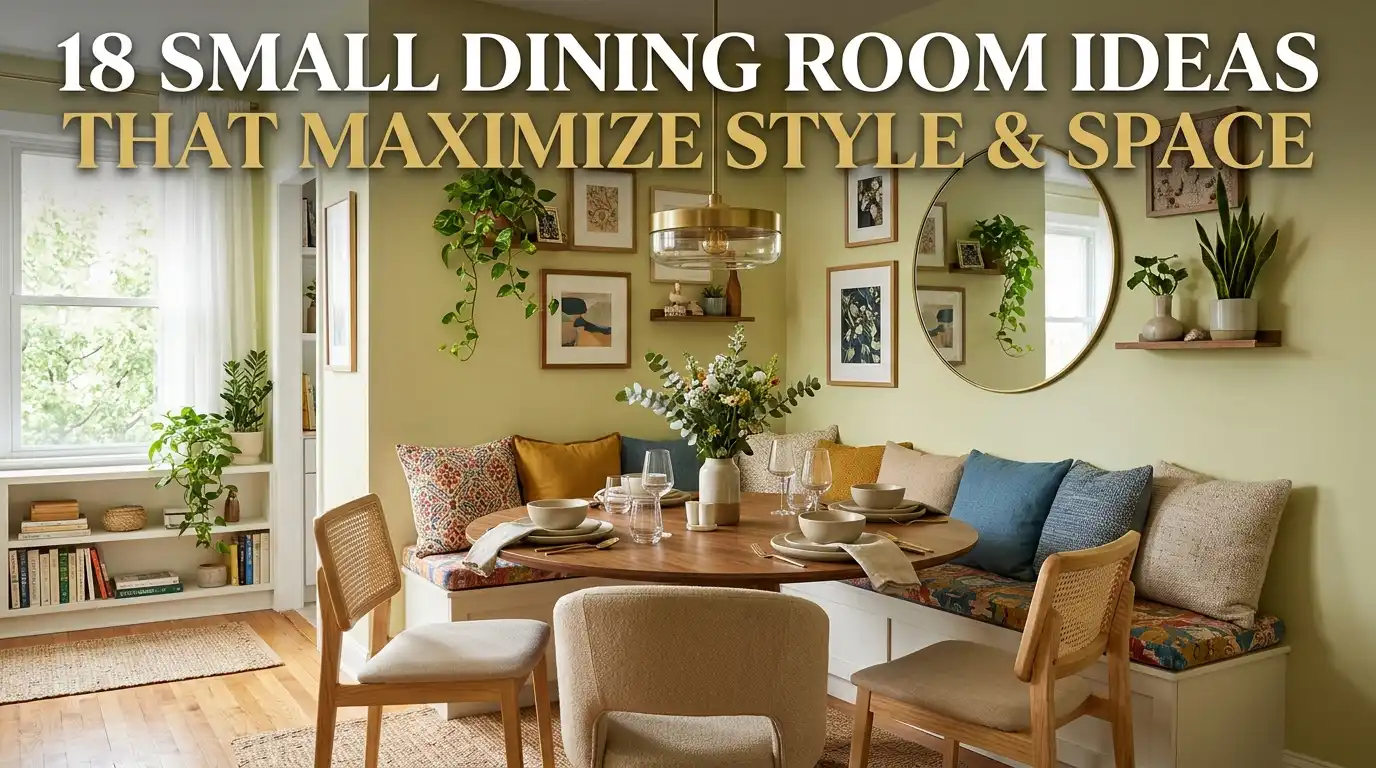
18 Small Dining Room Ideas That Maximize Style and Space
A small dining room can be just as inviting and stylish as a much larger space. The secret is choosing furniture that fits comfortably, making thoughtful use of walls and corners, and creating a layout that leaves enough room to move around the table. Whether you’re decorating a compact apartment, an open-plan condo, a narrow dining area, or a breakfast nook in a suburban home, a few well-planned changes can make everyday meals feel more comfortable.
These small dining room ideas combine practical space-saving solutions with attractive colors, natural materials, modern lighting, and personal decorative touches. Some approaches work with furniture you already own, while others introduce more substantial upgrades, such as built-in seating or a statement light fixture. The goal is to create a dining area that feels open, organized, and welcoming without sacrificing personality.
Choose a Round Dining Table

A round dining table can make a compact dining area feel easier to navigate. Without sharp corners, it often works well in square rooms, small breakfast areas, and awkward spaces where rectangular furniture would interrupt the walking path. A central pedestal base is especially useful because it leaves more legroom and reduces the number of table legs competing with chair placement.
Choose a diameter that suits the room and the number of people who regularly eat there. A smaller table may be ideal for two or three people, while a larger round option can accommodate more diners when space allows. Pair it with streamlined chairs that tuck beneath the tabletop instead of bulky armchairs.
For a welcoming look, combine natural oak, light upholstery, and a simple ceramic centerpiece. A round mirror or understated pendant above the table can reinforce the balanced arrangement without adding clutter.
Quick Tip: Measure the space with the chairs pulled out, not just the table footprint. The layout needs to work during an actual meal.
Make the Most of a Dining Nook
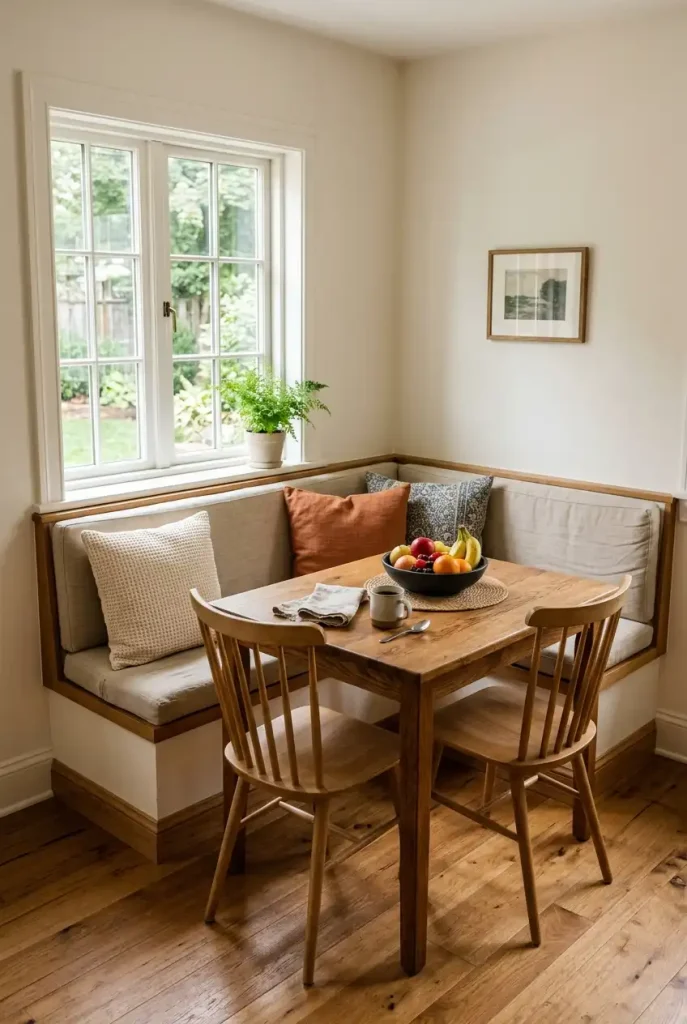
An unused corner can become a comfortable dining destination with a small table and thoughtfully fitted bench seating. This arrangement is particularly useful in open-plan homes where the kitchen, living room, and dining area share one larger space.
An L-shaped bench makes use of two walls instead of requiring chairs on every side. It can also create a clear visual boundary between the dining area and nearby kitchen counters. Choose a slim table with a simple base and keep the bench upholstery relatively light to avoid making the corner feel heavy.
If you own the home, a custom bench can be fitted to the room’s dimensions. Renters can achieve a similar effect with a freestanding corner bench or a compact upholstered settee. Add washable cushions and a small pendant or wall light to make the nook feel intentional.
Avoid filling the bench with oversized pillows. A few well-chosen cushions provide comfort while preserving usable seating space.
Use an Extendable Dining Table
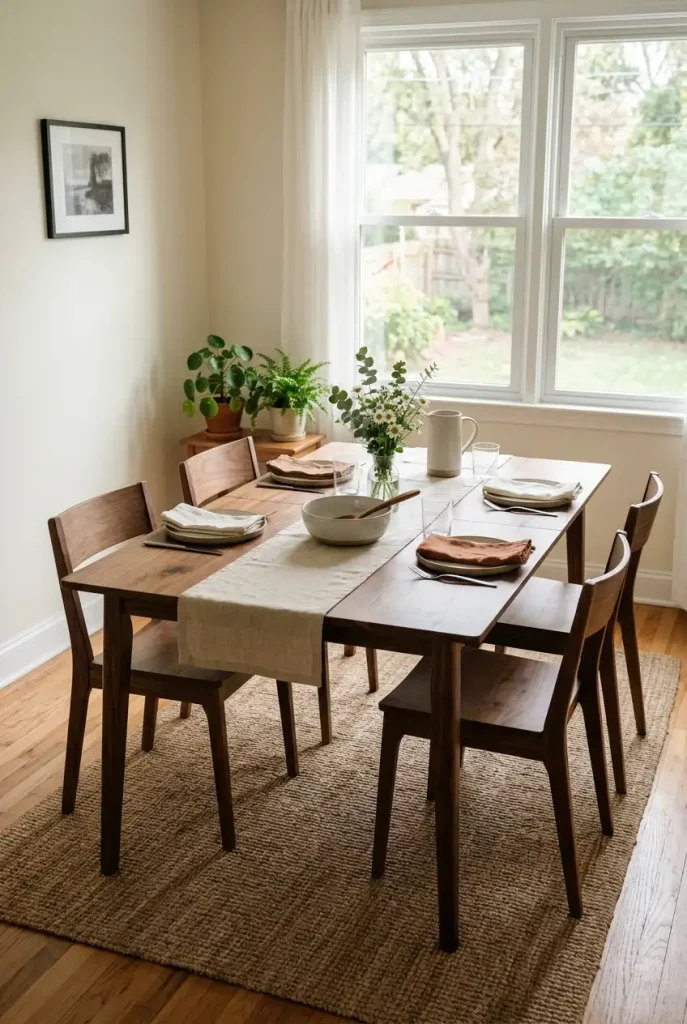
An extendable table offers flexibility when a dining room must handle everyday meals as well as occasional guests. Keep it in its compact configuration most of the time, then expand it for family gatherings, holidays, or dinner parties.
Look for a design with leaves that store inside the table or can be kept neatly in a nearby closet. A simple rectangular tabletop often suits narrow rooms, while rounded corners can soften the overall appearance. Slim legs and armless chairs help keep the arrangement visually light.
Before buying, check how much additional floor space the extended table will require. The table should not block the main route between the kitchen, hallway, and living room when extra seats are in use.
A practical approach: Keep everyday table décor minimal and store extra place settings elsewhere. That makes the transition from weekday dinner to entertaining much easier.
Install a Wall-Mounted Drop-Leaf Table

For a particularly tight apartment or multipurpose room, a wall-mounted drop-leaf table can provide a dining surface without permanently occupying the floor. When the table is not in use, its hinged top folds down to leave more room for circulation.
This solution works best when the mounting wall is suitable for the required hardware and the table can be installed securely. Choose a simple finish that complements the kitchen cabinetry or nearby furniture so the table feels like part of the room rather than an afterthought.
A folding table is especially useful for one or two people who don’t need a full dining setup every day. Pair it with folding chairs that can be stored in a closet or hung on appropriate wall hooks.
Keep the surrounding wall relatively uncluttered. A small framed print or a single wall sconce can add character, but bulky shelves may interfere with the folding surface.
Choose a Narrow Rectangular Table
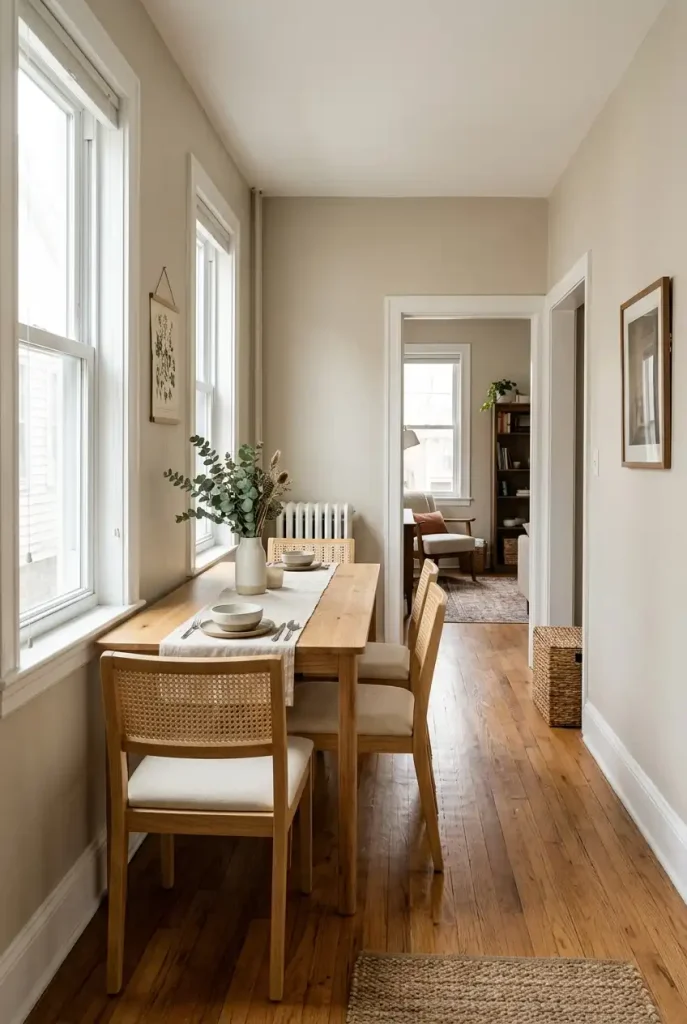
A narrow rectangular table can fit naturally against the longer wall of a small dining room. Unlike a deep table, it leaves more floor space available for walking, pulling out chairs, and accessing nearby doorways.
Look for a tabletop that provides enough room for plates and serving dishes without dominating the room. A simple wood design brings warmth, while a pale finish can help the table blend into a light interior. If the room doubles as a passage between the kitchen and living area, keep the main route unobstructed.
For seating, consider armless chairs with narrow profiles. Upholstered seats add comfort without requiring oversized backs or thick armrests. You can also use a bench on the wall-facing side if it fits comfortably beneath the table.
Common mistake: Choosing a table based only on its length. Its depth and the clearance around it are just as important.
Add a Built-In Bench Along One Wall
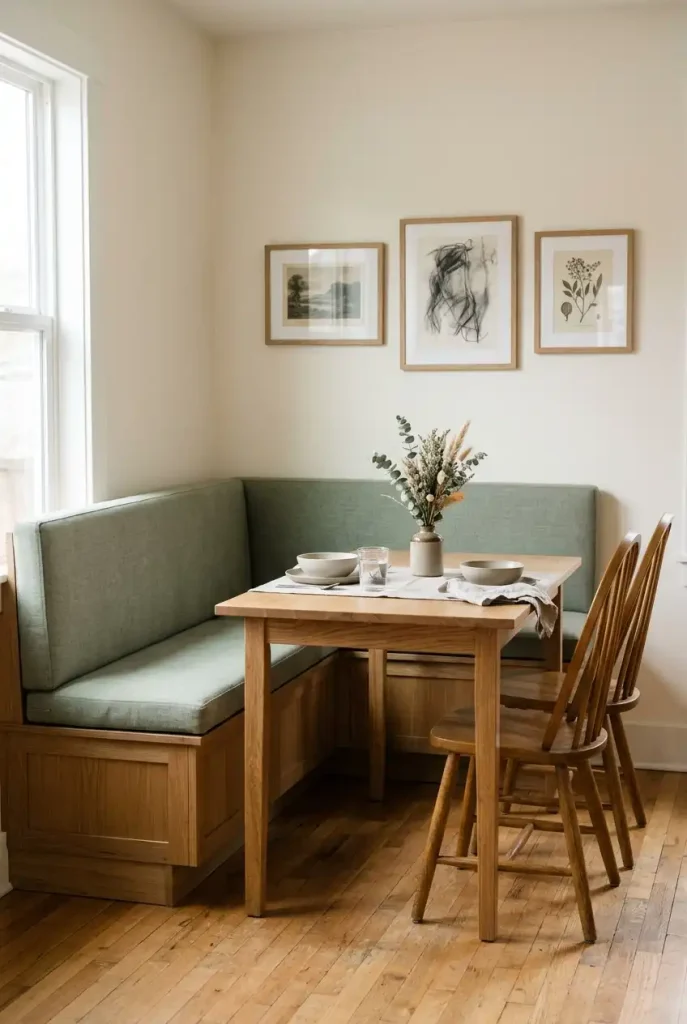
Built-in seating can make a small dining room feel more organized because it uses wall space instead of requiring separate chairs on every side of the table. It also creates a tailored appearance that works well in older homes, renovated townhouses, and compact open-plan layouts.
A straight bench against one wall is often enough; you don’t necessarily need a full wraparound banquette. Use a comfortable seat depth, a supportive backrest, and upholstery that can withstand everyday use. If the household includes children or pets, removable covers or durable performance fabric may be practical choices.
The table should sit close enough for comfortable dining without trapping people on the bench. Leave room for diners to get in and out, particularly if the bench is positioned against a wall.
For a more integrated finish, match the bench’s woodwork to nearby cabinetry or paint it the same color as the wall. This creates a cohesive look without introducing another dominant color.
Use Light Colors to Open Up the Room

Light colors can help a compact dining area feel airy, particularly when the room has limited natural light. Warm white, soft ivory, pale greige, and light sand are useful choices for walls because they create a calm background for furniture and artwork.
The effect doesn’t depend on painting everything white. A light wall color paired with natural oak, woven textures, and a few darker accents can create enough contrast to give the room character. Consider pale upholstered chairs, a light rug, or cream-colored curtains if the existing furniture feels visually heavy.
For a cohesive appearance, repeat one or two tones across the room. For example, warm white walls can work with a beige runner, pale wood furniture, and off-white ceramic accessories.
If you prefer a deeper color, use it selectively on a single wall, the lower portion of the room, or a piece of furniture. The goal is to balance visual interest with a sense of openness.
Hang a Statement Pendant Light

A well-chosen pendant light can give a small dining room a clear focal point without using any extra floor space. Hanging directly over the table, it helps visually define the dining zone and creates a more intentional atmosphere.
The fixture should be proportionate to the tabletop and the room. A compact linen shade, simple globe, or modest sculptural pendant can provide character without overwhelming the space. Consider the fixture’s overall shape as well as its finish: a rounded shade softens a room with many straight lines, while a linear fixture can complement a long rectangular table.
Position the light so it illuminates the dining surface without obstructing sightlines across the table. The exact hanging height depends on the fixture, ceiling, and room layout, so follow the manufacturer’s installation guidance and use a qualified electrician when needed.
Quick Tip: Choose a dimmable bulb and compatible dimmer if you want bright light for everyday tasks and a softer glow for dinner.
Add a Mirror to Reflect Light
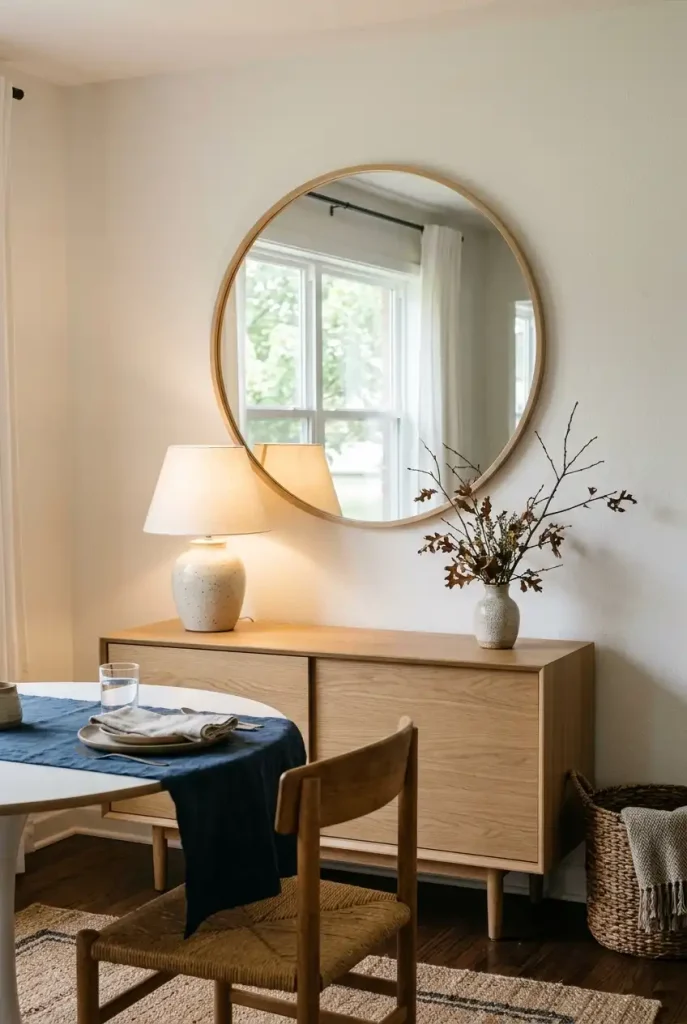
A mirror can make a compact dining room feel brighter and visually deeper, especially when it reflects a window, glazed door, or well-lit part of the home. It also provides wall interest without taking up valuable floor space.
Choose a mirror size that suits the wall and the furniture beneath it. A broad rectangular mirror works well above a sideboard, while a round mirror can soften a room filled with straight-edged furniture. Thin wood or metal frames keep the look relatively light.
Think carefully about what the mirror will reflect. A view of greenery, a window, or a thoughtfully styled part of the room is usually more appealing than a reflection of clutter or a busy work surface. Secure the mirror properly, particularly in homes with children or pets.
For a layered look, pair the mirror with a narrow console or sideboard, a small lamp, and one or two decorative objects. Keep the arrangement restrained so the reflective surface remains the main feature.
Bring in a Slim Sideboard for Storage

A small dining room still needs somewhere to store napkins, table linens, serving dishes, and everyday dining accessories. A slim sideboard can provide that storage without requiring a large cabinet or an additional piece of bulky furniture.
Choose a unit with a shallow profile and doors or drawers that suit what you intend to store. Closed storage helps the room look tidy, while a narrow top provides a place for a lamp, a vase, or a small serving tray when entertaining.
Before buying, measure the wall and check how the sideboard doors open. Make sure there is enough clearance for nearby chairs and walkways. If floor space is extremely limited, a wall-mounted cabinet can create a similar effect while keeping the floor underneath visually open.
Use the top sparingly. Two or three carefully selected accessories often look better than a crowded collection of frames, bowls, and decorative objects.
Create a Gallery Wall Above the Dining Table

A gallery wall adds personality without taking up any floor space. In a small dining room, it can make a simple table and chairs feel like a complete design rather than a collection of practical furniture.
Choose a visual theme that ties the artwork together. Botanical prints, landscape photography, abstract paintings, or a mix of personal photographs can all work. The frames don’t have to match exactly, but repeating a finish or color helps the arrangement feel intentional.
For a narrow room, a horizontal gallery can emphasize the length of the wall. In a square dining area, a more compact cluster may feel better balanced. Lay the arrangement out on the floor first or use paper templates to test the spacing before hanging anything.
Keep the artwork appropriately scaled to the table. Tiny frames scattered across a large wall can look disconnected, while oversized pieces may overwhelm the dining area. A few well-proportioned prints often create a stronger focal point than dozens of small decorations.
Use a Bench on One Side of the Table
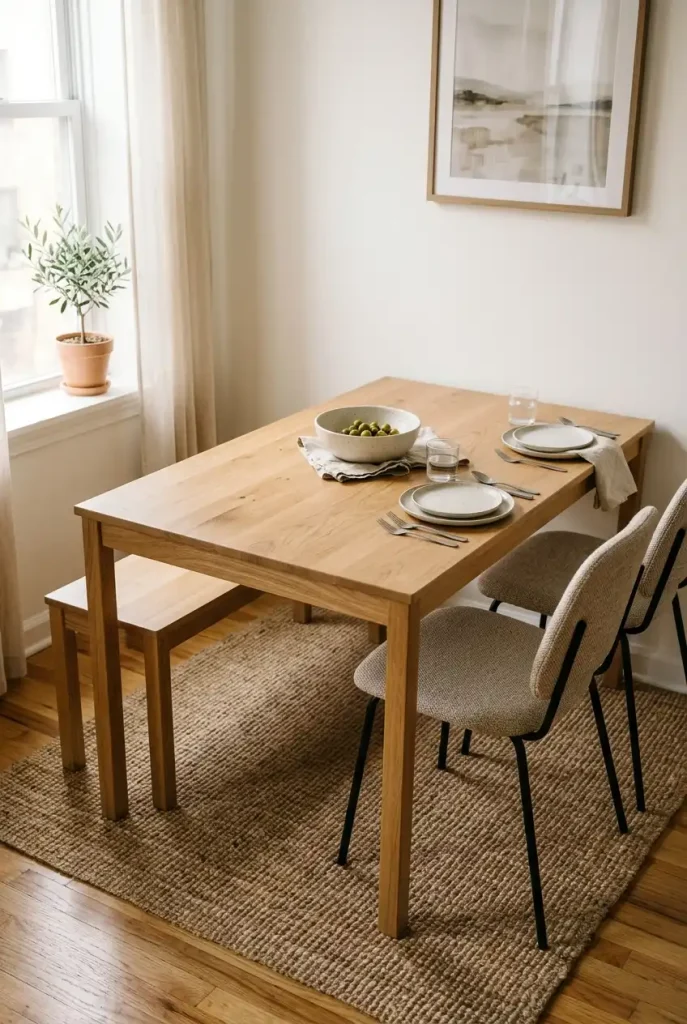
A freestanding dining bench can be a flexible alternative to several individual chairs. It can accommodate different seating arrangements, tuck neatly beneath the tabletop, and make a compact dining space feel less crowded.
A simple wood bench suits farmhouse, Scandinavian, and organic-modern interiors. An upholstered bench offers a softer appearance, especially when paired with fabric dining chairs on the opposite side. Choose a design with a scale that matches the table rather than one that extends far beyond its ends.
A bench is most practical when diners can get in and out easily. Avoid pushing it so tightly against a wall that people have difficulty accessing their seats. If the table is used daily, consider a bench with a comfortable seat height and enough depth for adults.
Do / Don’t
- Do: Choose a bench that fits under the table when not in use.
- Do: Leave a clear route to the remaining chairs.
- Don’t: Add oversized cushions that prevent the bench from sliding in.
- Don’t: Assume a bench will always seat more people comfortably than individual chairs.
Define the Dining Area With a Small Rug
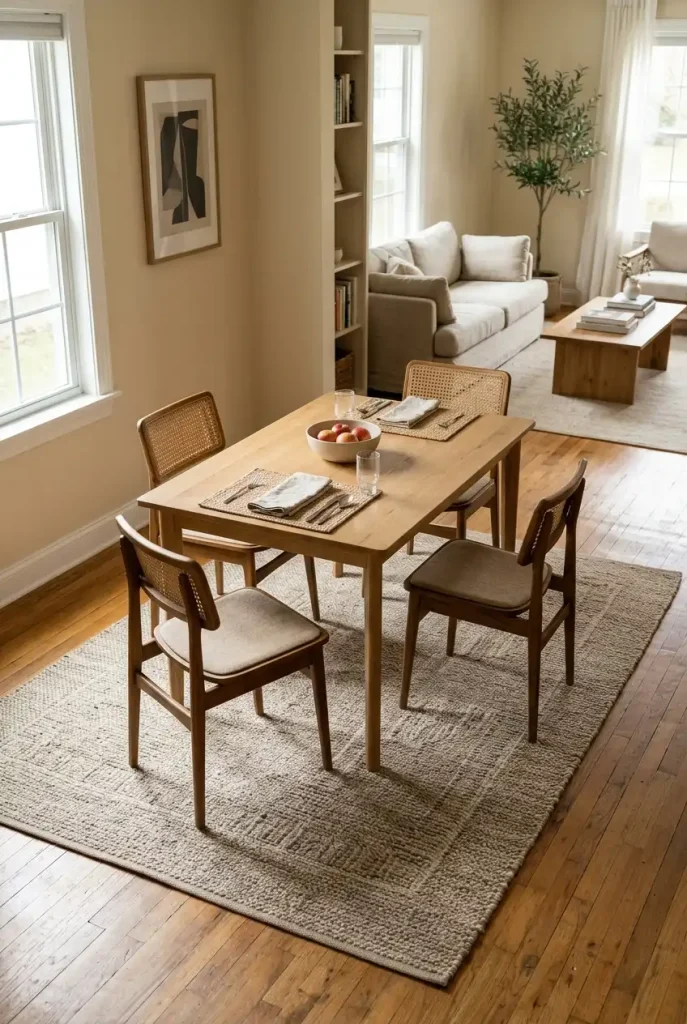
In an open-plan apartment or combined kitchen-living room, a rug can help distinguish the dining area from nearby spaces. It provides a visual boundary without adding a divider that blocks light or makes the room feel smaller.
Choose a rug large enough for the table and chairs to sit comfortably on it. Ideally, the chair legs should remain on the rug when people pull their seats back. A rug that’s too small can look disconnected from the furniture and become awkward to use.
Low-pile rugs are generally easier to move chairs across than thick, plush designs. Flatweave or tightly woven options can be practical for dining areas, particularly where crumbs and spills are common. Patterned rugs may disguise minor marks, while subtle textures offer a quieter appearance.
Coordinate the rug with the room rather than matching every item exactly. A warm neutral rug works well with oak furniture, while a muted geometric pattern can introduce interest beneath a simple table.
Make a Statement With One Accent Wall
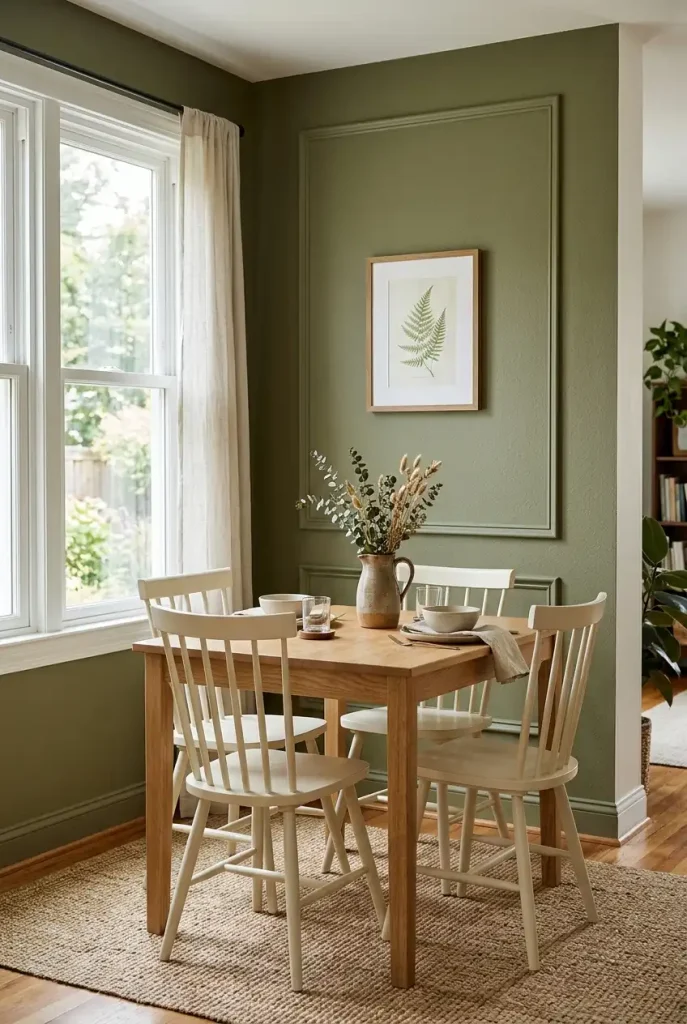
A small dining room doesn’t need elaborate decoration on every surface. One thoughtfully designed accent wall can create depth, establish a color palette, and give the table a more deliberate setting.
Paint is one of the simplest options. Deep olive, muted blue, terracotta, or warm charcoal can add contrast behind pale furniture. If you prefer subtle texture, consider removable wallpaper, understated botanical patterns, or simple applied wall molding where suitable.
The best wall to emphasize is usually the one that naturally draws the eye when entering the room or sitting at the table. A feature wall behind a sideboard or dining bench can also make that furniture feel integrated into the design.
Balance the accent with simpler surrounding surfaces. If the wall has a strong pattern, keep the tabletop and curtains relatively quiet. In a room with limited natural light, test paint samples at different times of day before committing to a dark shade.
Use Transparent or Visually Light Chairs
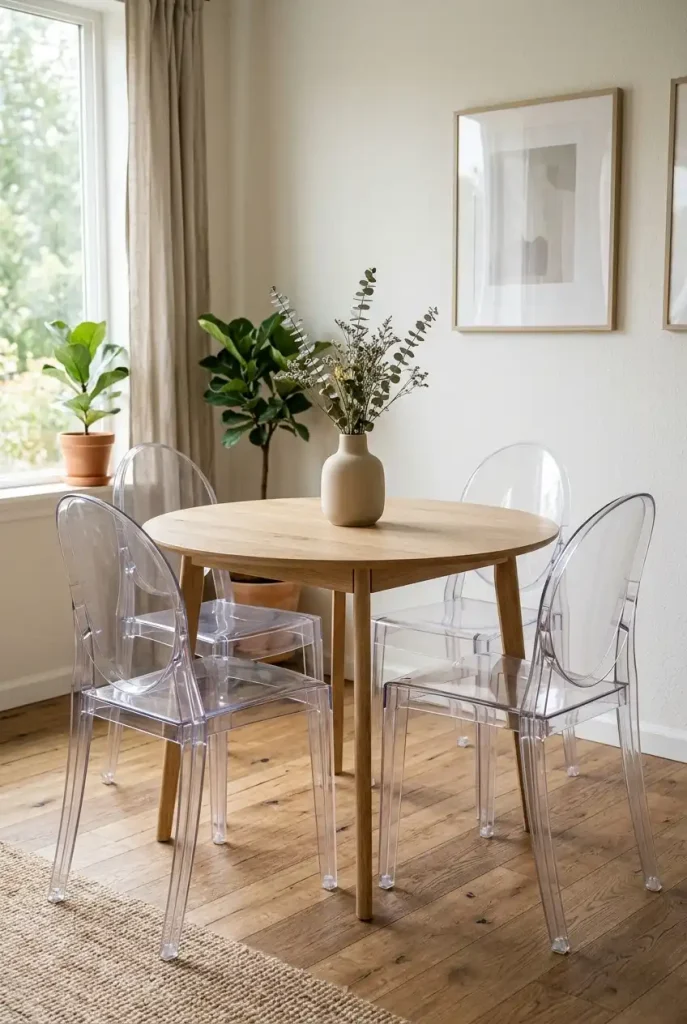
Furniture with open frames, slim legs, or transparent materials can help a small dining room feel less visually crowded. The benefit is not that the furniture physically disappears, but that it occupies less visual attention than thick, upholstered chairs with wide backs and arms.
Clear acrylic chairs are one option for contemporary spaces. Wire-frame or slender wood chairs can create a similar sense of openness while offering a different material and style. If comfort matters more than an entirely minimal appearance, choose chairs with a slim silhouette and a small upholstered seat.
Consider the other materials in the room before selecting transparent seating. Acrylic can complement a modern table, but it may feel out of place beside heavy rustic furniture unless other details connect the styles.
Keep the tabletop simple so the chairs remain part of a balanced arrangement. In everyday family homes, also consider cleaning requirements and whether the chosen chair material suits regular use.
Add Floor-to-Ceiling Curtains
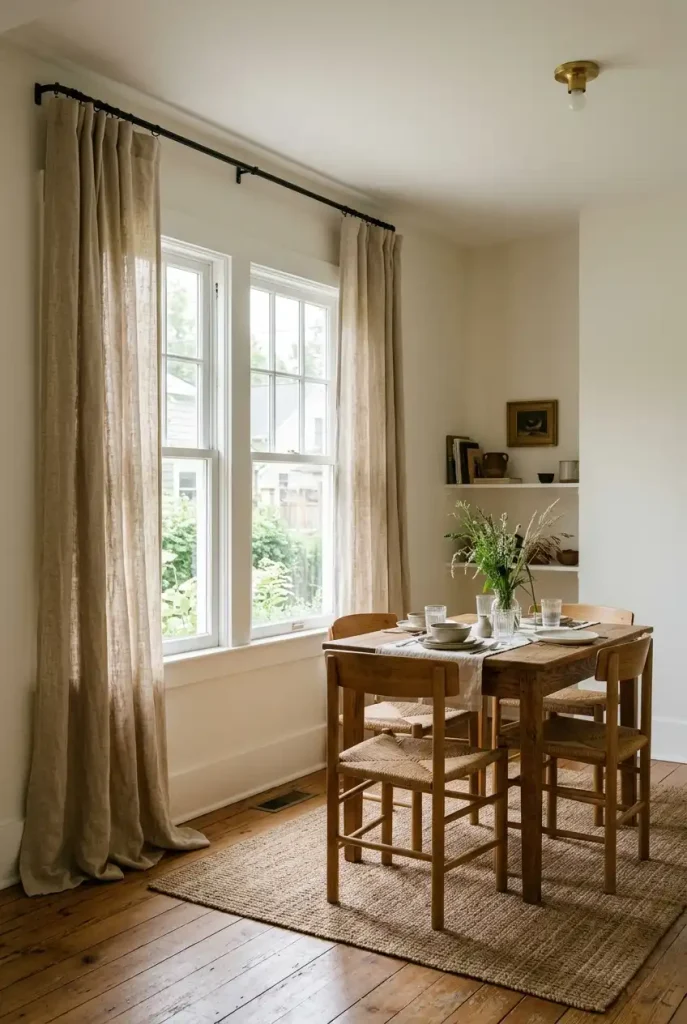
Curtains can make a small dining room feel taller and more finished when they’re hung thoughtfully. Mounting the curtain rod closer to the ceiling and allowing the panels to fall toward the floor draws the eye upward, emphasizing the room’s vertical space.
Choose lightweight linen or cotton-blend curtains when you want filtered daylight and a relaxed appearance. Soft white, flax, and warm beige work well in neutral rooms, while muted green or blue can introduce a little color without dominating the space.
Make sure the curtain panels don’t interfere with dining chairs or block doors that need to open. If the window is close to the table, use a simple treatment that stays clear of the eating area.
For a compact room, avoid overly heavy swags or elaborate layered window treatments. A straightforward curtain rod and full-length panels provide enough softness without adding unnecessary visual weight.
Try a Built-In Banquette With Hidden Storage
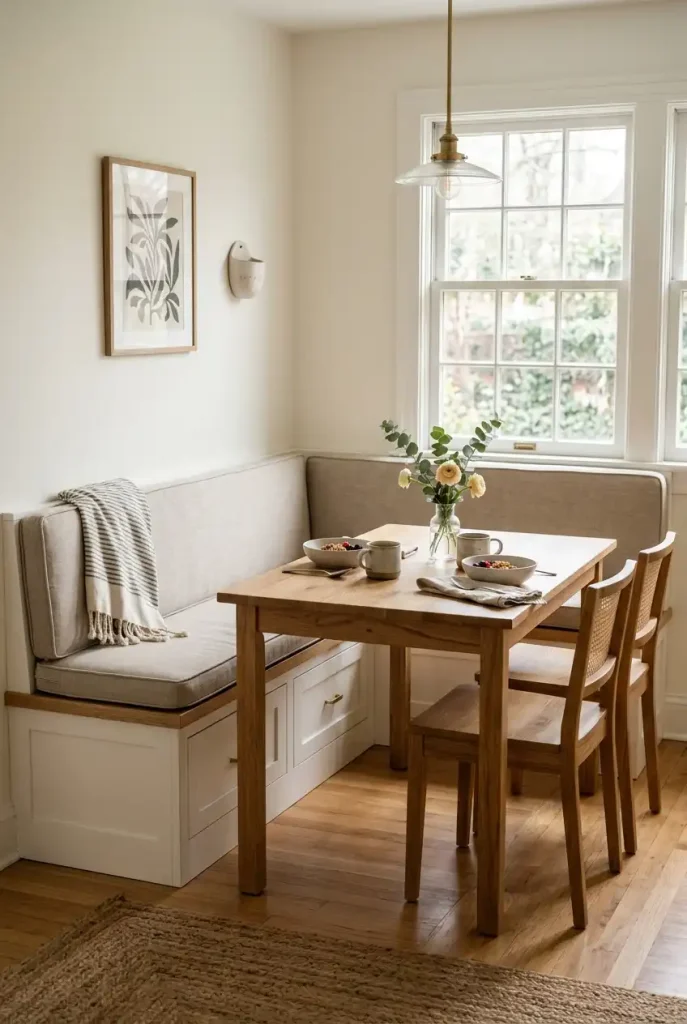
When a small dining room needs to serve several purposes, a storage banquette can make the most of the available footprint. The seating provides a comfortable place to eat, while drawers or lift-up compartments offer space for table linens, placemats, board games, or occasional serving pieces.
This arrangement works particularly well along a wall or in a corner where conventional chairs would otherwise take up extra floor space. A custom version can be fitted to the room, but a freestanding storage bench may provide a simpler alternative.
Choose storage that is easy to access. Drawers are convenient when the front of the bench remains clear, while lift-up seats can work well when there is enough room to raise the lid fully. Avoid storing heavy items that are awkward to lift in a frequently used seat.
Finish the bench in a color that relates to the walls or kitchen cabinetry, then add a tailored seat cushion for comfort. Keep decorative pillows minimal so the seating remains practical for everyday meals.
Style the Table With a Simple Centerpiece
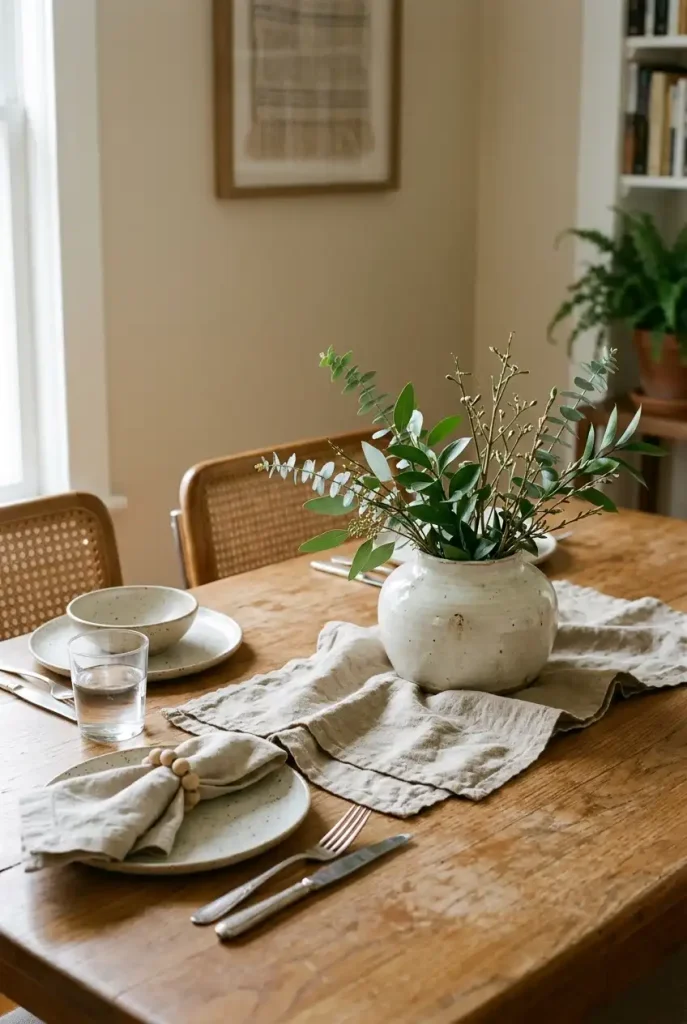
A carefully chosen centerpiece can make a small dining room feel finished without taking up the space needed for meals. The key is choosing something proportionate to the table and easy to move when serving food.
A low ceramic vase, a small arrangement of seasonal branches, or a shallow wooden bowl can work well. For a round table, a single central object often feels balanced. On a narrow rectangular table, a low tray or slim runner can create a gentle visual line without making the surface feel crowded.
Avoid tall arrangements that block conversation or oversized decorations that leave little room for plates. If your dining table doubles as a homework or work surface, choose a centerpiece that can be lifted away easily.
Here are a few combinations to try:
- Natural and relaxed: A handmade ceramic vase with a few leafy branches.
- Modern and minimal: A low sculptural bowl on a bare wood table.
- Warm and layered: A linen runner with a small vase and two candleholders.
- Seasonal: A compact arrangement of fresh flowers or simple greenery.
The aim is to give the table a focal point while preserving its everyday function.
How to Make a Small Dining Room Feel Bigger
The best design doesn’t always require new furniture. Before investing in a makeover, consider how the room is used and which elements make it feel crowded.
| Design choice | Why it helps | Best suited to |
|---|---|---|
| Round pedestal table | Reduces sharp corners and frees up chair-leg space | Square dining areas |
| Wall-mounted table | Keeps floor space open when not in use | Very small apartments |
| Built-in bench | Uses wall space for seating | Corners and narrow rooms |
| Slim sideboard | Adds storage without a bulky footprint | Dining rooms with a spare wall |
| Light wall colors | Creates a brighter visual backdrop | Rooms with limited daylight |
| Mirror near a window | Reflects light and adds visual depth | Dark or enclosed dining areas |
| Small, well-sized rug | Defines the dining zone | Open-plan homes |
Measure Before Buying Furniture
Start with the room’s length and width, then note door swings, window locations, radiators, and the main walking routes. Mark out the proposed table footprint with painter’s tape if you’re unsure whether a piece will fit.
Next, position temporary markers where chairs would sit when pulled out. This gives you a more realistic sense of how the room will function during a meal.
Finally, consider the whole arrangement rather than individual pieces. A slightly smaller table paired with comfortable chairs and good lighting can be more useful than a larger table that leaves everyone squeezing past one another.