

17 Dining Room Decor Ideas for a Stylish and Welcoming Home
A dining room should feel inviting enough for everyday family meals and polished enough for holidays, dinner parties, and special occasions. The right dining room decor can make even a simple space feel thoughtfully designed without requiring a complete renovation. From statement lighting and natural wood furniture to colorful accent walls and beautifully styled tables, small design decisions can change the entire atmosphere of a room.
Whether you have a dedicated dining room in a suburban home, an open-concept dining area, or a compact apartment eating space, there are plenty of ways to make it feel more personal and functional. The key is balancing visual appeal with practical details such as comfortable seating, easy movement, and lighting that works throughout the day.
These 17 dining room decor ideas explore a range of styles, from relaxed organic modern interiors to classic, elegant spaces, with practical ways to adapt each look to your home and budget.
Create a Warm, Neutral Dining Room
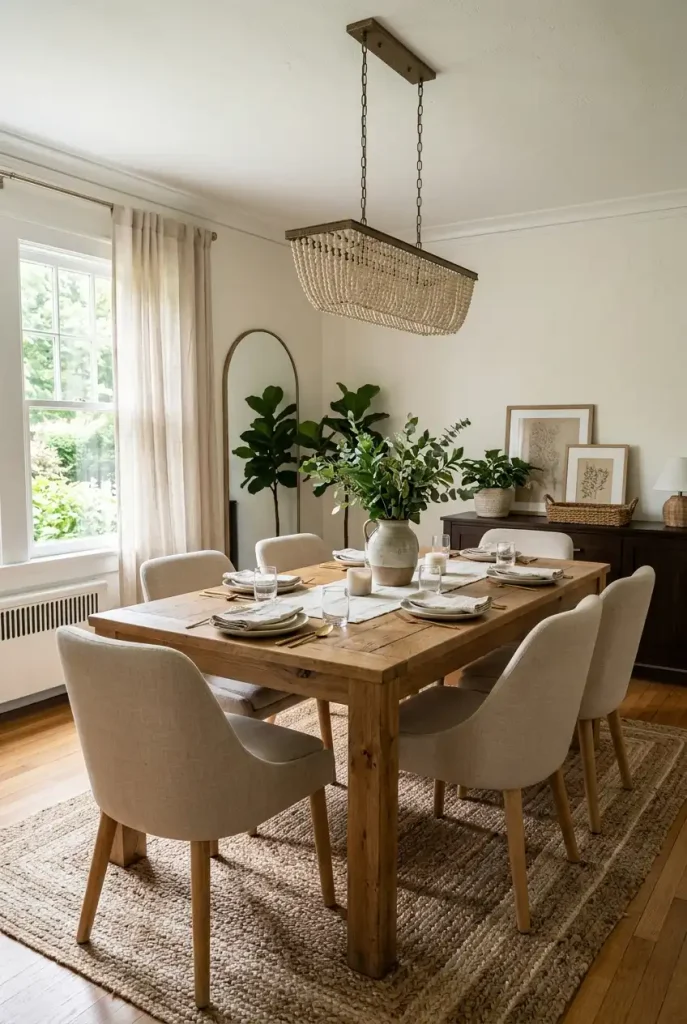
A neutral dining room creates a calm, welcoming foundation that works across many interior styles. Combine warm white walls with a natural oak dining table, beige upholstered chairs, and soft linen curtains. Instead of relying on one flat shade, introduce several related tones to give the room depth and character.
Texture is especially important in a neutral space. A woven rug, a handmade ceramic vase, and a lightly textured table runner add interest without overwhelming the palette. Choose one or two darker accents, such as black cabinet hardware or a deep brown bowl, to provide contrast.
How to recreate the look:
- Start with warm white, ivory, or soft greige walls.
- Choose wood furniture with a finish that complements your flooring.
- Add upholstered seating for comfort and softness.
- Keep the centerpiece simple with greenery or seasonal branches.
For a smaller dining area, use a light-colored rug and streamlined chairs to keep the space feeling open.
Make a Statement With a Sculptural Pendant Light

Lighting can define the entire dining room, particularly when the furniture and wall colors are relatively understated. A sculptural pendant creates a focal point above the table while providing a sense of intentional design. Consider a curved ceramic fixture, a woven pendant, a modern glass globe, or a simple linear chandelier.
Scale matters more than choosing the most elaborate fixture. A very small pendant can look lost over a large dining table, while an oversized design may overwhelm a compact room. Center the fixture over the dining surface and consider how it looks from adjoining rooms in an open-concept layout.
For a more comfortable evening atmosphere, use a dimmable light and a warm-white bulb compatible with the fixture.
Quick Tip: If you rent, look into a plug-in pendant or another approved reversible lighting option before making electrical changes.
Bring in Natural Wood for Organic Modern Style
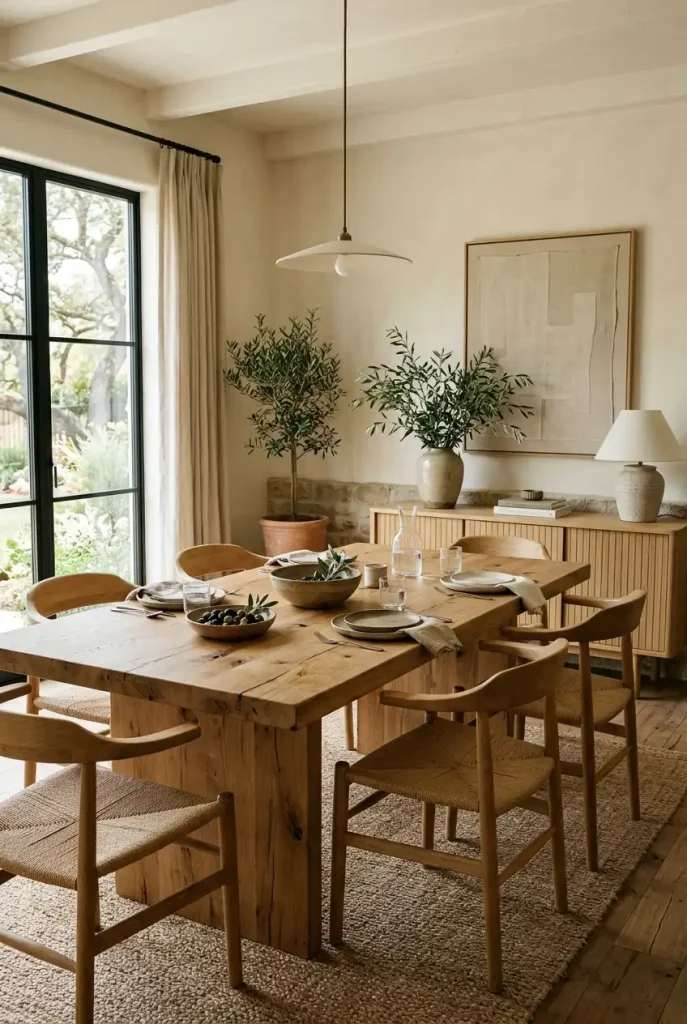
Natural wood brings warmth and visual texture to a dining room without requiring much additional decoration. For an organic modern look, pair a substantial oak or walnut table with simple chairs, earthy pottery, and a restrained color palette. Rounded edges and gently curved chair backs can soften the straight lines of a rectangular table.
You do not need to match every wood finish perfectly. A walnut sideboard can sit comfortably alongside an oak table when the undertones and surrounding colors work together. Repeating a finish in smaller details, such as a wooden bowl or picture frame, helps the room feel coordinated.
- Light oak: airy, casual, and well suited to Scandinavian-inspired interiors.
- Walnut: rich, grounding, and particularly effective against cream walls.
- Reclaimed wood: introduces natural variation and a more rustic character.
Choose a durable finish appropriate for everyday dining, especially if the table is used for homework, crafts, or family meals.
Use a Round Table in a Small Dining Room

A round dining table can make a compact dining area feel less rigid because it eliminates sharp table corners and creates a more conversational arrangement. A pedestal base is particularly useful when leg placement makes it difficult to tuck chairs underneath a traditional four-legged table.
This layout works well in breakfast nooks, apartments, and dining areas tucked between a kitchen and living room. Pair the table with lightweight chairs that can be pulled out without blocking a doorway or main walking path.
A wall mirror can help reflect daylight, while a single pendant or a small tabletop arrangement gives the area a clear identity. Avoid using an oversized centerpiece that takes up the limited surface area.
Before choosing a table: Measure the room with the chairs pulled out, not just the tabletop. A beautiful arrangement still needs enough room for people to sit down and move comfortably.
Add Character With a Bold Dining Room Accent Wall
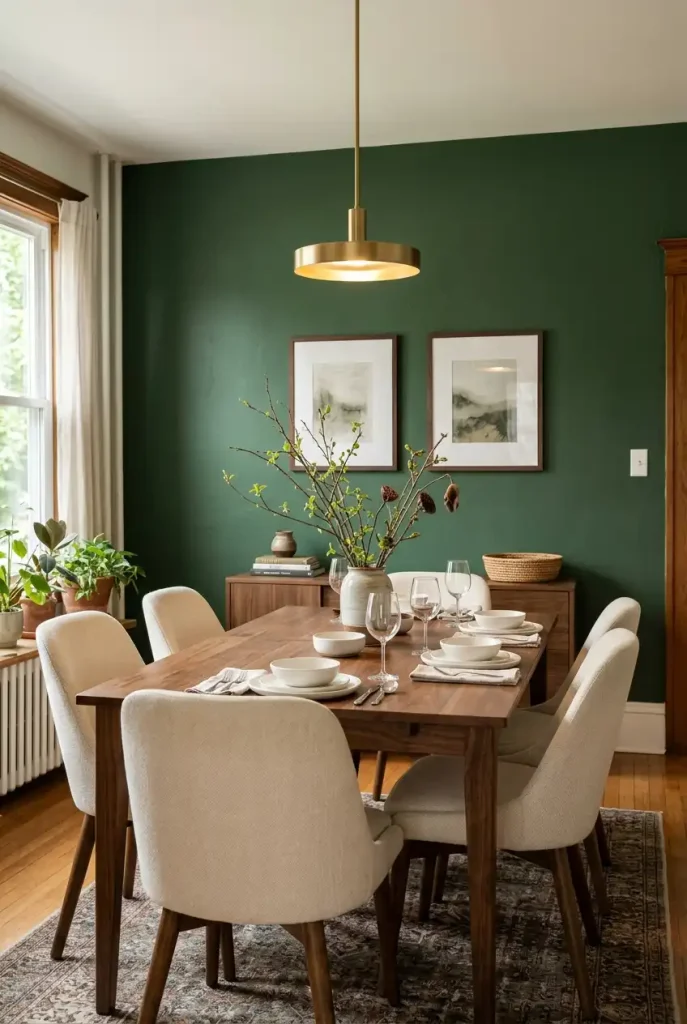
An accent wall is an effective way to give the dining room a distinct personality without painting every surface. Deep forest green, muted navy, terracotta, and earthy olive can all create a memorable backdrop for a dining table.
For a balanced result, repeat the accent color in a few small details rather than spreading it throughout the entire room. Green walls, for example, pair naturally with warm wood, cream upholstery, and aged-brass accents. A dark blue wall can feel sophisticated alongside walnut furniture and off-white curtains.
In an open-concept home, an accent wall can visually distinguish the dining zone from the living room without adding a physical divider. Paint is generally the simplest option, while removable wallpaper may suit some rentals.
Common mistake: Choosing a bold color without considering the room’s natural light. Test paint samples at different times of day before committing.
Layer a Rug Beneath the Dining Table
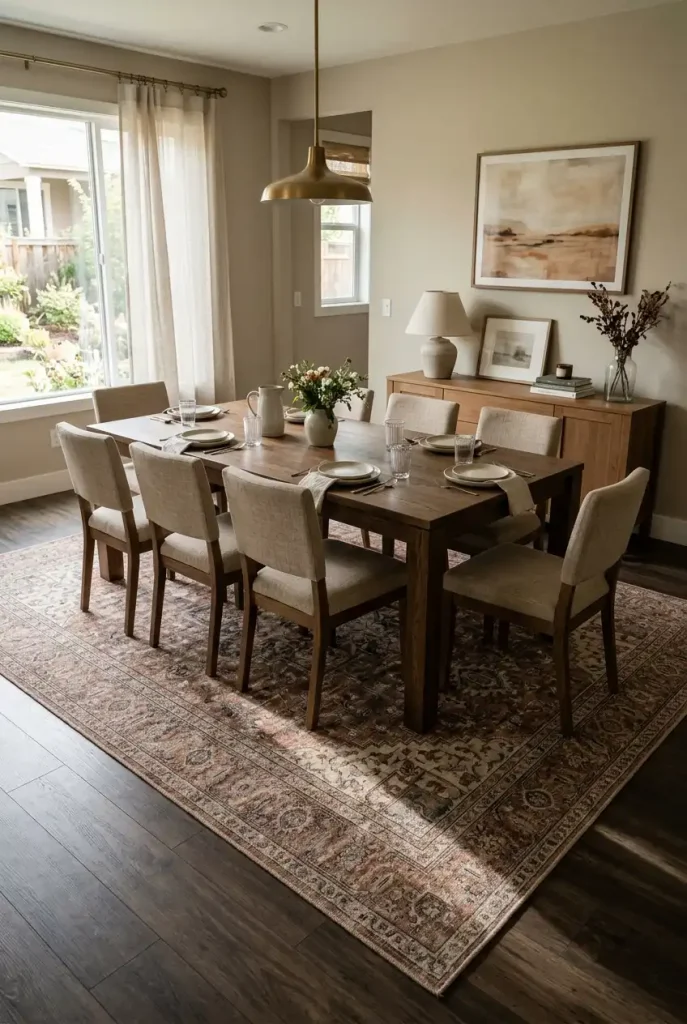
A well-chosen area rug helps anchor the dining table and visually separates the dining area from nearby spaces. It can also introduce pattern, color, and texture without changing the walls or investing in new furniture.
For everyday dining, consider a low-pile or flatweave rug that allows chairs to slide more easily. Patterns with several related colors can disguise minor crumbs and everyday marks better than a very pale solid surface, although no rug is completely stain-proof.
The rug should extend far enough beyond the tabletop to accommodate pulled-out chairs. Measure the table and estimate how much room the chairs occupy when someone is seated. Then check the full footprint before buying.
| Rug style | Visual effect | Practical consideration |
|---|---|---|
| Flatweave | Casual and understated | Usually easier for chairs to slide across |
| Subtle geometric | Modern and structured | Coordinates well with simple furniture |
| Traditional pattern | Layered and collected | Pattern can disguise minor marks |
| Natural fiber | Organic and textured | Check cleaning needs and spill resistance |
If spills are frequent, prioritize a material that suits your cleaning routine over a delicate rug chosen only for appearance.
Style the Table With a Simple, Seasonal Centerpiece

The dining table itself can become a decorative feature with a thoughtfully chosen centerpiece. A low ceramic vase filled with branches, a linen runner, or a shallow wooden bowl adds character without making the table feel crowded.
The most practical arrangement is one that can stay in place during ordinary meals but move easily when you need the entire surface. If your table is small, one sculptural object may be enough. A longer table can accommodate a low arrangement with two or three complementary pieces.
For seasonal updates, swap the branches or flowers rather than replacing the entire arrangement. Fresh spring stems, summer greenery, autumn foliage, and winter evergreens can all change the mood without requiring a new decorating scheme.
Tips for everyday styling:
- Keep arrangements low enough to maintain conversation across the table.
- Choose washable runners and easy-to-clean decorative objects.
- Leave enough open tabletop for plates, glasses, and serving dishes.
- Group accessories on a tray if you want to move them quickly.
Introduce Upholstered Chairs for Everyday Comfort
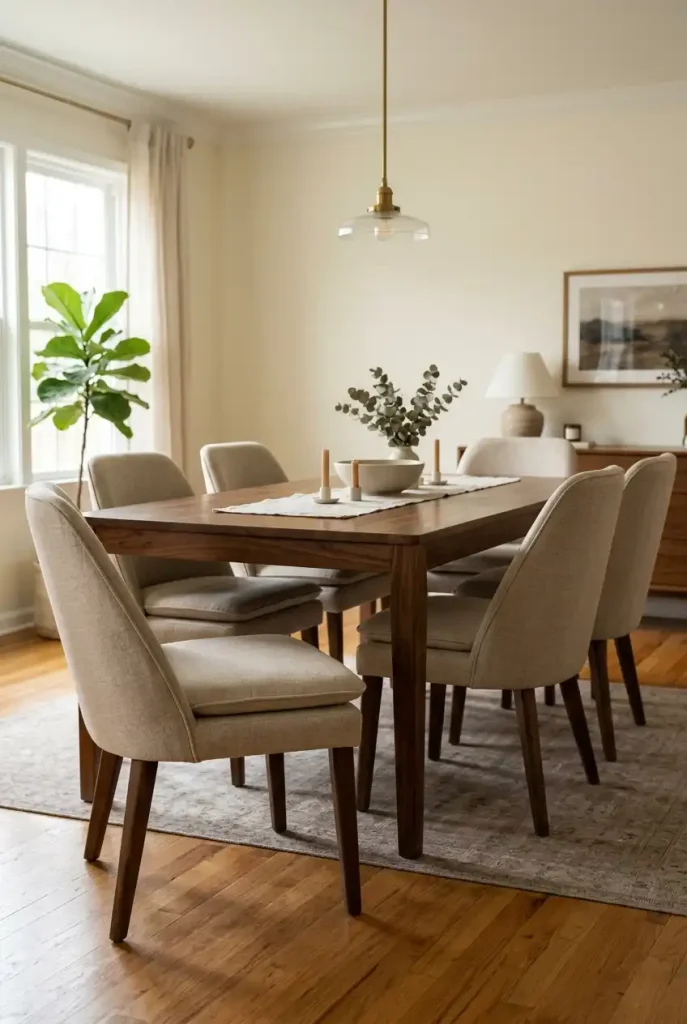
Dining chairs influence both the appearance and usability of the room. Upholstered chairs soften the look of a wood table and make long dinners more comfortable, especially when the room doubles as a gathering place for family and friends.
Cream, oatmeal, taupe, and muted gray are versatile upholstery colors, while rust, olive, or navy can introduce a stronger accent. You can also combine upholstered end chairs with simpler wood or metal side chairs for a layered look.
Before purchasing, check the seat height, chair width, and available space around the table. Thick arms and deep seats may look inviting but can prevent chairs from fitting neatly beneath the tabletop.
For busy households, performance fabrics or removable, washable covers can be practical options. Always check the manufacturer’s cleaning instructions and fabric specifications.
Editor’s Note: You don’t need a matching dining set. Coordinating the chair shapes, finishes, or colors is often enough to create a cohesive arrangement.
Add a Sideboard for Storage and Display

A sideboard is one of the most useful additions to a dining room because it combines hidden storage with a surface for decorative objects. Inside, you can organize table linens, serving platters, extra glasses, and seasonal accessories. On top, a lamp, artwork, and a few ceramics can create a finished-looking vignette.
Choose a sideboard that fits the wall without interfering with chair movement or doorways. A low, long cabinet works particularly well in a room with a rectangular table, while a narrower piece may suit an apartment dining area.
Keep the styling simple. Place a table lamp or tall vase at one end, lean or hang artwork above the cabinet, and use a small stack of books or a bowl to balance the arrangement.
A practical layout: Store frequently used serving pieces at an accessible height and reserve less convenient shelves for items you use only occasionally.
Hang Artwork to Give the Room Personality

Artwork gives a dining room a personal focal point and helps connect the furniture to the rest of the home. A large landscape painting, an abstract print, or a thoughtfully arranged gallery wall can bring color and visual interest to a plain wall.
The artwork should relate to the scale of the table and the wall beneath it. One substantial piece often looks calmer than several tiny frames scattered across a large empty surface. If you prefer a gallery wall, keep the spacing consistent and repeat one or two frame finishes.
Choose artwork that picks up colors already present in the room, such as the tones in your rug, upholstery, or centerpiece. It doesn’t need to match exactly; a subtle relationship is usually enough.
For renters, lightweight frames and removable hanging systems rated for the artwork’s weight can provide a less permanent option.
Quick Tip: Mock up the arrangement with paper templates before drilling holes. This makes it easier to judge proportions and spacing.
Use a Mirror to Reflect Light and Create Depth

Mirrors can be especially useful in dining rooms that receive limited natural light or feel visually enclosed. A large round mirror introduces a softer shape among rectangular tables, cabinets, and artwork, while a tall rectangular mirror can complement a more traditional interior.
Position the mirror where it reflects something pleasant, such as a window, greenery, or an attractive light fixture. A reflection of a cluttered kitchen counter or an awkward doorway may be less appealing, so check the view from several positions before installing it.
A slim frame in wood, black metal, or brass can connect the mirror to the room’s existing finishes. In smaller dining areas, choose a size that creates a noticeable effect without crowding nearby furniture.
Mirrors add visual depth, but they won’t physically enlarge a room. Their impact depends on placement, reflected light, and what appears in the reflection.
Try Modern Farmhouse Dining Room Decor

Modern farmhouse decor combines the warmth of rustic materials with the cleaner lines of contemporary interiors. A substantial wood dining table, simple black metal lighting, and relaxed upholstered or spindle-back chairs create a comfortable setting without making the room feel overly themed.
Keep the rustic elements selective. One reclaimed-wood table or vintage cabinet can supply plenty of character when paired with straightforward wall colors and modern lighting. Too many distressed finishes, decorative signs, and matching farmhouse accessories can make the space feel less personal.
For a lighter version, use white or warm ivory walls, natural wood, and woven textures. If you prefer a moodier look, introduce charcoal accents or a deeper wood finish.
Elements that work well together:
- A solid wood table with visible grain.
- Black metal or aged-brass lighting.
- Simple linen or cotton textiles.
- Greenery in a stoneware or ceramic vessel.
- Practical storage in a vintage-inspired cabinet.
The result should feel collected and comfortable rather than like a staged theme room.
Embrace a Moody, Dramatic Dining Room

A darker dining room can feel intimate and atmospheric, particularly when you enjoy hosting evening dinners. Charcoal, deep navy, chocolate brown, and dark olive create a rich backdrop for wood furniture, textured upholstery, and carefully placed lighting.
The trick is to create layers rather than rely on one overhead fixture. A dimmable chandelier, a lamp on a sideboard, and softly reflected light can make the room feel warm instead of gloomy. Natural materials, such as walnut, leather, linen, and ceramics, also help soften dark wall colors.
If your room is small or receives limited daylight, consider painting just one wall or choosing a medium-depth color instead of covering every surface in a near-black shade.
Do: Introduce lighter fabrics, warm wood, or artwork with subtle contrast.
Don’t: Depend on a single bright ceiling light to illuminate the entire room.
Mix Dining Chair Styles for a Collected Look

Matching dining sets are convenient, but mixing chair styles can make a room feel more individual. The secret is to create a connection between the different pieces so the arrangement feels intentional rather than random.
For example, place upholstered chairs at the ends of a rectangular table and use simpler wood chairs along the sides. You could also combine vintage-inspired chairs with modern seating in a related color palette.
Choose one element to tie everything together:
- Color: Repeat a shared wood tone or upholstery color.
- Shape: Look for similar curves or leg profiles.
- Material: Combine different chair silhouettes with a common wood finish.
- Proportion: Keep the seat heights and overall scale appropriate for the table.
You don’t have to buy all-new furniture. Replacing two end chairs, refinishing a pair of secondhand finds, or adding washable seat cushions may be enough to establish the look.
Common mistake: Mixing chairs that differ in both height and visual weight without a clear reason. A coordinated mix generally looks more balanced.
Add Architectural Interest With Wall Molding
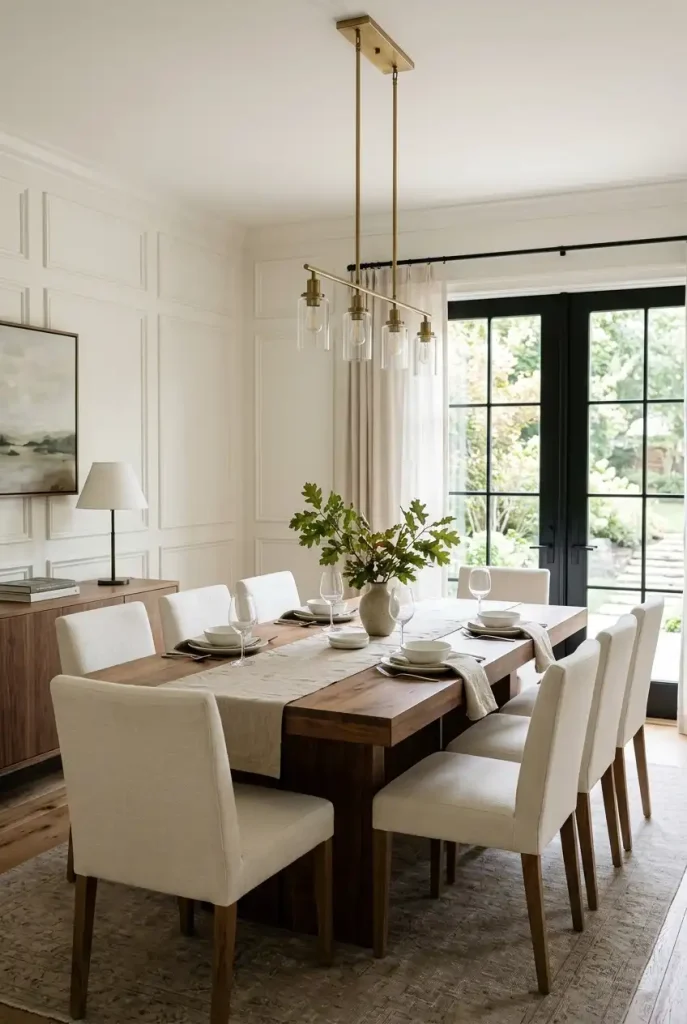
Wall molding adds architectural detail to a dining room, making plain walls feel more considered. Picture-frame molding is particularly versatile because it works with traditional interiors as well as cleaner contemporary spaces when the profiles are kept simple.
Paint the molding and wall the same color for a subtle, cohesive effect. Warm white creates a classic look, while muted sage, soft gray, or deep blue gives the detailing a more contemporary character.
You don’t necessarily need custom millwork. Simple applied trim can create a similar visual principle when carefully measured and installed, although the craftsmanship and finish may differ from custom-built paneling. Renters can explore removable decorative treatments, subject to the property’s rules and the product’s suitability.
Planning tips:
- Measure the wall and mark the intended panel layout before buying materials.
- Account for switches, outlets, door casings, and existing trim.
- Keep the spacing and proportions consistent across the wall.
- Test the paint finish in daylight and evening lighting.
The molding should complement the furniture rather than compete with an elaborate chandelier or busy wallpaper.
Create a Beautiful Dining Area in an Open-Concept Home

In an open-concept home, the dining area needs to feel connected to the kitchen and living room without disappearing into them. A rug, a dedicated pendant light, and a clearly positioned dining table help establish the zone without requiring a wall or partition.
Begin by mapping out the main walking routes between the kitchen, dining table, and living area. The dining chairs should not block a frequently used path when pulled out. If the room is compact, a round table or a bench positioned against a wall may provide more flexibility.
Use complementary materials to connect the spaces. For instance, a natural wood dining table can relate to kitchen stools or living room furniture, while a shared accent color creates visual continuity.
A simple zoning formula:
- Use the dining rug to mark the eating area.
- Center a pendant over the tabletop where installation permits.
- Keep the dining furniture proportionate to the overall room.
- Repeat one or two finishes from the adjacent kitchen or living room.
The goal is a distinct dining space that still feels part of one home.
Use Fresh Greenery to Make the Dining Room Feel Alive
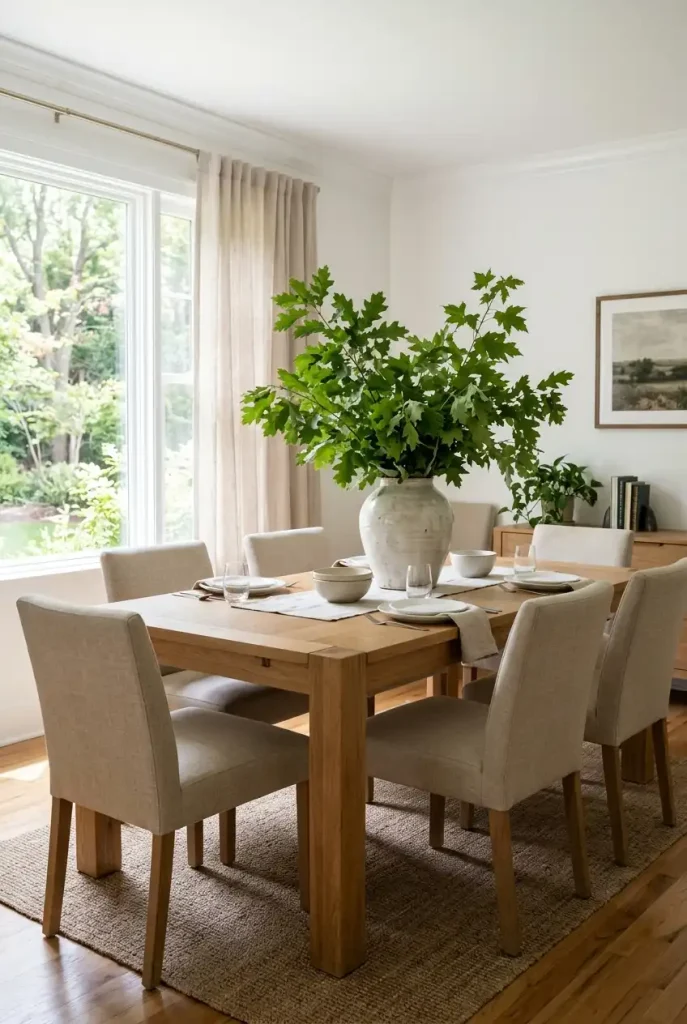
Greenery brings color and natural variation to a dining room without requiring a major decorating change. Fresh branches in a tall vase, a small arrangement of seasonal flowers, or a potted plant near a bright window can soften a room filled with wood, upholstery, and hard surfaces.
For a dining table, consider an arrangement that can be moved easily when serving food. A medium-height ceramic vase with leafy branches works well on a larger table, while a small arrangement is often better for a compact round table.
If you prefer living plants, choose varieties according to the room’s actual light conditions and the amount of care you can provide. A bright window may support more options than a dark corner. If pets or young children are present, check plant safety before choosing a variety.
You can also use branches and foliage as seasonal accents, changing the arrangement throughout the year while keeping your furniture and main color palette consistent.
Quick Tip: Use a substantial vase with a stable base, particularly if the table is in a busy family dining area.
How to Pull Your Dining Room Decor Together
You don’t need to change everything at once to create a more stylish dining room. Start with the element that will make the biggest difference in your space, whether that’s a better light fixture, more comfortable chairs, a rug, or a simple change to the walls.
Before buying anything, consider how your dining room is used. A family dining area may need durable surfaces and flexible seating, while a smaller entertaining space might benefit most from atmospheric lighting and a carefully styled centerpiece.
For a cohesive result, choose two or three materials and a complementary color palette, then repeat those elements throughout the room. Natural wood, soft textiles, and thoughtful lighting can work together across many decorating styles.
Most importantly, leave enough room for everyday life. A dining room should look inviting in photographs, but it should also be comfortable for meals, conversations, celebrations, and all the ordinary moments that happen around the table.