

23 Charming Fall Living Room Decor Ideas You’ll Want to Try This Season
Layer a Warm Rust and Cream Color Palette
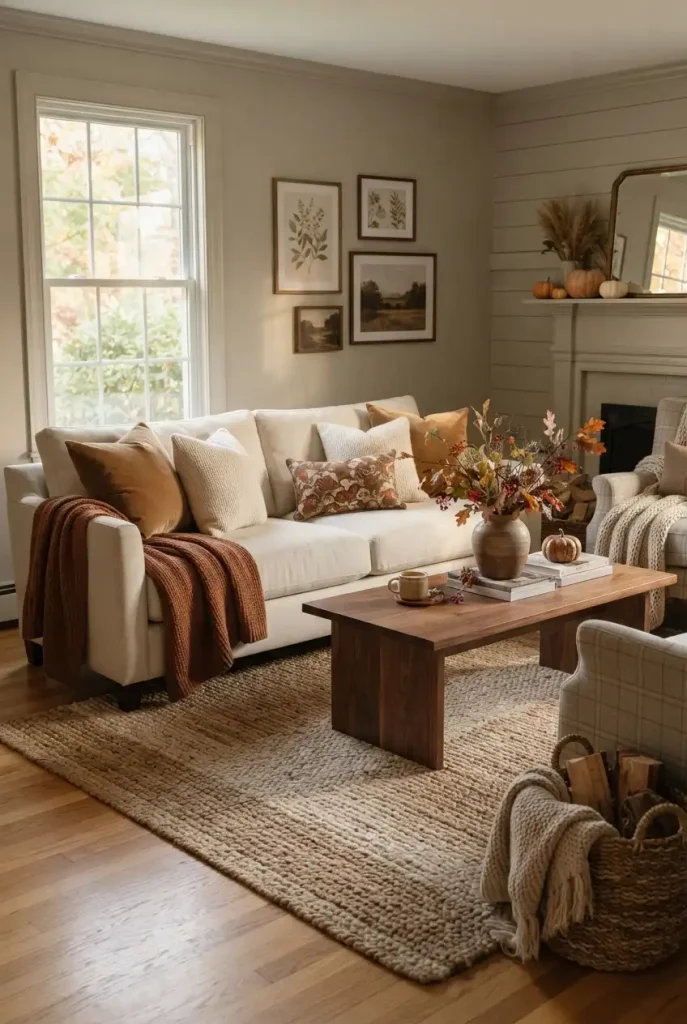
Rust, cream, caramel, and warm brown make an easy foundation for an autumn-inspired living room. Instead of covering the entire room in orange, use rust as an accent against neutral walls, sofas, or flooring. Cream cushions and curtains keep the scheme light, while darker wood tones add depth.
A practical approach is to repeat each color in at least two places. A rust throw might echo the color of a ceramic vase, while cream pillows connect with a nearby rug. This creates visual continuity without making the room feel overly themed.
Add a Chunky Knit Throw to the Sofa

Few changes make a sofa feel more seasonal than a substantial knitted throw. Choose oatmeal, beige, muted rust, or warm taupe for an understated look. Drape it casually over one arm or fold it across the seat rather than arranging it too perfectly.
Chunky textures are especially useful in rooms with smooth upholstery because they introduce contrast. If the sofa is already patterned, choose a solid throw. For a plain sofa, a subtle cable-knit or waffle texture adds more visual interest.
Style the Coffee Table With Natural Fall Elements

The coffee table is an easy place to introduce seasonal details without changing the entire room. Try a shallow wooden tray containing a ceramic vase, a small stack of books, pinecones, and a few dried leaves.
Keep the arrangement low enough that it doesn’t interrupt conversation across the table. Odd-numbered groupings can create a relaxed composition, while mixing smooth ceramics with rough wood and natural foliage gives the display more depth.
Bring in Dried Pampas and Autumn Branches

Dried stems can provide seasonal color without requiring fresh flowers. Tall branches with muted orange, brown, burgundy, or golden foliage work particularly well in a simple floor vase or large ceramic vessel.
The key is scale. A tall arrangement can balance a substantial sofa or empty corner, while a small vessel is better suited to a coffee table or console. Leave enough negative space around the arrangement so it remains a focal point.
Warm Up the Room With Amber Lighting

As daylight becomes shorter, lighting becomes an important part of seasonal decorating. Replace harsh bulbs where possible with warmer-toned lamps and add a table or floor lamp near the seating area.
A shaded lamp can create a soft pool of light that makes textiles and wood tones feel richer. Rather than lighting every corner equally, layer overhead lighting with smaller lamps for a more comfortable evening atmosphere.
Use Plaid Pillows for a Classic Autumn Touch

Plaid is an easy way to bring traditional fall character into the room. A muted buffalo check, windowpane, or small-scale tartan can work beautifully with solid cream and brown cushions.
Avoid putting plaid on every textile. One or two patterned pillows are usually enough to establish the seasonal theme while keeping the room visually balanced.
Quick Tip:
If your sofa already has several patterns, use a plaid pillow with a restrained color palette rather than adding another bold print.
Create a Cozy Reading Corner
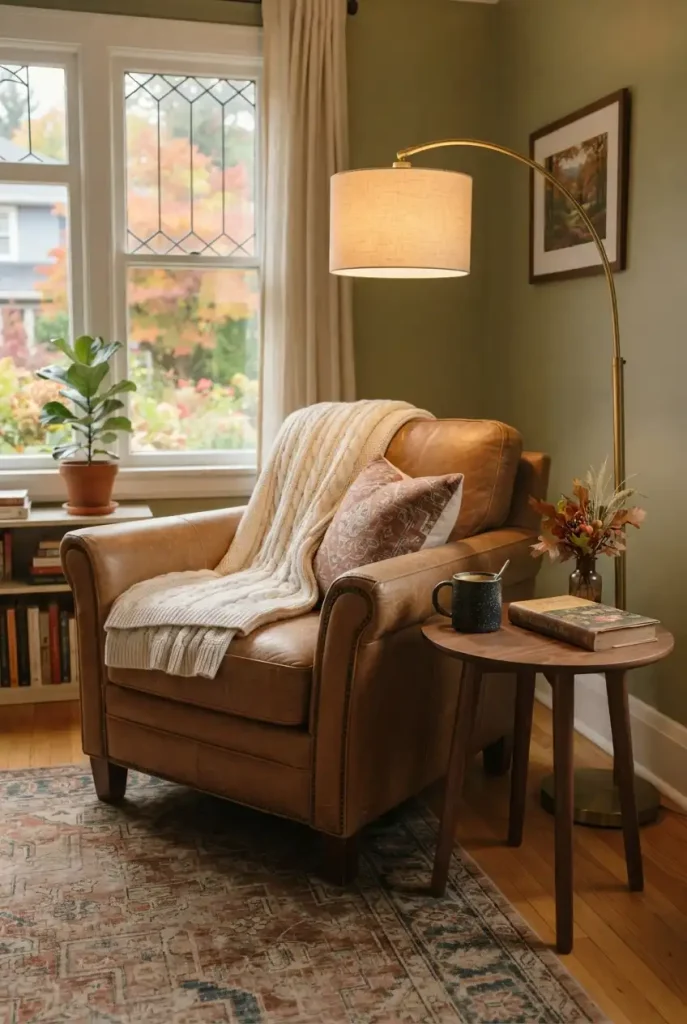
A fall living room doesn’t have to revolve entirely around the main sofa. Turn an unused corner into a reading spot with a comfortable armchair, small side table, floor lamp, and soft throw.
For a compact room, choose a chair with an open frame or modest footprint. In a larger room, a substantial upholstered chair can create a distinct secondary seating zone without requiring major construction.
Add a Vintage-Inspired Autumn Gallery Wall

For a more collected look, introduce vintage-style artwork in earthy tones. Botanical prints, landscapes, still-life paintings, and understated line drawings can work together when they share a similar color family.
Rather than making every frame identical, combine two or three finishes while maintaining visual balance. Antique brass, dark wood, and aged black frames can complement a warm autumn palette.
Introduce a Warm Terracotta Accent Chair
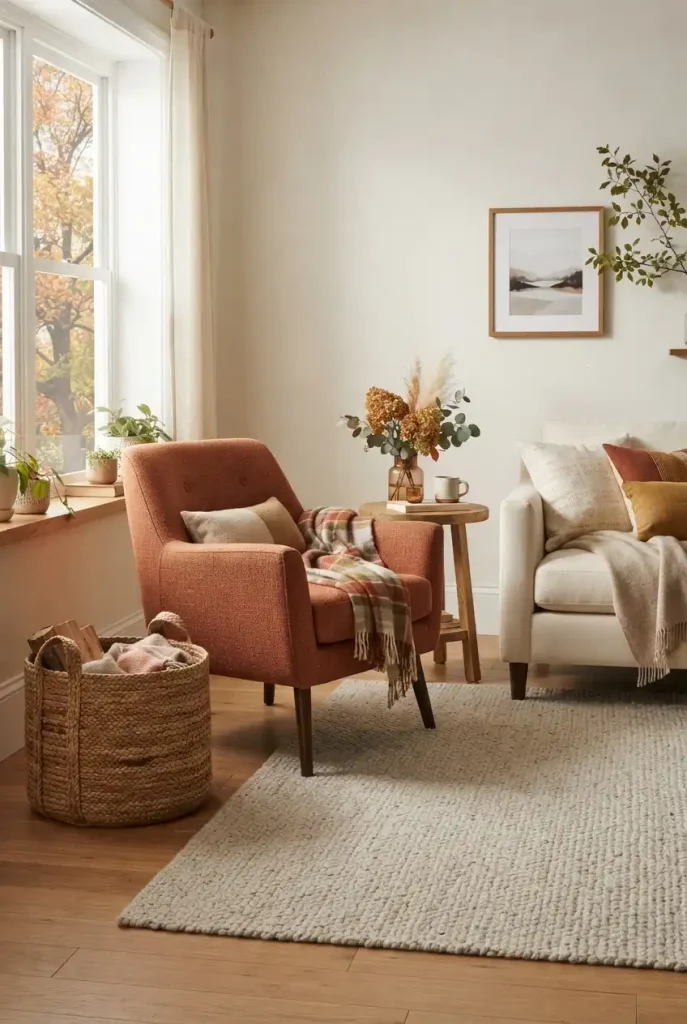
A terracotta or burnt-orange chair can become the room’s seasonal focal point without requiring a full furniture replacement. Place it opposite or slightly angled toward the main sofa to encourage conversation.
If a new chair isn’t practical, a slipcover or accent cushion in a similar shade can create the same color connection with less commitment.
Layer a Textured Neutral Area Rug
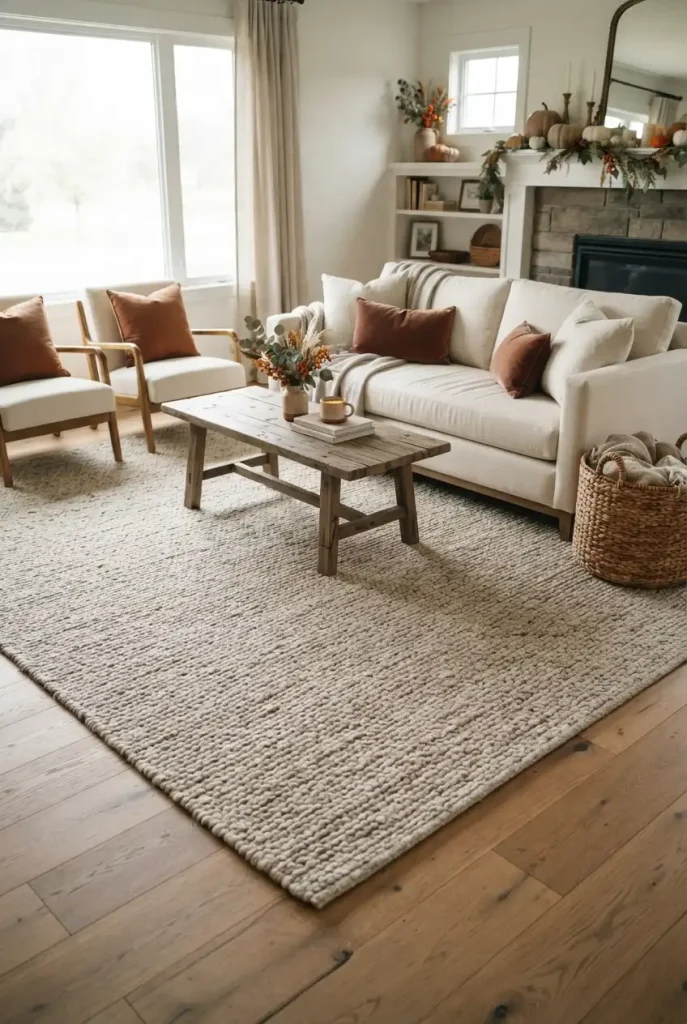
A textured rug can make the room feel more grounded as temperatures drop. Look for natural-looking fibers and a palette of ivory, oatmeal, tan, or warm gray.
If you already have a rug, consider layering a smaller patterned textile over it to introduce autumn character. Make sure the layered rugs sit flat and don’t interfere with doors or walking paths.
Do / Don’t
- Do: Choose a rug large enough to visually connect the main seating pieces.
- Don’t: Use a tiny rug that floats alone beneath the coffee table.
Decorate the Mantel With Subtle Autumn Foliage
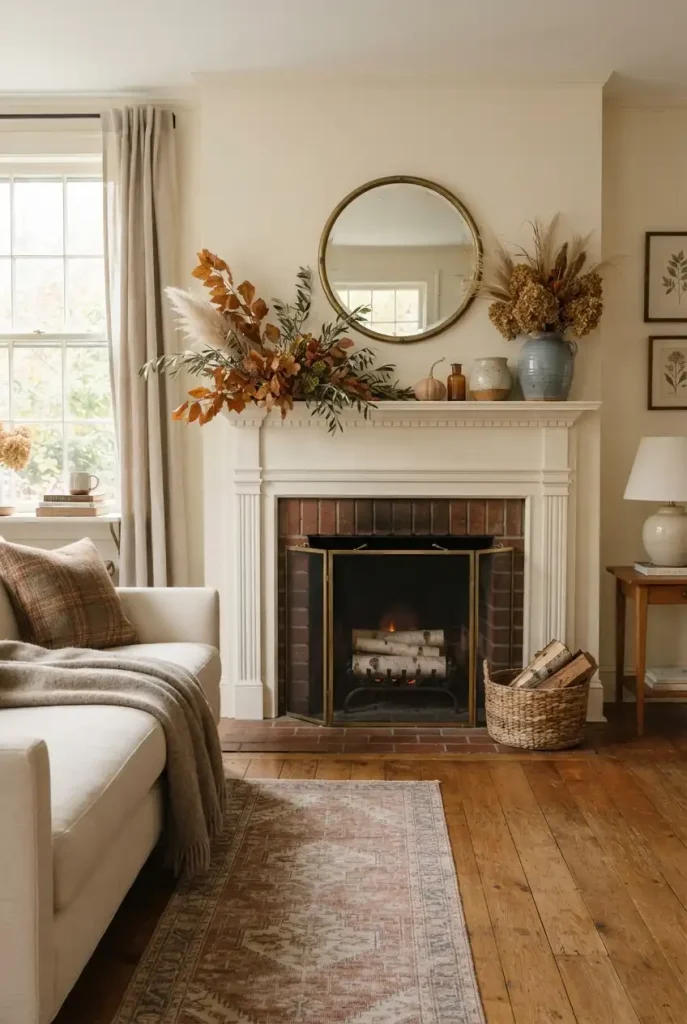
A fireplace mantel provides a natural horizontal surface for seasonal styling. Instead of filling it with pumpkins and decorations, use a loose garland of dried foliage, a few ceramic vessels, and one understated seasonal object.
Keep the tallest elements toward the sides so the center remains visually open. If the fireplace is already a strong architectural feature, restrained decoration will usually allow it to remain the star.
Mix Leather and Soft Textiles

Leather naturally complements the earthy colors associated with fall. Pair a cognac leather chair or ottoman with soft linen cushions, wool throws, and a woven rug to prevent the room from feeling too hard or visually cold.
This combination works particularly well in homes with wood floors because the materials share warm undertones while still providing enough texture contrast.
Build a Moody Brown Accent Wall
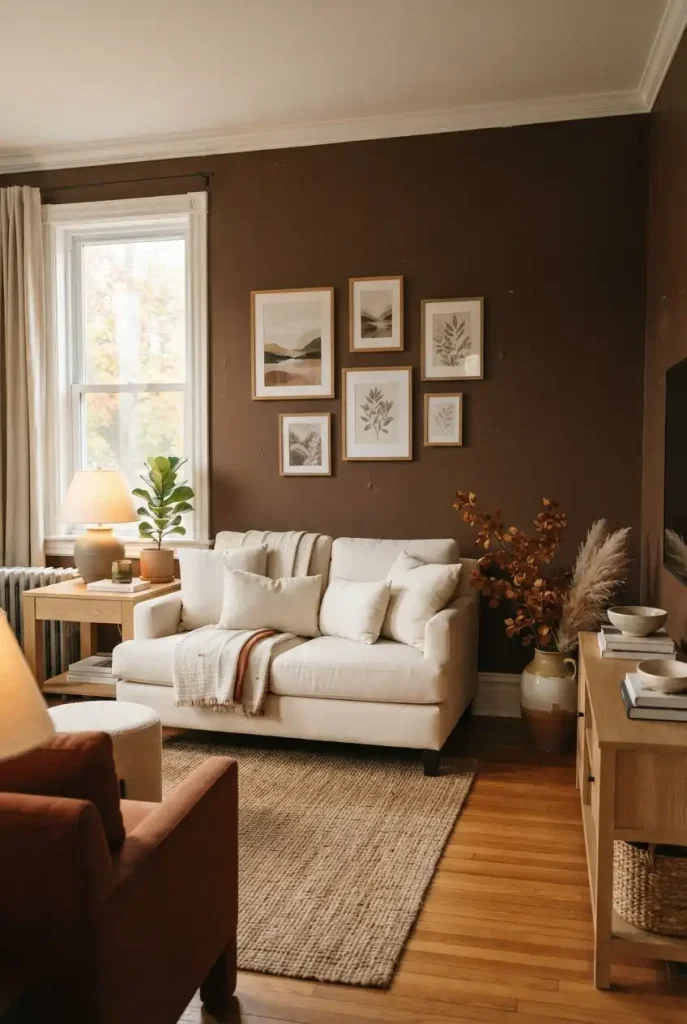
For a more dramatic autumn atmosphere, consider painting one wall in a deep chocolate, mushroom, olive-brown, or warm charcoal shade. An accent wall works particularly well behind a sofa or fireplace.
Before committing to paint, test samples at different times of day. A color that looks soft in afternoon light can appear considerably darker under evening lamps.
Use Amber Glass and Ceramic Accessories
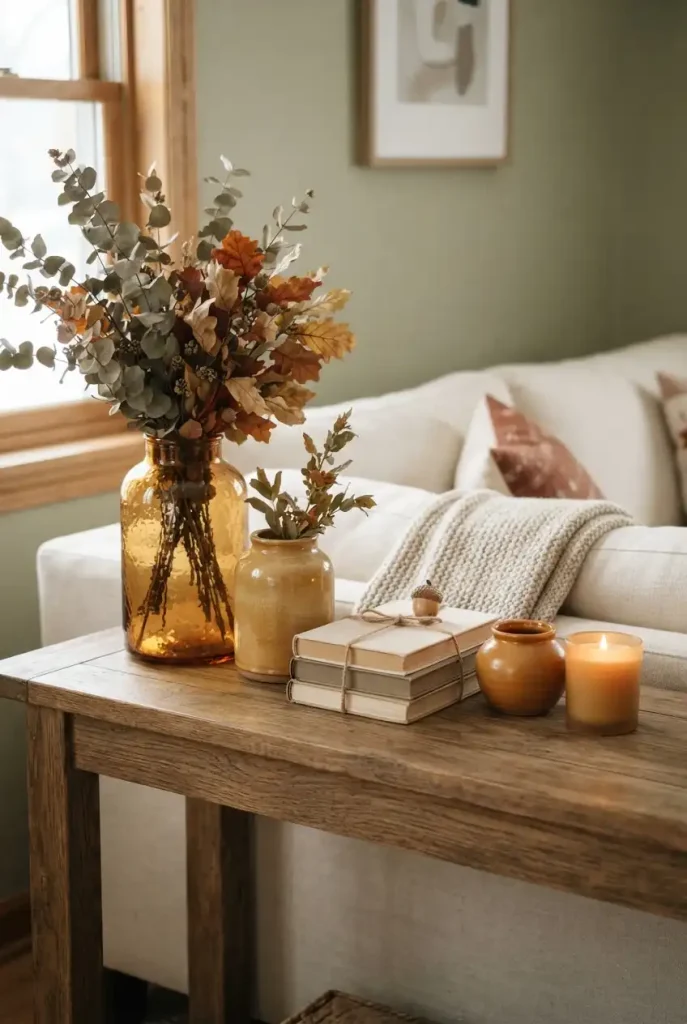
Small accessories can create a seasonal color shift without making permanent changes. Amber glass vases, honey-toned ceramics, and warm stoneware pieces add autumn color while remaining useful beyond the season.
Group a few pieces together rather than scattering tiny objects throughout the room. A tray, bookshelf, console, or coffee table gives these accessories a defined visual home.
Add a Woven Basket for Throws
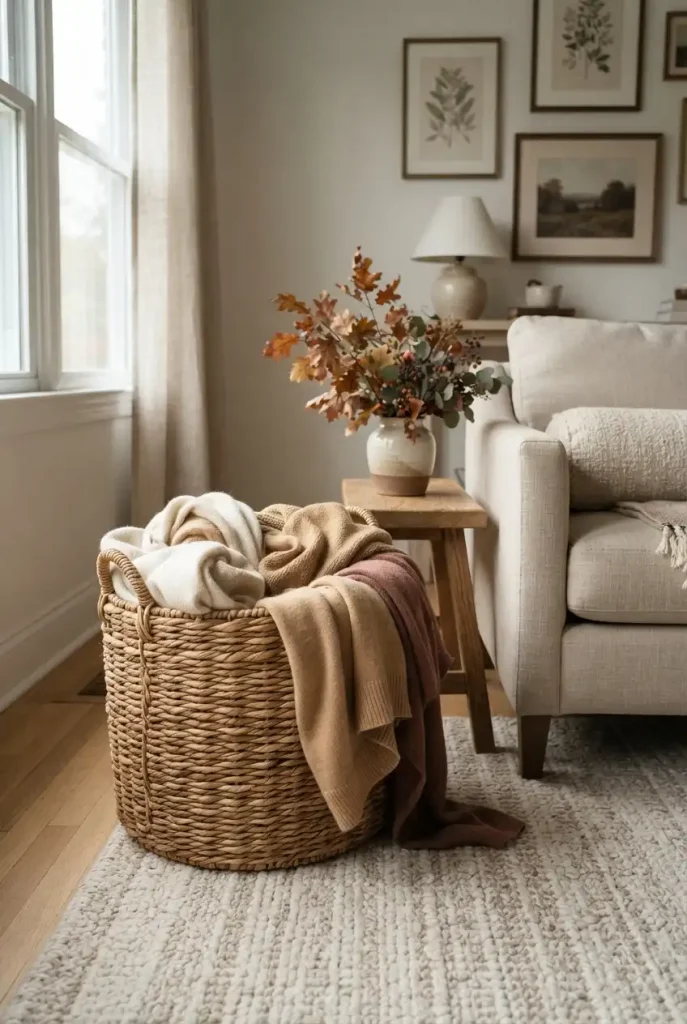
A woven basket is both decorative and functional, making it especially useful in family rooms and smaller homes. Keep extra throws inside so they’re easy to reach on chilly evenings.
Choose a basket with enough visual weight to balance the furniture around it. Natural seagrass, rattan, or woven fiber can reinforce an earthy fall palette without adding another strong color.
Create a Small Pumpkin Display
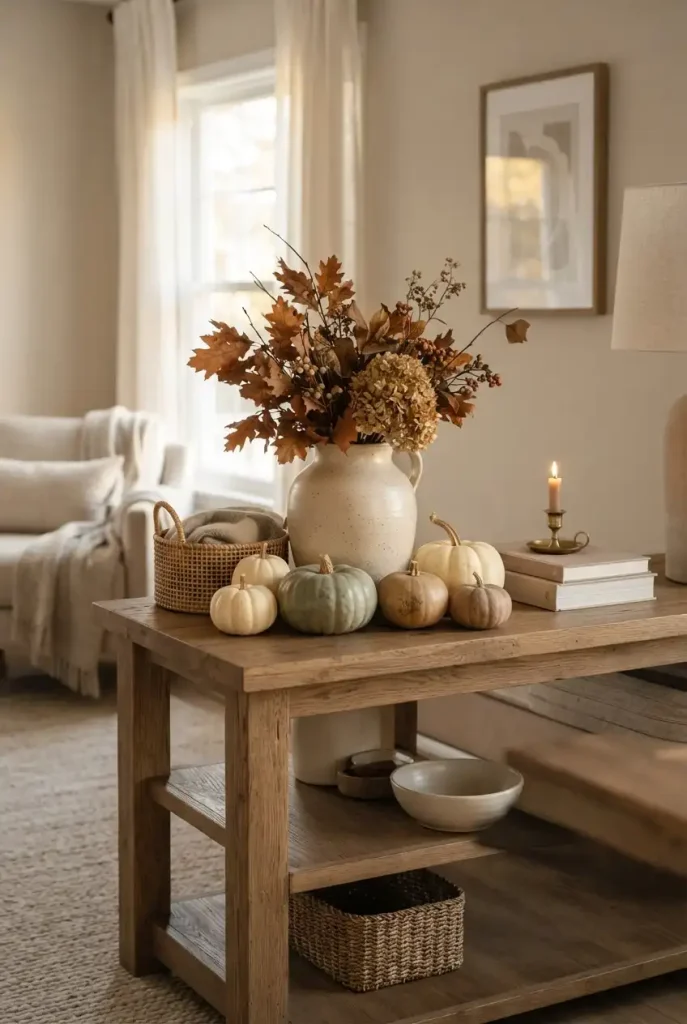
Pumpkins can signal fall immediately, but they don’t have to dominate the room. Choose a small group in varied shapes and muted shades such as cream, sage, dusty orange, or warm tan.
Place them on a console, hearth, bookshelf, or side table. Mixing real pumpkins with ceramic versions can make the display more durable and visually varied.
Try Olive Green With Warm Wood
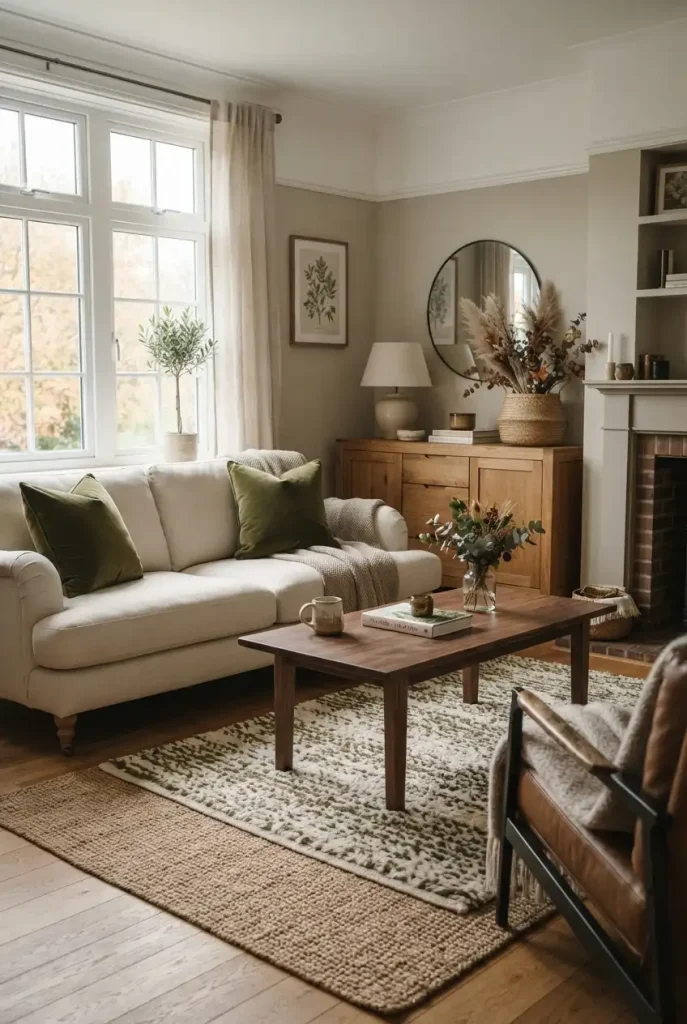
Olive green is a useful alternative to traditional orange if you prefer a quieter fall palette. Pair it with walnut, oak, cream, tan, and natural woven materials.
The result feels seasonal without looking like holiday decoration. Olive can appear through pillows, artwork, a painted accent piece, or even a single upholstered chair.
Make the Fireplace the Seasonal Focal Point
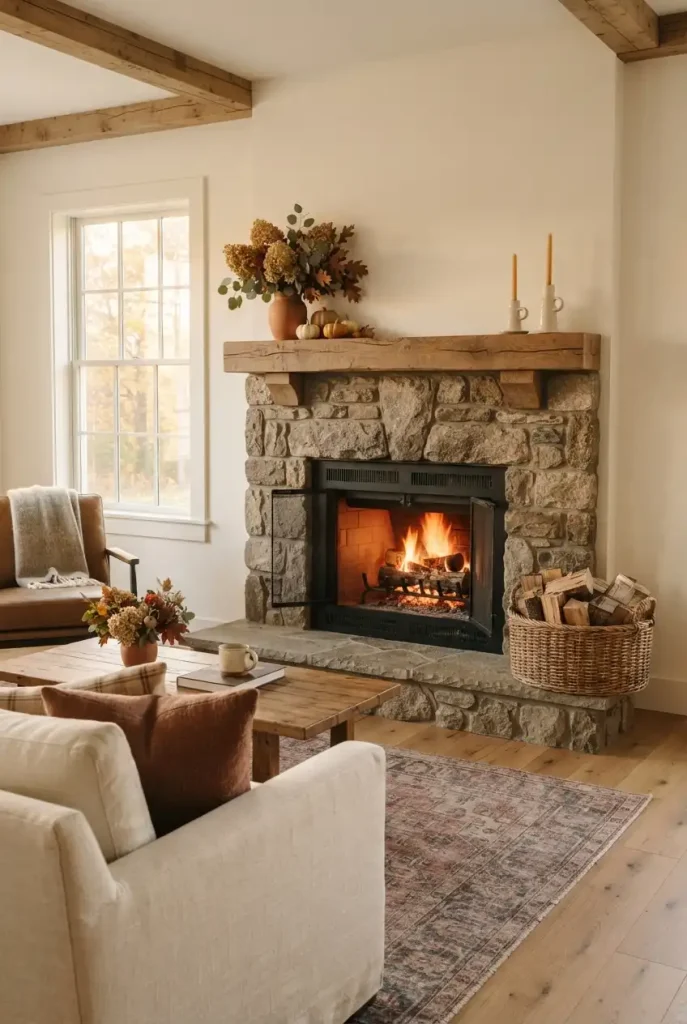
If your living room has a fireplace, let it carry much of the seasonal visual weight. A simple arrangement of firewood, a textured hearth basket, a few candles, and subtle foliage can make the fireplace feel inviting.
Avoid blocking the firebox, vents, or required clearances with decorative objects. The practical function of the fireplace should remain the priority.
Common Mistake:
Overfilling the mantel and hearth with small seasonal objects.
Better Approach:
Choose a few larger pieces with different heights and textures, leaving enough empty space for the architecture to breathe.
Add Floor Cushions for a Relaxed Family Room

For a casual home, oversized floor cushions can create additional seating without adding bulky furniture. Choose durable fabrics in warm neutrals, rust, olive, or camel.
This approach works especially well for movie nights, family gatherings, or homes where flexible seating is more useful than formal symmetry. Store the cushions in a nearby basket when they’re not needed.
Style a Bookshelf With Autumn Layers

A bookshelf gives you many opportunities to introduce fall without buying seasonal furniture. Mix books with small ceramics, framed art, wood objects, woven baskets, and a few dried stems.
Rather than arranging every shelf symmetrically, vary the height and position of objects. Leave some open space so the shelving remains practical and doesn’t become visually crowded.
Use a Warm Gallery of Landscape Art
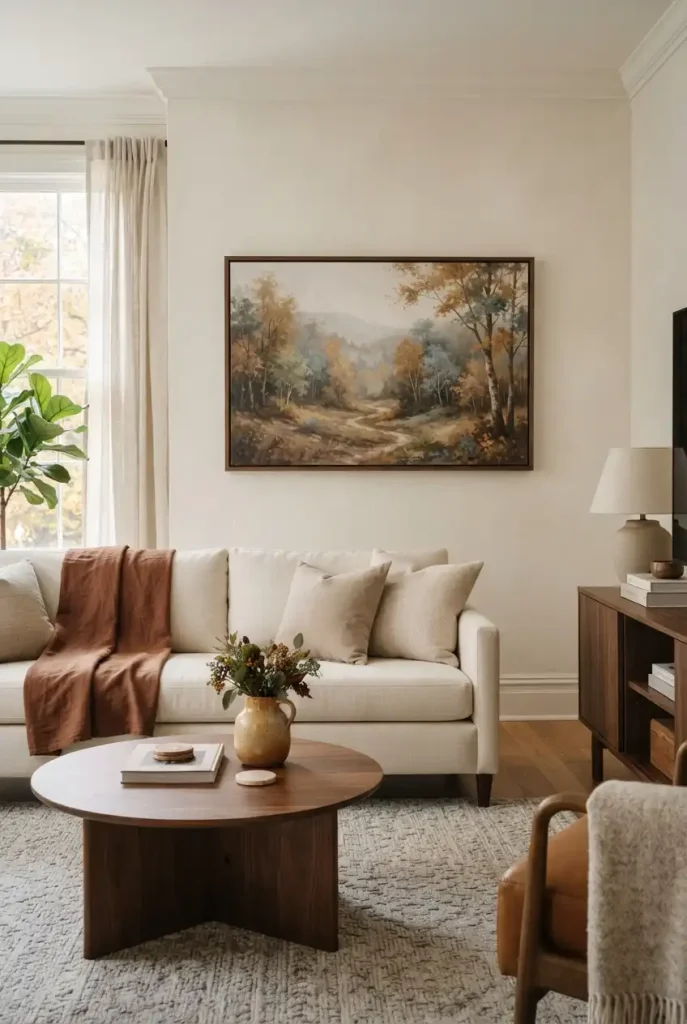
Autumn landscape artwork can change the emotional tone of a room without requiring a seasonal makeover. Look for paintings or prints featuring forests, fields, mountains, or abstract landscapes in ochre, brown, green, and muted blue.
A large piece can anchor a wall above the sofa, while smaller artwork works well in a layered arrangement on a console or shelf.
Mix Rustic Wood With Soft Neutrals

Rustic doesn’t have to mean heavy or farmhouse-themed. A reclaimed wood coffee table, vintage stool, or aged wooden cabinet can add character when paired with clean upholstery and soft neutral textiles.
The contrast between weathered wood and refined fabrics keeps the room from feeling too rustic. This is particularly effective in older homes where natural architectural character can become part of the seasonal design.
Finish With a Cozy Evening Candlelit Setup

For the final seasonal layer, create a simple evening arrangement using candles, warm lamps, soft textiles, and a few natural autumn accents. The goal isn’t to fill the room with candles but to create several gentle points of warm light.
Use candleholders on stable, heat-safe surfaces and keep flames away from curtains, throws, foliage, and other combustible materials. Flameless candles can provide a similar visual effect where open flames aren’t practical.
Simple Ways to Pull Your Fall Living Room Together
You don’t need to use all 23 ideas to create a convincing seasonal look. Start with the elements that will have the biggest visual effect in your existing room.
- Choose one main fall color: Rust, olive, caramel, or deep brown can provide a clear seasonal direction.
- Add texture before adding more objects: Throws, pillows, rugs, and woven baskets often make a room feel warmer without creating clutter.
- Repeat colors: Echo an accent color in two or three places so the room feels intentionally styled.
- Use natural materials: Wood, ceramic, dried foliage, wool, linen, and woven fibers work naturally with an autumn palette.
- Keep seasonal decorations restrained: A few well-placed pumpkins or branches can be more effective than covering every surface.
- Think about evening lighting: Table lamps, floor lamps, and carefully placed candles can change the atmosphere after sunset.
The most successful fall living room decor usually feels like an extension of the home’s existing style rather than a completely different room. Start with your sofa, rug, and largest furniture pieces, then build the seasonal look through color, texture, lighting, and a handful of carefully chosen accents.