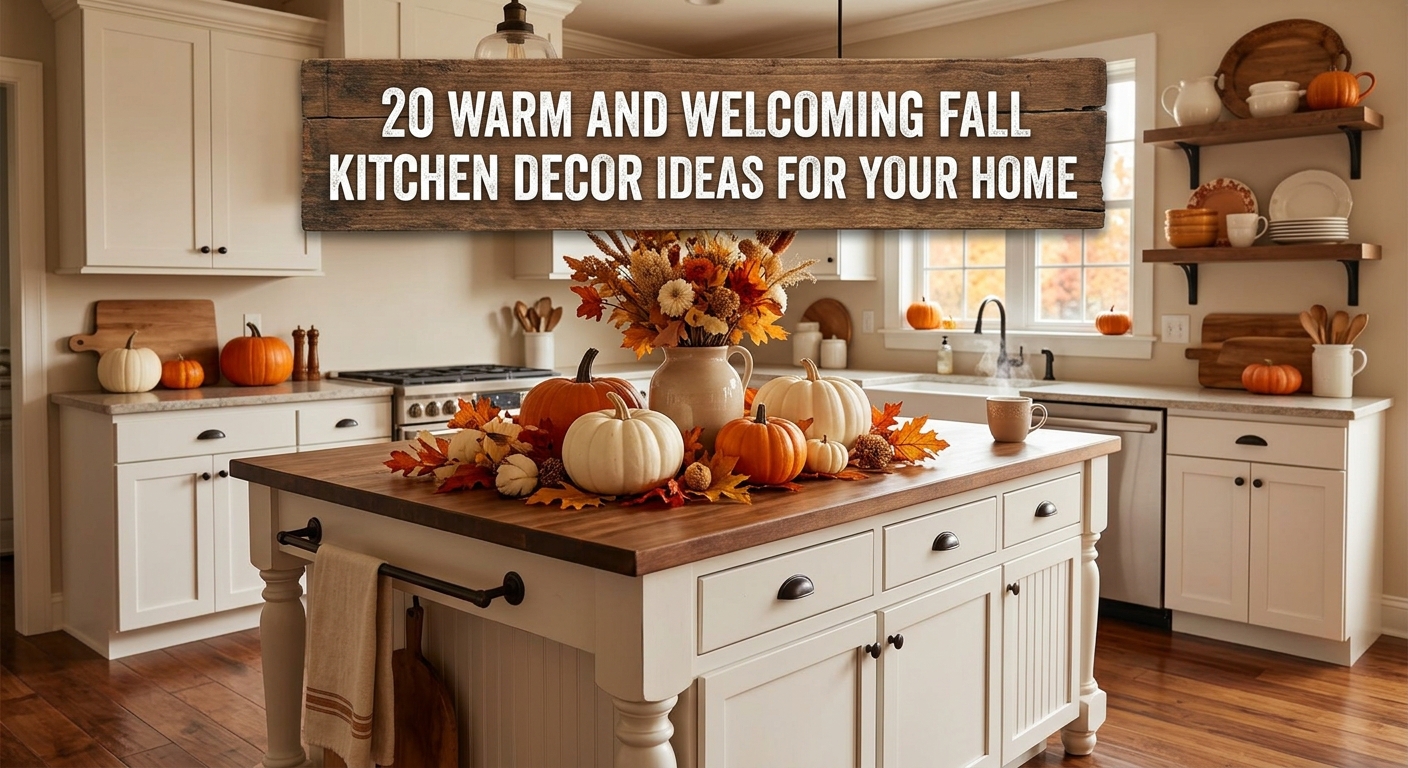
20 Warm and Welcoming Fall Kitchen Decor Ideas for Your Home
Layer a Bowl of Seasonal Produce on the Island
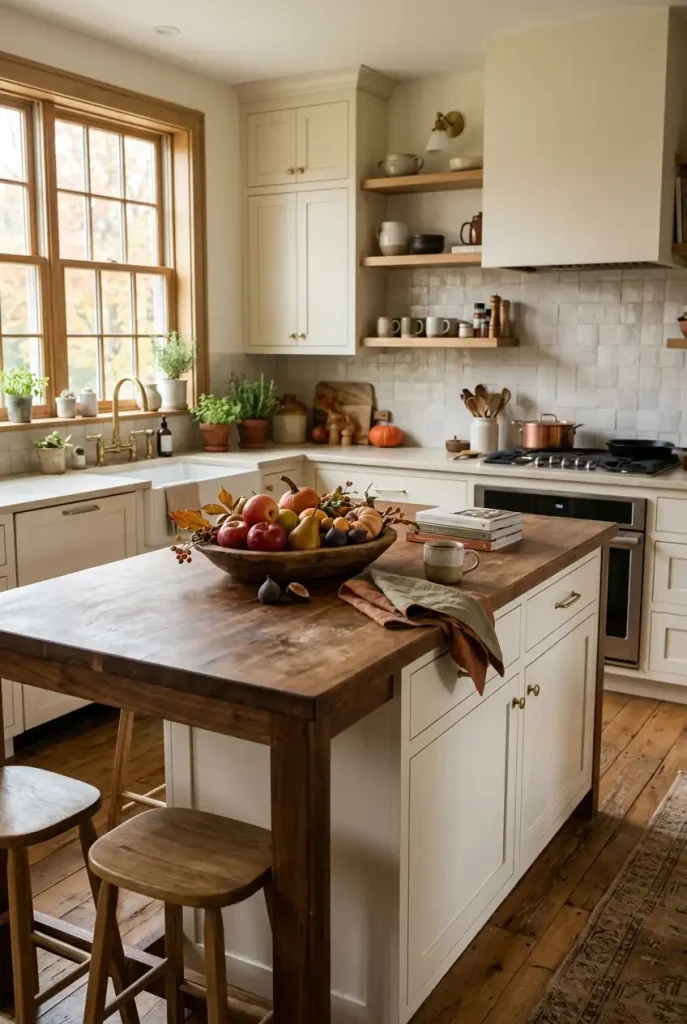
A kitchen island is a natural focal point, making it an ideal place for a simple fall display. Instead of relying entirely on decorative objects, use a large wooden or ceramic bowl filled with apples, pears, figs, or small pumpkins.
The advantage is that the arrangement feels connected to the function of the kitchen. Choose produce in complementary shades such as muted green, cream, burgundy, and warm gold rather than mixing every autumn color together.
For a smaller island, keep the bowl low and wide so it doesn’t interfere with food preparation or conversation across the counter.
Quick Tip: Leave some empty counter space around the arrangement. Negative space helps a seasonal display feel intentional rather than crowded.
Warm Up Open Shelves With Autumn Ceramics
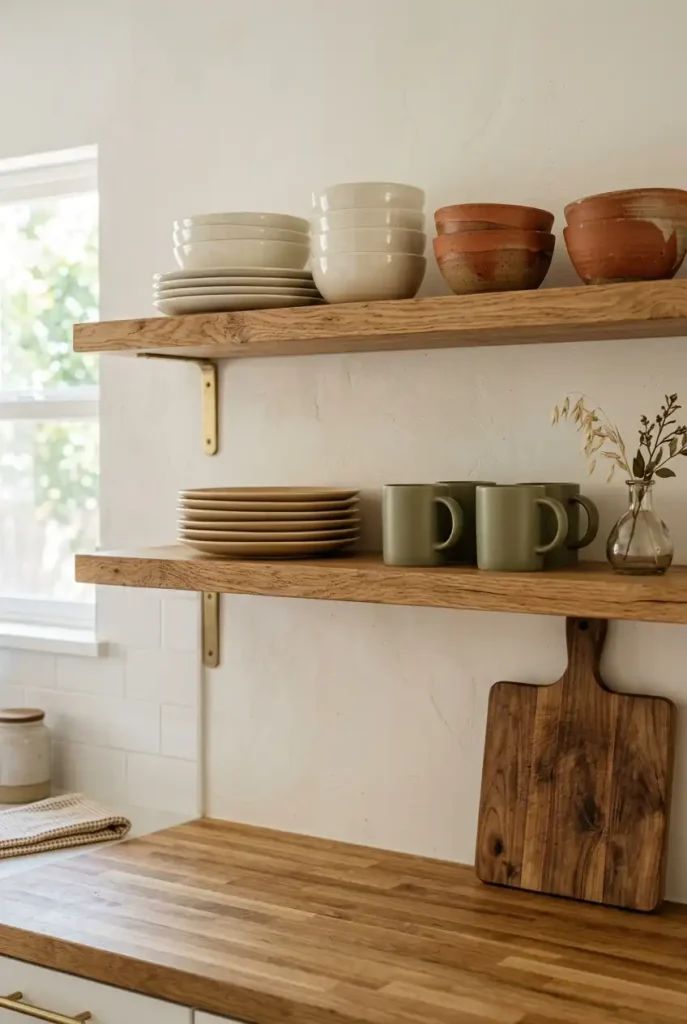
Open shelving can carry a surprising amount of seasonal character without adding much actual decor. Replace a few everyday pieces with ceramics in warm ivory, clay, olive, caramel, or muted terracotta.
Rather than creating a shelf filled entirely with autumn decorations, mix seasonal tones into the dishes you already use. Stack plates, lean a cutting board behind a small bowl, and add one or two handmade-looking pieces for variation.
The goal is repetition without uniformity. Similar colors create cohesion while differences in shape and texture keep the shelves from looking staged.
Best approach: Choose two or three autumn-inspired tones and repeat them across the shelves instead of introducing a new color for every object.
Add a Soft Plaid Runner to the Island

Textiles are one of the fastest ways to make a kitchen feel seasonal. A plaid or woven runner in rust, cream, brown, charcoal, or muted olive can introduce fall without permanently changing the room.
Choose the runner according to the island’s proportions. A narrow island benefits from a relatively simple textile, while a larger surface can handle a wider pattern.
For everyday use, select a washable fabric and keep the pattern restrained enough that it works with the kitchen’s existing finishes.
Create a Small Pumpkin Display by the Sink

The sink area often gets overlooked because it is primarily functional, but a small seasonal arrangement can make this everyday corner feel finished.
Use three to five pumpkins in varied sizes rather than a large collection. White, cream, pale green, and soft orange pumpkins work particularly well when the surrounding kitchen already has neutral finishes.
Keep the display to one side of the sink so it doesn’t interfere with washing dishes or preparing food.
Common Mistake: Filling the entire windowsill or counter with pumpkins.
Better Approach: Create one compact cluster with visible height variation and plenty of breathing room around it.
Style a Coffee Station for Cozy Fall Mornings

A coffee corner can become a dedicated seasonal moment without adding much clutter. Start with a tray to visually contain the area, then add a ceramic mug collection, coffee canister, small vase, and perhaps a jar of cinnamon sticks or other baking ingredients.
For a more autumnal look, use mugs in earthy colors and introduce one natural material such as wood, rattan, or stoneware.
Bring in Warm Wood Cutting Boards

Wooden cutting boards can function as both useful kitchen tools and decorative layers. Lean several boards vertically against a backsplash or inside an open shelf, varying their size and shape.
Look for visible wood grain and slightly different tones rather than an identical matching set. A large paddle board can provide a strong backdrop, while smaller boards add depth.
This approach works especially well in kitchens with white, cream, gray, or painted cabinetry because the wood introduces warmth without requiring additional color.
Editor’s Note: Keep frequently used boards within easy reach. Decorative styling works best when it still supports the way the kitchen is actually used.
Use Amber Glass for a Subtle Autumn Glow

Amber glass brings autumn color into a kitchen without making the room feel themed. Use it for a vase, soap dispenser, storage jar, or small collection of bottles grouped together.
The translucent quality catches natural light beautifully, especially near a window. Pair amber glass with cream ceramics and warm wood for a layered palette that feels seasonal but remains useful beyond November.
Add Dried Branches Instead of Traditional Bouquets
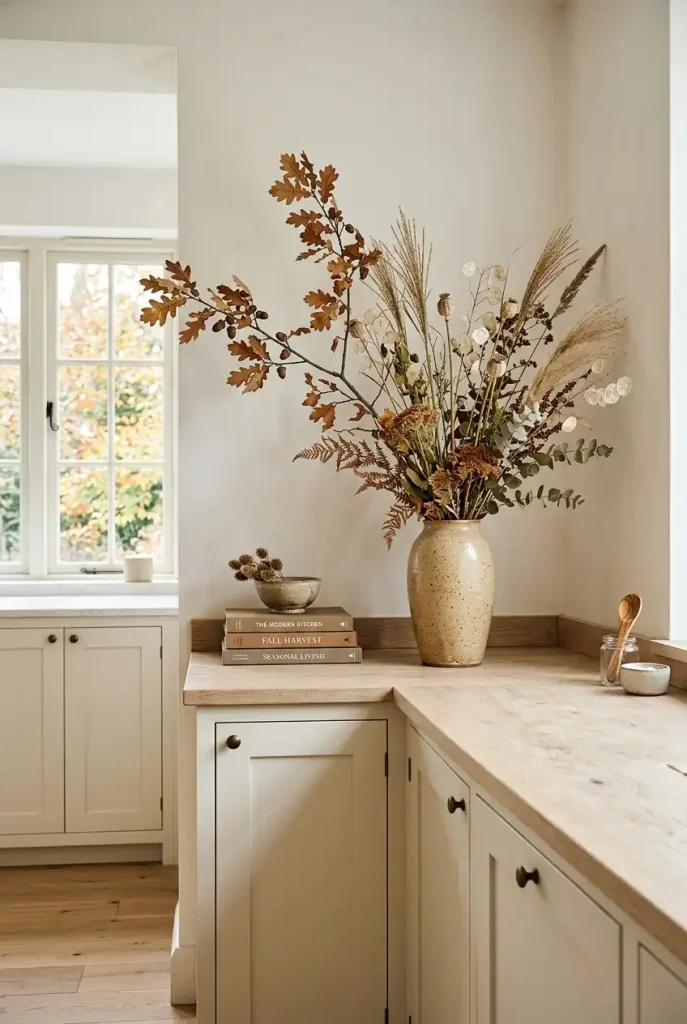
A tall arrangement of dried branches can give a kitchen vertical interest without competing with food, appliances, or workspace.
Try dried eucalyptus, grasses, seed pods, or slender branches in a simple ceramic or stoneware vessel. The muted tones work especially well in kitchens with natural wood and neutral cabinetry.
For a small kitchen, keep the arrangement narrow. The goal is to add height, not create another object that needs to be moved every time you cook.
Swap Everyday Kitchen Towels for Autumn Textures

Kitchen towels are inexpensive seasonal accents, and they take up almost no visual space. Look for linen, cotton, or waffle-weave towels in autumnal neutrals such as oatmeal, cinnamon, forest green, rust, or warm gray.
Hang one towel neatly from an oven handle or place a folded towel beside a sink. One or two coordinated textiles are usually enough.
Do / Don’t
| Do | Don’t |
|---|---|
| Repeat a color already present in the kitchen | Introduce several unrelated colors |
| Choose washable fabrics | Use delicate decor where it will quickly become impractical |
| Mix subtle textures | Cover every handle with a towel |
The small change can make a neutral kitchen feel noticeably warmer without altering its larger design.
Build a Layered Fall Centerpiece With Candles

For an island or dining table, combine several low elements instead of using one oversized centerpiece. A shallow tray can anchor small pumpkins, taper candles, a low bowl, and a few dried stems.
Vary the heights, but keep the overall arrangement low enough to preserve sightlines across the table.
For everyday kitchens, flameless candles can provide a similar visual effect without introducing an open flame.
Decorate a Kitchen Nook With a Fall Textile

If your kitchen includes a breakfast nook or small dining area, use textiles to carry the seasonal palette beyond the countertops.
A plaid seat cushion, woven throw, or textured tablecloth can create a clear connection between the kitchen and nearby dining space. Keep the colors related to your countertop styling so the two areas feel like part of the same room.
A textile is particularly useful in open-plan homes because it visually connects spaces without requiring matching furniture.
Use a Muted Autumn Palette Instead of Bright Orange
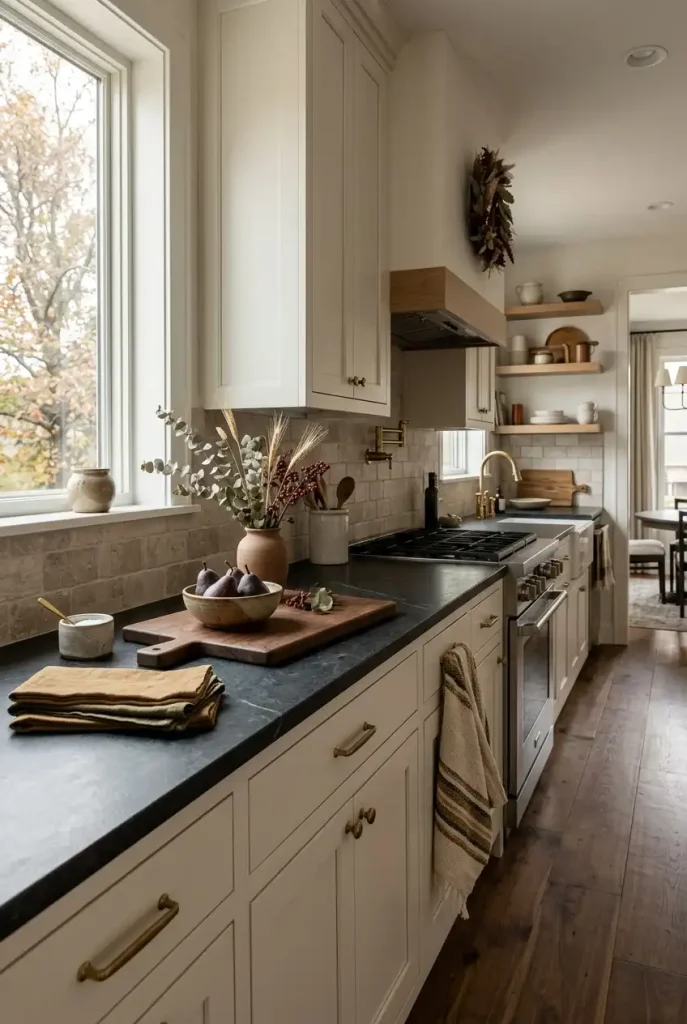
Fall decor doesn’t have to revolve around vivid orange. A quieter palette of cream, caramel, olive, clay, walnut, and burgundy can create the same seasonal feeling while blending more easily with an existing kitchen.
A simple palette
- Base: warm white, cream, or beige
- Wood: oak, walnut, or natural bamboo
- Accent: muted rust or clay
- Secondary accent: olive or deep green
- Small contrast: burgundy or charcoal
This approach is especially useful if your kitchen already has stainless steel, gray cabinetry, or contemporary finishes.
Add a Seasonal Wreath to an Interior Door
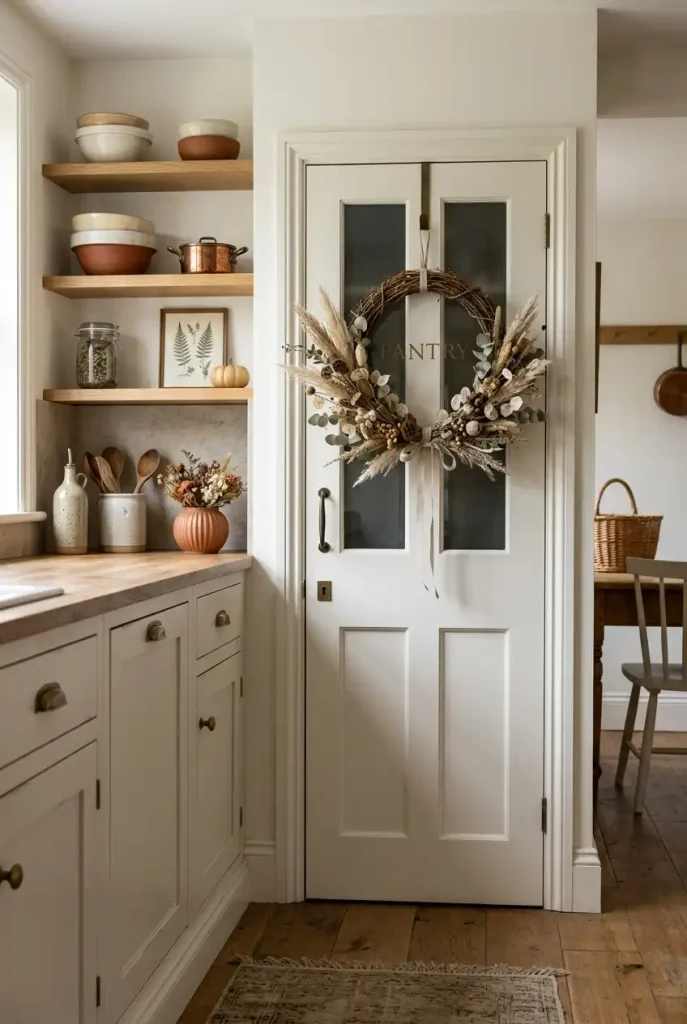
A wreath doesn’t have to hang on the front door. An interior pantry, laundry, mudroom, or kitchen door can provide an unexpected place for a small seasonal wreath.
Choose a wreath made from dried grasses, eucalyptus, grapevine, or other natural-looking materials. Keep the scale appropriate to the door so it reads as an accent rather than a centerpiece.
For renters, a removable over-the-door hook can provide a practical alternative to permanent hardware.
Turn a Counter Corner Into a Baking Station

Autumn and baking naturally pair together, so a small baking corner can make the kitchen feel seasonal while remaining genuinely useful.
Arrange a wooden board, ceramic mixing bowls, a flour canister, rolling pin, and a few everyday baking tools in one contained area. If the kitchen has open shelving, place frequently used ingredients within easy reach.
The visual trick is containment. A defined baking station feels purposeful, while scattered ingredients and utensils can quickly look like clutter.
Three easy layers:
- Place a wooden board or tray as the foundation.
- Group your most-used baking tools and ingredients.
- Add one seasonal detail, such as a small ceramic pumpkin or dried stem.
Introduce Woven Baskets for Texture and Storage

Woven baskets can solve a practical storage problem while also contributing natural texture to the room. Use one on an open shelf for linens, beneath a console-style kitchen island, or on a lower shelf for less frequently used items.
Choose a basket that fits the scale of the space. A large basket can overwhelm a narrow kitchen, while several tiny baskets may create unnecessary visual noise.
Natural rattan, seagrass, and other woven finishes pair particularly well with wood, stone, and neutral cabinetry.
Style a Small Seasonal Shelf
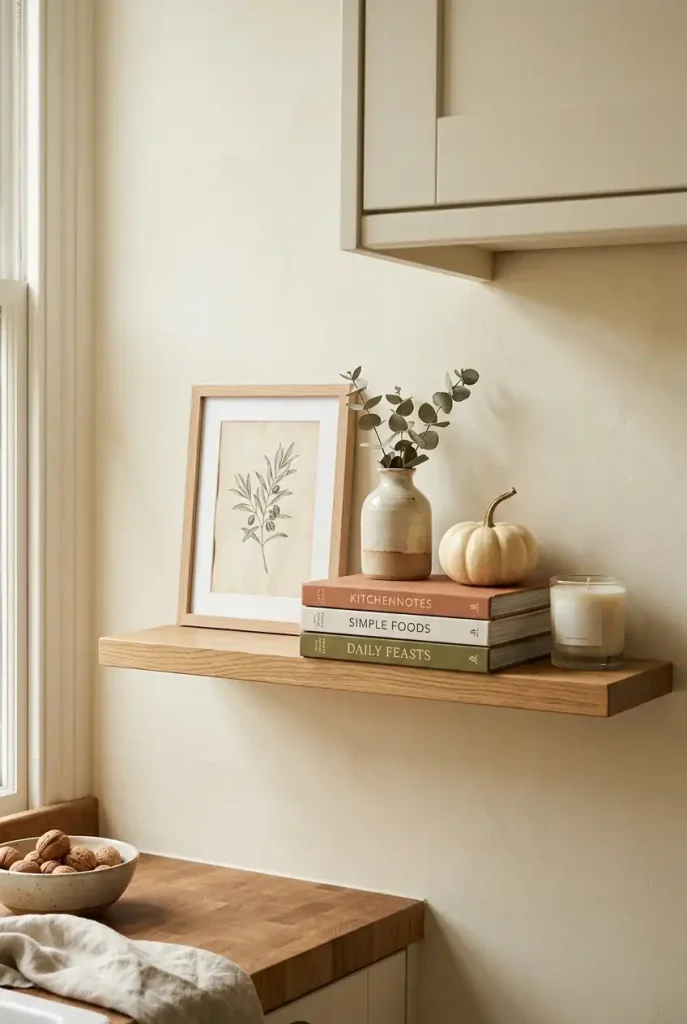
A narrow wall shelf can become a compact fall vignette without taking valuable counter space.
Choose a few objects with different heights: perhaps a small framed artwork, ceramic vessel, tiny pumpkin, candle, and stacked cookbook. Keep the palette consistent and leave some of the shelf visible.
Common Mistake: Filling Every Inch
A shelf needs visual breathing room. Instead of adding more objects when something feels unfinished, try changing the height or position of what is already there.
A small seasonal shelf works especially well in apartments, condos, and smaller kitchens where countertop space is limited.
Bring Fall to the Dining Table With Layered Place Settings
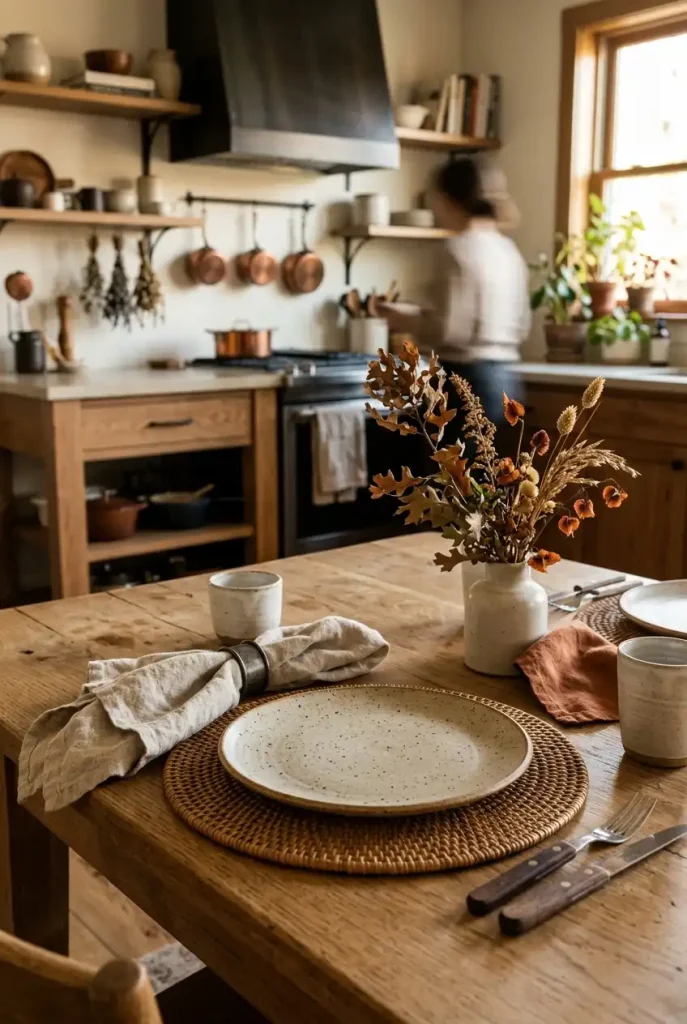
If your kitchen flows into a dining area, carry the autumn palette onto the table. Start with neutral plates, then add a woven placemat, linen napkin, warm-toned napkin ring, and a small natural centerpiece.
The table doesn’t need to look formal. Everyday stoneware can feel seasonal when combined with warmer textiles and organic materials.
Quick Tip: Repeat one accent color from the kitchen on the table. Even a small amount of rust, olive, or burgundy can visually connect the two areas.
Warm the Room With Better Evening Lighting

Fall decor becomes more noticeable after sunset, which makes kitchen lighting an important part of the seasonal atmosphere.
Instead of adding more decorations, consider how existing fixtures are illuminating the room. Under-cabinet lighting, pendant lights, table lamps in an adjoining breakfast area, and warm-toned practical lighting can make wood, ceramics, and textiles appear richer.
Lighting Approach | Visual Effect
|—|—|
| Under-cabinet lighting | Adds a soft layer close to work surfaces |
| Pendant lighting | Creates a focal point above the island |
| Small table lamp | Adds warmth to a kitchen nook |
| Candlelight | Creates a softer decorative accent |
Use lighting as a layer rather than relying on one bright overhead source for the entire room.
Create a Simple Fall Pantry Display

A pantry or glass-front cabinet can carry seasonal character through the way everyday ingredients are arranged.
Group baking staples, preserves, dried pasta, grains, and serving pieces in a consistent palette of glass, ceramic, wood, and woven materials. Add a small seasonal accent rather than turning the pantry into a decorative display that becomes difficult to use.
For open pantries, matching containers can create a cleaner visual field. For closed pantries, prioritize accessibility over perfect styling.
Practical advantage: Organizing ingredients by frequency of use makes the display easier to maintain once the initial seasonal styling wears off.
Finish the Kitchen With a Natural Fall Focal Point

For a kitchen that already has plenty of visual interest, one strong seasonal focal point may be all you need.
That could be a large ceramic vase filled with branches, a substantial bowl of seasonal produce, a sculptural arrangement of pumpkins, or a striking piece of autumn-toned pottery. Place it where the eye naturally lands, such as the center of an island, the end of a long counter, or a prominent open shelf.
Before / After Logic
Before: Several small seasonal decorations are scattered throughout the room.
After: One larger focal arrangement anchors the kitchen, while the remaining surfaces stay relatively quiet.
This approach is especially effective in smaller kitchens because it creates seasonal impact without reducing useful workspace.
How to Make Fall Kitchen Decor Feel Cohesive
The easiest way to avoid a cluttered seasonal kitchen is to choose a small visual language and repeat it selectively.
Start with your existing finishes. If the room already has warm wood, cream cabinets, or brass hardware, build on those tones rather than introducing a completely new palette. If the kitchen is cooler, muted rust, olive, caramel, and natural wood can help soften it without requiring a renovation.
A useful formula is:
- One dominant seasonal color: such as rust, olive, or caramel
- Two supporting neutrals: cream and warm brown, for example
- Two or three natural materials: wood, linen, ceramic, or woven fibers
- One primary focal point: island, shelf, nook, or dining table
You also don’t need to decorate every surface. Leaving some countertops, shelves, and walls quiet gives the seasonal pieces more visual weight and keeps the kitchen functional.
For renters or anyone who prefers low-commitment decorating, focus on textiles, tabletop pieces, removable hooks, ceramics, produce, and natural arrangements. Homeowners who want a more permanent change can use the same fall palette in lighting, hardware, paint, or cabinetry details.