
20 Beautiful Living Room Decorating Ideas for a Fresh New Look
A living room can feel completely different with a few thoughtful decorating changes. Sometimes, the furniture is already right for the space, but the arrangement feels awkward, the colors lack balance, or the room needs more warmth and personality. The best living room decorating ideas focus on how the space looks and how it works for everyday life, from relaxing after work to hosting friends and family.
Whether you live in a small apartment, a suburban home, or a spacious open-plan house, a fresh look doesn’t have to require a complete renovation. A new color palette, better lighting, natural materials, carefully chosen accessories, or a more practical furniture layout can make a noticeable difference.
These 20 ideas explore a range of decorating styles, including modern organic interiors, cozy traditional spaces, contemporary color combinations, and elegant statement features. Each offers practical inspiration you can adapt to your home’s size, existing furniture, and budget.
Create a Warm Neutral Living Room

Warm neutrals provide an easy starting point for a living room that feels calm, comfortable, and visually connected. Instead of relying on plain white walls and matching beige furniture, combine several related shades, such as ivory, oatmeal, warm taupe, sand, and soft caramel.
Texture makes this palette interesting. A linen sofa, wool-blend rug, wooden coffee table, ceramic lamp, and loosely woven cushions create subtle contrast without introducing too many colors. Natural wood also prevents the room from feeling overly pale.
To recreate the look, begin with the largest surfaces: walls, sofa, curtains, and rug. Choose two or three related neutrals, then introduce darker accents through picture frames, side tables, or lighting.
Quick Tip: Use a few deeper shades of brown to define the space and keep an all-neutral room from appearing flat.
Rearrange Furniture Around a Clear Focal Point
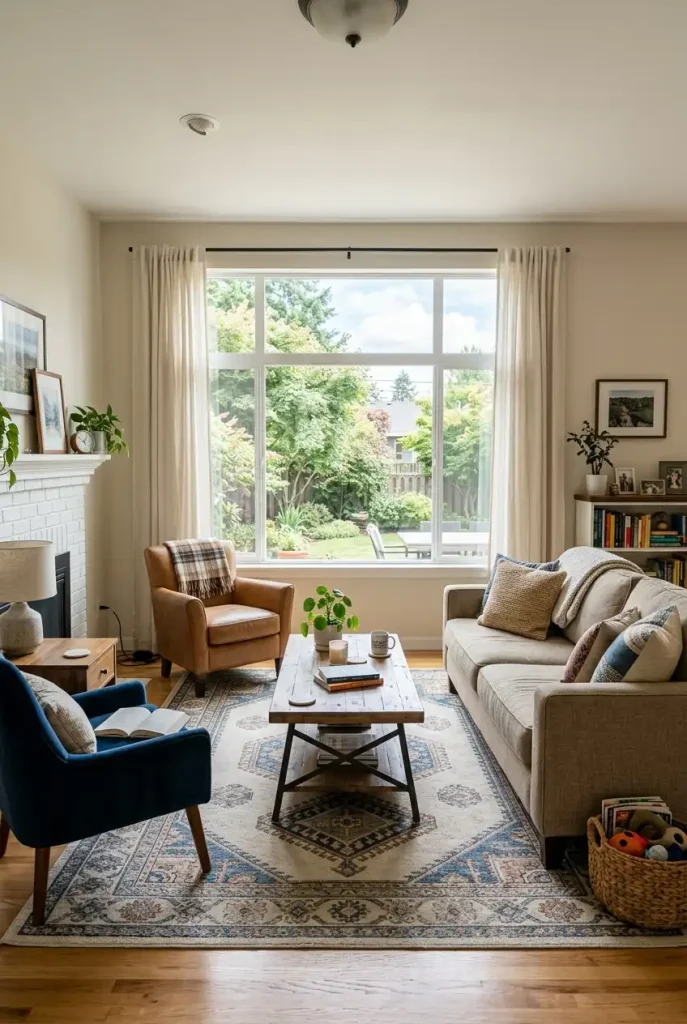
Sometimes, the most effective living room update costs nothing. Rearranging the furniture can make a room feel more spacious, improve conversation, and give the entire interior a more deliberate appearance.
Start by identifying the room’s natural focal point. It might be a fireplace, a large window, a built-in bookcase, or a television wall. Arrange the main seating so that it relates to this feature without blocking doorways or the most frequently used walking paths.
In a rectangular room, placing the sofa along a longer wall may preserve circulation. In a larger square room, floating the sofa away from the walls can create a more intimate seating area. Accent chairs can complete the arrangement without making it feel crowded.
Before moving heavy furniture, sketch two or three possible layouts on paper. Consider electrical outlets, window access, and the distance needed to move comfortably around tables and chairs.
Common Mistake: Pushing every piece of furniture against the walls can leave an oversized, empty center and make conversation feel disconnected.
Add Natural Wood for Organic Warmth

Natural wood introduces warmth and visual depth, particularly in living rooms dominated by painted walls, upholstered furniture, or cool-colored flooring. It also pairs well with a variety of styles, from contemporary interiors to relaxed farmhouse and Scandinavian-inspired spaces.
You don’t need matching wooden furniture throughout the room. In fact, a mix of finishes often feels more collected and personal. Consider a light oak coffee table, a medium-toned sideboard, and a darker walnut picture frame or occasional chair.
Wood works especially well alongside:
- Cream or warm white upholstery.
- Green plants and earthy ceramics.
- Linen, cotton, wool, and woven textures.
- Matte black or aged-brass hardware.
- Muted olive, clay, and rust accents.
If replacing furniture isn’t practical, introduce wood through a tray, a picture frame, a small stool, or a pair of wooden table lamps. These smaller details can establish a cohesive material palette without a major expense.
Layer Rugs to Add Texture and Definition
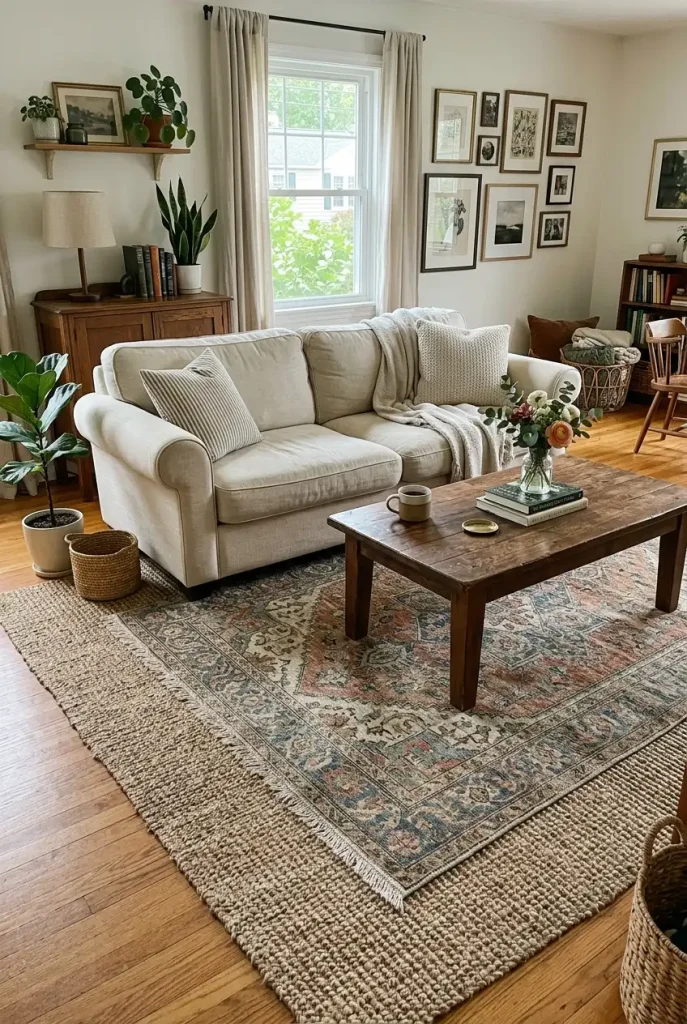
Layering rugs is a useful way to introduce texture, pattern, and a more collected look. The approach works particularly well in open-plan homes where the living area needs to feel distinct from a dining space or kitchen without adding a physical divider.
Start with a large, relatively simple base rug in jute, sisal, or a flat-woven neutral material. Place a smaller patterned or colorful rug over it, positioning the upper layer beneath the main seating area. A vintage-inspired design, muted geometric pattern, or faded floral motif can add character to an otherwise understated room.
Pay attention to scale. The base rug should be large enough to anchor the arrangement, while the top rug should be substantial enough to look intentional rather than like a small mat placed in the middle.
Do: Use rug pads appropriate for the flooring and rug materials.
Don’t: Layer two thick, highly patterned rugs that compete with one another or create an uneven walking surface.
Make the Sofa Wall a Gallery Feature
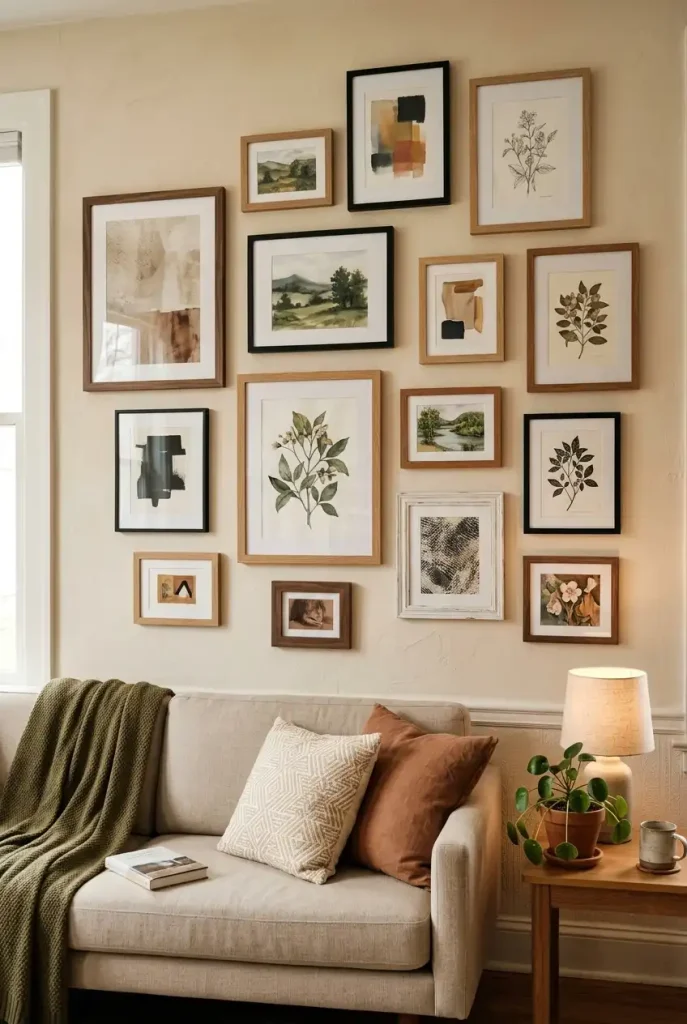
A gallery wall gives a plain living room personality without requiring a major renovation. It can display abstract prints, botanical artwork, landscape photography, family photographs, or a combination of pieces collected over time.
For a cohesive arrangement, choose a shared element that connects the frames. This might be a consistent frame finish, a restrained color palette, or a repeated subject. The artwork itself doesn’t have to match.
A few ways to approach the layout:
- Symmetrical: Arrange similarly sized frames in a neat grid for a more formal appearance.
- Collected: Combine different frame sizes for an eclectic, relaxed effect.
- Minimal: Use three or four larger artworks with generous space between them.
- Color-led: Choose artwork that repeats one or two accent colors already present in the room.
Lay the arrangement out on the floor before hanging anything. Paper templates can also help you test spacing and placement without making unnecessary holes in the wall.
Bring in Greenery for a Fresh, Natural Feel
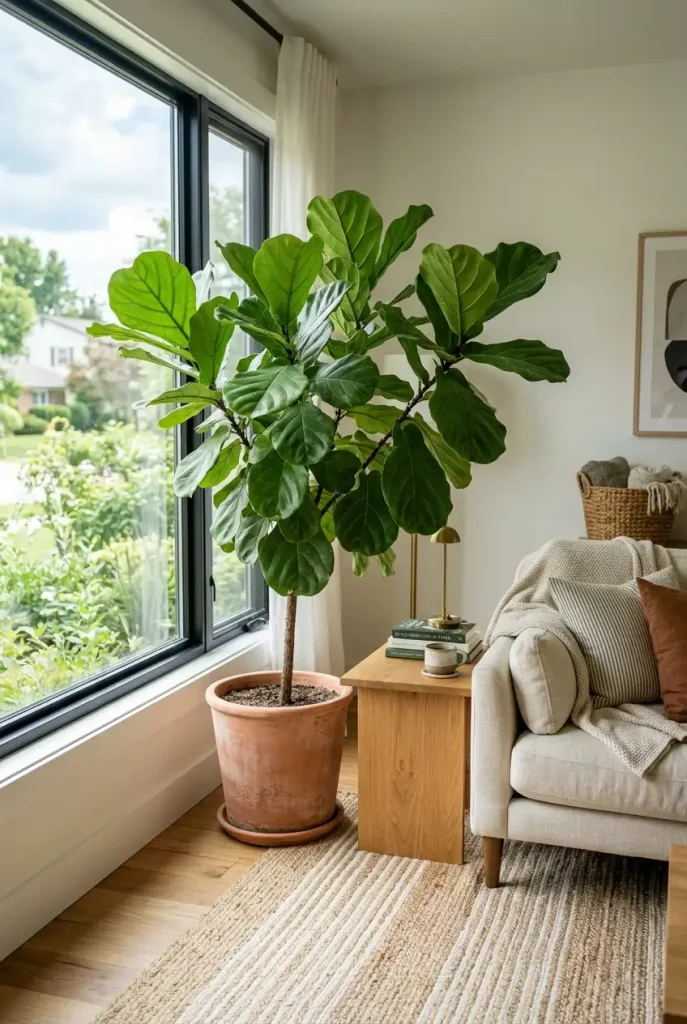
Plants add a living element to a room filled with fixed furniture and hard surfaces. Their varied shapes, leaf patterns, and shades of green can soften corners and create contrast against neutral walls.
Think about placement before choosing a plant. A taller floor plant can fill an empty corner, while a smaller tabletop plant can bring life to a sideboard or bookshelf. Hanging plants may suit a bright window area where they won’t interfere with curtains or everyday movement.
Consider the room’s actual light conditions and the care requirements of each species. A bright living room may support a wider range of options than a dim corner several feet away from a window. If natural light is limited, choose plants suited to those conditions rather than relying on appearance alone.
For a low-commitment update, use one substantial plant in an attractive ceramic planter instead of scattering many small pots across every surface.
Introduce an Accent Wall With Color

An accent wall can change the atmosphere of a living room without requiring you to repaint the entire space. Sage green, dusty blue, muted terracotta, deep olive, and warm charcoal are all worth considering, depending on the room’s natural light and existing furnishings.
The wall behind the sofa is a natural choice, although a fireplace wall or built-in shelving area can also work well. Select a color that relates to at least one other element in the room, such as a cushion, artwork, rug, or upholstered chair.
Before committing, test paint samples on the actual wall and observe them at different times of day. Colors can look noticeably different in bright sunlight, shade, and warm artificial lighting.
If you rent, removable wallpaper or a freestanding screen may provide a similar visual focal point, subject to the property’s rules.
Quick Tip: A muted accent color often feels easier to live with than a highly saturated shade when the wall occupies a large portion of the room.
Upgrade the Curtains for a Softer Finish
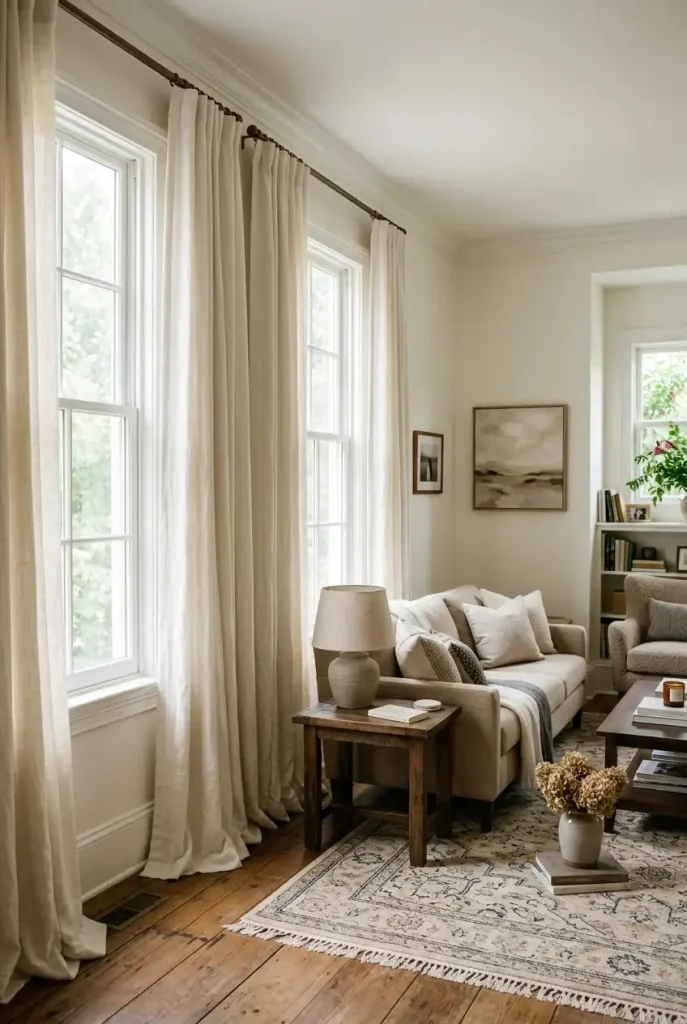
Window treatments influence the entire appearance of a living room. Curtains that extend from near the ceiling to close to the floor can make the wall feel taller and create a softer frame around the window.
Linen and linen-look fabrics work well in relaxed, organic interiors. Heavier woven curtains can provide a more substantial finish, while simple cotton panels suit casual spaces. Choose a shade that complements the walls rather than automatically matching the sofa.
For a polished look, consider the following details:
- Mount the rod high enough to emphasize the wall’s height.
- Extend it beyond the window frame where practical.
- Choose enough fabric fullness for gentle folds.
- Keep the panels clear of heaters and other potential hazards.
- Check whether you need light-filtering, room-darkening, or privacy-focused fabric.
Curtains can be an especially effective update in rental apartments where changing the wall color or flooring isn’t an option.
Choose a Statement Coffee Table
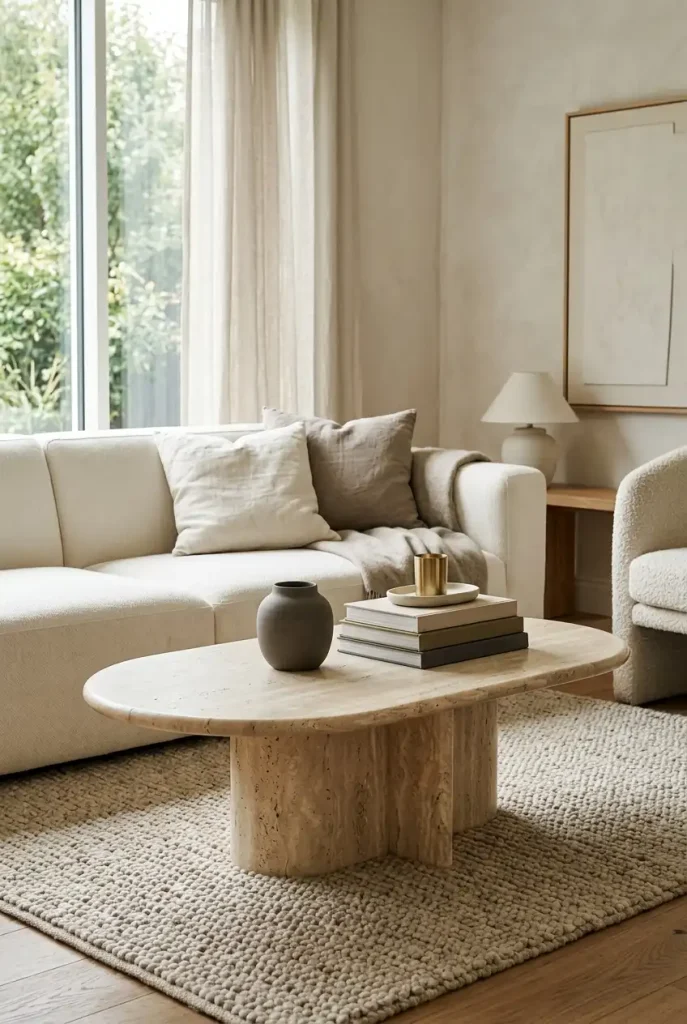
A coffee table can act as the visual centerpiece of a living room, particularly when the sofa and surrounding furniture are relatively understated. A sculptural silhouette or distinctive material creates interest without requiring a room full of decorative accessories.
Consider the atmosphere you want to create. A rounded oak table feels approachable and warm, a stone-look table adds visual weight, and a slim metal-and-glass design can feel lighter in a compact room.
The table should also suit everyday use. Leave enough space to walk between it and the seating, and think about whether you need drawers, a lower shelf, or a surface that can accommodate drinks, books, and a tray.
| Table style | Visual effect | Useful consideration |
|---|---|---|
| Rounded wood | Warm and relaxed | Works well with soft upholstery |
| Stone or travertine look | Sculptural and substantial | Check weight and maintenance |
| Glass and metal | Light and contemporary | Shows fingerprints and dust |
| Nesting tables | Flexible and practical | Can be separated when needed |
Style the surface with a few carefully chosen objects rather than filling every available inch.
Mix Modern Furniture With Vintage Finds
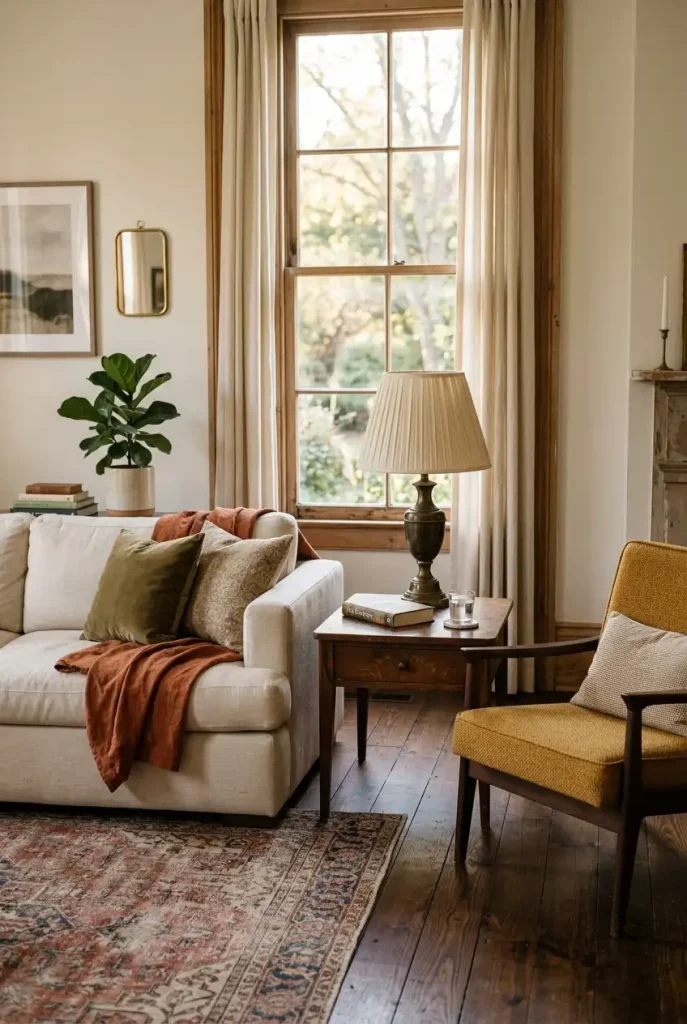
A living room often feels more personal when it includes a mix of old and new pieces. Modern furniture provides clean lines and practical comfort, while vintage finds introduce patina, craftsmanship, and a sense of history.
You could pair a streamlined sofa with a secondhand wooden side table, place an antique-style lamp beside a contemporary armchair, or use a vintage chest as a distinctive storage piece. The goal isn’t to fill the room with antiques; it’s to give a few objects room to stand out.
To make different eras feel connected, repeat a color or material across the room. For example, walnut wood, warm brass, or muted green can link furniture pieces that otherwise have very different silhouettes.
Editor’s Note: Condition matters as much as appearance. Before buying secondhand upholstered furniture, inspect it carefully for damage, odors, pests, and structural problems.
Use Built-In Shelving to Display Books and Decor
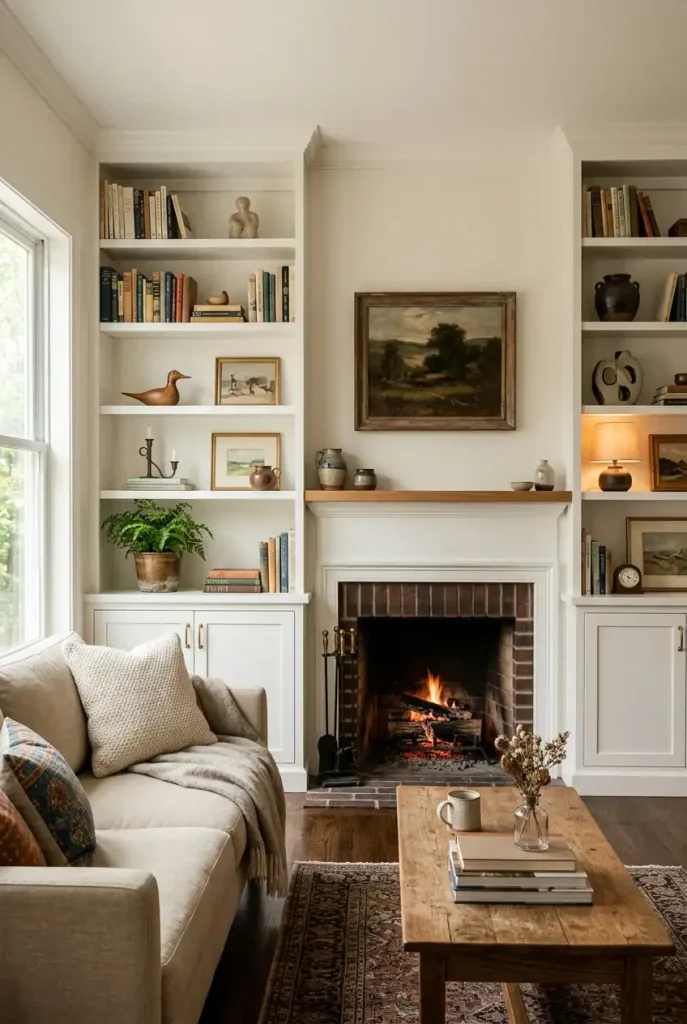
Built-in shelving gives a living room a finished architectural appearance while providing space for books, artwork, and meaningful objects. It can be especially useful around a fireplace or along a wall that otherwise feels empty.
If custom cabinetry isn’t within your budget, freestanding bookcases can create a similar sense of structure. Choose units with consistent proportions and arrange them carefully so they relate to the room’s furniture and wall height.
A balanced shelf arrangement usually includes a mixture of vertical and horizontal books, a few framed pieces, small ceramics, and some open space. You don’t need to fill every shelf. Empty areas help individual objects stand out and make the arrangement feel less crowded.
For a coordinated finish, repeat a limited selection of materials, such as natural wood, white ceramics, and black picture frames. Keep frequently used books and everyday items within easy reach, reserving higher shelves for lighter decorative objects.
Make Lighting a Decorative Feature
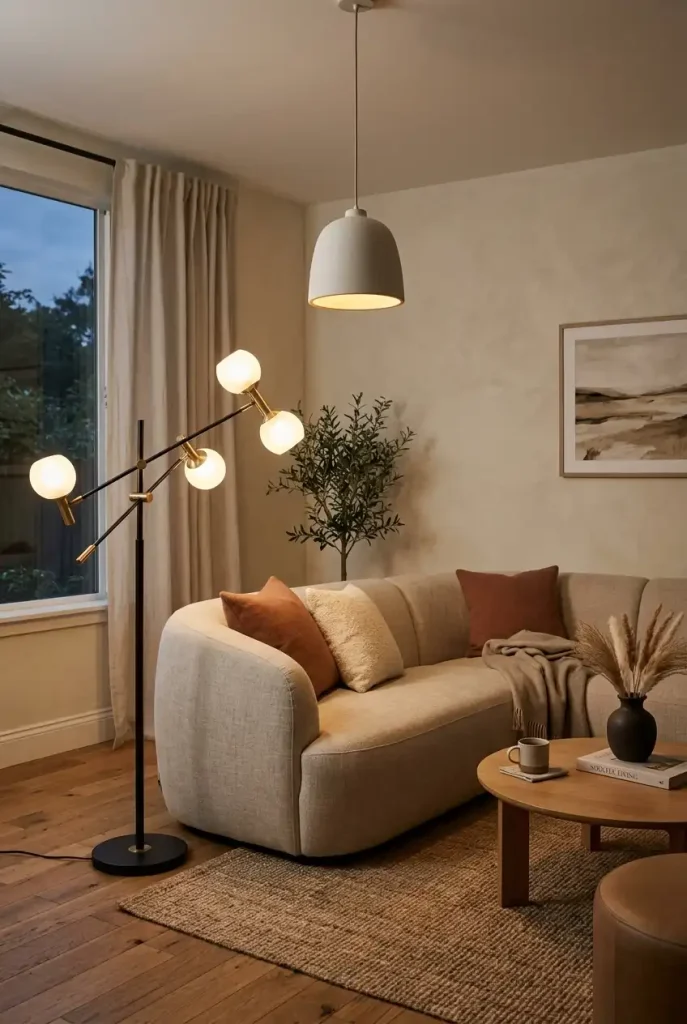
Lighting does more than make a room visible after sunset. It also shapes the atmosphere, highlights architectural features, and helps distinguish different areas within the living space.
Instead of depending on one bright ceiling fixture, combine several sources at different heights. A floor lamp beside the sofa can illuminate a reading corner, a table lamp can warm a sideboard, and a ceiling pendant can provide general light.
A statement fixture also works as a decorative object. Consider an oversized fabric shade, a sculptural floor lamp, or a pendant with an interesting natural-material finish. Choose a design that suits the room’s scale rather than one that overwhelms the furniture.
For evening comfort, warm-toned bulbs are often a good starting point. Dimmable lighting provides additional flexibility, provided the bulbs and controls are compatible.
Practical tip: Plan lighting around activities. Reading, entertaining, watching television, and moving safely through the room may require different levels of illumination.
Add Color Through Cushions and Throws
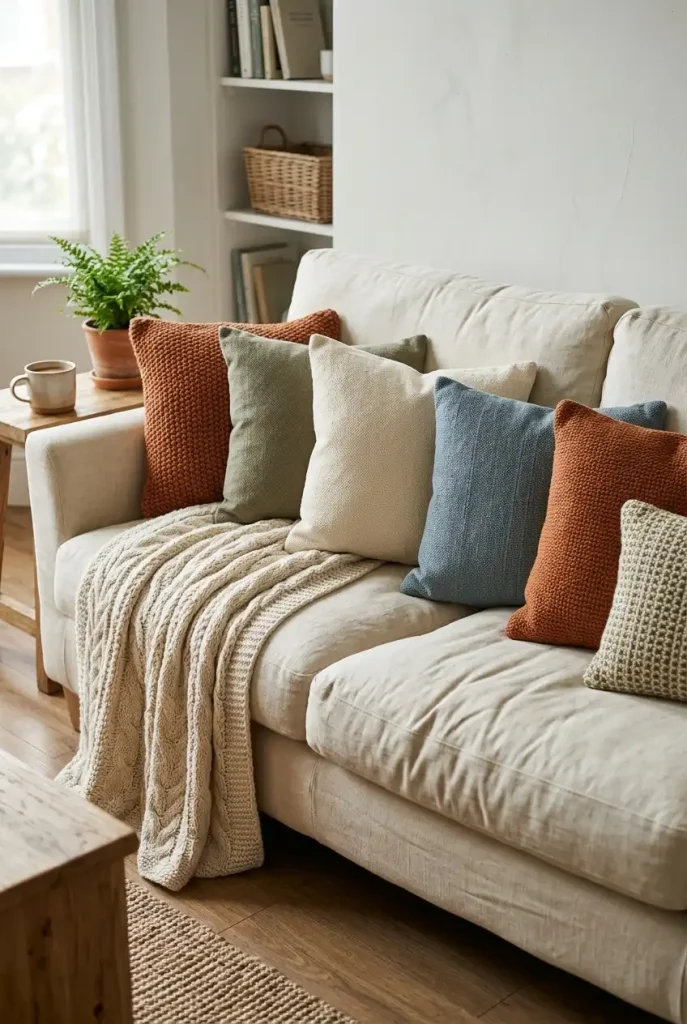
Soft furnishings offer a simple way to refresh a living room without replacing its largest pieces. Cushions and throws can introduce seasonal color, pattern, and texture while keeping a neutral sofa as the foundation.
Choose a small palette rather than buying every attractive cushion you see. Terracotta and olive create an earthy combination; dusty blue and caramel feel relaxed; rust and cream provide warmth with a little contrast.
Vary the textures as well as the colors. Combine a smooth cotton cushion with a nubby woven cover, a subtle stripe, or a velvet accent. A casually draped throw adds another layer without making the arrangement look overly formal.
For a budget-conscious update, keep the cushion inserts if they remain in good condition and replace only the covers. You can also rotate a few sets throughout the year rather than storing a large collection.
Quick Tip: Repeat one accent color in two or three places, such as a cushion, a piece of artwork, and a small ceramic object. This creates a visual connection across the room.
Bring Character to the Room With Wallpaper

Wallpaper introduces pattern and depth in a way that plain paint cannot always achieve. A subtle botanical print can soften a formal living room, a geometric design can support a contemporary interior, and a small-scale motif can add interest without dominating the furniture.
The wall behind the sofa is one option, but wallpaper can also work inside a recessed alcove or across a wall of built-in shelves. The best placement depends on where you want the eye to settle when entering the room.
When choosing a pattern, consider the size of the room and the visual weight of existing textiles. If the sofa, rug, and curtains already have strong patterns, a quieter wallpaper may be easier to coordinate. A simpler room can accommodate a more expressive print.
Renters may be able to use removable wallpaper, although wall condition, installation instructions, and lease restrictions should be considered before applying it.
Create a Cozy Reading Corner

A reading corner gives an underused part of the living room a clear purpose. You don’t need a separate library or a large floor plan; a comfortable chair, a useful light source, and a small table can be enough.
Choose a corner near natural light when possible. Position the chair so that it feels connected to the rest of the room but still offers a little separation from the main seating area. A small ottoman can make the spot more comfortable, while a nearby basket keeps blankets or reading materials organized.
A floor lamp is useful when overhead lighting isn’t sufficient for reading. Look for a shade and bulb arrangement that directs enough light toward the page without creating uncomfortable glare.
For small apartments, a compact armchair with visible legs may feel less bulky than a large recliner. In a larger room, a generous upholstered chair can create a more substantial retreat.
Embrace Modern Organic Design
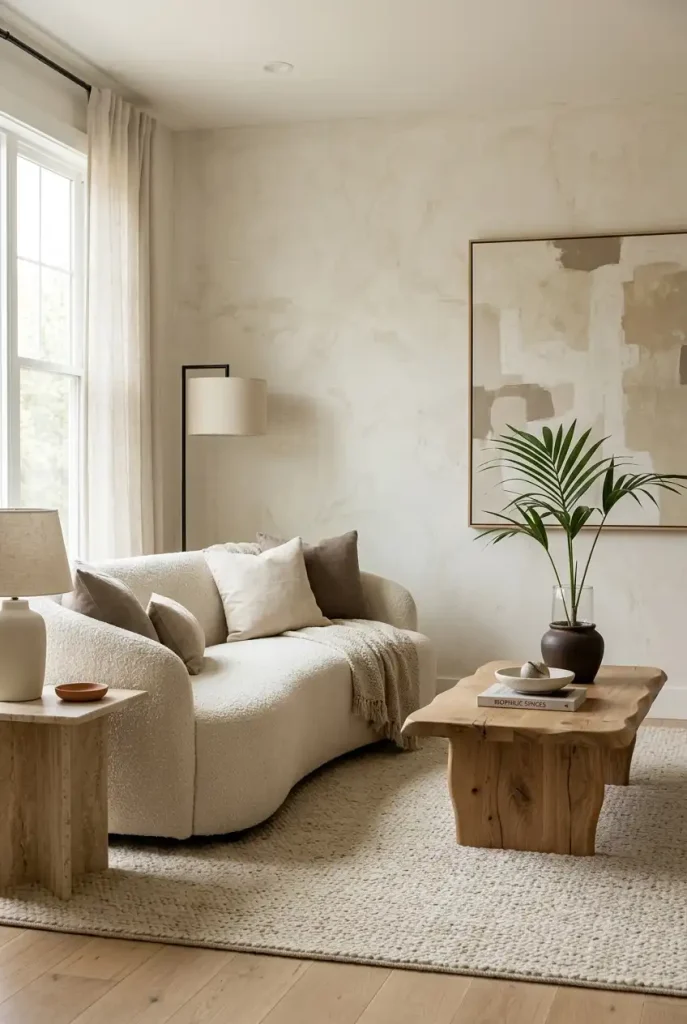
Modern organic interiors combine contemporary shapes with natural materials and a relaxed color palette. The result feels clean without becoming stark and comfortable without relying on excessive decoration.
Start with simple, functional furniture. A curved sofa or rounded armchair can soften a room filled with straight architectural lines, while an oak coffee table or stone-look side table introduces natural texture. Linen, wool, cotton, wood, and handmade-looking ceramics help build depth through material rather than busy patterns.
The palette can include warm white, mushroom, sand, muted brown, and soft green. Small variations between these shades are useful because a room built entirely from identical tones may feel flat.
You don’t need every piece to be organic-shaped or expensive. A straightforward sofa, a wooden table, and two or three tactile accessories can communicate the style effectively.
Common Mistake: Choosing only pale objects with similar textures can make the room feel unfinished. Include a few darker elements to give the composition definition.
Decorate With Oversized Artwork
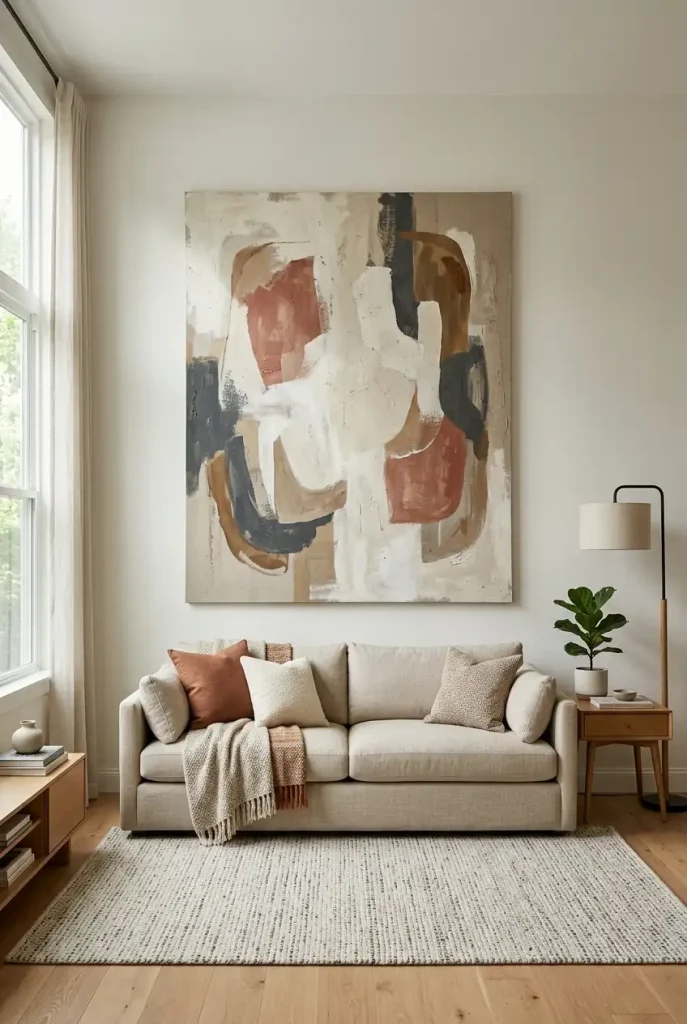
One large artwork can give a living room a strong focal point without the visual complexity of a gallery wall. This approach works especially well above a sofa, a low sideboard, or a fireplace where a single piece can anchor the surrounding furniture.
Abstract paintings, large landscape prints, and expressive botanical artwork are all options. Choose a piece that relates to the room’s palette, but don’t feel obligated to match every color precisely. A painting with a small amount of rust, charcoal, or deep green can introduce contrast into a predominantly neutral space.
Scale is important. Artwork that is too small may look disconnected from a wide sofa, while an oversized piece can overwhelm a narrow wall. Consider the dimensions of the furniture beneath it and leave enough surrounding wall space for the composition to breathe.
If original artwork is outside your budget, a well-chosen print in a quality frame can still create a strong visual feature.
Add Storage That Looks Like Furniture
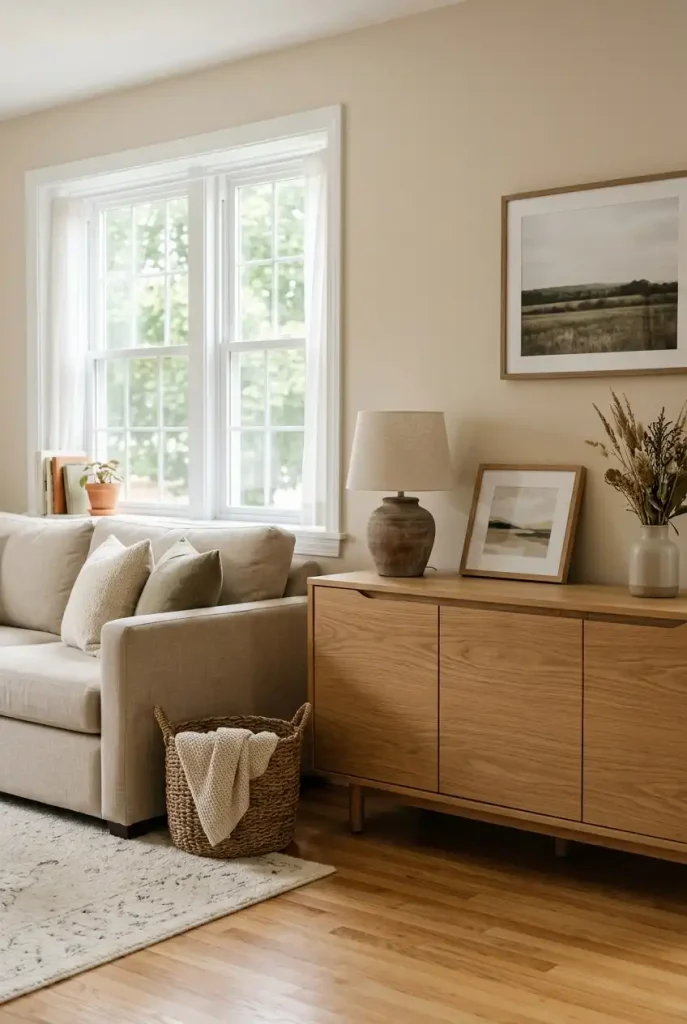
A living room feels easier to enjoy when everyday belongings have a place to go. The challenge is finding storage that solves practical problems without making the room look like a utility area.
A wooden sideboard, a low cabinet, or a storage ottoman can hide items such as board games, chargers, blankets, and remote controls. Open baskets work well for frequently used throws, while closed cabinets help keep visually busy objects out of sight.
Choose storage according to the items you actually need to keep. Deep cabinets may be useful for larger objects, while shallow drawers can organize smaller essentials. In a compact room, furniture with legs or a lower visual profile may feel less imposing.
For a coordinated appearance, repeat the cabinet’s finish elsewhere through picture frames, a coffee table, or small wooden accessories.
Do / Don’t
- Do: Keep frequently used objects accessible.
- Do: Measure the wall and available walking space before purchasing a cabinet.
- Don’t: Fill every empty corner with storage furniture if the room already feels crowded.
Introduce a Dark and Moody Color Palette
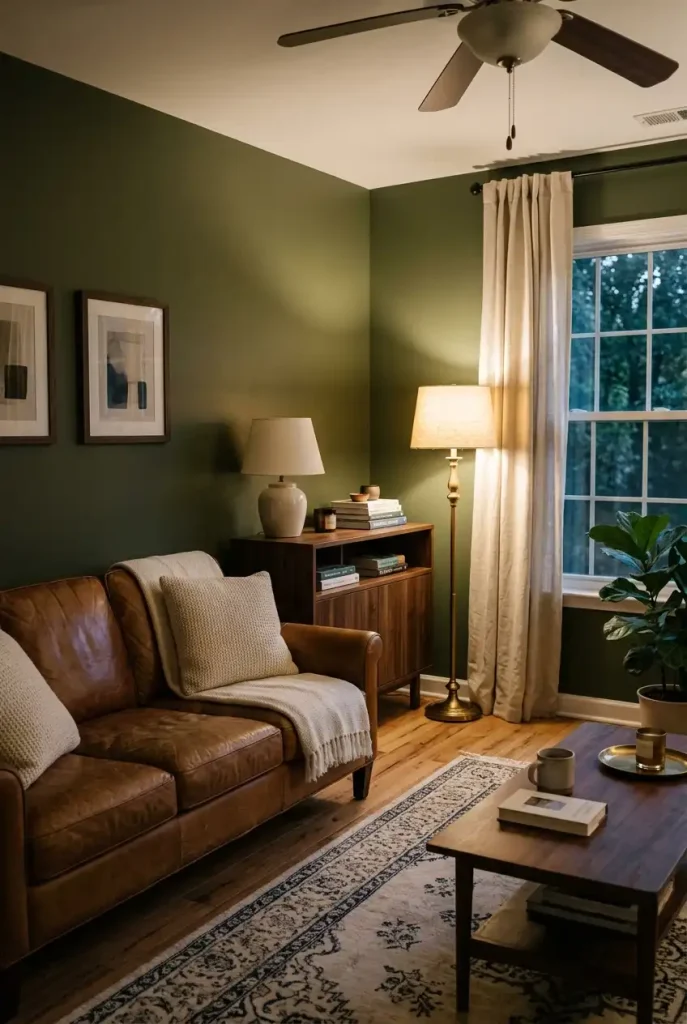
Light interiors aren’t the only way to create a welcoming living room. Deep olive, navy, chocolate brown, charcoal, and muted burgundy can give a space a more intimate, layered atmosphere.
A darker palette works particularly well when the room has a clear lighting plan. Combine daylight with floor lamps, table lamps, and other practical light sources so the space remains usable after sunset. Warm wood, tactile upholstery, and a few lighter accessories can keep the room from feeling visually heavy.
You can introduce dark colors gradually through a painted feature wall, a sofa, curtains, or a substantial rug. Painting every wall is an option, but it isn’t necessary to establish the mood.
In smaller rooms, balance darker surfaces with reflective details, lighter textiles, or a well-positioned mirror. The aim is to create contrast and depth, not to follow a rigid rule about which colors are allowed in a small space.
Refresh the Room With Seasonal Accessories

A seasonal refresh is a practical way to keep your living room feeling current without changing its main furniture. Rather than redesigning the entire space every few months, rotate a handful of accessories to reflect the time of year.
In spring, fresh branches, lighter textiles, and soft green accents can make the room feel brighter. Summer may call for breathable cotton, natural woven materials, and simpler surfaces. During autumn, rust-colored cushions, warm wood, and textured throws introduce a cozier mood. Winter accessories might include layered blankets, deeper colors, and gentle ambient lighting.
The key is to maintain a consistent foundation. A neutral sofa, versatile rug, and classic furniture pieces can work throughout the year while smaller details change around them.
A seasonal basket is useful for storing cushion covers, lightweight throws, and decorative objects when they aren’t being used. This also helps prevent the room from accumulating too many accessories.
Quick Tip: Change just two or three visible elements at a time. A new cushion combination, a different vase arrangement, and a refreshed coffee table display may be enough to give the room a different feel.
How to Choose the Right Living Room Decorating Ideas
Not every idea needs to be used in the same room. The best approach is to identify what your living room needs most and start there.
| Your main goal | Ideas to prioritize |
|---|---|
| Make the room feel warmer | Neutral layers, natural wood, textured cushions |
| Improve the layout | Furniture rearrangement, reading corner, functional storage |
| Add personality | Gallery wall, oversized artwork, vintage furniture |
| Make a small room feel open | Carefully scaled furniture, lighter curtains, uncluttered surfaces |
| Create a cozy evening atmosphere | Layered lighting, warm colors, soft throws |
| Refresh the room on a budget | Rearranging furniture, cushion covers, plants, seasonal accessories |
Three Simple Steps for a Fresh Look
- Start with the biggest issue. Decide whether the room needs better furniture placement, more color, additional storage, or improved lighting.
- Choose a consistent palette. Select a few colors and materials that work with the furniture you already own.
- Add details gradually. Introduce artwork, plants, cushions, or lighting one at a time, checking how each change works with the rest of the room.
You don’t have to replace everything to make the space feel different. Often, a more thoughtful arrangement and a few carefully selected details will create a stronger result than buying lots of new decorations.