
20 Cozy Small Living Room Ideas for a Stylish, Comfortable Home
A small living room can feel just as welcoming and stylish as a much larger space. The secret is choosing furniture that fits comfortably, layering textures that make the room feel warm, and arranging everything so the space remains easy to use. Whether you live in a city apartment, a small suburban home, or a rental with limited square footage, thoughtful decorating can make a noticeable difference without requiring a major renovation.
These cozy small living room ideas explore a range of styles, from soft neutral interiors and warm wood accents to space-saving furniture, layered lighting, inviting reading corners, and colorful decorative details. Some ideas focus on affordable changes you can make with accessories and rearranging, while others explore more permanent design upgrades. Use them as inspiration to create a living room that feels comfortable, personal, and visually balanced without overcrowding the space.
Layer Warm Neutral Colors for a Calm, Cozy Living Room
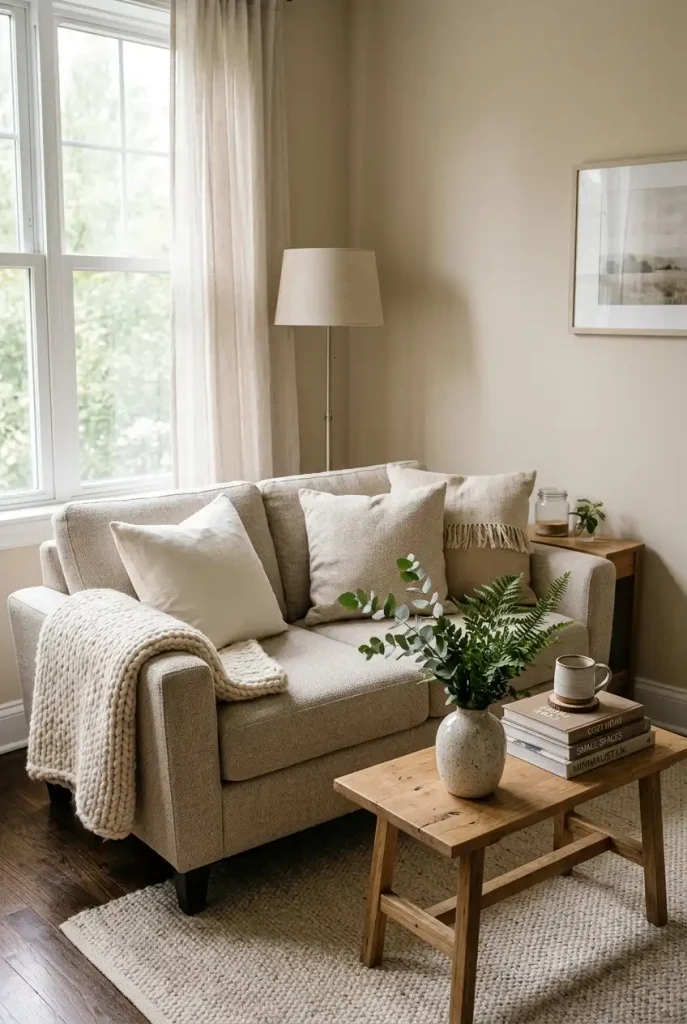
A warm neutral palette is an easy starting point when decorating a compact living room. Combine ivory walls, a cream or oatmeal sofa, natural oak furniture, and a textured rug to create a relaxed atmosphere without making the room feel visually busy. Rather than using the exact same shade everywhere, introduce subtle variations through linen cushions, knitted throws, woven baskets, and ceramic accessories.
The key is to mix materials so the room feels inviting instead of flat. A light-colored sofa can become the main focal point, while darker wood accents or a few charcoal details add definition. This approach works particularly well in apartments and smaller homes where visual simplicity helps the space feel more open.
Practical styling tips:
- Choose two or three related neutral shades rather than an entirely monochromatic palette.
- Use a textured rug to distinguish the seating area from the rest of the room.
- Add a soft throw over one sofa arm for a relaxed, lived-in finish.
- Keep small decorative objects grouped together instead of scattering them across every surface.
Choose a Small Sofa With a Slim, Raised Profile

The sofa usually takes up more visual and physical space than any other piece of furniture in a living room, so its proportions matter. A compact two-seat sofa with narrow arms and visible legs can create a lighter appearance than a bulky model with oversized cushions and a heavy base.
Raised legs allow more of the floor to remain visible, helping the seating area feel less solid and crowded. Look for a sofa that offers enough depth for comfortable sitting without extending too far into the room. Measure the available wall and the space needed to walk around the furniture before buying.
A slim-profile sofa doesn’t have to look formal or uncomfortable. Soft upholstery, rounded corners, and generously padded back cushions can provide plenty of coziness while keeping the silhouette relatively streamlined.
Quick Tip: If you regularly host guests, consider a compact sofa with a movable ottoman instead of a much larger sectional.
Add a Soft, Textured Rug to Define the Seating Area
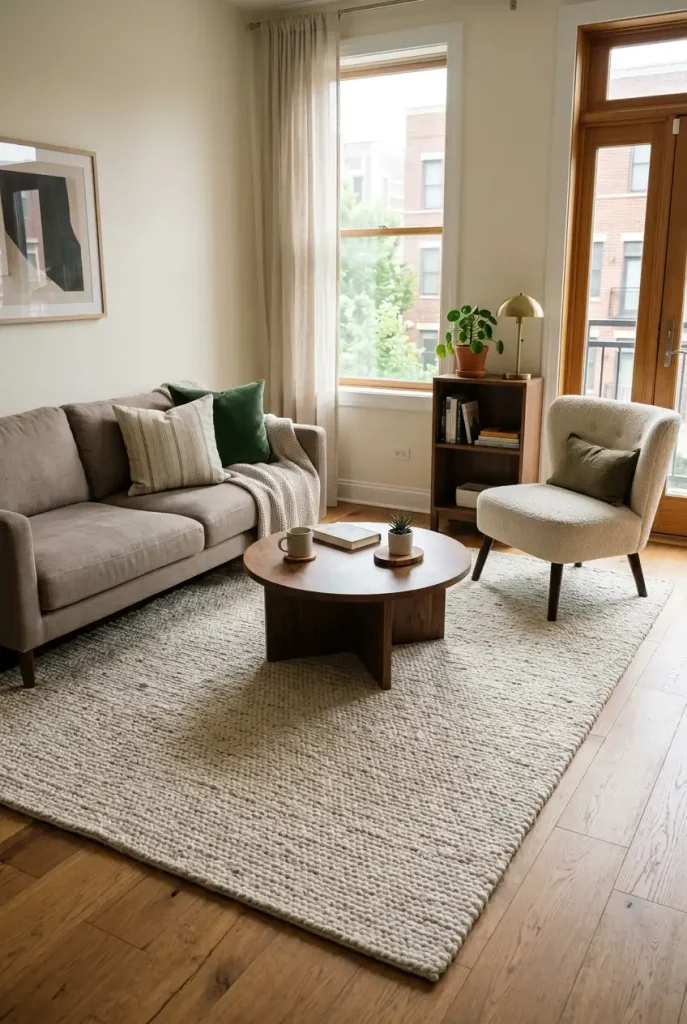
A well-chosen area rug makes a small living room feel more intentional by visually connecting the sofa, coffee table, and nearby seating. It also introduces softness underfoot, which can make the space feel warmer and more comfortable.
Instead of automatically choosing the smallest rug available, consider a size that allows the front legs of the main seating furniture to rest on it. This can help the arrangement feel connected rather than like a collection of separate pieces. Leave enough exposed flooring around the rug to suit the room’s proportions and preserve a practical walking path.
Texture is particularly useful when the color palette is restrained. A wool-blend rug, a subtle geometric weave, or a low-pile textured design can add depth without introducing a busy pattern.
| Rug style | Visual effect | Practical consideration |
|---|---|---|
| Textured ivory | Soft and airy | Check cleaning requirements |
| Muted geometric | Adds subtle structure | Keep surrounding patterns simple |
| Warm taupe | Creates a grounded look | Coordinate with the flooring |
| Low-pile neutral | Clean and understated | Useful around frequently moved furniture |
Create a Warm Glow With Layered Lighting

Lighting can change the atmosphere of a small living room without taking up much floor space. Instead of relying entirely on a single overhead fixture, combine a floor lamp, a compact table lamp, and existing ceiling lighting where available.
Each source serves a different purpose. A floor lamp can illuminate a reading chair, a table lamp adds a softer glow near the sofa, and overhead lighting helps with everyday activities. Warm-white bulbs generally create a more relaxed atmosphere than harsh, cool lighting, especially in the evening.
If your room is particularly small, choose a narrow floor lamp or a wall-mounted reading light. These options provide illumination without requiring another large table or cabinet.
Try this simple arrangement:
- Position a floor lamp beside the sofa or reading chair.
- Place a small table lamp on an existing sideboard or end table.
- Use the ceiling light when you need broader illumination.
- Switch on the lamps together in the evening for a more layered effect.
Use a Round Coffee Table to Soften Tight Layouts
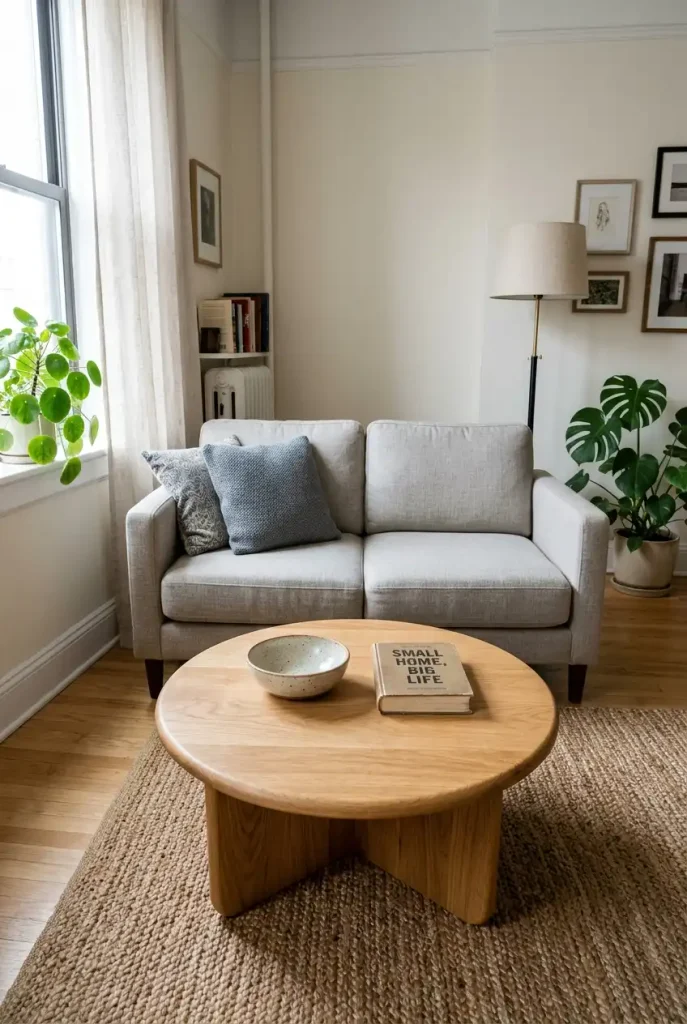
A round coffee table can be especially useful when a small living room has a narrow walkway or furniture arranged close together. Its curved edges soften the room’s straight lines, and the absence of sharp corners can make it easier to navigate around the seating area.
Choose a table that is appropriately scaled to the sofa and leaves enough space for people to move comfortably. A small round oak table brings warmth to a neutral room, while a glass-topped design can make the center of the room feel visually lighter.
The surface should remain practical. A shallow bowl, a small stack of books, or a compact vase can provide decoration without making the table difficult to use.
Do: Check the distance between the table and sofa before purchasing.
Don’t: Choose a large round table simply because its shape looks softer. A table that dominates the seating area can still make the room feel cramped.
Decorate With Sage Green and Natural Wood
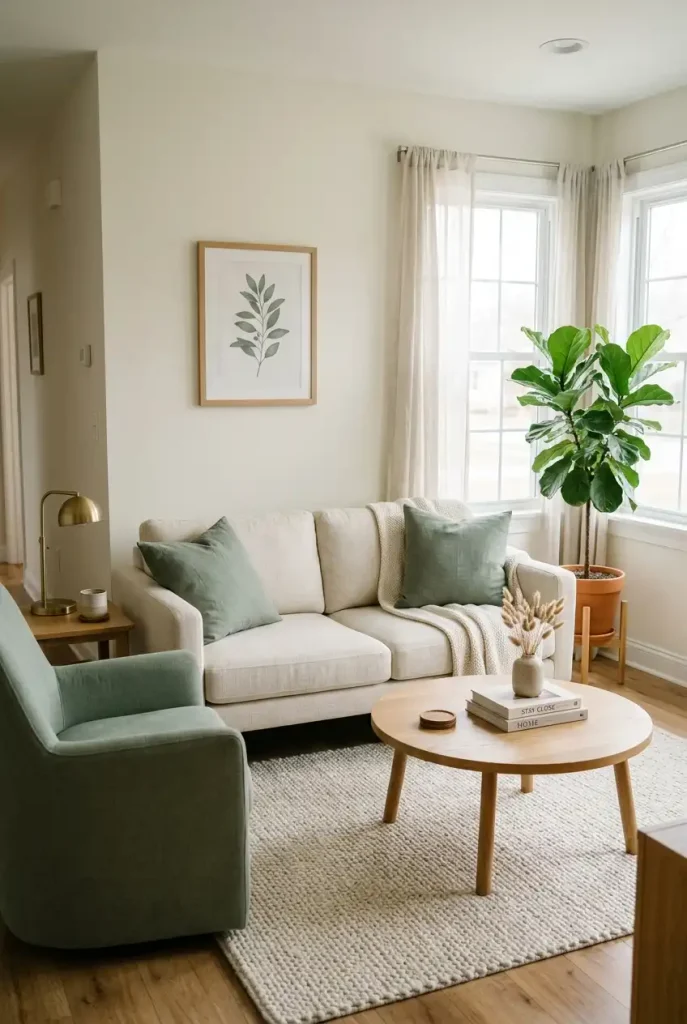
Sage green brings a gentle hint of color to a compact living room while keeping the atmosphere relaxed. Pair it with warm oak, creamy white upholstery, and natural woven materials for a look that feels fresh without becoming visually overwhelming.
You don’t need to repaint the entire room to introduce this palette. Sage green cushions, a soft throw, a small upholstered chair, or a painted accent wall can provide enough color to anchor the design. Natural wood balances the green, while ivory textiles keep the overall arrangement light.
For a more contemporary appearance, introduce a little black through a lamp base or picture frame. If you prefer a softer cottage-inspired look, use warm brass details, botanical artwork, and loosely woven textiles.
Make the Most of a Small Corner With a Reading Nook

An unused corner can become one of the most inviting parts of a small living room. A comfortable armchair, a reading lamp, and a small table create a separate place to relax without requiring an entire additional seating area.
Look for an accent chair with a modest footprint and arms that don’t extend too far outward. If the corner is beside a window, take advantage of the daylight, but leave enough space for curtains to open and close freely. A small round side table can hold a book and a mug without competing with the main coffee table.
For a more comfortable reading spot, add a cushion with good back support and a soft throw. Keep the floor around the chair clear so the nook feels restful rather than crowded.
Quick Tip: A wall-mounted reading light is a useful alternative when there isn’t enough space for a floor lamp.
Add Floating Shelves for Vertical Storage

When floor space is limited, the walls can provide useful storage and display opportunities. Floating shelves above a sofa or along an unused wall can hold books, framed photographs, small plants, and a few decorative objects without requiring a large bookcase.
The most appealing arrangements leave some open space between objects. Mix horizontal book stacks with upright books, a small ceramic vessel, and one trailing plant to create variety without filling every inch. Repeating a few colors, such as warm wood, cream, and muted green, helps the display feel connected to the rest of the room.
Before installing shelves, consider what lies behind the wall and use suitable mounting hardware for the wall type and intended load. In a rental, freestanding shelving or approved removable display solutions may be more appropriate.
Choose Curtains That Make the Room Feel Taller
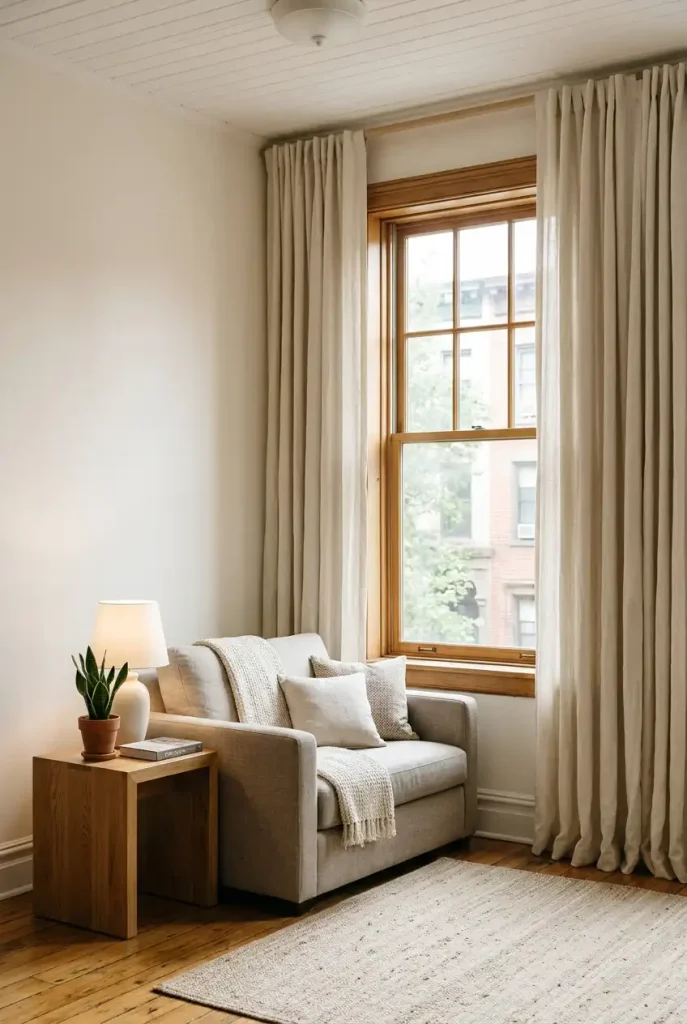
Window treatments can influence how tall and open a small living room feels. Hanging curtains higher than the window frame, when the architecture allows, draws the eye upward and creates a longer vertical line. Curtains that reach the floor can also make the room feel more finished.
Light-filtering linen or linen-look fabric is a useful choice when you want privacy without making the room excessively dark. Warm ivory, soft flax, and pale beige work well with many interior palettes. If the room receives strong direct sun, consider the window’s orientation and choose a lining or shade that suits your needs.
Keep the curtain rod and panels proportionate to the wall. Curtains should frame the window rather than overwhelm it, and they shouldn’t obstruct radiators, doors, or essential walking paths.
Do: Let the fabric fall naturally with a gentle, tailored drape.
Don’t: Allow long curtain hems to bunch heavily on the floor in a compact, high-traffic area.
Introduce Warmth With Terracotta and Rust Accents

A compact living room doesn’t have to be entirely white or beige to feel spacious. Terracotta, cinnamon, and muted rust bring warmth and personality while working beautifully with cream upholstery, walnut furniture, and natural woven textures.
Start with one dominant accent color and repeat it in two or three places. For example, use rust-colored cushions on a neutral sofa, a terracotta planter near the window, and a small abstract artwork with similar undertones. This repetition helps the room feel coordinated without making every item match.
If the space has limited daylight, balance the richer shades with light walls and a pale rug. In a brighter room, a deeper rust-colored accent chair can create a stronger focal point.
Use an Ottoman With Hidden Storage
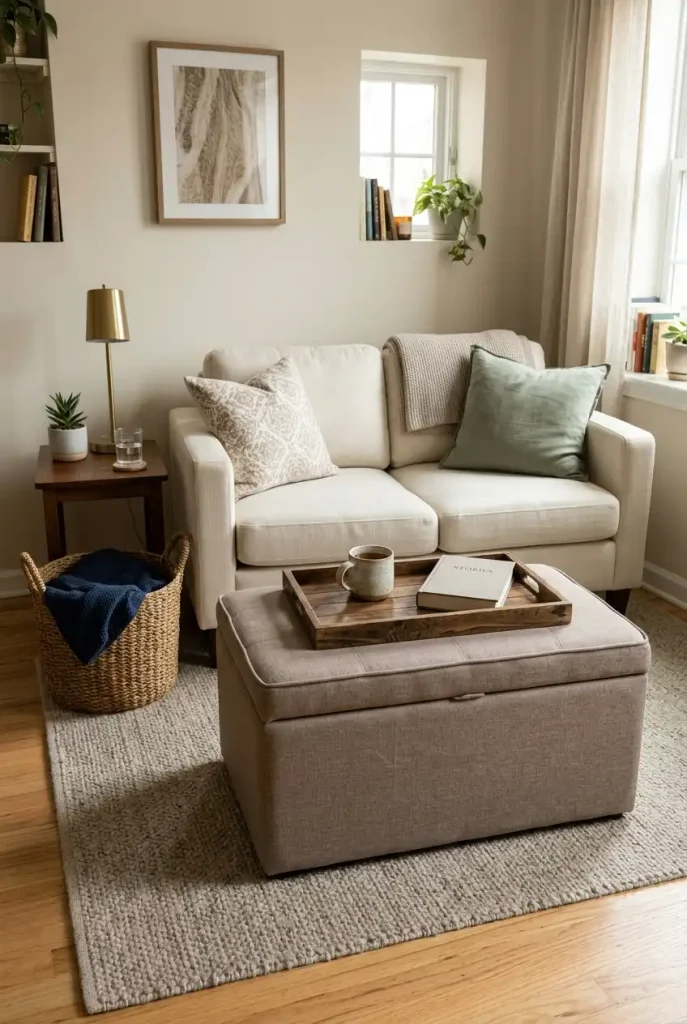
An upholstered storage ottoman can perform several jobs in a small living room. It provides a soft place to rest your feet, offers an extra seat when needed, and can store items such as spare throws, board games, or remote controls.
Choose an ottoman that fits comfortably in front of the sofa and is easy to move when you need more open floor space. A lift-top design works well when the storage compartment is used regularly, while a lightweight upholstered cube can be easier to reposition. If you plan to use the ottoman as a coffee table, add a firm tray for drinks and smaller items.
Consider upholstery that coordinates with the sofa without matching it exactly. A textured beige ottoman with a cream sofa, for example, introduces a subtle change in tone and makes the arrangement feel layered.
Bring in Greenery for a Fresh, Lived-In Feel
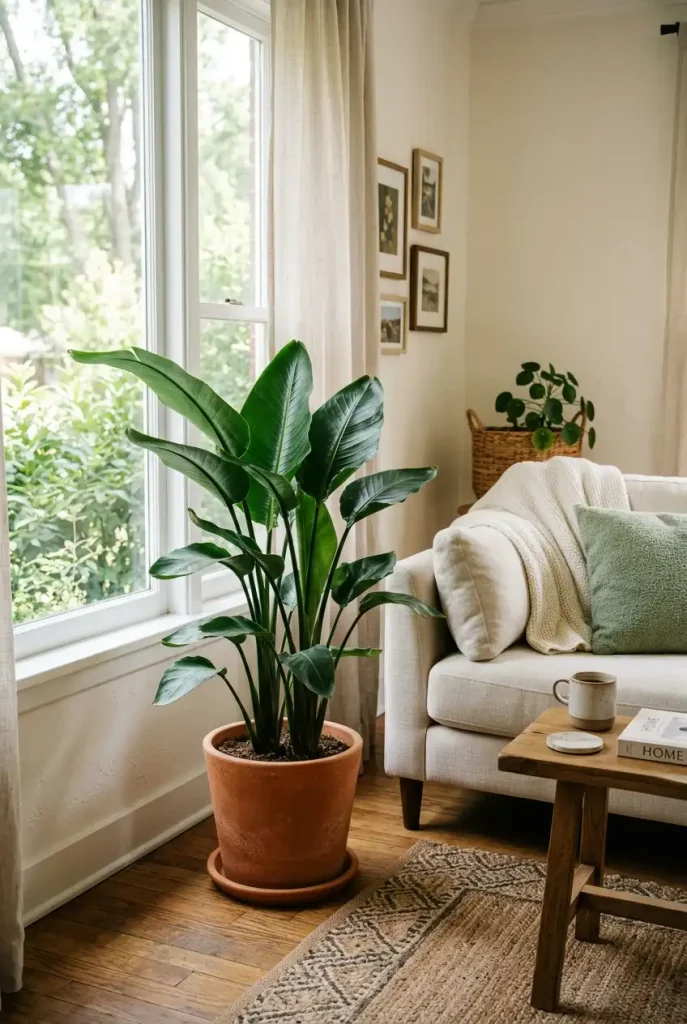
Plants can soften the straight lines of furniture and introduce natural variation into a small living room. One medium-sized plant near a window may have more impact than several tiny pots scattered across every available surface.
Choose plants according to the light available in your room rather than selecting them on appearance alone. Place a floor plant in an unused corner, use a small tabletop plant on a shelf, or hang a suitable trailing plant where it won’t interfere with walking paths. Simple ceramic, terracotta, or woven-look planters can tie the greenery into your existing decor.
If you have pets or young children, check whether your chosen plant is appropriate for your household and position it securely.
Styling idea: Combine one taller plant with a smaller plant on a shelf to create variation in height without filling the floor with pots.
Create a Cozy Gallery Wall Above the Sofa

A gallery wall adds personality to a small living room without using valuable floor space. The wall above the sofa is often a natural location because it provides a clear visual anchor for the seating arrangement.
For a cohesive look, choose artwork that shares a general color palette but varies in subject or scale. Botanical prints, abstract shapes, quiet landscapes, and personal photographs can work together when their frames and tones relate to one another.
Before hanging anything, arrange the frames on the floor or make paper templates to test the layout. A tighter grouping can look intentional in a small room, while excessive gaps may make the display feel disconnected. Renters can explore suitable picture-hanging strips where permitted, checking the wall surface and the weight limits of the products.
Add a Narrow Console Behind the Sofa

If your sofa sits away from the wall, a narrow console table behind it can make use of an otherwise awkward strip of space. The surface provides a home for a small lamp, a few books, or a decorative bowl, while helping the sofa feel deliberately positioned within the room.
Depth is particularly important. A shallow console is often more practical than a standard-depth table when the room has limited circulation space. Measure the sofa’s back height and the available gap before selecting a piece so the arrangement looks balanced and doesn’t obstruct the walkway.
In an open-plan apartment, the console can also help distinguish the living area from the dining or kitchen zone. Keep the styling simple so it remains useful for everyday life.
Common Mistake: Filling the console with tall accessories that block sightlines or crowd the space behind the sofa.
Better Approach: Use one lamp, one low decorative object, and a small stack of books.
Make a Small Living Room Feel Rich With Velvet

Velvet adds visual depth because its pile reflects light differently across the fabric. In a small living room, a velvet loveseat, accent chair, or a pair of cushions can introduce a richer texture without requiring elaborate decoration.
Muted olive, dusty blue, deep caramel, and warm burgundy are all possible choices, depending on the surrounding palette. Pair the velvet with matte materials such as linen, wood, and wool so the room doesn’t feel overly shiny. A velvet accent chair can be particularly effective when the main sofa is upholstered in a simpler fabric.
Before buying velvet furniture, check the manufacturer’s cleaning and maintenance guidance, especially if the seating will be used frequently or shared with pets.
Use a Small Sectional to Maximize Seating
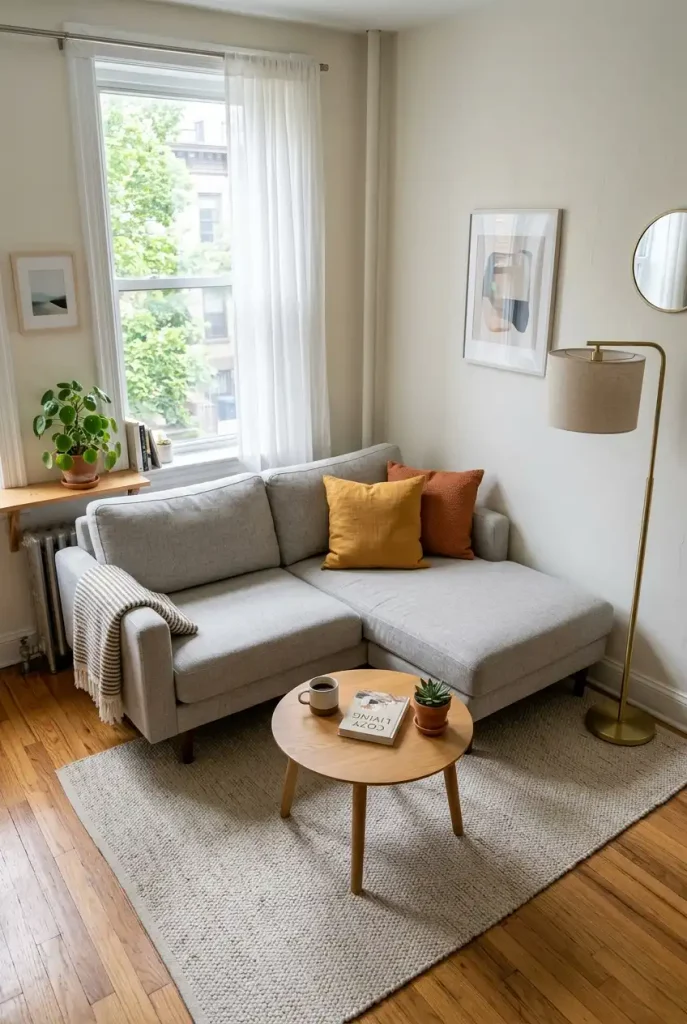
A small sectional can be a smart choice when you want comfortable seating for several people but don’t have room for a sofa and multiple armchairs. An L-shaped design uses a corner efficiently and can create a natural boundary around the living area.
The important thing is to choose a sectional that fits the room rather than assuming every corner needs one. Measure both sides of the proposed arrangement, including the chaise, and account for doors, windows, and walkways. A compact model with a relatively low back and narrow arms can feel less imposing than a deep, oversized sectional.
For flexibility, consider a modular sofa that allows the chaise to be positioned on the side that best suits your layout. Pair it with a small movable ottoman or round coffee table to keep the center of the room functional.
Create a Soft Cottage Look With Floral Textiles

A cottage-inspired living room feels welcoming because it combines soft patterns, natural materials, and furniture with a relaxed character. Floral cushions, a vintage-style side table, a knitted throw, and a few botanical accessories can create this atmosphere without filling the room with decorations.
To keep the look balanced, use a fairly simple background. Cream walls, light flooring, and understated upholstery allow floral patterns to stand out without overwhelming the space. Choose one main floral print and complement it with smaller-scale stripes, plain linen, or a subtle check.
Secondhand furniture can be a useful way to find characterful pieces. A small wooden side table or an older framed picture may bring more personality than a collection of matching new accessories.
Styling tip: Repeat one color from your floral fabric elsewhere in the room, such as in a throw, a ceramic vase, or a small artwork.
Try a Moody Living Room With Deep, Cozy Colors
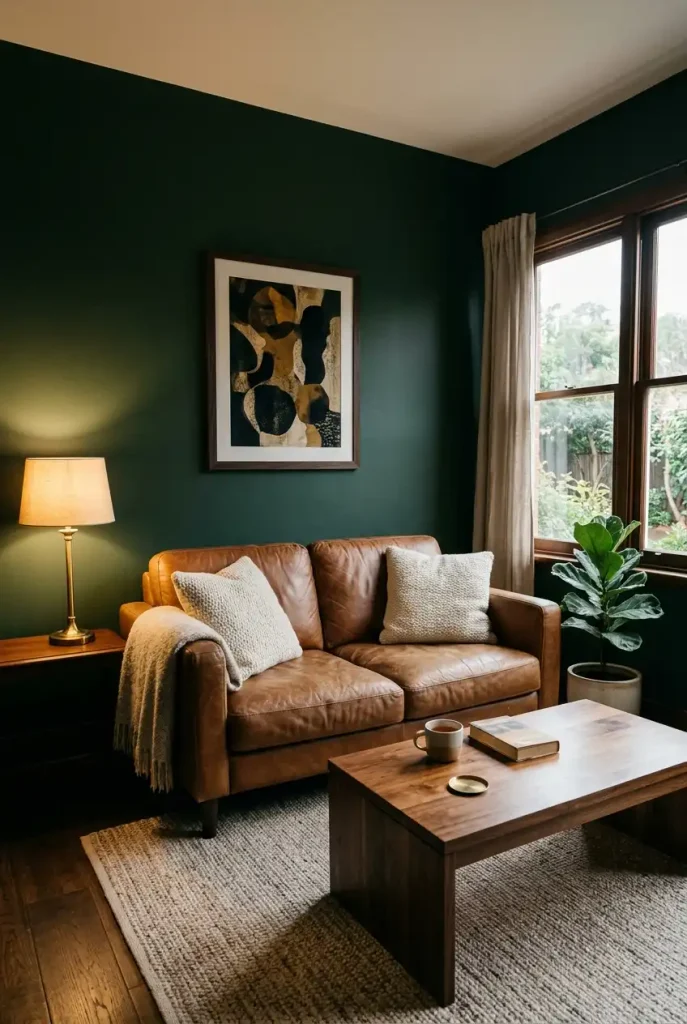
Light colors aren’t the only way to decorate a small living room. Deep forest green, muted navy, charcoal, or warm brown can create a cocoon-like atmosphere when used thoughtfully.
The key is to balance the darker tones with warm lighting and tactile materials. For example, forest-green walls can work with a caramel sofa, walnut furniture, and cream cushions. A few reflective surfaces, such as a framed mirror or a glass lamp base, can introduce variation without turning the room into a glossy showroom.
This approach is especially appealing if your living room is primarily used in the evening. However, consider how much natural daylight the space receives and whether you want the room to feel intimate or open throughout the day. Testing paint samples in different lighting conditions is a useful first step before committing to a darker color.
Keep the Room Airy With Glass and Light-Colored Furniture

When a small living room feels crowded, the visual weight of the furniture may be part of the problem. Glass, pale upholstery, and lighter wood finishes can make the arrangement appear less heavy without reducing its actual functionality.
A glass coffee table is one option because it allows more of the rug and floor beneath it to remain visible. Pair it with a compact cream sofa, a pale wood side table, and a restrained selection of accessories. The goal isn’t to eliminate texture; a woven rug, linen cushions, or a knitted throw can still provide plenty of warmth.
Glass furniture does require practical consideration. Choose a stable design with suitable safety glass, and think about household needs if you have young children or pets. A light-colored wood table can provide a similar airy effect if glass isn’t a suitable choice.
Finish the Room With Personal Details and Soft Textures
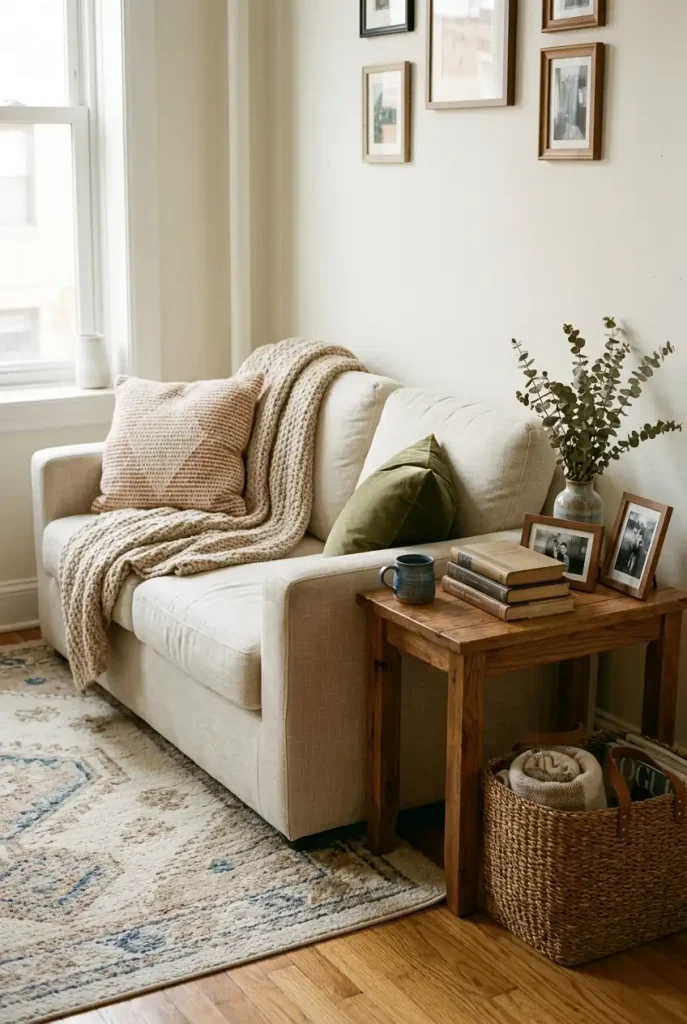
The final details are what make a living room feel like home rather than a furniture showroom. A few framed photographs, favorite books, handmade ceramics, or a treasured secondhand find can bring personality into a small space without requiring more furniture.
Start with the pieces you genuinely enjoy rather than buying accessories simply to fill empty surfaces. Group objects by height or material, and leave some open space around them. A small collection of books and a ceramic vase on a side table can feel more intentional than a dozen unrelated decorative items.
Soft textures help bring everything together. Combine a linen cushion with a knitted throw, a woven basket, and a smooth wooden surface to create contrast without introducing too many colors.
The best arrangement is one that reflects your everyday life. Keep frequently used items within reach, store less attractive essentials out of sight when practical, and allow your favorite objects to stand out.
How to Make a Small Living Room Feel Cozier Without Cluttering It
The most successful small living rooms balance comfort with enough open space to move around easily. You don’t need to use all 20 ideas at once. Choose a few that address your room’s biggest needs, then build the design gradually.
- Start with the layout. Arrange the sofa and main seating around a practical focal point while keeping doors and walkways accessible.
- Choose furniture carefully. Measure pieces before buying and consider slim arms, raised legs, and multipurpose storage.
- Layer texture. Rugs, linen cushions, knitted throws, and natural wood create warmth without requiring lots of decorative objects.
- Use lighting strategically. Combine general lighting with lamps for reading and relaxing.
- Personalize selectively. A gallery wall, a favorite plant, or a few meaningful accessories can add character without crowding surfaces.
Which Small Living Room Style Should You Choose?
| Your preference | Ideas to start with |
|---|---|
| Calm and neutral | 1, 2, 3 |
| Warm and colorful | 6, 10, 17 |
| Practical and space-saving | 5, 8, 11, 14, 16 |
| Soft and romantic | 7, 9, 17 |
| Modern and airy | 2, 5, 19 |
| Rich and intimate | 4, 15, 18 |
| Natural and personal | 12, 13, 20 |