

20 Beautiful Winter Decorating Ideas for a Warm, Stylish Home
Winter is a good time to make a home feel warmer without completely changing its personality. A few thoughtful additions—soft textiles, natural materials, warmer lighting, seasonal greenery, and carefully chosen accents—can shift the atmosphere of a room without making it feel overloaded with holiday décor. The best winter decorating ideas work beyond December, giving living rooms, bedrooms, entryways, and dining spaces a comfortable seasonal layer that can stay in place through the colder months. From simple renter-friendly changes to more polished design upgrades, these ideas focus on warmth, texture, proportion, and everyday livability.
Layer a Soft Neutral Throw Over the Sofa
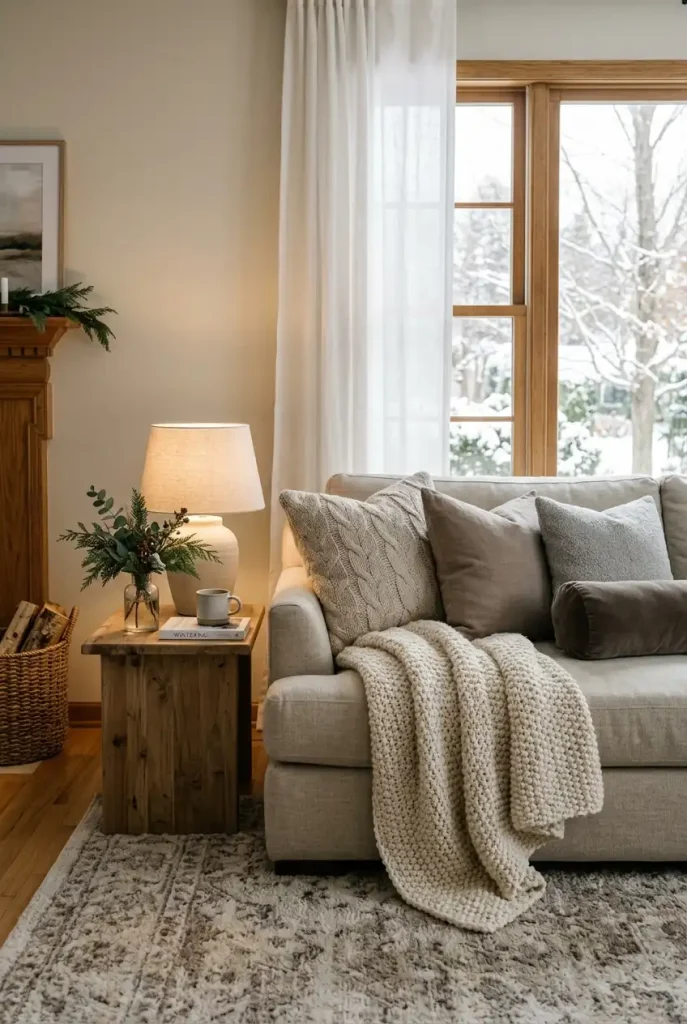
A winter living room doesn’t need dramatic seasonal decorations to feel cozy. Start with a substantial throw in a material such as wool, cotton, brushed fleece, or a chunky knit, then casually drape it over the arm or back of the sofa. Cream, oatmeal, taupe, camel, and soft gray work especially well because they add warmth without fighting an existing color scheme.
For a more collected look, combine the throw with two or three pillows in slightly different textures rather than matching everything exactly. A woven pillow beside a smooth linen-style cushion creates subtle contrast.
Quick Tip: Keep at least one area of the sofa relatively uncluttered so the room still feels practical for everyday use.
Warm Up the Room With Layered Lighting

Lighting can change the character of a room more dramatically than another decorative object. During winter, combine several modest sources rather than relying entirely on one overhead fixture. A floor lamp beside a reading chair, a table lamp on a console, and a small accent lamp on a side table can create pools of warm illumination.
The goal is not simply to make the room brighter. Layered lighting gives different parts of the room their own atmosphere and makes an evening space feel more inviting.
If your existing fixtures use very cool-looking bulbs, switching to a warmer color temperature can also make textiles and wood tones feel richer.
Do: Use multiple light sources at different heights.
Don’t: Put every lamp at exactly the same level.
Create a Winter Entryway With Natural Texture

The entryway sets the tone for the rest of the home, and winter is an ideal season to give it a little more texture. A narrow wood bench, woven basket, wool runner, and simple wall hooks can create a practical arrangement that also feels seasonal.
Keep the palette restrained. Natural oak, woven fibers, cream textiles, and muted greenery can feel distinctly wintery without relying on snowflakes or holiday motifs.
For smaller American entryways, choose furniture with a shallow footprint so coats, shoes, and bags don’t turn the walkway into an obstacle course.
Practical Detail: A basket beneath the bench can hide gloves, scarves, and other small cold-weather accessories while keeping them accessible.
Bring in Evergreen Branches Without Making the Room Feel Like Christmas

Evergreen branches can carry a winter arrangement long after the holidays are over. Instead of creating a large festive display, place a few natural-looking branches in a simple ceramic vase, stoneware pitcher, or glass vessel.
The restrained approach works particularly well in dining rooms, kitchens, bedrooms, and entryways. Choose an arrangement that has room around it rather than filling the container with a dense mass of greenery.
Pairing evergreen foliage with warm wood, stone, linen, or neutral ceramics keeps the look seasonal rather than overtly holiday-specific.
Editor’s Note: The container matters almost as much as the branches. A simple, substantial vessel gives the arrangement a more intentional appearance.
Add a Chunky Rug for Instant Visual Warmth
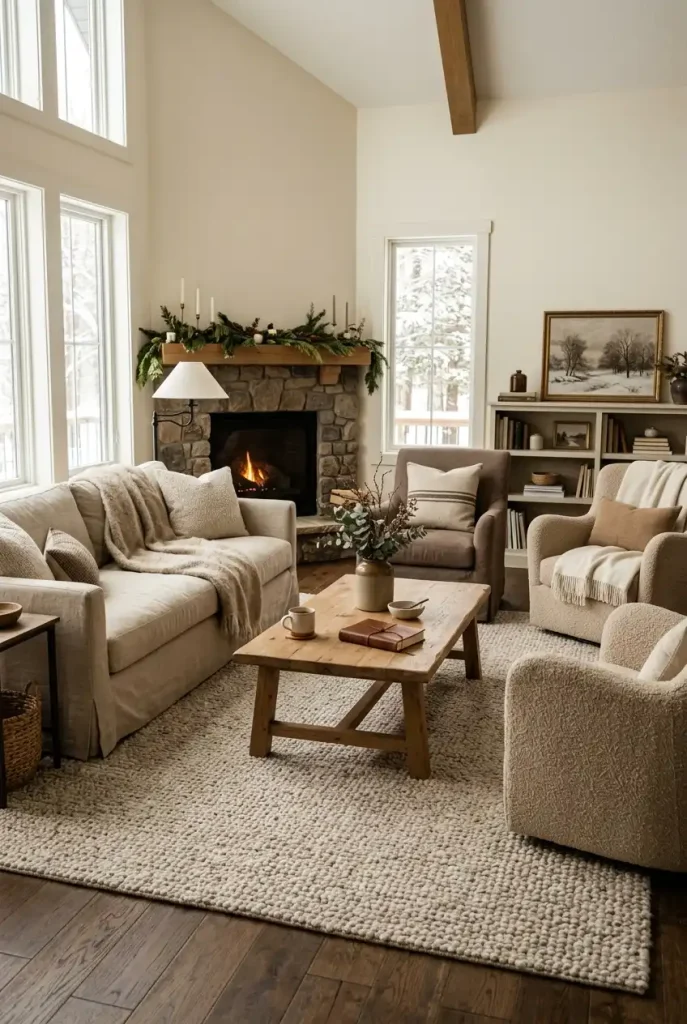
A rug can make a room feel warmer even before the temperature changes. For winter, consider a thicker wool, wool-blend, or similarly substantial rug with enough texture to visually soften hard flooring.
A neutral rug is especially versatile because it can remain in the room throughout the year. If the space already contains several patterns, choose a quiet tonal design. If the furniture is mostly solid-colored, a subtle geometric or woven pattern can provide additional interest.
Make sure the rug is appropriately sized for the furniture arrangement rather than selecting one simply because it fits the open floor area.
Style a Cozy Winter Reading Corner
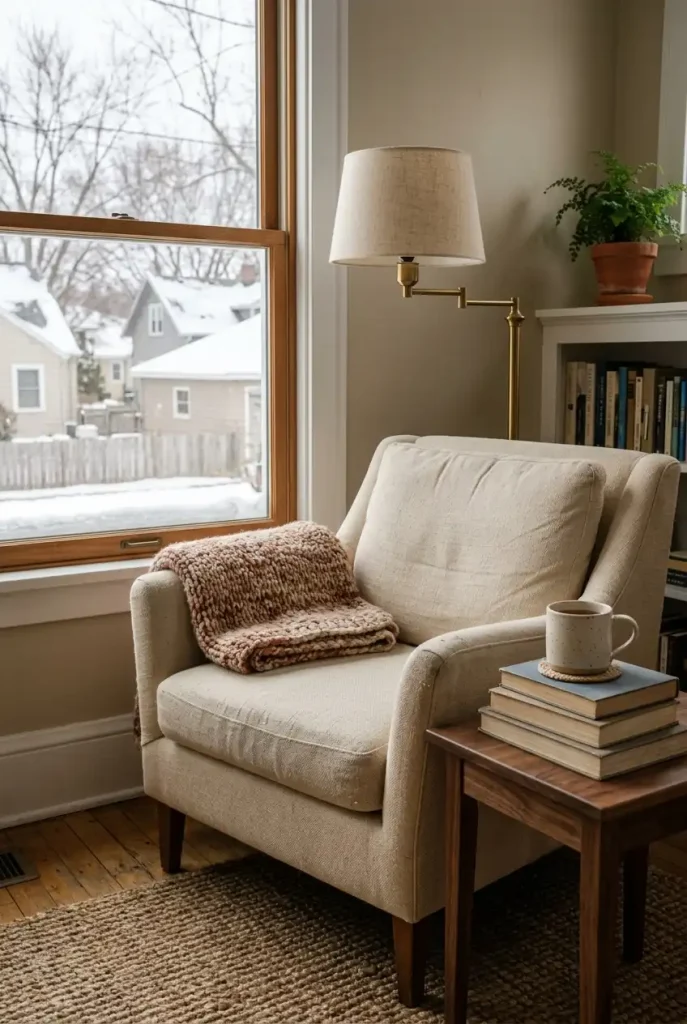
A small reading corner can become one of the most inviting parts of a winter home. Start with a comfortable chair, then add a compact side table, warm lamp, soft throw, and a place to rest a book or cup of tea.
You don’t need a dedicated library or large room. A quiet corner beside a window, unused section of a bedroom, or space next to a bookcase can work beautifully.
Keep the surrounding area relatively simple. A reading corner feels more restful when the eye isn’t competing with a large number of decorative objects.
Quick Tip: A floor lamp with an adjustable shade can provide useful reading light without requiring a permanent wall installation.
Make the Bedroom Warmer With Layered Bedding

Winter bedding works best when it is layered rather than simply piled high. Begin with breathable everyday sheets, then add a quilt or coverlet, duvet, and folded blanket near the foot of the bed.
Mixing materials makes the bed visually interesting. Smooth cotton can sit alongside a woven coverlet and a textured throw without making the arrangement feel overly decorated.
For a calm bedroom, keep the palette within two or three related tones. Cream with warm beige and muted brown is an easy starting point, while deep olive, dusty blue, or muted terracotta can provide a subtle seasonal accent.
Use Candlelight as a Small Seasonal Accent

Candles can add atmosphere without taking over a room. Group a few simple vessels on a dining table, fireplace mantel, bathroom shelf, or bedroom nightstand, keeping enough space between them for the arrangement to breathe.
Glass, ceramic, and stone vessels create different visual effects. Mixing heights can make a small grouping feel more natural, while a single oversized candle can serve as a quieter focal point.
Always place burning candles on stable, heat-resistant surfaces and keep them away from curtains, greenery, paper, and other flammable materials.
Layer Wood Tones for a Cozy Cabin-Inspired Feel

You don’t need to live in a mountain cabin to borrow some of its warmth. Wood accents can bring a grounded winter feeling to an ordinary room, especially when paired with soft textiles and muted colors.
Try a wood-framed mirror, small stool, tray, side table, cutting board display, or naturally finished furniture. The key is variation: combining several identical wood tones can feel overly matched, while subtle differences in grain and finish create depth.
Create a Simple Winter Dining Table
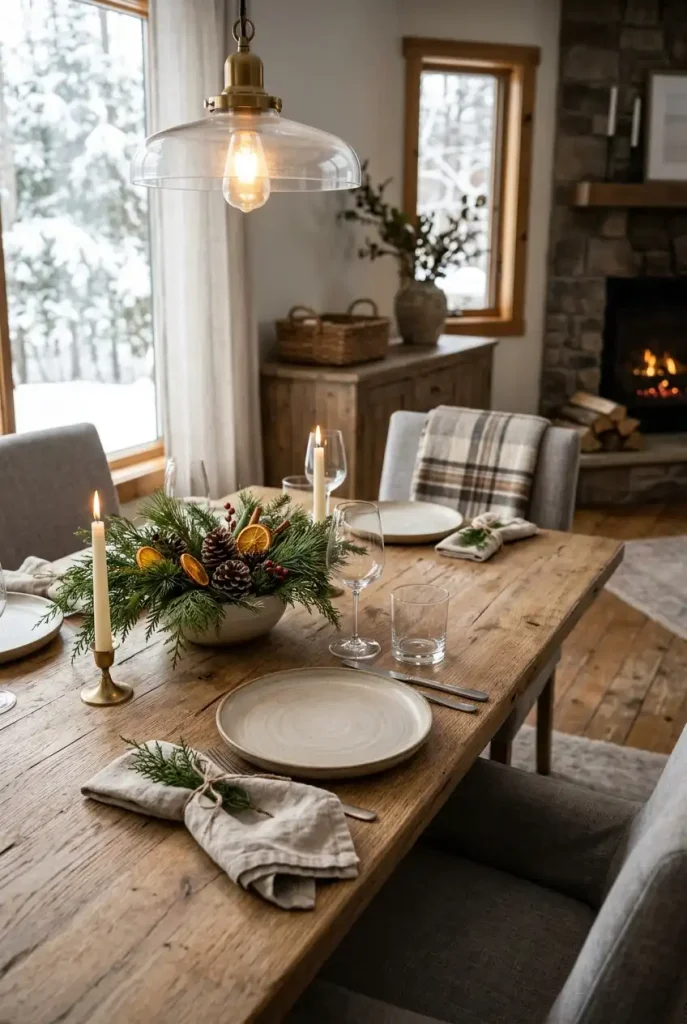
A winter tablescape doesn’t have to be formal. Start with a natural linen runner or bare wood table, then add neutral plates, textured napkins, simple glassware, and a low centerpiece.
Evergreen clippings, pinecones, branches, or seasonal fruit can provide natural variation without making the table feel like a holiday display. Keep the centerpiece low enough that people can see across the table comfortably.
For everyday meals, use fewer decorative pieces and leave enough space for serving dishes.
Do: Keep the centerpiece low and visually open.
Don’t: Fill the entire center of the table with tall arrangements.
Add Texture With Woven Baskets
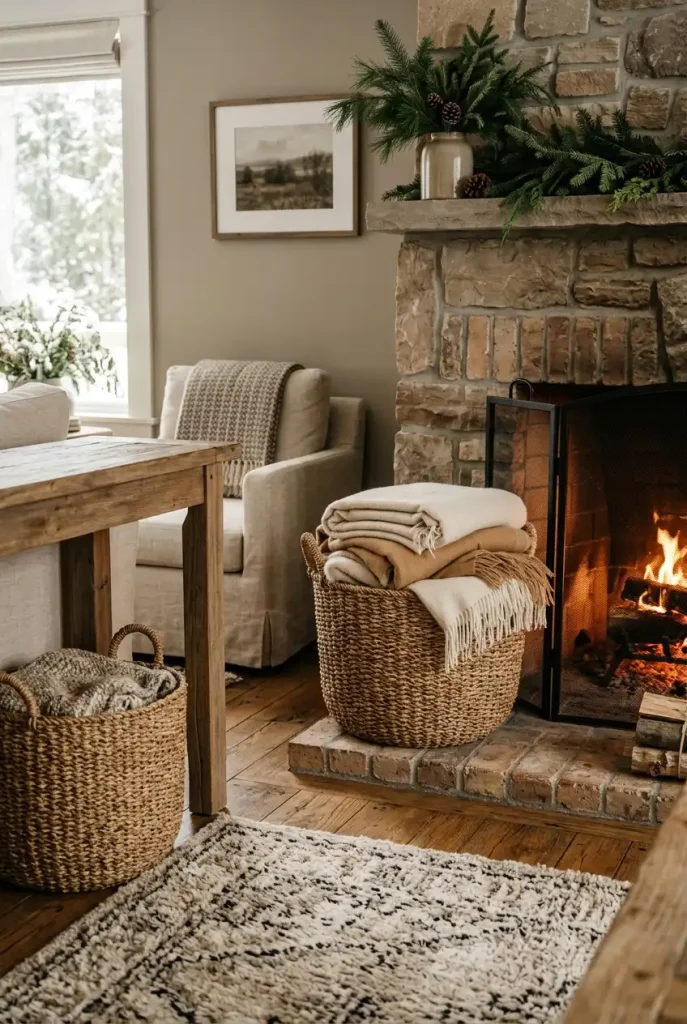
Woven baskets are useful throughout the year, but they are especially effective during winter because their natural texture complements wool, wood, linen, and other tactile materials.
Use a large basket beside the fireplace for blankets, a smaller one beneath a console for accessories, or a pair in a living room to organize everyday items. Choose baskets with enough structure to hold their shape rather than soft containers that collapse when filled.
A basket can also visually soften an otherwise hard-edged storage area.
Give the Fireplace a Quiet Winter Moment

A fireplace naturally becomes a focal point during colder months, so it doesn’t need a complicated mantel arrangement. A few carefully chosen objects can be enough: a ceramic vessel, evergreen branches, a small stack of books, or a sculptural piece.
If the fireplace already has strong architectural character, let it lead. Keep decorative objects asymmetrical and leave some negative space around the main focal point.
For homes without a working fireplace, the same styling principle can be applied to a media console or architectural wall.
Common Mistake: Filling every inch of the mantel.
Better Approach: Use three to five objects with varied heights and leave breathing room between them.
Introduce Deep Winter Colors in Small Doses
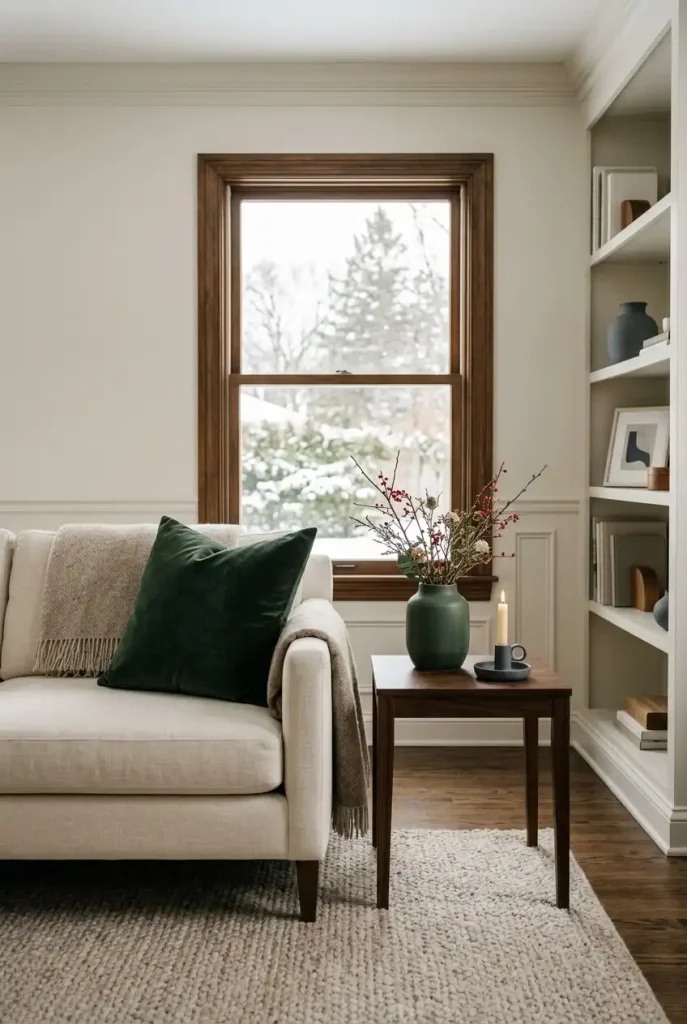
Winter decorating doesn’t have to mean an entirely neutral palette. Deep colors such as forest green, burgundy, charcoal, navy, and chocolate brown can add depth when used selectively.
Instead of repainting an entire room, introduce one or two richer tones through pillows, a throw, artwork, ceramics, or a small accent chair. This makes the seasonal change easier to reverse when spring arrives.
Quick Tip
Use the darker color in more than one place. A forest-green pillow paired with a small green branch or ceramic accent will feel more intentional than one isolated splash of color.
Style the Coffee Table With Winter Layers
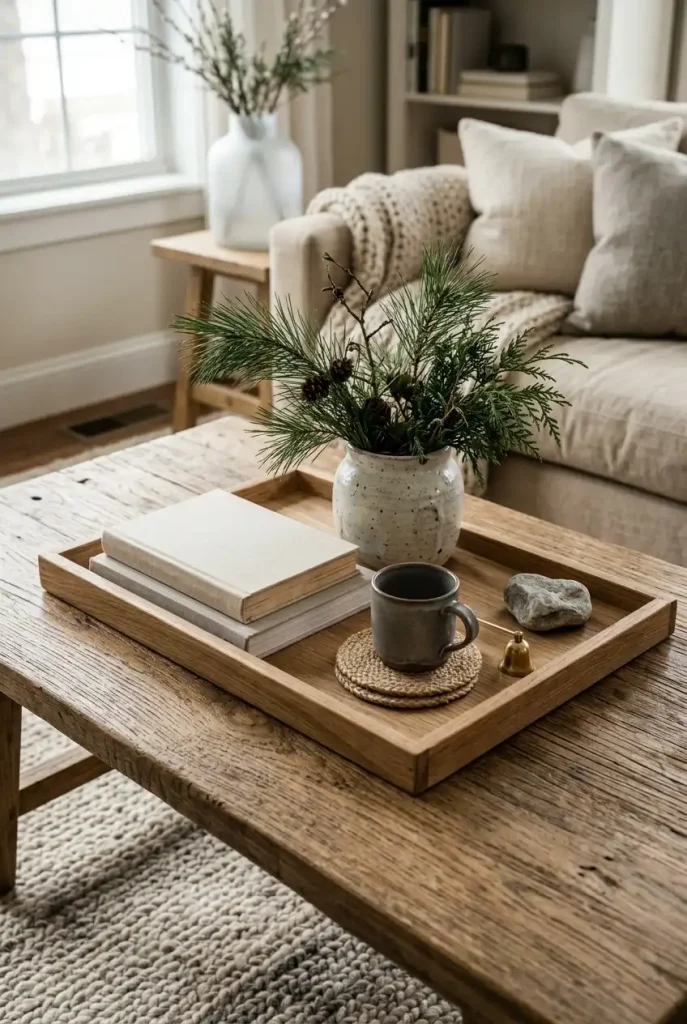
A coffee table can carry the seasonal mood without becoming cluttered. Start with a tray or low decorative object to establish a visual anchor, then add one or two books, a ceramic vessel, and a small natural element.
Vary the height and texture of the objects. A smooth ceramic piece beside a woven coaster and a rough wood tray creates more visual interest than several objects with the same finish.
Leave a meaningful portion of the tabletop open so the room remains functional.
Make a Window Seat Feel Extra Cozy

A window seat is naturally inviting in winter, especially when the area receives soft daylight. Add a fitted cushion or comfortable pad, a couple of textured pillows, and a folded blanket.
If the space is narrow, avoid overfilling it. The goal is to create a place where someone can actually sit rather than a decorative pile of pillows.
A small wall-mounted reading light or nearby floor lamp can make the area useful after sunset.
Use Soft Curtains to Soften Cold-Season Light

Window treatments can make a room feel more comfortable during winter without changing the furniture. Full-length curtains in linen, cotton, or another substantial fabric add softness around windows and visually frame the room.
A warm ivory, oatmeal, mushroom, or muted taupe curtain can complement many existing interiors. Hang curtains high and allow them to fall close to the floor when the room permits; the extra vertical line can make the window treatment feel more intentional.
For smaller spaces, avoid overly heavy fabrics that visually close in the room.
Add a Layer of Faux Fur or Shearling Texture

One tactile accent can make a room feel noticeably warmer. A faux-fur or shearling-style throw placed over an accent chair, bench, or the end of a bed adds softness and visual contrast.
Because the material has a strong texture, use it selectively. One substantial piece usually makes more impact than several competing fluffy accessories.
Pair the texture with smoother materials such as wood, ceramic, cotton, or leather to keep the room balanced.
Create a Winter-Inspired Kitchen Display
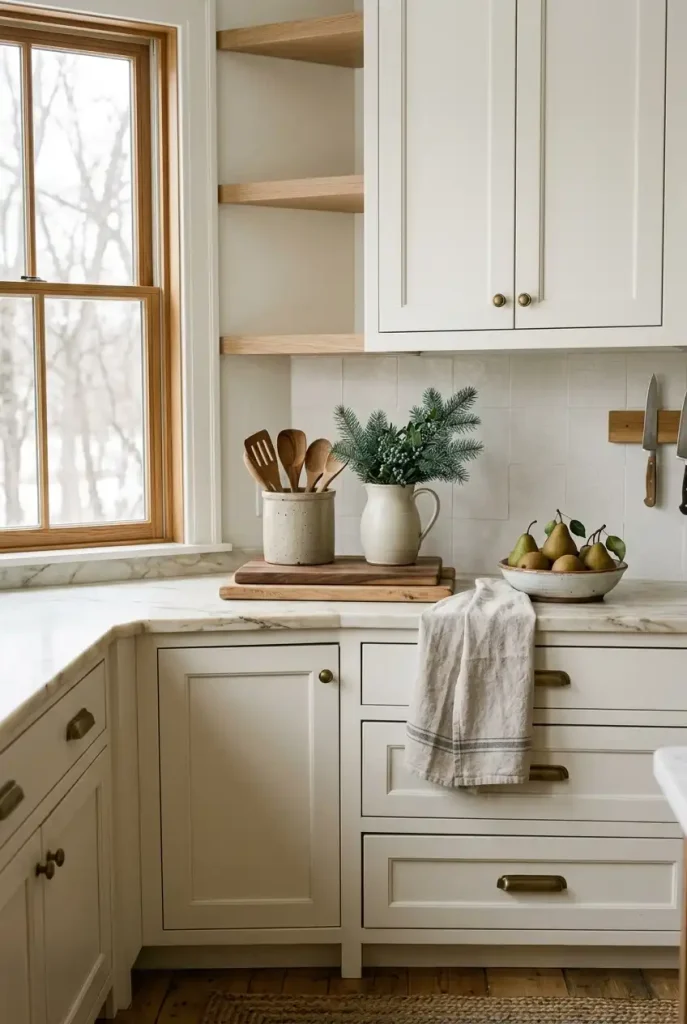
The kitchen can participate in seasonal decorating without sacrificing its working surfaces. Instead of filling the counters with ornaments, use practical objects that happen to feel seasonal.
A wooden cutting board, stoneware crock, ceramic pitcher, evergreen branch, woven towel, and a bowl of winter fruit can create a warm arrangement. Keep the cooking zone clear and concentrate the decorative elements in one area.
This approach is especially useful in smaller kitchens where every inch of counter space matters.
Do: Decorate around the kitchen’s existing function.
Don’t: Put fragile or decorative objects beside the busiest prep area.
Mix Warm Metal Accents Into Neutral Decor

Metal doesn’t have to feel cold. Warm finishes such as aged brass, antique bronze, and soft copper can add depth to a neutral winter interior, particularly when balanced with wood and textiles.
Try a brass lamp, bronze picture frame, copper-toned tray, or small metallic decorative object rather than introducing several matching pieces at once.
The contrast is especially effective in rooms dominated by cream, gray, beige, or natural wood.
Mini Comparison
| Finish | Visual Effect | Works Well With |
|---|---|---|
| Aged brass | Warm and softly reflective | Cream, walnut, olive |
| Antique bronze | Deeper and quieter | Charcoal, beige, natural wood |
| Soft copper | Warmer and more noticeable | Cream, terracotta, warm brown |
The goal is subtle reflection rather than a highly polished metallic look.
Finish With a Layered Winter Bedroom Corner
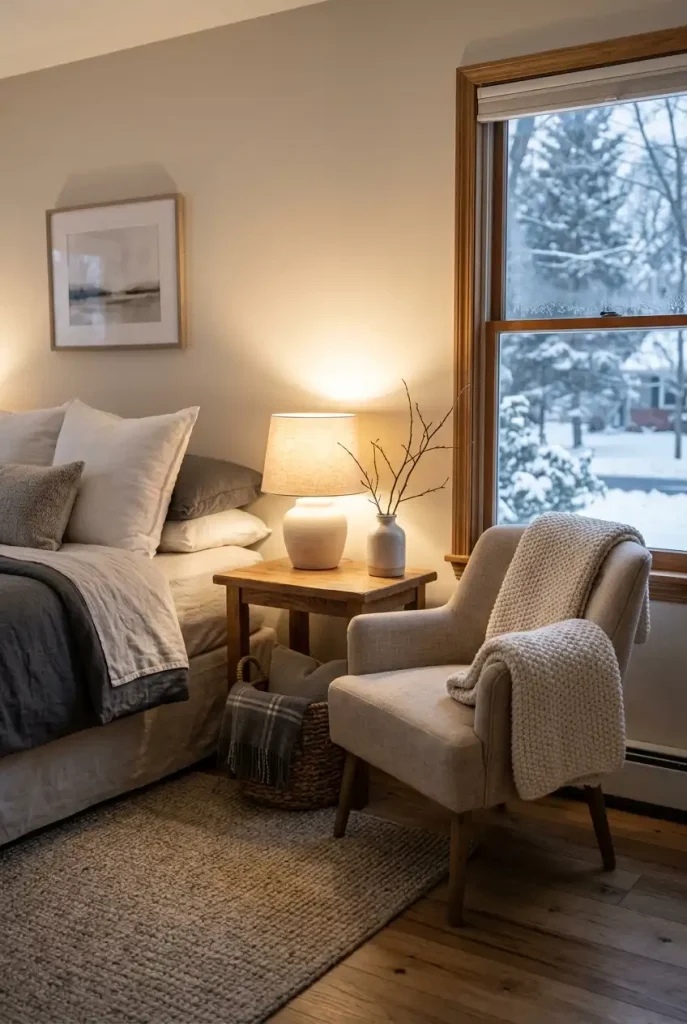
For a complete winter refresh, focus on one bedroom corner rather than trying to redecorate the entire room. A small upholstered chair, woven basket, soft throw, warm lamp, and seasonal branch can create a quiet visual endpoint.
The trick is repetition. If the room already contains warm wood, repeat that tone. If the bedding is cream, use another cream textile nearby. Repeated colors and materials make separate pieces feel connected.
This is also one of the easiest winter decorating ideas to adapt to a rental or smaller bedroom because it relies mainly on movable furnishings and textiles.
Editor’s Note: Seasonal decorating feels more sophisticated when it looks like an extension of the room rather than a temporary collection of unrelated objects.
How to Make Winter Decor Feel Seasonal Without Looking Overdone
The most successful winter decorating usually comes from layers rather than themes. Instead of adding a large number of explicitly seasonal objects, work with materials and atmosphere: wool, wood, woven fibers, ceramics, soft lighting, natural branches, deeper colors, and comfortable textiles.
A useful approach is to choose two or three elements to repeat throughout the home. For example:
- Texture: wool, boucle-style upholstery, woven baskets, linen
- Natural material: wood, stoneware, branches, pinecones
- Color: warm ivory, camel, forest green, chocolate brown
- Lighting: table lamps, floor lamps, candles used safely
- Seasonal greenery: evergreen branches or understated winter foliage
This creates continuity without requiring every room to look identical.
A Simple Winter Decorating Formula
If your home needs a seasonal refresh but you don’t want to start from scratch, use this three-step sequence:
- Remove a few objects first. Clearing visual clutter gives new additions room to breathe.
- Add texture. Introduce a throw, rug, basket, curtain, or layered bedding.
- Finish with atmosphere. Use warm lighting, natural branches, ceramics, or one deeper accent color.
The result should still feel like your home—just warmer, softer, and better suited to the season.