

21 Cozy Christmas Decor Ideas to Make Your Home Feel Magical
The best Christmas decor ideas don’t have to fill every corner of your home to create a memorable holiday atmosphere. A few thoughtful layers of greenery, warm lighting, soft textiles, natural wood, and familiar seasonal details can make an everyday room feel wonderfully festive. From a welcoming front entry to a softly decorated bedroom, the key is to create warmth without making the space feel crowded. These ideas work across apartments, townhomes, suburban houses, and larger homes, with options that can be adapted to different budgets and decorating styles. Whether you prefer traditional red and green, quiet neutrals, rustic textures, or a more elegant holiday palette, these cozy Christmas decorating ideas offer practical ways to make your home feel inviting throughout the season.
Layer Evergreen Garlands Across the Mantel

An evergreen garland is one of the easiest ways to establish a classic Christmas mood in a living room. Drape it loosely across the mantel rather than arranging it in a perfectly straight line. Natural-looking pine, cedar, eucalyptus, or mixed greenery can provide texture and depth, while a few pinecones add an understated woodland quality.
Let part of the garland hang slightly over one side for a relaxed appearance. If you use faux greenery, mix in a few real branches or natural pinecones to make the arrangement feel less uniform.
Quick Tip: Keep the mantel decor at different heights. A garland, a few tapered candles, and one taller decorative object will create more visual interest than a row of similarly sized pieces.
Create a Warm Candlelit Dining Table

A Christmas dining table can feel festive without requiring an elaborate centerpiece. Start with a natural linen runner and build the arrangement with greenery, simple candles, and a few seasonal accents. White or cream dinnerware keeps the table versatile, while brass, wood, or ceramic details introduce warmth.
For everyday holiday meals, keep the centerpiece low enough that guests can comfortably see across the table. A collection of small vessels can be more practical than one oversized arrangement.
Do:
- Use varying candle heights.
- Keep greenery loosely arranged.
- Mix matte and reflective textures.
- Leave enough open space for serving dishes.
Don’t: Fill the entire table with decorations that need to be moved before dinner.
Add Velvet Ribbon to Greenery
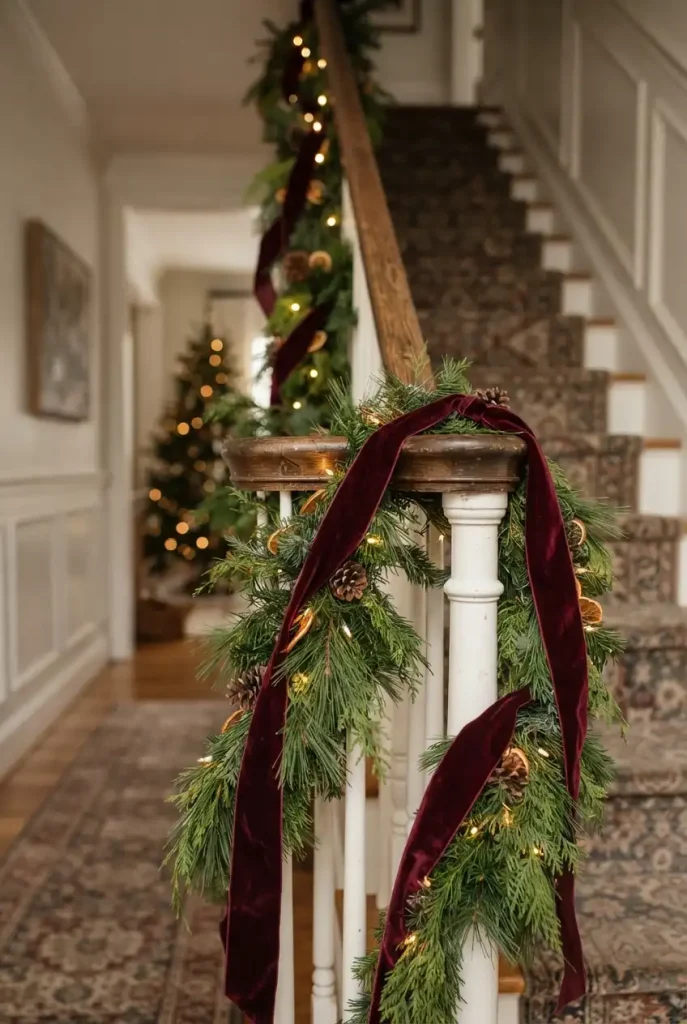
Ribbon can change the character of Christmas decor without requiring a complete redesign. Velvet ribbon in burgundy, forest green, cream, or muted cranberry brings softness and visual richness to garlands, wreaths, stair railings, and tree branches.
Instead of tying identical bows everywhere, cut different lengths and allow some ribbons to hang naturally. A few loose loops can look more relaxed and contemporary than perfectly symmetrical bows.
This approach is particularly useful when you already own basic greenery but want to give it a new seasonal personality.
Style a Simple Christmas Entryway
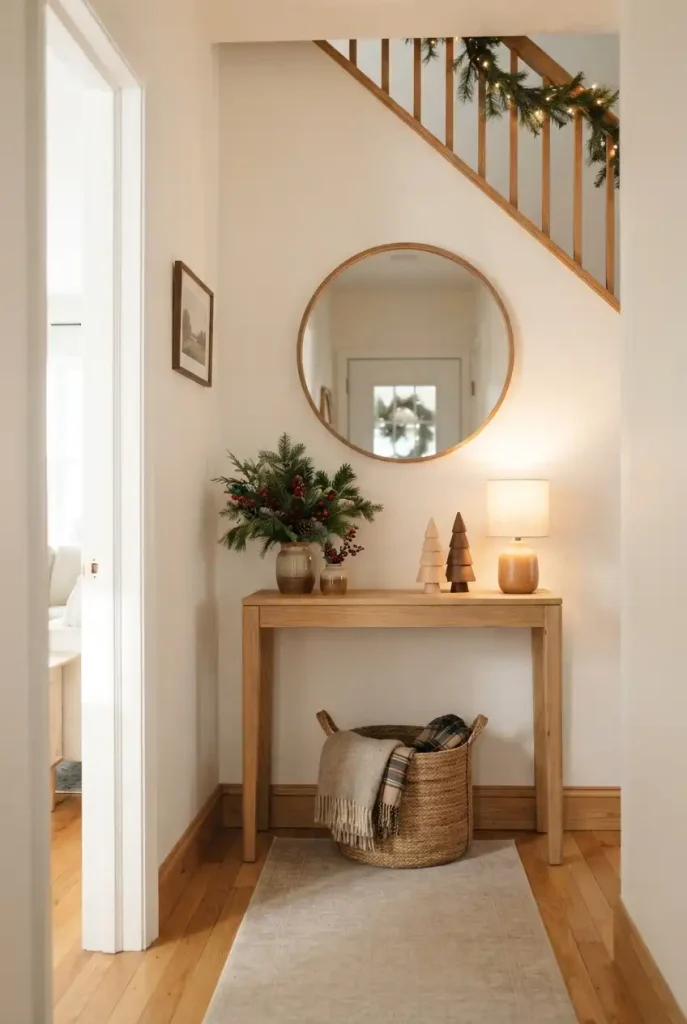
The entryway sets the tone for the rest of the home, so even a small seasonal update can make a noticeable difference. A narrow console, bench, or wall shelf can hold a small arrangement of evergreen branches, a ceramic tree, and a warm lamp.
If floor space is limited, concentrate the decoration vertically. A wreath on the wall, greenery around a mirror, or a small hanging stocking display can create a festive effect without interfering with the walking path.
Editor’s Note: In a narrow entry, fewer larger accents often look more intentional than many tiny decorations.
Bring Christmas Greenery Into the Kitchen
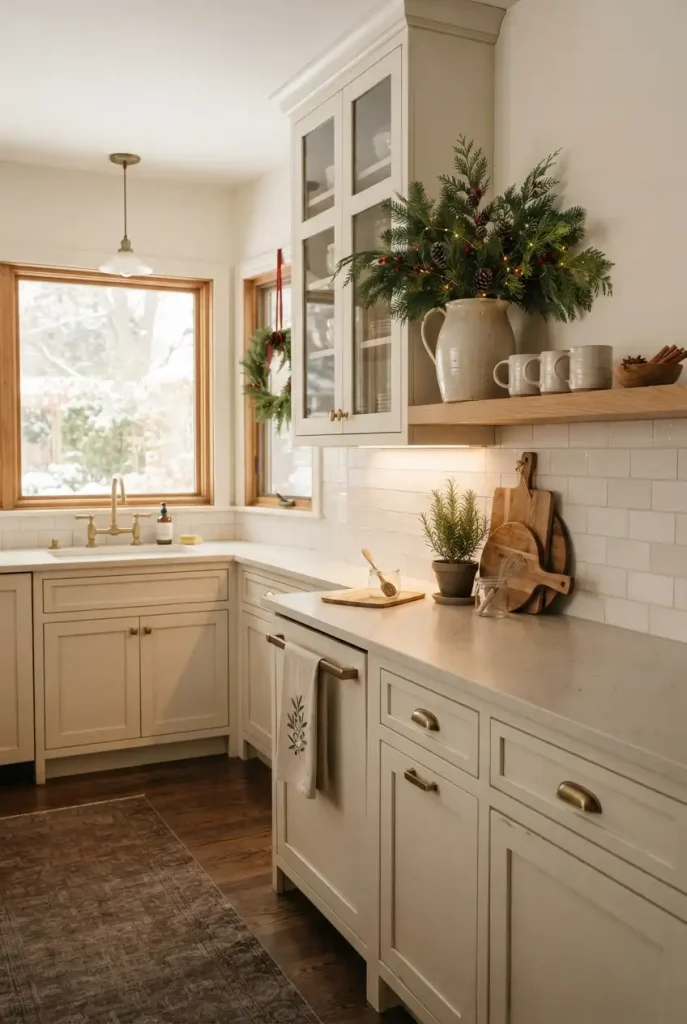
The kitchen is often the busiest room during the holidays, making it a natural place for seasonal decorating. Rather than covering countertops with ornaments, use small touches of greenery along open shelves, a window ledge, or the top of cabinets.
A few clipped evergreen branches in a stoneware pitcher can soften a practical kitchen without interfering with food preparation. Add a seasonal hand towel or wooden cutting board for subtle contrast.
The goal is to decorate around the kitchen’s function rather than compete with it.
Use Soft Throws and Plaid Pillows

Textiles are an easy way to make a living room feel warmer during the holiday season. Add a chunky knit throw over an armchair or sofa and introduce one or two plaid, boucle, velvet, or woven pillows.
Classic patterns such as muted tartan can create a traditional Christmas feeling, while cream-and-tan patterns work beautifully in neutral interiors. Keep the number of seasonal textiles controlled so the room remains comfortable rather than overly themed.
A useful combination is one patterned pillow, one textured solid pillow, and a soft throw.
Decorate With Natural Wood Accents

Wood brings warmth to holiday spaces that might otherwise feel too glossy or colorful. Wooden trees, candleholders, stars, bead garlands, trays, and small carved ornaments can introduce an organic quality.
Pair wood with greenery and cream textiles for a Scandinavian-inspired look, or combine it with plaid and deeper red accents for a rustic Christmas scheme.
A few carefully chosen wooden pieces can also make mass-produced holiday decorations feel more personal.
Make the Fireplace the Holiday Focal Point

If your home has a fireplace, use it as the visual anchor of the room. A restrained mantel arrangement can combine greenery, stockings, candles, and one or two meaningful seasonal objects.
Keep the fireplace itself visually accessible rather than surrounding it with too many decorations. The glow from a real or electric fire can become part of the overall lighting scheme.
For a room with a television above the mantel, use low-profile greenery and symmetrical accents to avoid creating visual competition.
Create a Neutral Christmas Tree
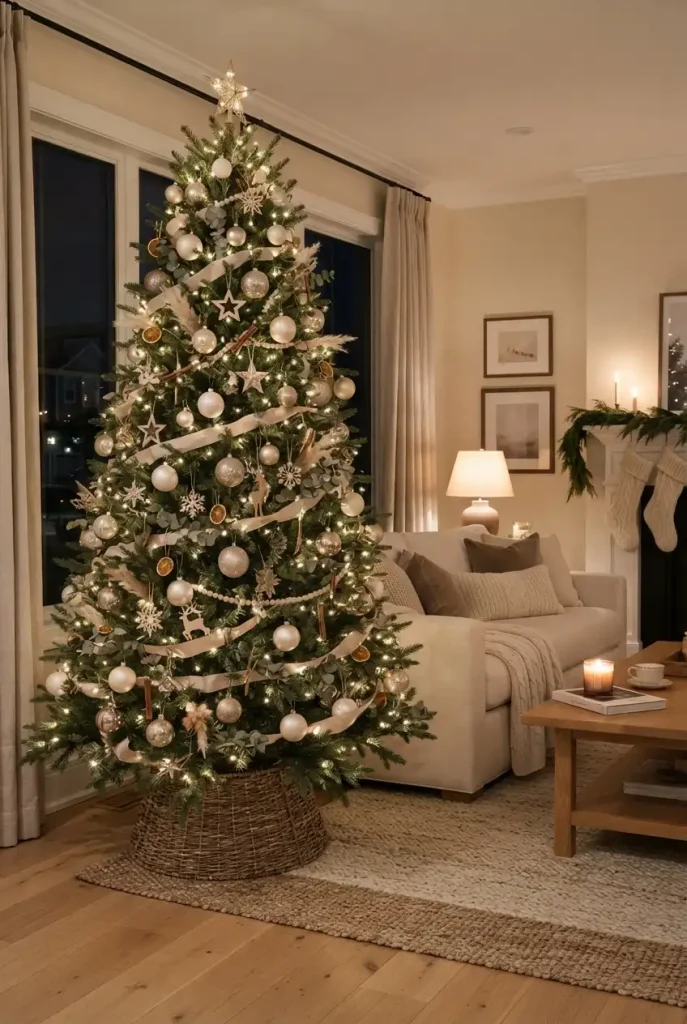
Christmas decorating doesn’t have to rely on bright red and green. A neutral tree using cream, champagne, warm wood, muted gold, and soft brown ornaments can feel festive while fitting naturally into an understated interior.
Use different finishes to keep the tree from appearing flat. Matte ornaments, woven decorations, glass balls, wooden pieces, and soft ribbon provide variation without overwhelming the palette.
Warm white lights are especially effective with neutral ornaments because they maintain the cozy atmosphere.
Turn a Staircase Into a Festive Feature

A staircase offers plenty of vertical space for Christmas greenery. Wrap a garland loosely around the handrail, then add ribbon or a few small ornaments rather than covering every section.
For homes with children or pets, secure the greenery carefully and keep delicate ornaments away from reachable areas. Battery-powered lights can add a soft glow where electrical access is limited.
The staircase should still function normally, so keep the handrail usable and avoid creating bulky sections that interfere with movement.
Common Mistake: Using an oversized garland that overwhelms a narrow staircase.
Better Approach: Choose greenery with a scale that complements the width of the railing and let the architecture remain visible.
Add a Small Christmas Moment to the Bedroom
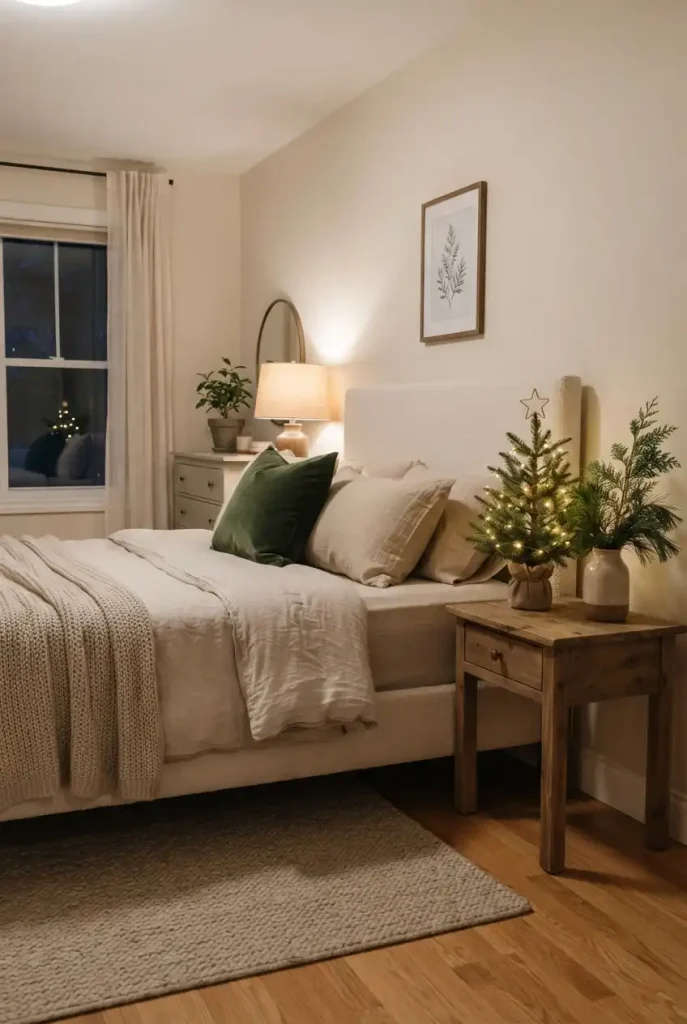
Holiday decorating can extend beyond shared spaces. In a bedroom, keep the Christmas details quiet and comfortable. A small tabletop tree, a eucalyptus or evergreen branch, a velvet cushion, or a simple wreath can introduce the season without making the room feel like a holiday display.
Warm white lights around a headboard or nearby window can create a gentle evening glow. Stick to the bedroom’s existing color palette so the seasonal additions feel integrated.
A few understated details often work better here than a complete festive makeover.
Build a Cozy Hot Cocoa Station

A small beverage station can make holiday gatherings feel more welcoming while adding a decorative moment to the kitchen or dining area. Use a wooden tray or open shelf to group mugs, cocoa ingredients, candy canes, marshmallows, cinnamon sticks, and a seasonal spoon or scoop.
Choose containers that match your existing kitchen style instead of relying on novelty holiday pieces. A few natural textures can make the station feel festive without looking cluttered.
Hang Wreaths in Unexpected Places

A wreath doesn’t have to be limited to the front door. Small wreaths can decorate interior doors, kitchen windows, dining-room walls, bedroom doors, or the back of dining chairs.
Keep the wreath scale appropriate to the surface. A large wreath can dominate a narrow interior door, while several small matching wreaths can create rhythm along a row of cabinet doors.
Natural greenery works beautifully, but dried branches, eucalyptus, berries, or simple ribbon can create different seasonal moods.
Style Open Shelves With Holiday Layers
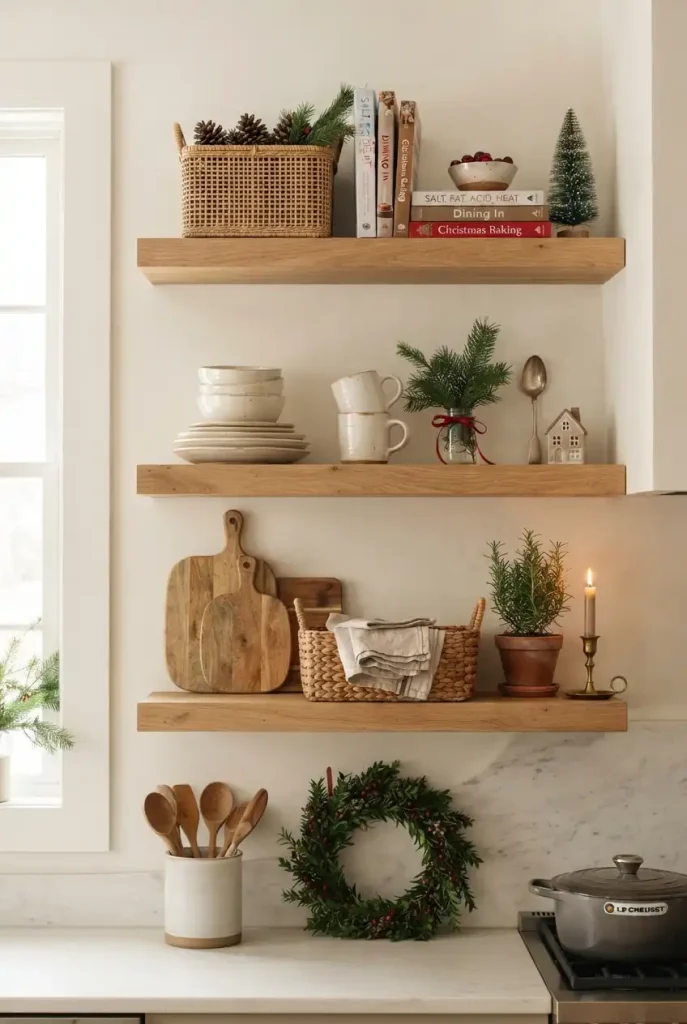
Open shelving is ideal for small seasonal changes because you can introduce Christmas details without rearranging an entire room. Start with existing everyday pieces such as ceramics, books, cutting boards, or baskets. Then add greenery, small trees, pinecones, and one or two holiday-colored accents.
Vary the heights and leave some empty space between groups. The shelves should still look like part of the home rather than a dedicated holiday display.
Quick Tip: Repeat one or two colors across several shelves instead of introducing a new color on every level.
Decorate With Dried Oranges and Natural Elements

Dried oranges can introduce color and texture without relying on shiny ornaments. Use them in garlands, bowl arrangements, wreaths, or on a Christmas tree alongside cinnamon sticks, pinecones, wooden ornaments, and dried greenery.
Their warm amber tone works particularly well with cream, forest green, brown, and muted red. Because natural elements vary slightly in shape and color, they also help holiday arrangements feel less manufactured.
For a cohesive look, repeat the same natural materials in two or three areas of the room.
Create a Traditional Red-and-Green Corner

Traditional Christmas colors remain effective because they immediately establish a familiar holiday atmosphere. Rather than using red and green throughout the entire room, concentrate the colors in one small area such as a reading chair, sideboard, console, or fireplace corner.
A deep red throw, evergreen branches, plaid cushion, and a few classic ornaments can provide enough seasonal color while the rest of the room stays neutral.
This concentrated approach is especially useful if you want traditional Christmas decor without changing your everyday interior palette.
Add Twinkling Lights to Everyday Spaces
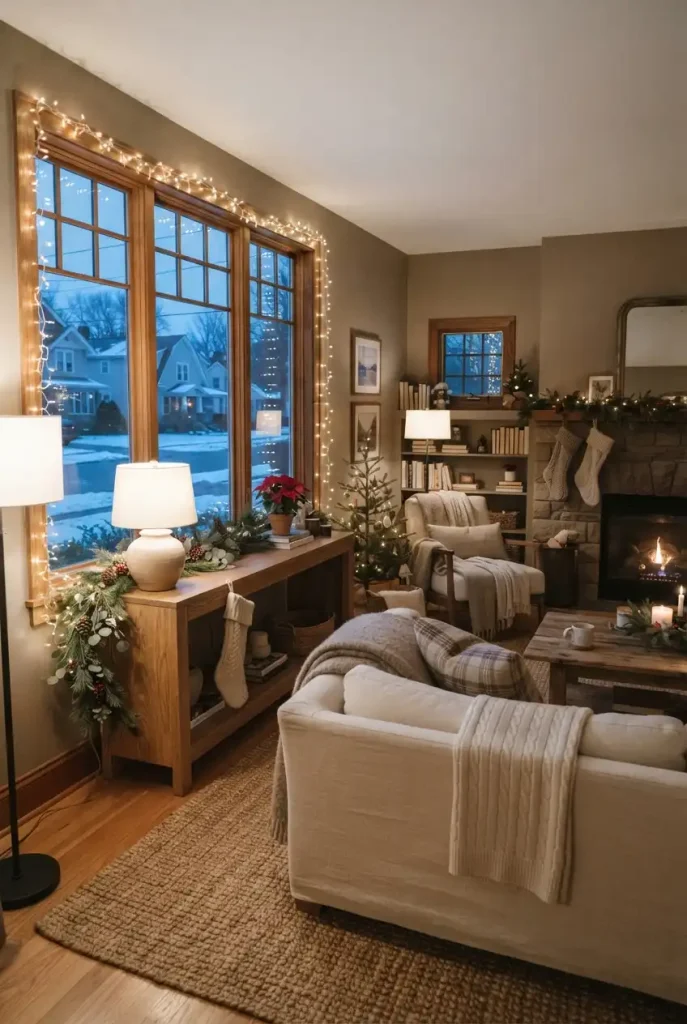
Christmas lights can create atmosphere even when used sparingly. Instead of covering every wall, place warm-white lights around a window, inside a glass vase, along a mantel, or around a bookcase.
Choose fine-wire lights for delicate displays and hide the battery pack or cord as neatly as possible. Warm white tends to blend easily with existing lamps and other residential lighting.
Do / Don’t
Do: Use lights to emphasize architectural or decorative features.
Don’t: Let visible cords become the most noticeable part of the display.
Use a Christmas Village Display

A small Christmas village can become a charming focal point on a sideboard, console, shelf, or mantel. Choose buildings and accessories that share a similar scale and color palette rather than combining too many unrelated pieces.
For a more contemporary interpretation, use simple white or ceramic houses with miniature trees and warm lights. For a nostalgic look, traditional painted buildings and woodland details create a stronger story.
Leave breathing room around the village so each piece remains visible.
Make a Cozy Christmas Coffee Table
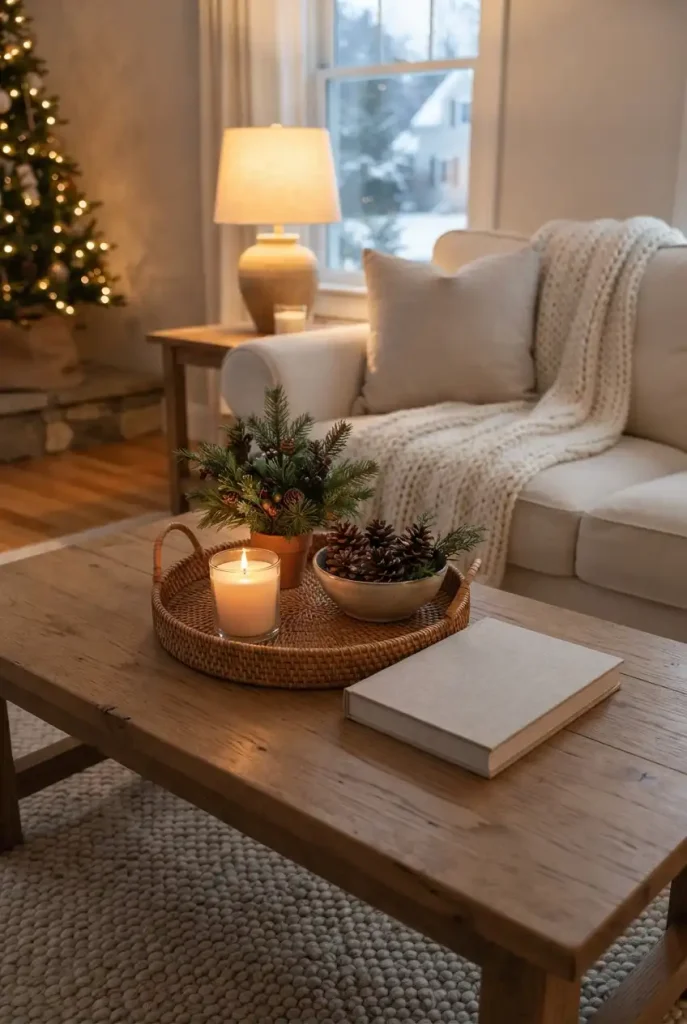
A coffee table can carry a surprising amount of seasonal atmosphere with only a few elements. Start with a tray to visually organize the arrangement, then add a candle, small evergreen vase, decorative bowl, and one seasonal book or natural object.
Keep enough of the tabletop open for everyday use. If the table is small, replace a collection of objects with one low arrangement and a candle.
The best coffee-table styling balances decoration with function.
Decorate the Front Door With Layered Greenery
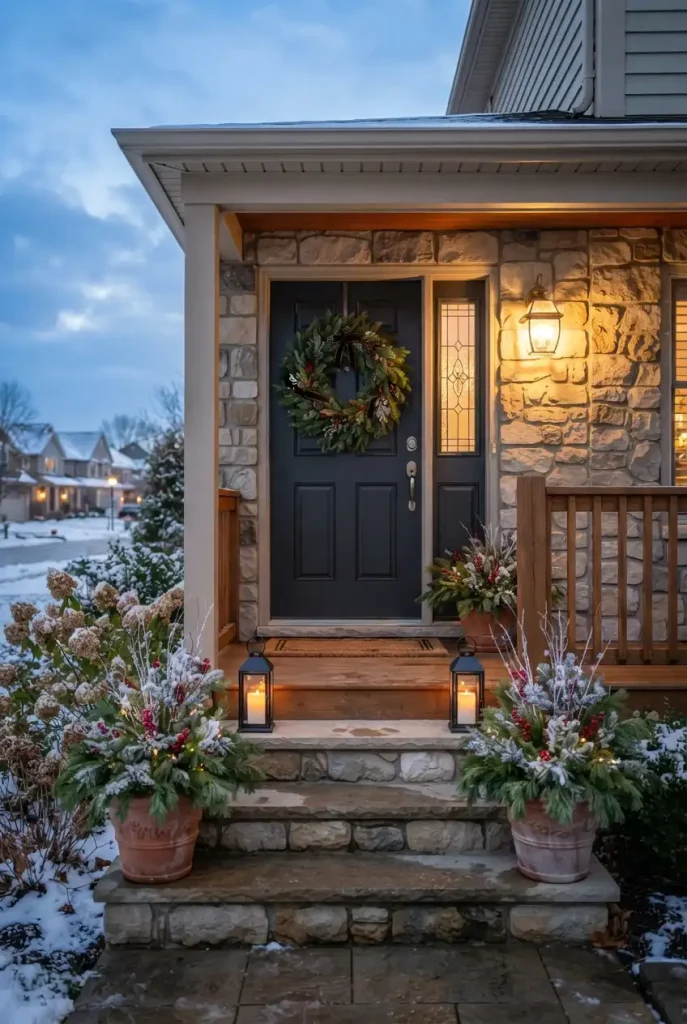
The front door is one of the first places guests see during the holiday season. A substantial wreath can serve as the main focal point, while a pair of planters, lanterns, or small evergreen trees can frame the entrance.
For a smaller porch, concentrate on one wreath and one or two simple accents. Larger entrances can support more symmetrical layers without feeling crowded.
Choose weather-appropriate materials for outdoor displays and secure everything properly against wind and winter conditions.
Finish With Warm Lighting and Personal Details
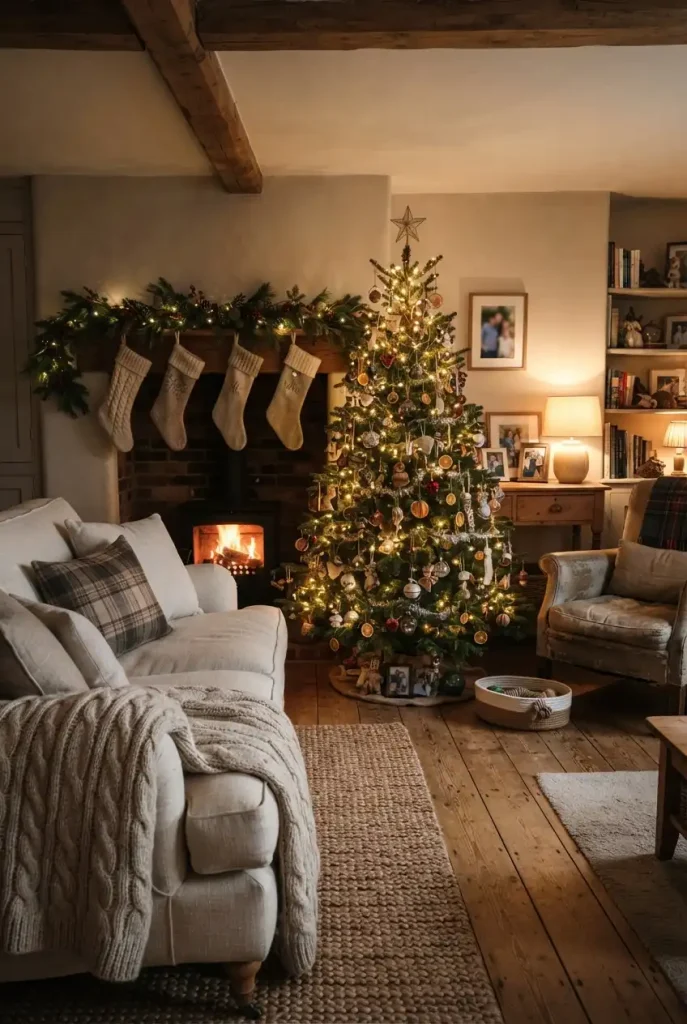
The final layer of Christmas decorating is often the most personal. Family ornaments, handmade pieces, favorite stockings, old photographs, treasured ceramics, or decorations collected over the years can make a room feel more meaningful than a perfectly coordinated display.
Balance these sentimental pieces with warm lighting so they become part of the atmosphere rather than isolated objects. A few personal details can be placed on the mantel, tree, shelves, or a small side table.
The result doesn’t need to look professionally styled. Christmas decor feels especially inviting when it reflects the people who live in the home.
Tips & Tricks
- Combine sentimental pieces with simple neutral decorations.
- Use warm-white bulbs for a softer evening atmosphere.
- Repeat natural greenery around the room to connect different displays.
- Keep treasured objects in places where they can be seen and enjoyed.
How to Make Christmas Decor Feel Cozy Rather Than Cluttered
A cozy holiday home usually depends more on layering and restraint than on the number of decorations. Start by choosing a simple color direction, then repeat it across several rooms. Warm whites, natural wood, evergreen, and one accent color can create continuity without making every space identical.
Use height strategically. Garlands, wreaths, tabletop trees, and hanging decorations draw the eye upward, while baskets, throws, and rugs add warmth at lower levels.
It also helps to preserve everyday function. Leave kitchen counters usable, keep walkways clear, and make sure decorative pieces don’t interfere with doors, stairs, seating, or dining.
If your home is small, focus on high-impact areas such as the entryway, living room, dining table, and front door rather than trying to decorate every surface.
A Cozy Finish for the Holidays
The most inviting Christmas homes aren’t necessarily the ones with the most decorations. They are the spaces where lighting, texture, greenery, color, and personal details work together naturally. Choose a few areas that matter most in your home, then build each display gradually rather than decorating everything at once. A simple evergreen garland, a warm throw, candlelight, or a collection of meaningful ornaments may be enough to create the atmosphere you’re after. The goal is a home that feels festive while remaining comfortable, functional, and unmistakably yours.