
23 Budget-Friendly Bathroom Decor Ideas That Look Expensive
A beautiful bathroom doesn’t have to come with the price tag of a full renovation. With thoughtful color choices, attractive accessories, better lighting, and a few carefully selected details, even a basic bathroom can feel polished and inviting. The secret is to focus on the elements that make the biggest visual difference rather than replacing everything at once.
These budget-friendly bathroom decor ideas show how to create a more expensive-looking space using accessible materials, simple DIY projects, and practical styling changes. Whether you’re decorating a small apartment bathroom, refreshing a rental, or updating a family bathroom in your home, you can find inspiration that fits your space and budget.
From coordinated towels and framed mirrors to warm wood accents and elegant countertop arrangements, each idea offers a realistic way to make your bathroom feel more considered without committing to a costly remodel.
Create a Cohesive Neutral Color Palette
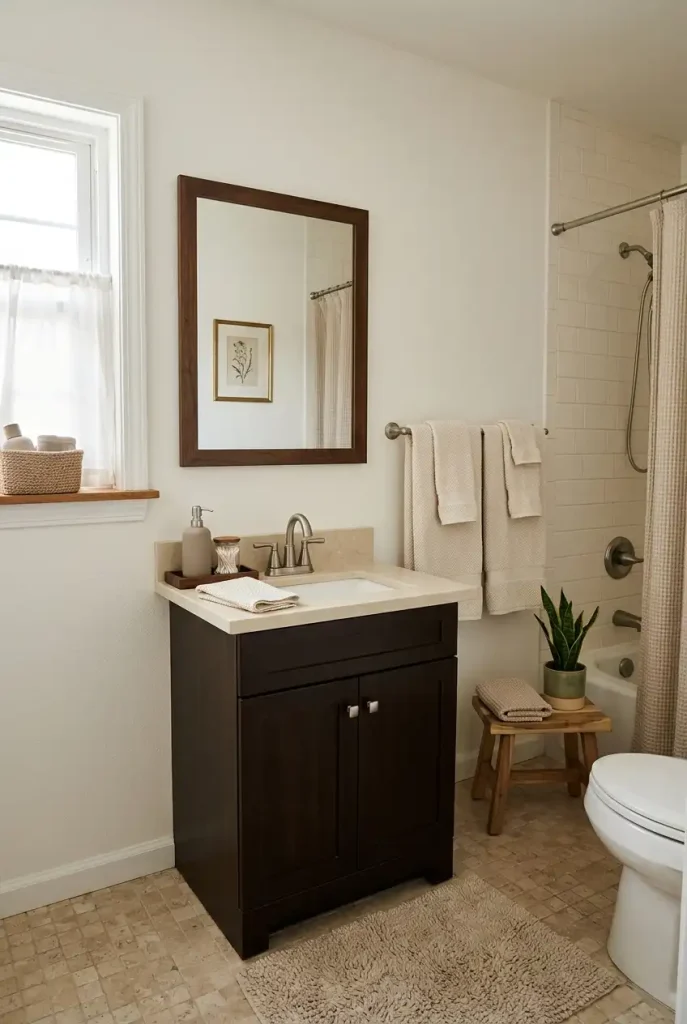
A coordinated color palette is one of the easiest ways to make a bathroom feel more expensive. Warm white, soft beige, taupe, pale gray, and muted brown work well together because they create a calm background without competing for attention.
You don’t need to replace the tiles or vanity to achieve this effect. Start with the items you can change, such as towels, a bath mat, a shower curtain, and countertop accessories. Keeping these pieces within two or three complementary colors makes the room feel more intentional.
For a warmer appearance, introduce natural wood or woven textures. If you prefer a crisp, contemporary look, combine white textiles with matte black or brushed nickel details.
Budget-friendly approach: Use your existing finishes as the foundation and purchase only a few coordinating accessories. Repeating colors is often more effective than adding lots of new decorations.
Upgrade the Mirror With an Elegant Frame

A plain bathroom mirror can look surprisingly sophisticated with a frame that complements the rest of the room. A slim wood frame adds warmth, while a simple black frame creates a sharper, more contemporary effect. Painted white or soft brass-toned frames can also work well with traditional interiors.
If the mirror is in good condition, replacing it may be unnecessary. A suitable mirror-framing kit or a carefully measured DIY frame can provide a more finished appearance without the expense of installing a completely new mirror.
Before starting, check how the mirror is mounted and whether the proposed framing material is suitable for a humid environment. Avoid covering clips, obstructing cabinet doors, or interfering with lighting.
Quick tip: Match the mirror frame to one other element, such as a shelf, cabinet pull, or light fixture, rather than trying to match every finish in the room.
Replace an Ordinary Shower Curtain

A shower curtain covers a large portion of many bathrooms, making it an effective place to focus a small decorating budget. A well-chosen curtain can soften the room, introduce texture, and make basic fixtures look more coordinated.
Look for a simple design with a substantial-looking fabric texture, a subtle stripe, or a restrained pattern. Ivory, soft sage, muted blue, and warm gray are versatile choices. A curtain with an uncomplicated pattern can also introduce personality without making a compact room feel busy.
Pay attention to length and width. A curtain that hangs neatly and covers the tub appropriately usually looks more polished than one that is too short or narrow.
For everyday practicality, use a suitable waterproof liner where needed and follow the care instructions for the curtain. Keep the rod and rings simple so they support rather than compete with the fabric.
Style the Countertop With a Small Decorative Tray
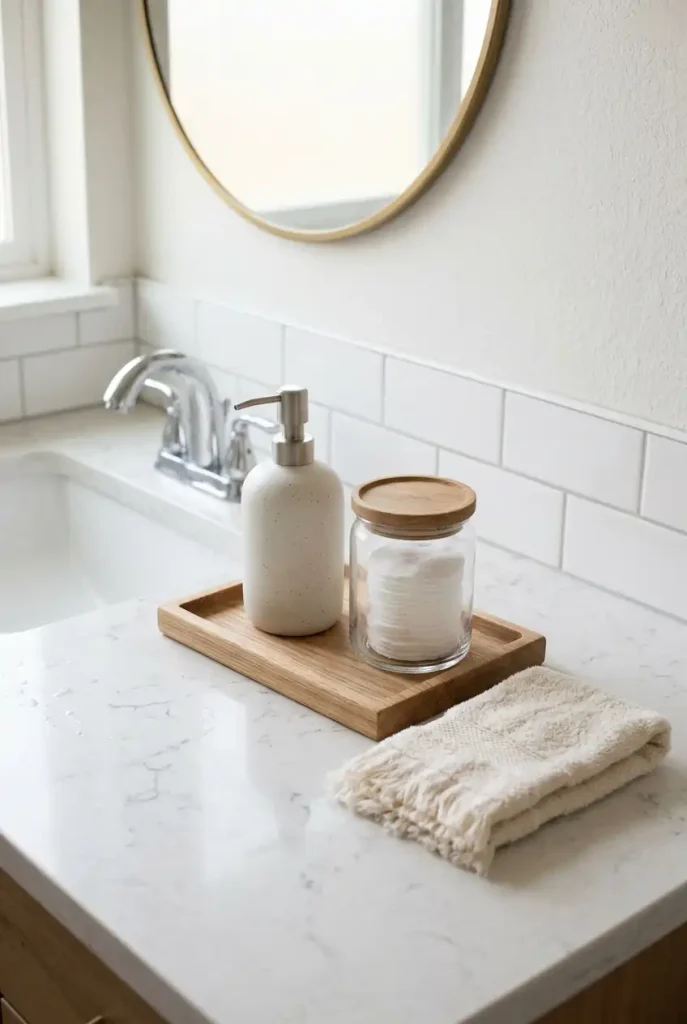
A bathroom countertop can feel cluttered when everyday products are scattered across the surface. A small decorative tray creates a visual boundary, bringing frequently used items together and making the vanity appear more organized.
Choose a tray made from sealed wood, ceramic, stone-look material, or another finish appropriate for the area. Arrange just two or three useful items on it, such as a soap dispenser, a small jar of cotton rounds, and a folded hand towel.
The rest of the countertop should remain available for daily routines. This balance is particularly important in small bathrooms, where decorative objects can quickly take over valuable space.
A simple styling formula:
- One tray to define the arrangement.
- One attractive dispenser for hand soap.
- One small container for useful essentials.
- Clear space around the sink for easy cleaning.
The goal is not to hide every practical item. It’s to give everyday essentials a consistent place.
Add Affordable Wall Art
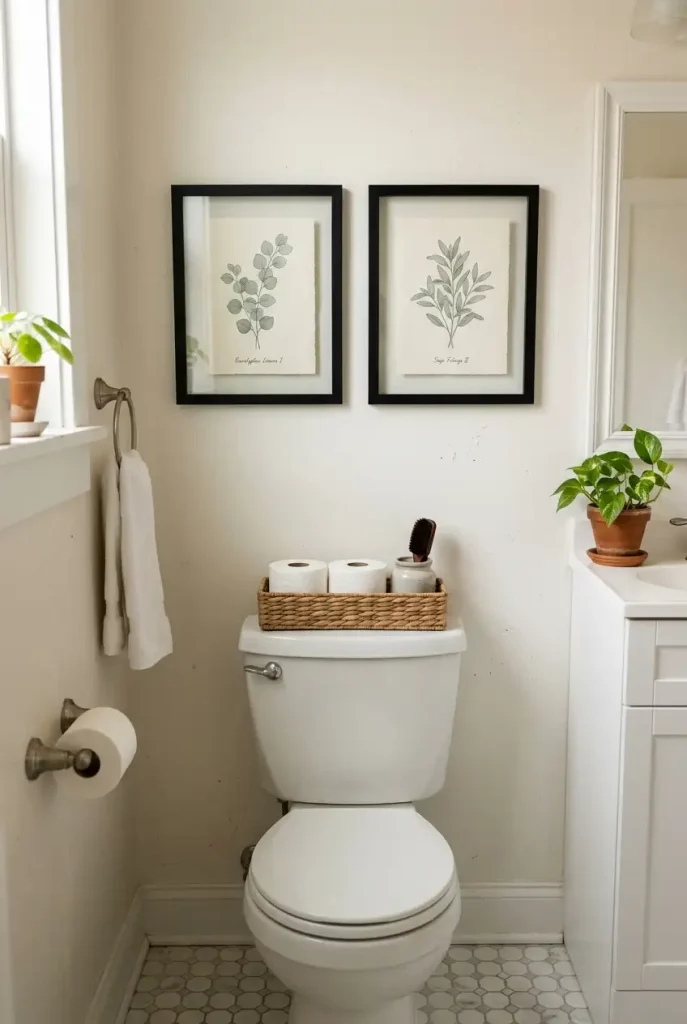
Bare bathroom walls can make an otherwise functional room feel unfinished. A small piece of wall art introduces personality and helps connect the bathroom’s colors and textures.
Botanical illustrations, abstract shapes, minimal landscapes, and understated line drawings are easy to incorporate into different decorating styles. You can find inexpensive prints or create your own artwork, then use ready-made frames for a coordinated finish.
In a narrow bathroom, one vertical print may work better than a large horizontal arrangement. Above a toilet or beside a vanity, two smaller prints can create balance when the available wall space allows it.
Because bathrooms experience moisture, choose suitable framing and placement away from direct splashes and excessive steam. Use secure hanging hardware appropriate for the wall and frame weight.
Budget tip: Select artwork that repeats a color already found in your towels, shower curtain, or bath mat. This creates continuity without buying additional accessories.
Introduce Warm Wood Accents

Wood introduces warmth into bathrooms dominated by ceramic tile, porcelain, glass, and metal. Even one or two wood accents can soften the overall appearance and make the space feel more thoughtfully decorated.
Consider a small wooden stool beside the bathtub, a compact shelf above the toilet, a wood-framed mirror, or a soap dish in a matching tone. Light oak suits Scandinavian-inspired bathrooms, while deeper walnut tones can complement traditional or moodier interiors.
You don’t need to purchase a matching collection. Two related wood tones are often enough to establish continuity, especially when the rest of the palette stays simple.
Keep wooden accessories away from standing water, and choose finishes appropriate for humid conditions. A decorative piece that constantly gets wet may require more maintenance than expected.
Make Towels Part of the Decor
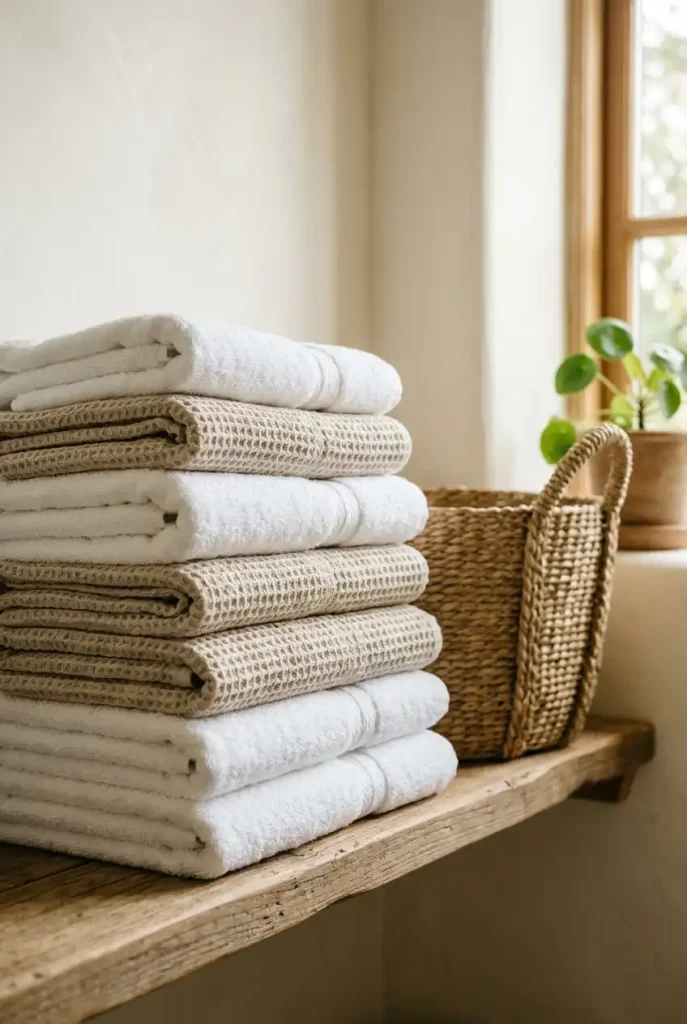
Towels are everyday essentials, but they can also contribute to the overall design. A coordinated set in white, oatmeal, soft gray, or muted green gives a bathroom a more consistent appearance than a collection of unrelated colors and patterns.
Fold towels neatly on an open shelf or roll a few smaller towels inside a basket. If you have limited storage, display only the pieces you use regularly and keep the rest in a cupboard.
White towels create a crisp, classic look, while warmer shades introduce softness. You can also use one muted accent color to complement your shower curtain or artwork.
You don’t need to replace every towel at once. Begin with the most visible hand towels, then gradually coordinate the larger bath towels as needed.
Editor’s note: The visual effect comes from consistency and neat storage, not from buying the most expensive towels available.
Use a Large Mirror to Reflect Light

A mirror can make a bathroom feel brighter and more open by reflecting existing light and extending the visual depth of the room. This can be especially helpful in small bathrooms where a window or light source is limited.
If you already have a small mirror, consider whether a larger replacement would fit the vanity wall without crowding nearby cabinets or lights. A simple frameless mirror often feels contemporary, while a thin framed option can introduce extra character.
Position the mirror to reflect a useful view, such as a window, a bright wall, or an attractive feature. Avoid positioning it where it primarily reflects clutter.
Before replacing a mirror, check the wall construction, mounting method, and weight requirements. A larger mirror needs suitable support and careful installation.
Budget-friendly alternative: Clean the existing mirror thoroughly and improve the lighting around it before deciding that a replacement is necessary.
Replace Basic Cabinet Knobs and Pulls

Cabinet hardware is a small detail, but it sits at eye level and gets used every day. Replacing dated knobs or pulls with a more considered finish can make an existing vanity look refreshed without the cost of buying new cabinetry.
Brushed brass adds warmth, matte black creates contrast, and brushed nickel offers a restrained contemporary look. The best choice depends on your existing faucet, lighting, and other visible metal finishes.
Before purchasing anything, measure the distance between the screw holes on existing pulls. Choosing replacements with the same spacing can save time and prevent unnecessary drilling or patching.
For renters, keep the original hardware in a labeled bag so it can be reinstalled when moving out. If the cabinet is damaged or the new hardware needs different holes, check the relevant permission requirements before modifying it.
Install a Simple Floating Shelf
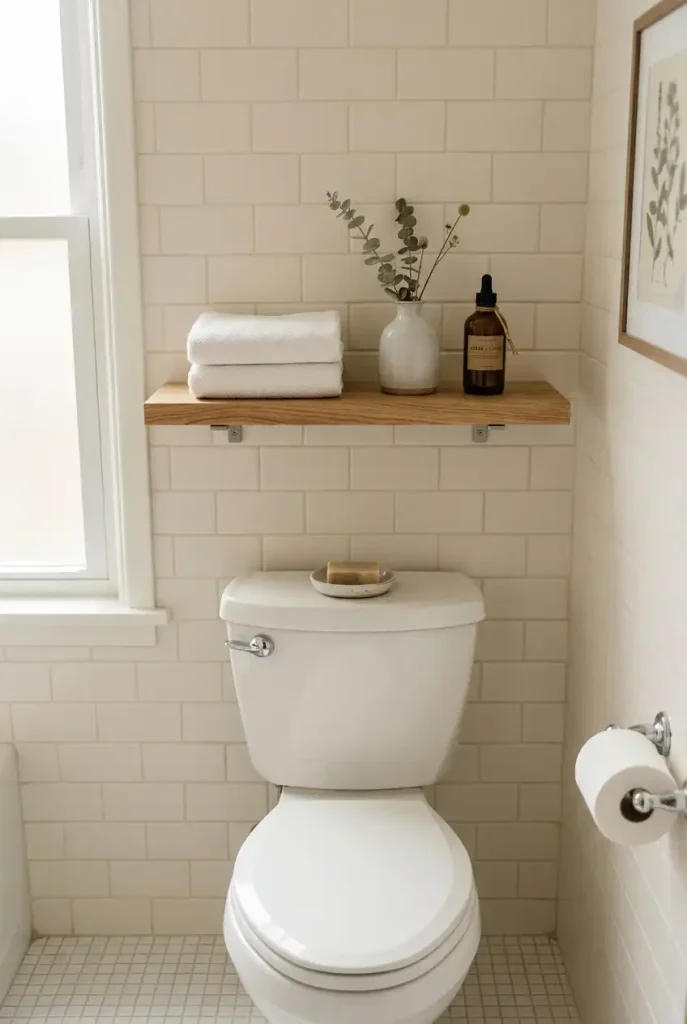
A floating shelf creates useful storage and a place to display a few attractive accessories. The wall above a toilet is often an overlooked area, making it a practical option for bathrooms with limited cabinet space.
A single wood shelf adds warmth, while a painted shelf blends into the wall for a quieter look. Style it with a small plant, a ceramic container, or neatly folded hand towels rather than filling every inch.
Keep objects balanced and leave some empty space around them. The shelf should serve a purpose, not become another surface that collects clutter.
Before installation:
- Check for plumbing and electrical services inside the wall.
- Use appropriate anchors or attach the shelf to suitable structural support.
- Confirm that the shelf is level and rated for its intended load.
- Keep stored items away from areas where they could fall into the toilet or basin.
A renter may prefer a freestanding storage unit or a removable solution suitable for the specific wall surface.
Add a Textured Bath Mat
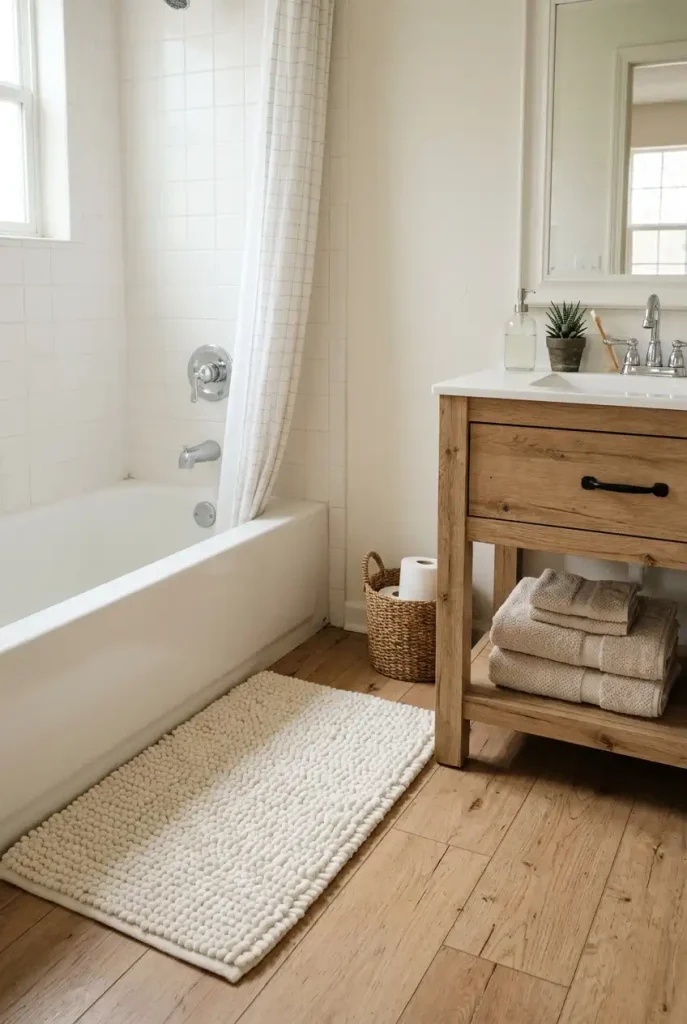
A bath mat can connect the colors of a bathroom while adding softness to a hard-tiled floor. Instead of choosing a heavily patterned design, consider a simple cotton weave, a subtle ribbed texture, or a restrained geometric pattern.
An ivory or oatmeal mat suits a warm-neutral scheme, while charcoal, sage, or muted blue can add contrast. The size matters, too: a mat that is proportionate to the tub or vanity looks more intentional than one that disappears into the floor or overwhelms a narrow walkway.
Choose a product with suitable absorbency and a slip-resistant backing, or use an appropriate non-slip underlay. Keep the mat clean and allow it to dry between uses.
Common mistake: Choosing a mat based only on appearance. A beautiful bathroom accessory should also work safely and comfortably in a damp environment.
Refresh the Bathroom With Paint

Paint can change the atmosphere of a bathroom without requiring new furniture or expensive finishes. Muted sage brings a natural quality, warm white creates a fresh background, and a dusty blue can give the room a softer, more traditional character.
When choosing a color, consider the undertones of your existing tile, countertop, and flooring. A warm white may work better with cream-colored tile than a stark, cool white. Testing sample colors under both daylight and the bathroom’s artificial lighting can help you avoid surprises.
Use a paint product suitable for the bathroom’s surface and moisture conditions, and prepare the wall according to the manufacturer’s instructions. Surfaces with persistent dampness or peeling paint need their underlying problems addressed before repainting.
For a rental, check whether painting is permitted. If it isn’t, introduce color through towels, art, and a shower curtain instead.
Coordinate Soap Dispensers and Everyday Containers

Mismatched packaging can make a countertop feel visually busy, even when it’s clean. Coordinating a few frequently used items creates a more consistent appearance without requiring a full bathroom makeover.
Choose two or three containers in a shared material or color. White ceramic works with traditional and modern bathrooms, amber glass adds warmth, and clear glass keeps the arrangement visually light. You can mix materials, provided the overall palette remains coordinated.
Prioritize items that remain visible every day, such as hand soap, a toothbrush holder, and a small container for cotton pads. Keep cleaning products and less attractive essentials in a cupboard or drawer where practical.
Check that dispensers are easy to refill and clean. Containers near the sink should be suitable for regular contact with moisture.
Budget tip: Replace the most visually distracting items first. There’s no need to buy a complete matching set if your existing accessories already work with the new arrangement.
Bring in a Suitable Bathroom Plant

A little greenery can soften the hard surfaces found in many bathrooms. A leafy plant on a shelf or vanity introduces natural color, making a simple room feel more welcoming.
Choose a plant according to the light and conditions in your actual bathroom. A bright room may accommodate different varieties than an interior bathroom with no window. Pothos, for example, can suit a range of indoor conditions, but it still needs appropriate light and care.
If your bathroom is dark or frequently unoccupied, a realistic artificial plant may be the more practical choice. Select one with natural-looking leaves and a simple ceramic planter rather than a highly decorative container.
Keep plants away from direct splashes of cleaning chemicals, and make sure pots have an appropriate drainage arrangement. Protect wood shelves and countertops from excess moisture.
Use Matching Storage Baskets
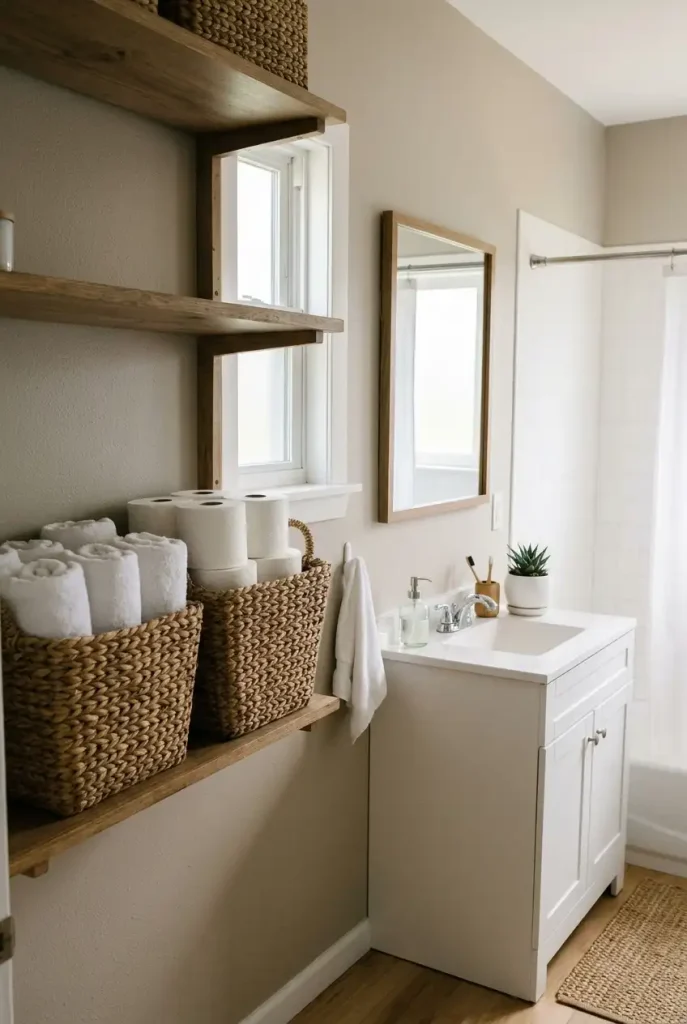
Visible storage can look decorative when containers are coordinated and their contents are arranged neatly. Woven baskets bring texture to white cabinetry and plain walls, while fabric bins or simple plastic containers may be more suitable for damp areas.
Use baskets to group spare towels, toilet paper, hair accessories, or other small essentials. Similar shapes or complementary colors help the storage look intentional without requiring custom cabinetry.
For a vanity with open shelving, measure the available space before buying baskets. Containers that slide in easily and leave room for your hands are more practical than oversized options.
Choose materials that suit the bathroom’s humidity. Natural woven baskets work well in suitable locations but should not remain damp. Washable or moisture-resistant alternatives can be more useful near the shower.
Quick tip: Keep one basket for each broad category of items. This makes it easier to find what you need and prevents the shelves from becoming a collection of miscellaneous products.
Make the Lighting Feel Softer and More Intentional
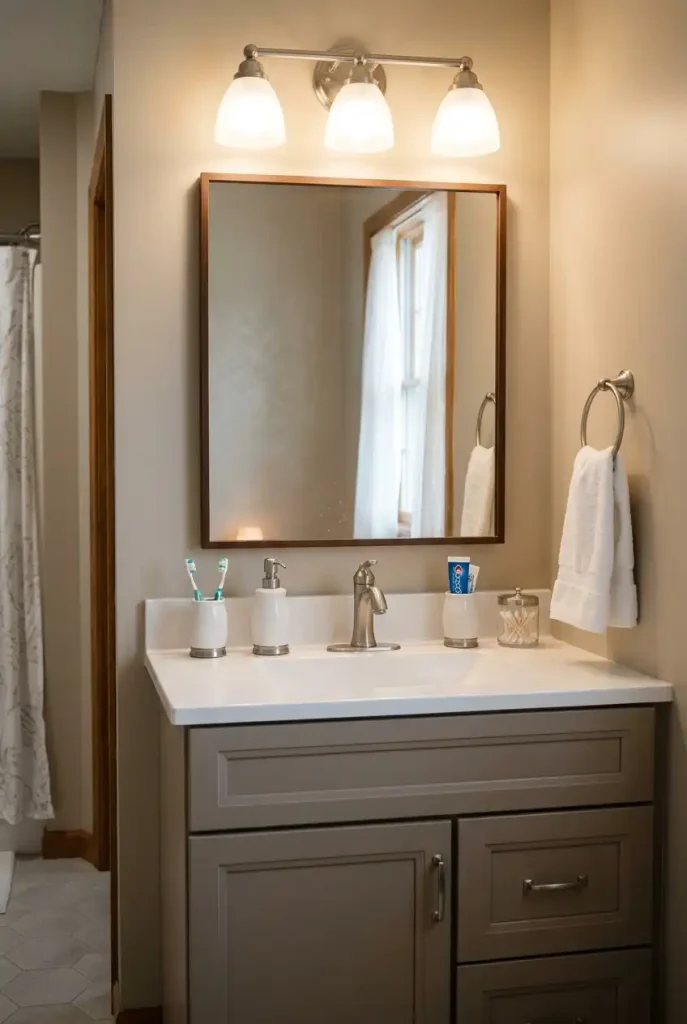
Lighting influences how colors, mirrors, and materials appear. A bathroom with harsh, uneven light may feel less inviting than one with comfortable, well-distributed illumination.
Start by looking at the lighting you already have. Replacing an unsuitable bulb with one that matches the fixture’s requirements and provides a more comfortable color appearance can be a modest improvement. A warm or neutral-white tone often works well for a relaxed atmosphere, while a suitable light near the mirror should still allow you to see clearly for grooming.
If you replace a fixture, choose one rated for its intended bathroom location and follow applicable electrical requirements. Areas exposed to water may require specific equipment and installation precautions, so don’t assume every decorative fixture is suitable.
Do / Don’t
- Do: Aim for even light around the vanity and mirror.
- Don’t: Choose a bulb solely because it looks warm in the store.
- Do: Consider how the light renders skin tones and the bathroom’s paint colors.
- Don’t: cover ventilation openings or install decorative lighting in unsuitable damp locations.
Add a Stylish Ladder Shelf
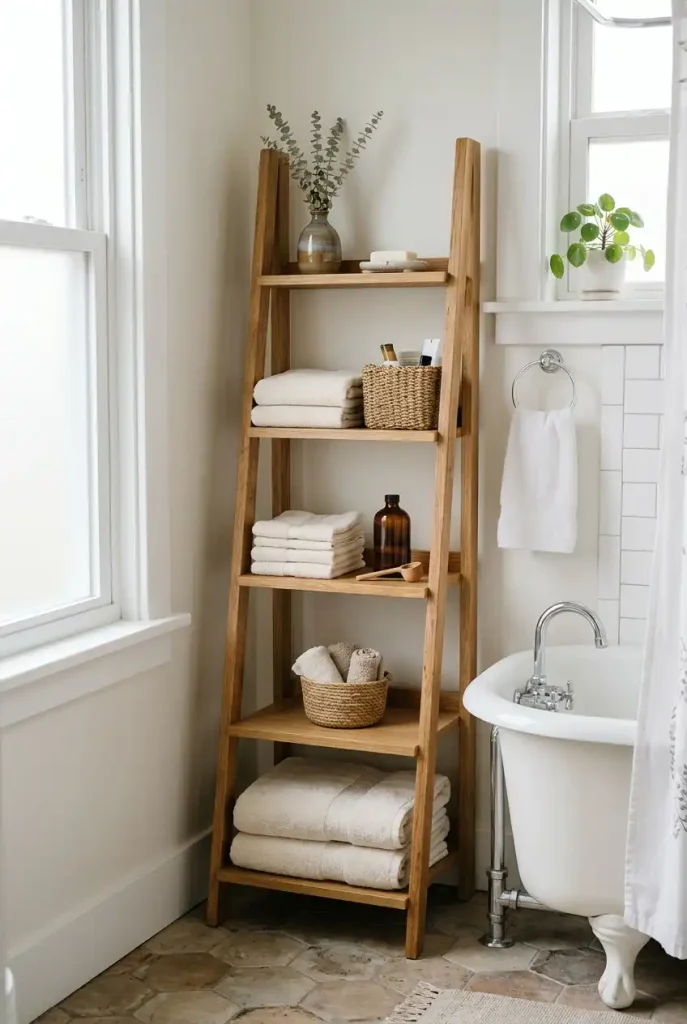
A ladder shelf can introduce vertical storage without taking up the floor area of a wide cabinet. It works particularly well in bathrooms where a blank corner could accommodate a narrow piece of furniture.
Choose a shelf with a footprint that preserves a clear walking path. Light wood adds warmth, painted white blends into the walls, and black metal can suit a more industrial look.
Use the lower levels for baskets or spare towels and reserve the upper shelves for lighter, less frequently used items. Avoid overcrowding every rung, as leaving some open space helps the shelf feel visually lighter.
A freestanding shelf should be stable and suitable for bathroom conditions. Secure it according to the manufacturer’s instructions, especially if children may be present. Keep it away from direct splashes and avoid placing heavy items overhead.
Give the Shower a More Organized Appearance
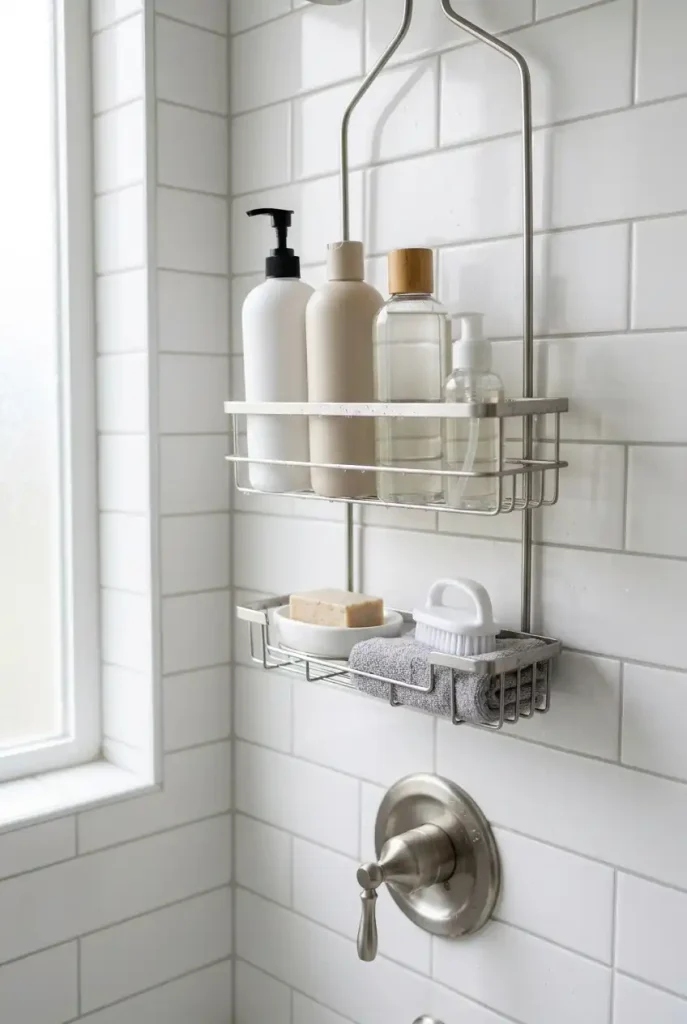
Bottles scattered around the shower can make even a recently cleaned bathroom look untidy. A suitable shower caddy or shelf gives everyday products a defined place and helps keep the edges of the tub or shower floor clear.
Choose a storage solution designed for your particular setup. Some caddies hang from the showerhead, while others fit over a shower door or attach to a wall using a specified mounting system. Check compatibility with your fixtures and surfaces before buying.
For a more cohesive appearance, group products by use and keep only regularly used items in the shower. If you transfer products to refillable containers, label them clearly so their contents remain identifiable.
Practical consideration: Use only storage systems appropriate for the wet environment and follow installation instructions. Avoid drilling into tiled shower walls without confirming what’s behind them and how the installation can be properly waterproofed.
Introduce a Small Vintage-Inspired Accent
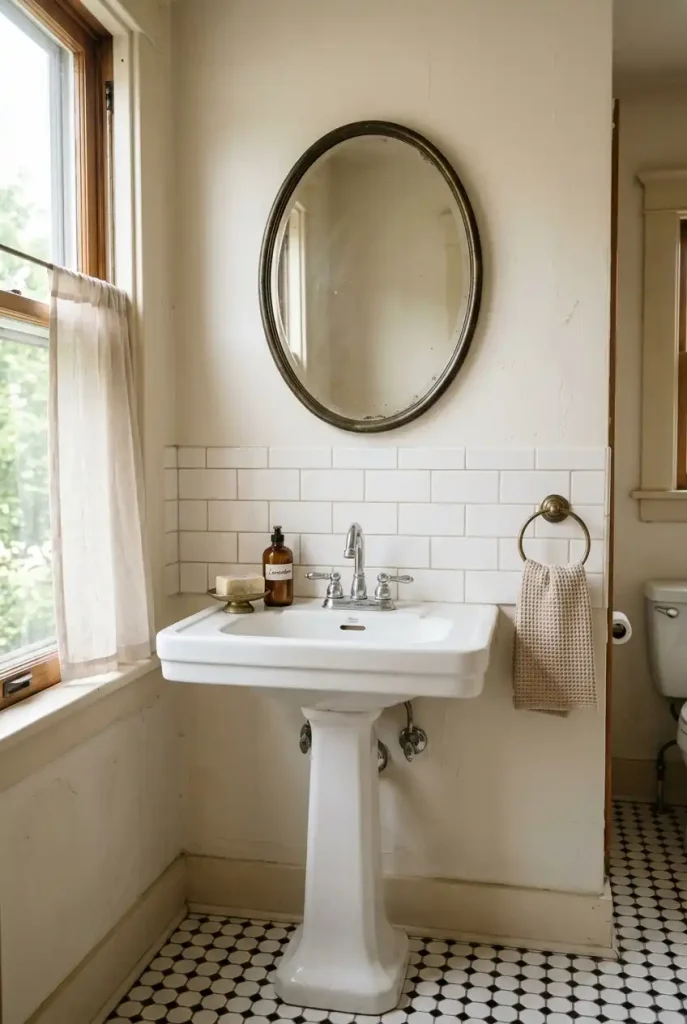
A bathroom doesn’t need expensive antique fixtures to feel distinctive. One vintage-inspired accessory can add character to a room with otherwise simple finishes.
Consider an ornate secondhand frame, a small brass-look soap dish, a traditional ceramic container, or a modest decorative stool. The contrast between an older-looking accent and clean modern surfaces can make the overall design feel collected rather than overly coordinated.
Choose one focal piece and let it stand out. Several competing vintage details can make a compact bathroom feel busy, especially when the tile or flooring already has a strong pattern.
Secondhand stores and flea markets can be useful places to find affordable decorative objects. Check items carefully for damage, corrosion, and suitability for humid conditions before placing them in the bathroom.
Create a Spa-Inspired Corner
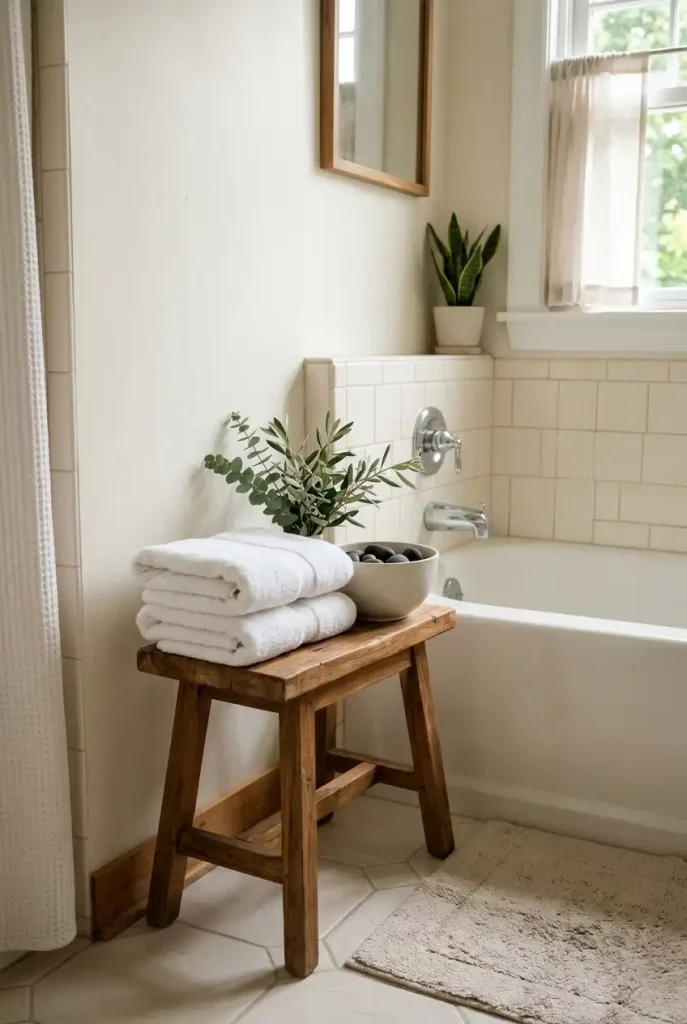
A spa-inspired bathroom is more about calm, organization, and thoughtful details than expensive fixtures. You can create a relaxing corner with a few everyday items arranged neatly and a palette that feels restful.
A small stool beside the tub can hold a folded towel, while a ceramic bowl or simple vase adds a finishing touch. If you enjoy fresh greenery, a suitable plant or a small arrangement can introduce a natural element.
Keep the arrangement away from walking routes, water splashes, and surfaces where items could fall. Avoid overcrowding the bathtub with decorative objects that make cleaning or bathing less convenient.
Try this simple combination:
- Two neatly folded white towels.
- One small wooden or ceramic accessory.
- A neutral-colored bath mat.
- A clear, uncluttered countertop.
The result should feel comfortable for everyday use rather than staged exclusively for photographs.
Use Peel-and-Stick Wallpaper for a Feature Wall

Wallpaper can introduce pattern and color without the expense of installing decorative tile. A small powder room is often a useful place to consider a feature wall because it can make a visual impact without requiring a large quantity of material.
Choose a restrained botanical print, a fine geometric pattern, or a subtle textured design. Cream and sage can create a gentle natural look, while a darker pattern can add contrast against white fixtures.
Peel-and-stick wallpaper isn’t suitable for every bathroom wall. Excess humidity, direct splashes, surface texture, and the manufacturer’s installation requirements can affect whether it adheres properly. Check the product guidance and test a small area if appropriate.
For renters, confirm that the material can be removed from the particular wall finish without damage. If the wall is frequently wet or poorly ventilated, artwork or paint approved for the space may be a more reliable option.
Make the Floor Look More Coordinated With a Simple Color Scheme
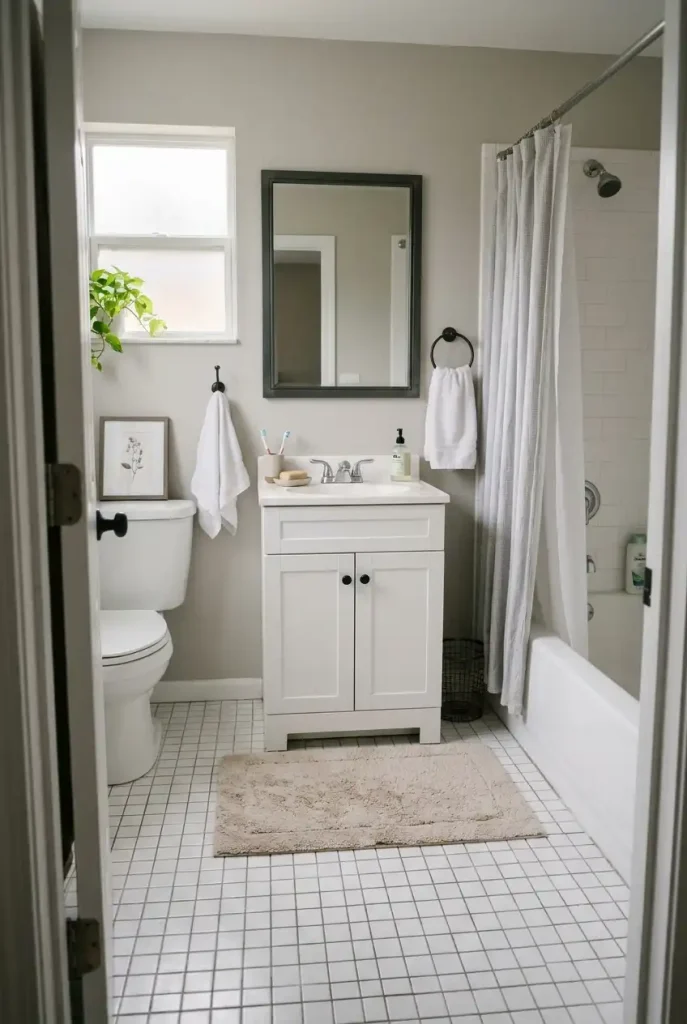
Bathroom flooring can be expensive to replace, but it doesn’t have to dictate the entire decorating scheme. The key is to choose accessories that work with the floor’s existing color and pattern.
If the floor has busy or strongly patterned tiles, keep the shower curtain and towels relatively simple. With plain white or gray flooring, a patterned bath mat or a muted accent color can introduce interest without making the room feel crowded.
For an older floor that looks dated but remains serviceable, coordinate the visible finishes before considering a renovation. A new bath mat, carefully selected textiles, and consistent metal finishes can help the existing materials feel more intentional.
Avoid covering damaged or slippery flooring with a decorative rug. Address any underlying repair or safety concerns first, and choose a bath mat suitable for the surface.
Design principle: Let one element carry the pattern while the others provide visual balance.
Finish the Room With One Statement Accessory
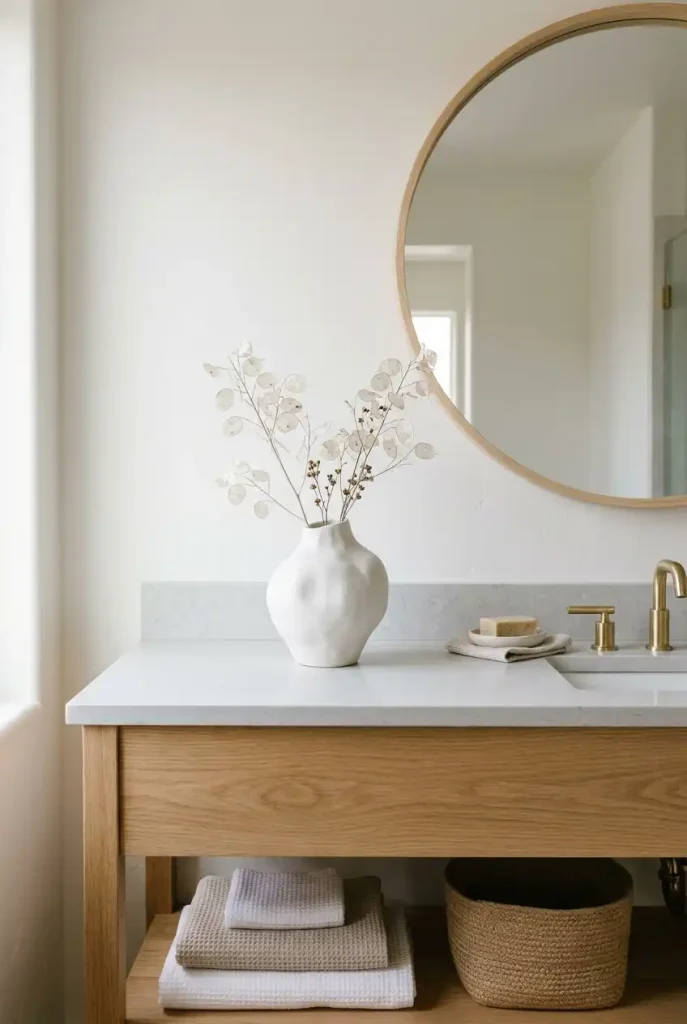
A bathroom can feel unfinished when every surface is purely functional, but adding too many decorations can make it cluttered. One carefully chosen statement accessory provides a focal point without requiring a major investment.
This might be a sculptural ceramic vase, a distinctive soap dispenser, a small piece of framed art, or an attractive countertop container. Choose an item with a clear shape or interesting texture that complements the room rather than competing with everything else.
If your bathroom already features patterned tile, distinctive hardware, or a decorative mirror, keep the accessory understated. In a very simple room, a more sculptural piece can provide the visual interest that the rest of the space lacks.
The most effective arrangement usually leaves some open surface around the featured object. That negative space allows the item to stand out and keeps the vanity useful.
Budget tip: Before buying anything new, look around your home for a small decorative object that can be repurposed safely for bathroom use.
How to Make Your Bathroom Look More Expensive on a Small Budget
The most effective bathroom updates usually work together. Rather than buying several unrelated accessories, decide what you want the room to feel like and make a few coordinated changes.
| Decorating priority | Budget-conscious approach | Visual benefit |
|---|---|---|
| Color | Coordinate towels, bath mats, and curtains | Creates a unified appearance |
| Lighting | Improve bulb choice or update a suitable fixture | Makes the room feel more inviting |
| Storage | Add baskets, trays, or a simple shelf | Reduces visible clutter |
| Details | Update cabinet hardware or frame a mirror | Makes existing features feel more considered |
| Texture | Introduce wood, cotton, ceramic, or woven materials | Adds warmth and visual depth |
A Simple Weekend Bathroom Refresh
If you’re unsure where to start, follow this order:
- Declutter first. Remove empty packaging and relocate items that don’t need to stay on the countertop.
- Choose a palette. Work with your existing tiles, vanity, and flooring instead of trying to change everything.
- Refresh the visible textiles. Coordinate the shower curtain, towels, and bath mat.
- Improve the finishing details. Add a tray, update suitable cabinet hardware, or introduce a simple framed print.
- Review the result. Live with the changes before purchasing anything else.
This approach helps you prioritize the changes that make the greatest difference to your particular bathroom.