
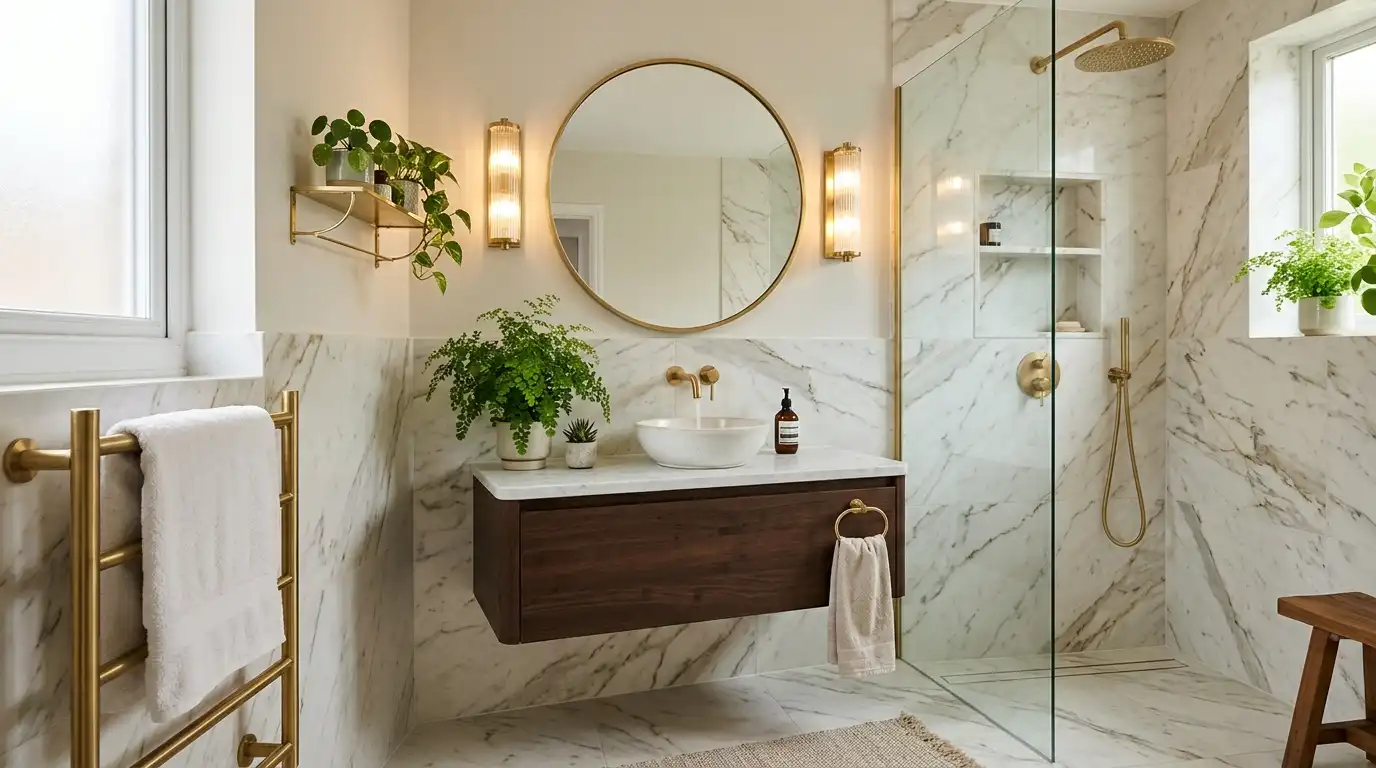
17 Small Bathroom Decorating Ideas for a Fresh, Expensive Look
A small bathroom doesn’t need a complete renovation to look polished and expensive. Sometimes, the difference comes down to a few thoughtful choices: a beautifully framed mirror, coordinated hardware, soft lighting, or towels that look and feel substantial. Even a basic powder room or compact guest bathroom can feel more intentional when colors, materials, and accessories work together.
The best small bathroom decorating ideas balance style with everyday practicality. You want a space that looks inviting without sacrificing counter space, storage, or comfortable movement. That means choosing decor carefully, using vertical space, and paying attention to details that often get overlooked.
From warm neutral palettes and elegant mirrors to budget-friendly hardware upgrades and spa-inspired accessories, these 17 ideas offer realistic ways to refresh your bathroom. Some require only a small styling change, while others can inspire a more substantial update.
Create a Warm, Neutral Color Palette
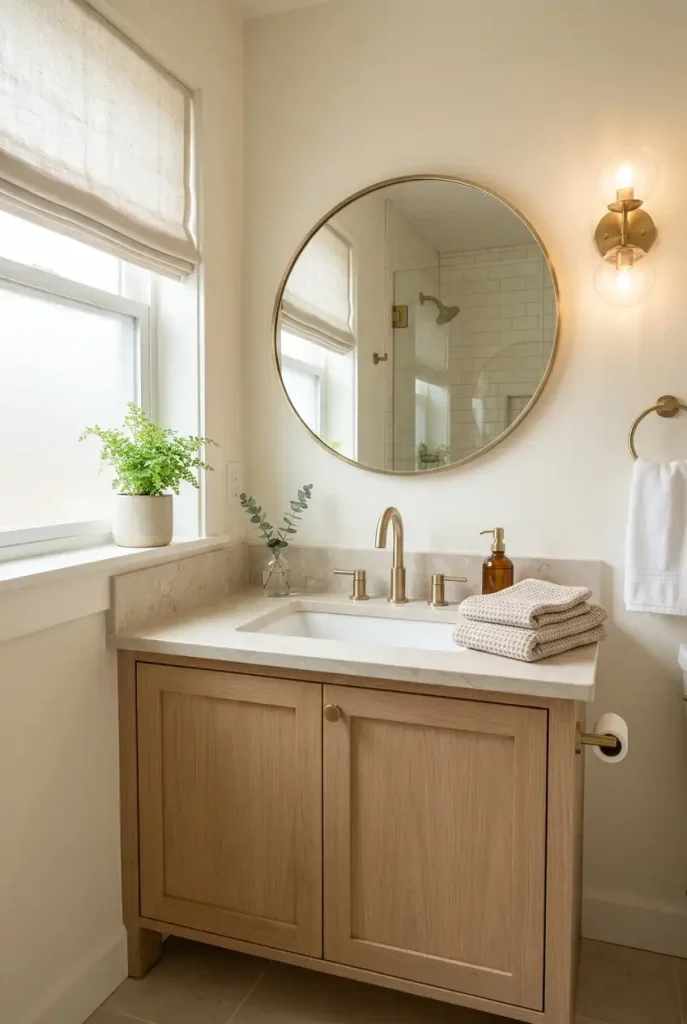
A coordinated color palette is one of the easiest ways to give a small bathroom a more expensive appearance. Instead of mixing many unrelated colors, build the room around two or three complementary shades. Warm white, soft beige, creamy ivory, and light taupe create a calm foundation that works especially well with wood, brushed metal, and natural-looking stone.
You don’t have to make every surface the same color. A creamy wall color, white sink, and light oak accessories can create subtle contrast while keeping the room visually connected. If the bathroom already has white tile, introduce warmth through towels, a bath mat, a wooden stool, or a small framed print.
For a slightly moodier look, consider mushroom, muted olive, or a soft clay accent. Use stronger colors in small, replaceable details so the room can evolve without another major expense.
Quick Tip: Compare paint samples in the actual bathroom. Artificial lighting can make a warm white look yellow or a cool gray feel flat.
Upgrade the Mirror With an Elegant Frame
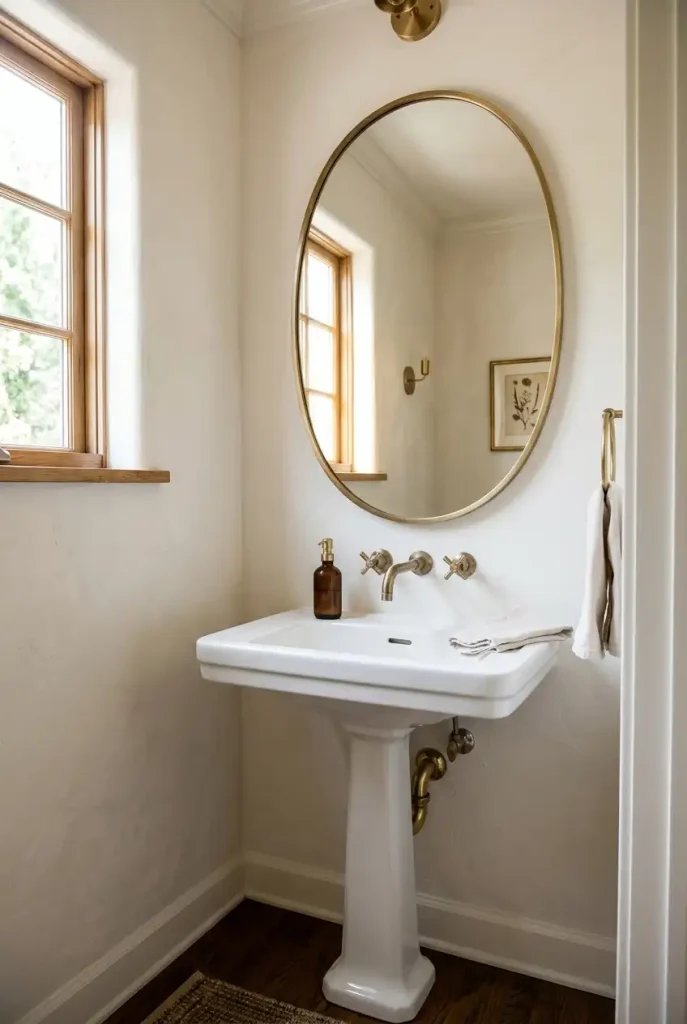
The mirror is often one of the largest visible features in a small bathroom, so changing its appearance can make a meaningful difference. A plain builder-grade mirror may feel unfinished, while a carefully chosen frame gives the vanity area a more deliberate look.
Consider a slim black frame for a modern bathroom, warm wood for a natural aesthetic, or brushed brass for a softer traditional style. Rounded rectangular and oval mirrors can also soften the hard lines of tile, cabinetry, and countertops.
Before choosing a mirror, measure the vanity and the available wall space. A mirror that’s too small can make the sink area feel disconnected, while one that’s excessively wide may crowd nearby lighting or wall fixtures.
For a budget-friendly update, a properly installed mirror frame can refresh an existing mirror if its shape and condition allow it. In a rental, a lightweight decorative mirror may be easier to use, provided it can be securely mounted.
Replace Builder-Grade Hardware With Coordinated Finishes
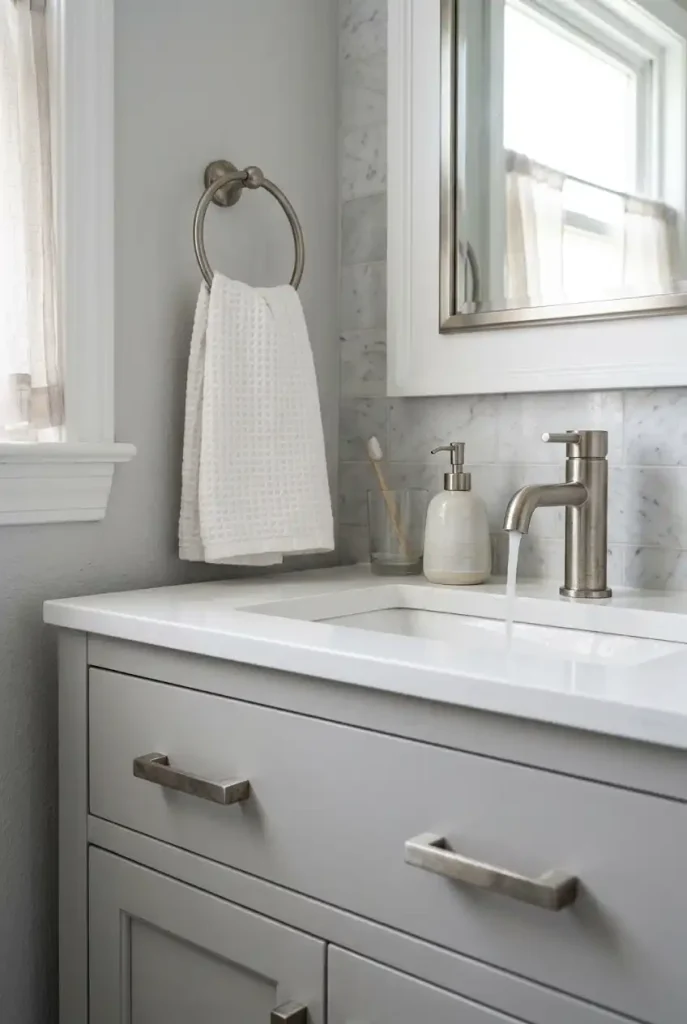
Small details can make a bathroom feel either cohesive or visually scattered. Cabinet pulls, faucet finishes, towel rings, and toilet paper holders all contribute to the room’s overall appearance. When these details look intentional, even a modest bathroom can feel more carefully designed.
Choose a finish that complements the existing fixtures rather than trying to replace everything at once. Brushed nickel suits many contemporary bathrooms, matte black creates crisp contrast, and brushed brass adds warmth. Chrome can also look polished, particularly in a bright, classic space.
You don’t necessarily need every metal surface to match exactly. The key is to avoid introducing too many competing finishes without a clear reason.
A practical upgrade order:
- Choose the main metal finish based on the faucet and shower fixtures.
- Replace cabinet pulls or knobs that look worn or dated.
- Coordinate smaller accessories, such as the towel ring and toilet paper holder.
If you’re renting, focus on removable accessories and keep the original hardware stored safely before making any changes.
Style the Vanity With Just a Few Beautiful Accessories
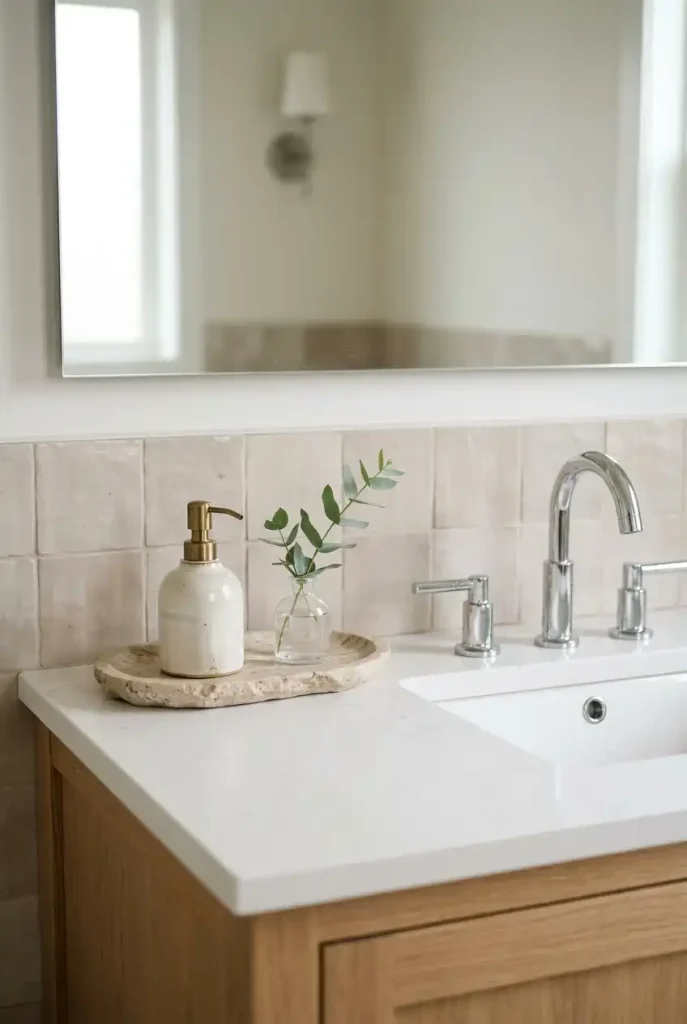
A crowded countertop can make a small bathroom feel smaller, even when the room itself is well decorated. A more expensive-looking vanity usually has a clear surface, a few useful accessories, and enough open space for everyday routines.
Start by removing anything you don’t use regularly. Store extra skincare products, hair tools, and backup toiletries inside drawers or a cabinet. Then select two or three countertop pieces that complement each other, such as a ceramic soap dispenser, a small tray, and a simple vase.
Materials matter here. Matte ceramic, clear glass, natural stone, and warm wood often look more refined than a collection of mismatched plastic containers. The pieces don’t need to be expensive; consistency in shape, color, and finish does much of the work.
Do / Don’t
- Do: Keep daily essentials within easy reach.
- Do: Use a small tray to group loose items.
- Don’t: Fill every available corner with decorative objects.
- Don’t: Display products in several competing colors if a calmer look is the goal.
Add Wall Sconces for a More Finished Vanity
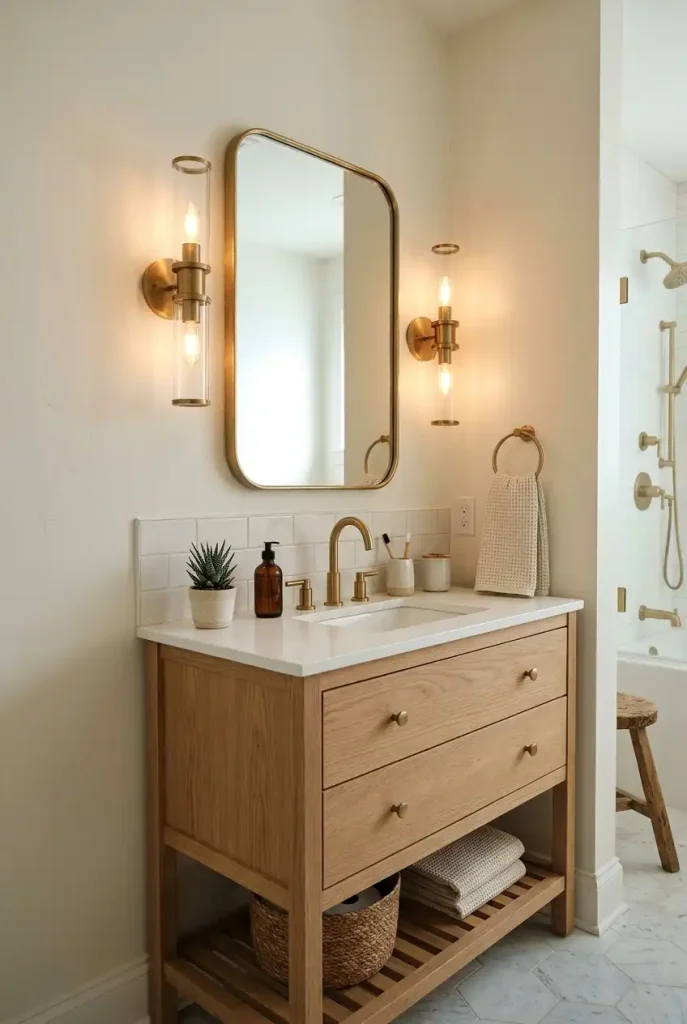
Lighting influences how colors, finishes, and faces appear in a bathroom. A single overhead light can create harsh shadows, while thoughtfully placed vanity lighting gives the room a more balanced, considered appearance.
Wall sconces positioned on either side of a mirror can provide useful, even illumination when the layout allows. In especially tight bathrooms, a suitable light above the mirror may be the more practical choice. Look for fixtures with simple silhouettes and finishes that relate to the rest of the room.
A warm, comfortable light can help create a welcoming atmosphere, but brightness and color quality matter too. Bathroom lighting should support daily tasks such as shaving, applying makeup, and grooming, not just decorative mood.
Have a qualified electrician handle new wiring or fixture relocation, and choose fixtures rated for their intended bathroom location.
Editor’s Note: A beautiful fixture won’t compensate for poor placement. Consider the mirror, the user’s face, and the available wall width together before choosing a style.
Hang Plush, Coordinated Towels
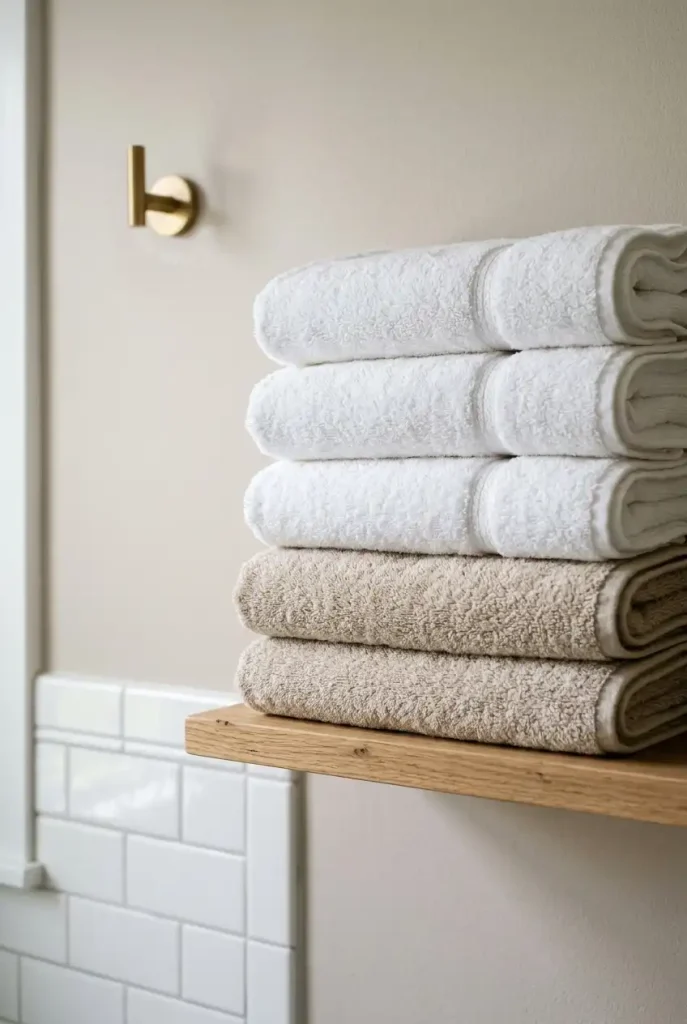
Fresh towels are an affordable way to make a bathroom feel more inviting. A coordinated set creates visual order, while thicker-looking cotton towels can add softness and texture to an otherwise hard-surfaced room.
White towels give the space a clean, classic appearance. Oatmeal, sand, sage, and muted blue introduce color without overwhelming the room. If your bathroom already features patterned tile or a strong wall color, plain towels are often the easiest choice. In a neutral bathroom, a subtle stripe or woven border can add interest.
Display only the towels you need. Fold a clean hand towel neatly beside the sink, hang a bath towel on a suitable bar or hook, and store extras in a cabinet or basket. Avoid covering every available hook or rail, since too many textiles can make a tiny room feel busy.
For everyday practicality, choose towels that suit your laundry routine and dry thoroughly between uses.
Introduce Natural Wood for Warmth
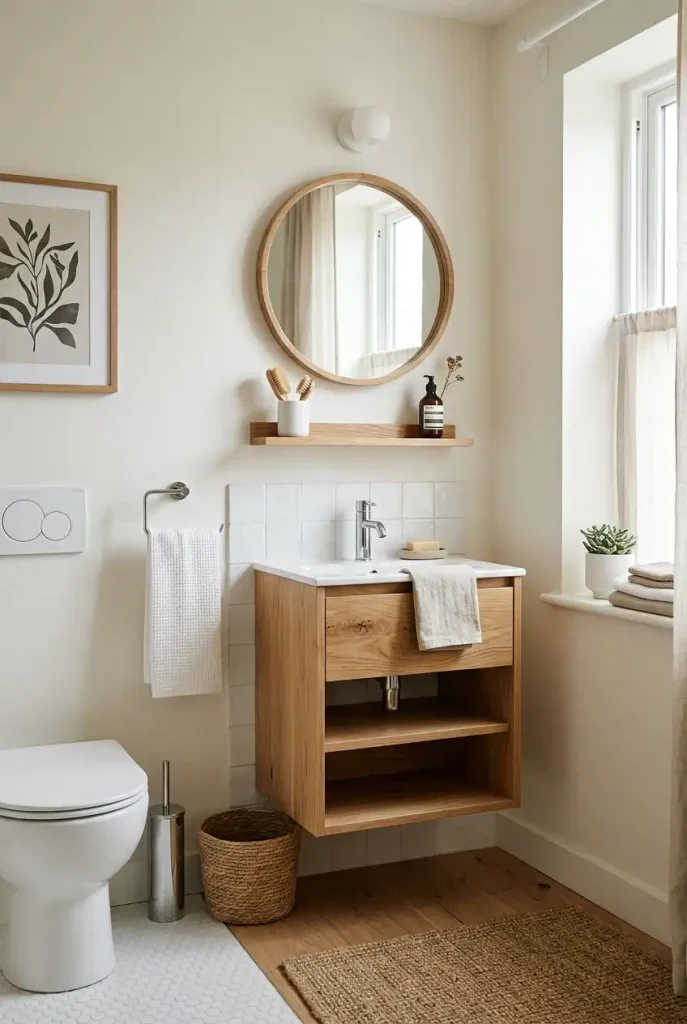
Bathrooms contain many hard, reflective surfaces: tile, glass, porcelain, and metal. Natural wood adds visual warmth and helps balance that crispness. Even a small wooden detail can make a white bathroom feel less stark.
Depending on the available space, try a narrow oak shelf, a teak-style bath stool, a wood-framed mirror, or a small accessory tray. Pale wood pairs especially well with creamy whites and soft grays, while darker wood adds contrast to light walls.
Moisture is the main consideration. Choose products and finishes suitable for bathroom conditions, wipe up standing water, and avoid placing untreated wood where it will remain wet. A wooden accessory should improve the room without becoming another maintenance problem.
If the bathroom is extremely compact, use one or two wood accents rather than adding wood to every surface. The contrast will feel more intentional.
Use a Large Mirror to Reflect Light
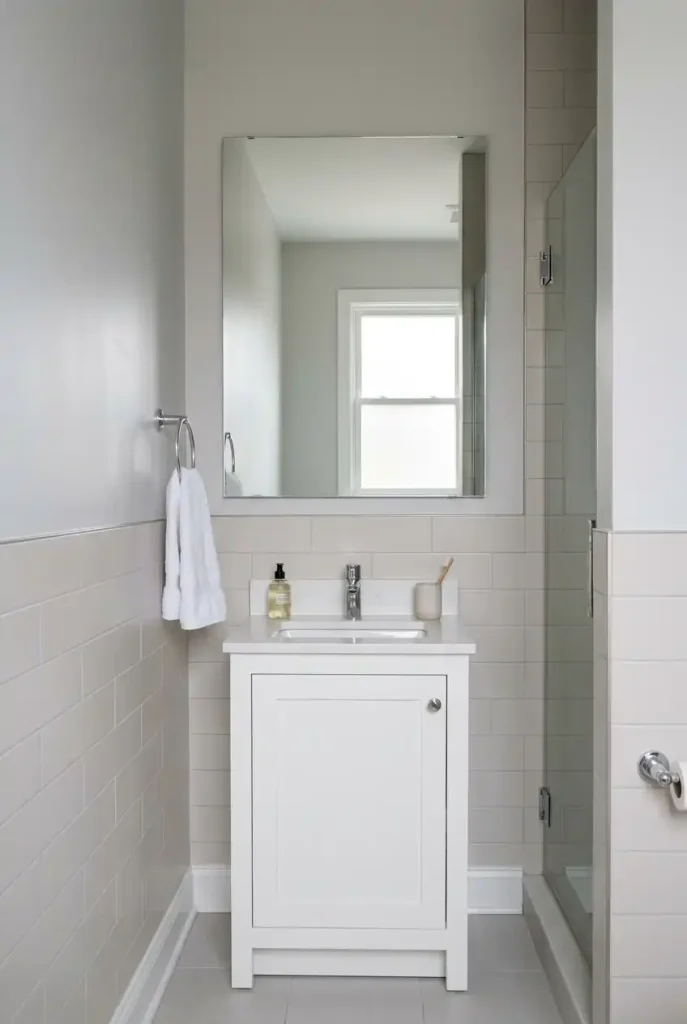
A mirror can do more than provide a place to get ready. In a small bathroom, it can reflect light and make the room feel visually more open. A generously sized mirror above the vanity often creates a stronger effect than several tiny decorative mirrors scattered around the walls.
Position the mirror where it can reflect a window, a bright wall, or another attractive part of the room. If there’s no natural light, a well-lit vanity area can still benefit from a larger mirror. Frameless designs blend quietly into the background, while thin metal or wood frames add definition.
Think about the reflection before hanging it. A mirror that faces a cluttered shelf or an awkward corner may draw attention to the very thing you want to minimize.
Common Mistake: Choosing a mirror based only on its shape.
Better Approach: Consider the mirror’s size, height, frame, and what it will reflect from the main doorway.
Add Subtle Texture With Wallpaper or Wall Treatment
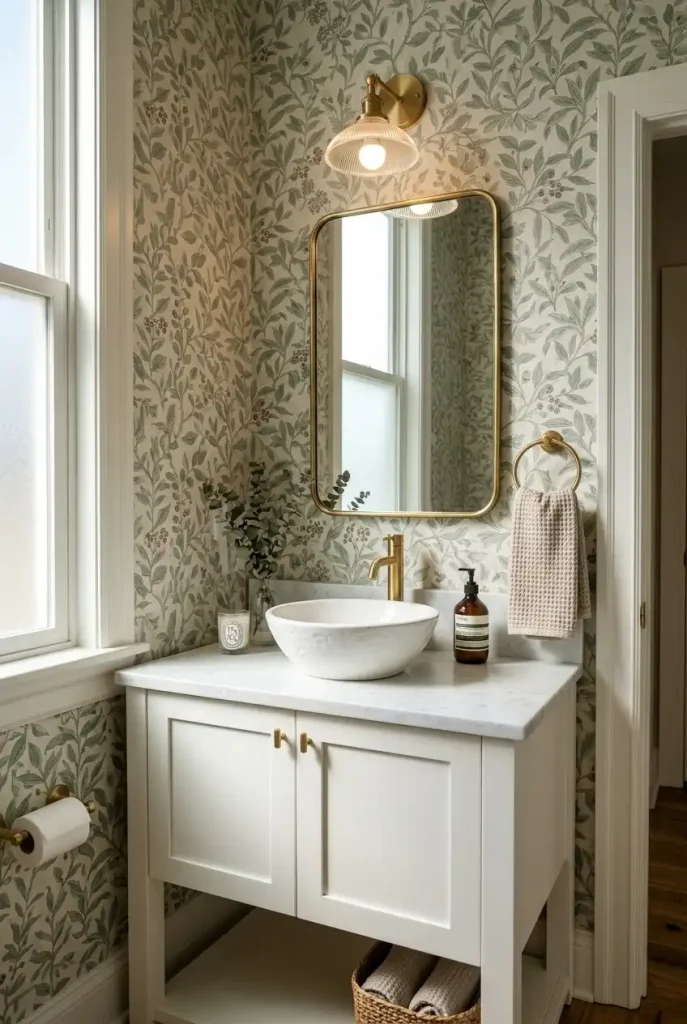
A small bathroom can handle a little visual personality, especially when the main fixtures and colors remain simple. Wallpaper, beadboard, or a carefully chosen painted accent can create a more finished look without requiring a full renovation.
For a classic powder room, consider a delicate botanical print or a small-scale geometric pattern. A textured grasscloth-inspired look can add depth, though genuine natural-fiber wallcoverings may be less suitable in bathrooms with persistent moisture. Choose materials specifically rated for the room’s conditions and follow the manufacturer’s installation guidance.
If you prefer painted walls, consider beadboard or simple applied molding on a dry wall area. These details add shadow and structure, especially when painted in a shade that complements the rest of the bathroom.
In a tiny room, a bold pattern can work, but it helps to keep the remaining surfaces relatively quiet. Let one wall treatment be the focal point rather than competing with multiple patterns.
Choose a Statement Bath Mat With a Soft Texture
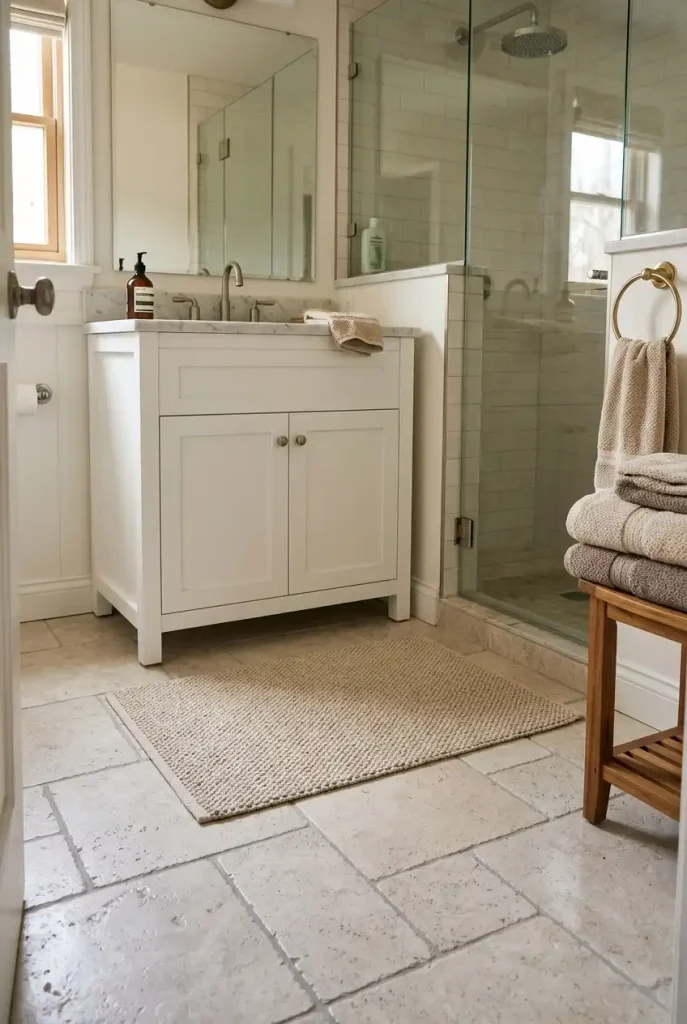
A bath mat is practical, but it also occupies a noticeable area of the bathroom floor. Choosing one that complements the room can make the entire space feel more coordinated.
A simple cotton mat works well in a classic bathroom, while a textured neutral rug can add softness to a modern space. Muted stripes or subtle woven patterns offer visual interest without competing with patterned tile. Choose a size that fits comfortably in front of the sink or shower and doesn’t interfere with doors.
Bathroom mats should be designed for their intended use. A washable option is useful for everyday upkeep, and a secure nonslip backing or separate nonslip underlay can help reduce movement on smooth flooring. Avoid ordinary decorative rugs that become slippery or stay damp.
For the most polished effect, coordinate the mat with towels or the room’s accent color, rather than matching every textile exactly.
Bring in Greenery for a Fresh Finish
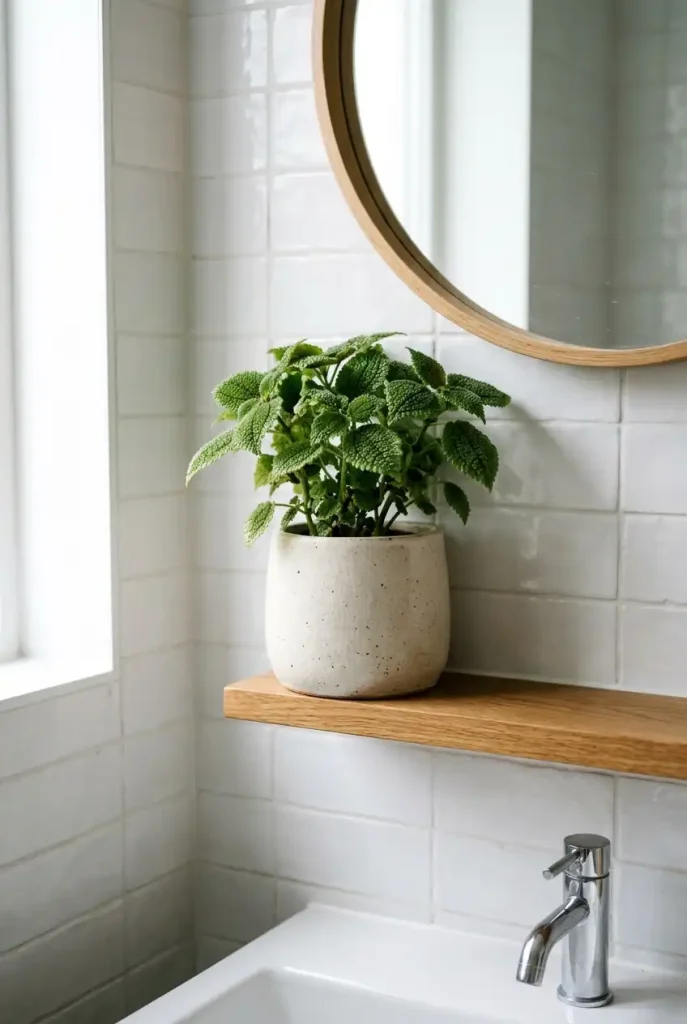
A little greenery can soften a bathroom filled with tile, porcelain, and metal. One thoughtfully placed plant often looks more polished than several small pots competing for limited space.
Start by considering the room’s actual light and ventilation. A bathroom with a bright window may support a wider range of plants than a windowless room. If natural light is limited, choose a realistic artificial plant or consider whether a suitable grow light is practical rather than assuming any live plant will thrive.
Place a small plant on a shelf, vanity corner, or stable ledge away from splashing water and busy traffic areas. A simple ceramic or stone-look planter helps the greenery feel connected to the decor.
Keep the arrangement restrained. A single trailing plant or compact leafy plant can create a natural focal point without using precious counter space.
Quick Tip: Check the mature size and care requirements before choosing a plant for a small shelf.
Make Open Shelving Look Intentional
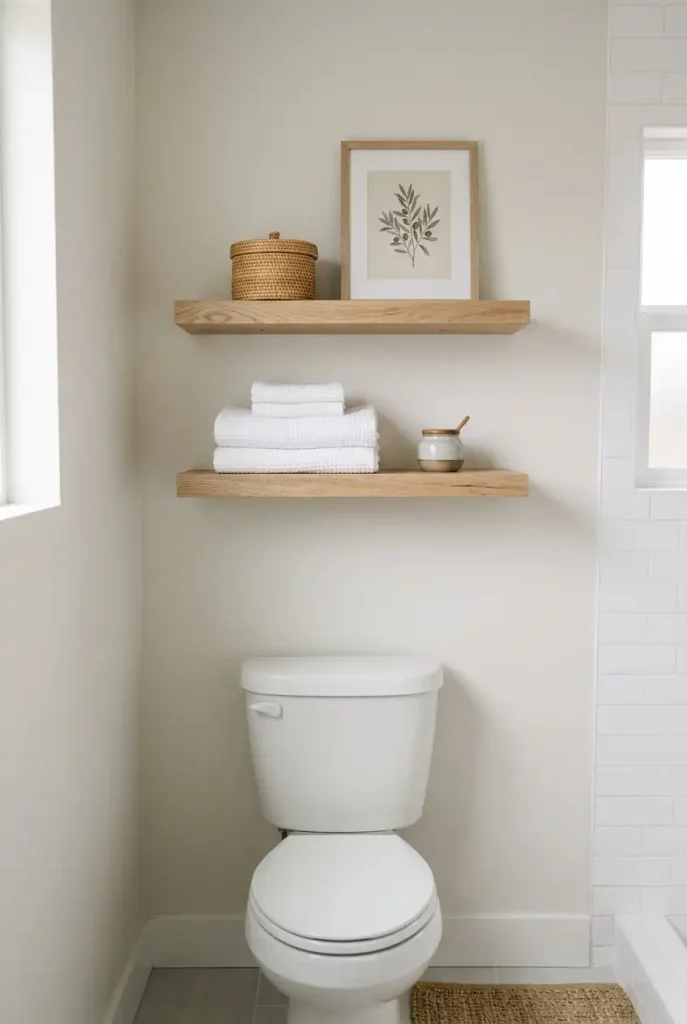
Open shelves can provide useful storage while giving a small bathroom a decorative feature. The trick is to treat them as a carefully edited display rather than a place to leave every spare product.
A narrow shelf above the toilet or beside the vanity can hold neatly folded towels, a small lidded basket, and one decorative object. Keep frequently used items within easy reach and reserve less accessible shelves for backup supplies.
For a cohesive appearance, use a limited palette of baskets and containers. Matching materials create order, but everything doesn’t need to be identical. A combination of natural woven storage, white ceramics, and folded neutral towels can look relaxed and refined.
Before installing shelves, check wall construction, choose suitable anchors, and avoid placing heavy objects above areas where they could fall onto someone. In a rental, freestanding or removable storage may be a better option.
Upgrade the Shower Curtain and Rod
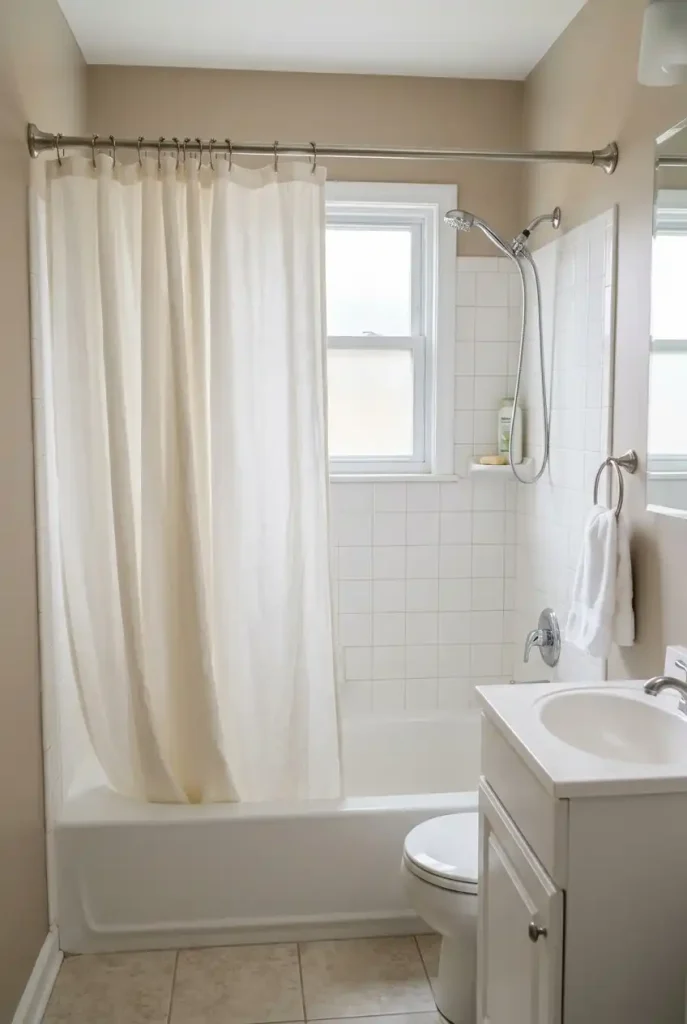
In a bathroom with a shower-tub combination, the shower curtain can occupy a large part of the visual field. Replacing a tired curtain with a well-fitting, attractive one can refresh the room without changing the tile or plumbing.
A white or ivory fabric curtain gives a classic, airy appearance. Subtle vertical stripes can add structure, while a muted botanical print introduces personality. For a tailored look, choose a curtain that hangs neatly and reaches an appropriate height without pooling excessively on the floor.
The rod and rings matter, too. A coordinated finish can make the whole arrangement feel more deliberate. A curved rod may provide additional elbow room in some tub-shower layouts, provided it fits the bathroom and is securely installed.
Make sure the curtain or liner is appropriate for wet conditions and can be cleaned easily. A beautiful curtain that stays damp or is difficult to maintain won’t feel like an upgrade for long.
Use a Decorative Tray to Organize Everyday Essentials
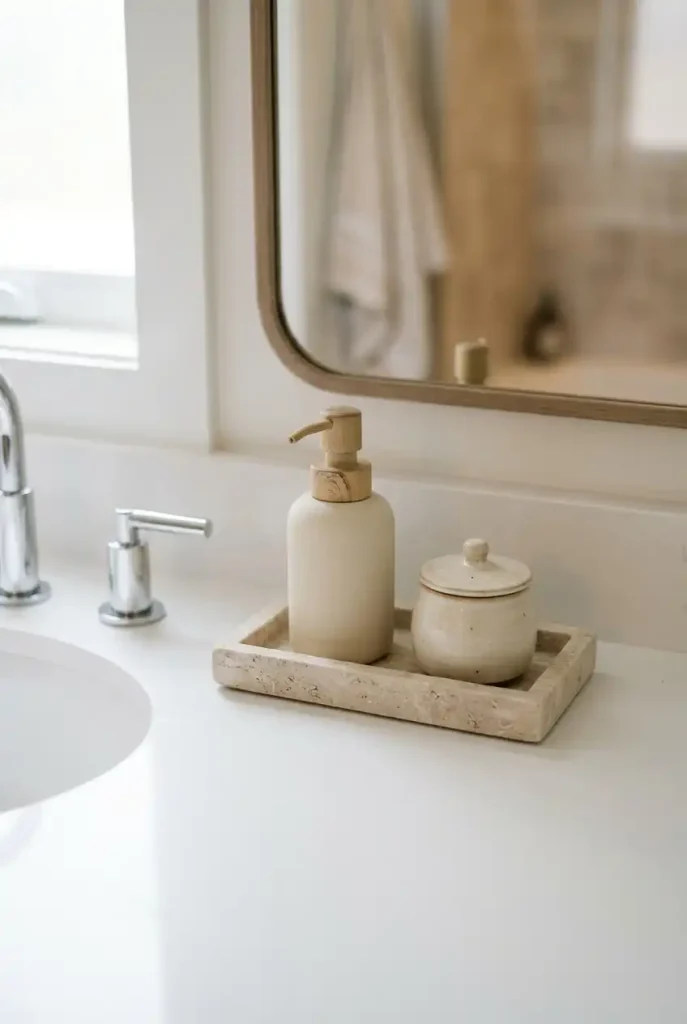
A small tray can make bathroom products feel arranged rather than scattered. It gives everyday items a defined home and creates a visual boundary on a crowded vanity.
Choose a tray that leaves enough room around the sink for handwashing and other daily tasks. Stone, ceramic, sealed wood, and durable metal are useful options depending on the bathroom’s style and moisture exposure. Rounded edges can also soften a vanity with many straight lines.
Use the tray for a few essentials: a soap dispenser, a small container for cotton pads, or a neatly folded guest hand towel. Avoid treating it as a storage basket for every loose item in the room.
A simple styling formula:
- One functional item, such as a soap dispenser.
- One contained item, such as a lidded jar.
- One optional accent, such as a small vase.
This combination gives the counter a finished appearance while preserving usable space.
Add One Carefully Chosen Piece of Wall Art
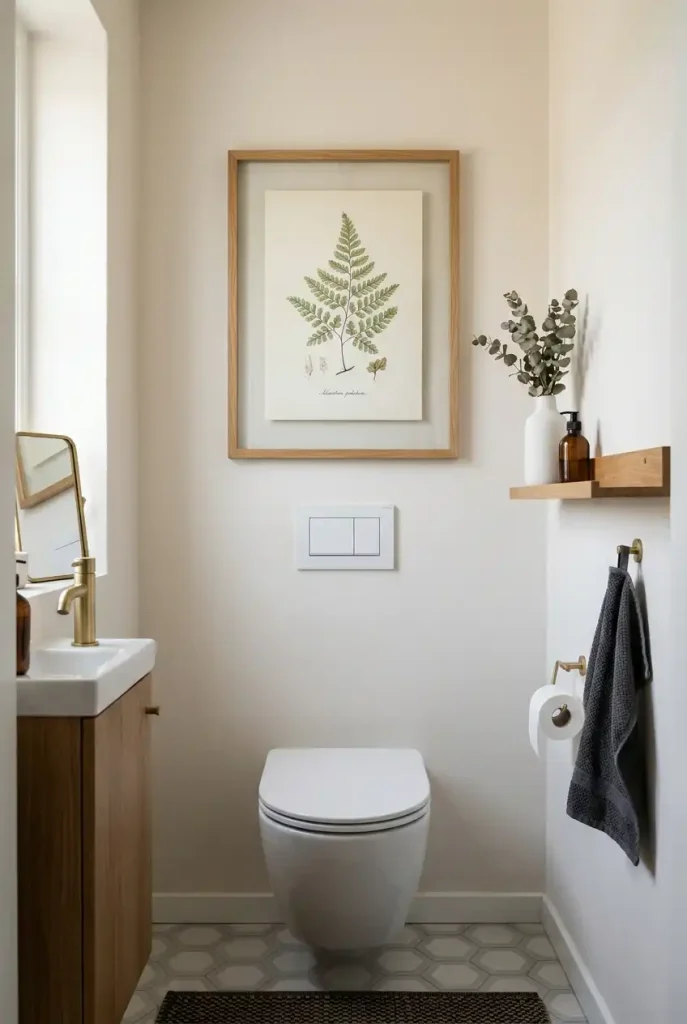
Bathroom art can make a small space feel more personal and complete. A simple print above the toilet, beside the vanity, or on an empty wall can introduce color without taking up valuable floor or counter space.
Choose artwork that suits the room’s palette. Soft landscapes, botanical illustrations, abstract shapes, and restrained line drawings all work well in different settings. A thin wood frame brings warmth, while a black frame creates a sharper contemporary contrast.
Scale is important. A print that’s too small may disappear on a large wall, while a very oversized piece can overwhelm a narrow bathroom. Measure the wall area and consider how the artwork relates to the mirror, towel bar, and other fixtures.
Bathrooms experience humidity, so use suitable framing and avoid placing vulnerable artwork where it will be directly exposed to splashes or steam. In a rental, a lightweight frame secured with an appropriate removable hanging system may be convenient.
Upgrade the Vanity With Paint or New Cabinet Fronts
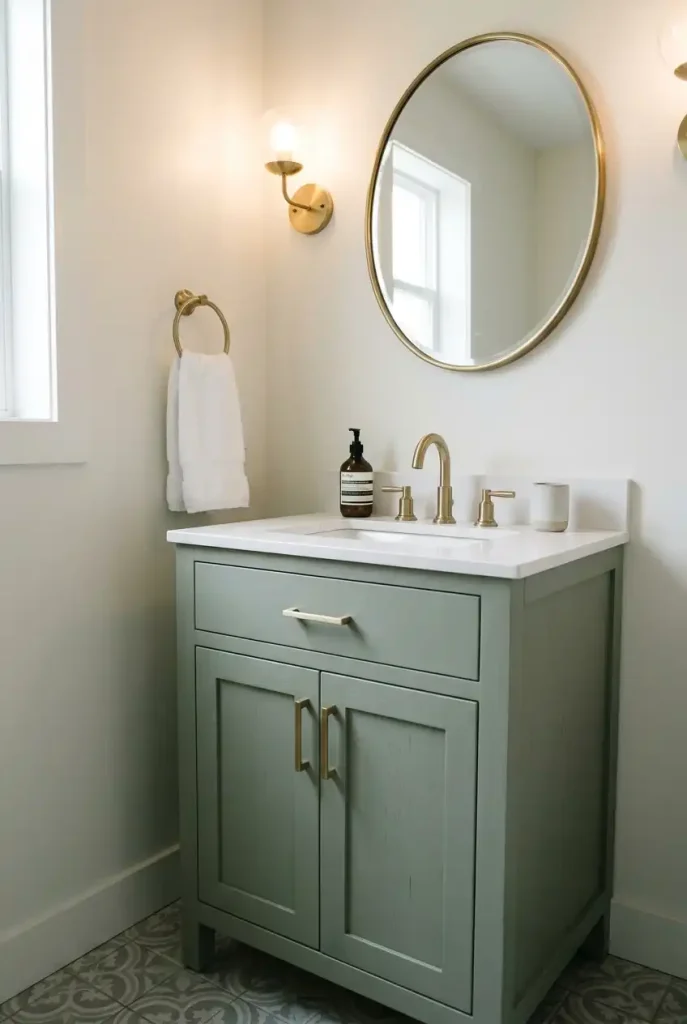
If the bathroom vanity looks dated, a carefully chosen finish can make a bigger visual difference than adding more accessories. Painting suitable existing cabinetry is often a more accessible option than replacing the entire unit, provided the cabinet material and condition are appropriate for refinishing.
Soft sage, muted navy, warm taupe, and deep charcoal can all work in small bathrooms. The best choice depends on the room’s light, countertop, flooring, and overall style. Lighter cabinetry can blend quietly into the space, while a deeper color creates a deliberate focal point.
Preparation is essential. Clean the surfaces, use a suitable primer and paint system, and follow the manufacturer’s drying and curing guidance. Not every laminate or damaged cabinet is a good candidate for ordinary paint. If the cabinet is swollen from moisture or structurally unsound, address the underlying problem first.
A new set of pulls can complete the update and help the vanity look more considered.
Finish With a Simple Spa-Inspired Styling Touch
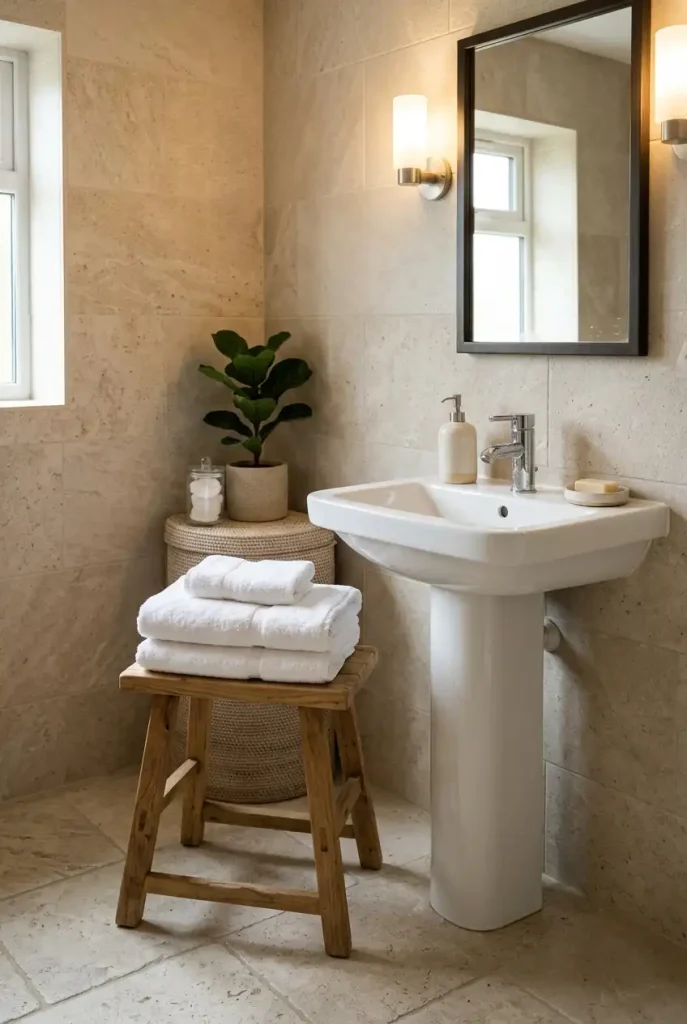
A spa-like bathroom is less about expensive products and more about the atmosphere. Clean surfaces, comfortable textiles, gentle lighting, and a few natural materials can make the room feel calmer without turning it into an impractical display.
Start with the basics: store excess products, keep fresh towels available, and use a small basket or cabinet to hide visual clutter. Then add one or two finishing touches, such as a wooden bath stool, a ceramic soap dispenser, or a neatly arranged stack of towels. If the room has a bathtub, a bath caddy can be useful as long as it fits securely and doesn’t obstruct safe access.
A subtle scent can be pleasant, but keep fragrance modest and consider the preferences of household members and guests. Avoid placing candles or decorative objects where they interfere with daily use.
The aim is a bathroom that feels restful at the beginning and end of the day while remaining easy to clean and comfortable to use.
How to Make a Small Bathroom Look More Expensive on a Budget
You don’t need to tackle all 17 ideas at once. A few well-chosen changes can make the room feel more coordinated, especially when they address the features you notice most often.
Start With the Changes That Have the Most Visual Impact
| Upgrade | Why It Helps | Best Starting Point |
|---|---|---|
| Fresh towels and bath mat | Adds coordinated color and texture | Choose two complementary shades |
| Mirror upgrade | Creates a stronger focal point | Measure the vanity before buying |
| Coordinated hardware | Makes small details feel intentional | Match or complement the main fixtures |
| Clearer countertop | Reduces visual clutter | Store rarely used products out of sight |
| Better lighting | Improves the vanity’s appearance and usefulness | Review fixture placement and brightness |
| Natural wood accents | Softens hard surfaces | Add one shelf, tray, or stool |
Keep the Room Visually Consistent
A simple decorating plan can prevent unnecessary purchases:
- Choose your palette. Pick a main neutral and one or two supporting colors.
- Identify the main focal point. This might be the mirror, vanity, wallpaper, or shower curtain.
- Edit the accessories. Keep the items you use and remove anything that crowds the counter.
- Add texture thoughtfully. Combine smooth tile with cotton, ceramic, wood, or woven storage.
- Check everyday function. Make sure doors open fully, drawers remain accessible, and walking paths stay clear.
Small Bathroom Decorating Mistakes to Avoid
- Too many small accessories: A collection of tiny objects can create clutter. Choose fewer, more useful pieces.
- Ignoring lighting: Attractive colors and finishes can look different under harsh or dim light.
- Buying decor before measuring: Shelves, mirrors, and rugs need to fit the actual room.
- Using unsuitable materials: Wood, wallpaper, textiles, and artwork should be appropriate for the bathroom’s moisture conditions.
- Sacrificing storage for styling: A polished bathroom still needs a practical place for daily toiletries and cleaning supplies.