

25 Cozy Bedroom Ideas You’ll Want to Try This Season
A cozy bedroom doesn’t need to be filled with heavy blankets, matching furniture, or layers of beige. The most inviting rooms usually combine a few thoughtful elements: soft lighting, comfortable textiles, warm materials, and enough visual contrast to keep the space feeling personal rather than staged.
Whether you’re refreshing a small apartment bedroom, making a guest room more welcoming, or simply craving a warmer atmosphere for the season, small changes can make a noticeable difference. Try layering your bedding, bringing in natural textures, warming up the lighting, or creating one restful focal point instead of redecorating the entire room.
These 25 cozy bedroom ideas range from simple styling changes to more substantial upgrades, so you can choose the ones that fit your space, budget, and decorating style.
Layer the Bed With Different Textures

A bed becomes instantly more inviting when several textures are layered rather than relying on one matching bedding set. Start with breathable sheets, add a quilt or coverlet, then finish with a duvet and a casually folded throw.
Mix materials such as washed cotton, linen, chunky knits, velvet, or brushed fabrics. The key is variation without visual chaos.
Quick Tip: Keep most of the palette within two or three related tones so the different textures become the feature.
Warm Up the Lighting

Overhead lighting rarely creates the relaxed atmosphere most people want in a bedroom. Instead, build several softer sources around the room.
Try:
- Bedside lamps with warm-toned bulbs
- A small table lamp on a dresser
- A wall sconce beside the bed
- A dimmable ceiling fixture
- A subtle accent light aimed toward artwork or architectural detail
Multiple low-level sources create a gentler evening environment than one bright fixture.
Add a Soft Rug Under the Bed

A rug can make a bedroom feel warmer both visually and underfoot. For a substantial effect, position a large area rug so it extends beyond the sides and foot of the bed.
If a large rug isn’t practical, runners or smaller rugs placed beside the bed can provide some of the same softness without requiring as much floor coverage.
Editor’s Note: Scale matters. A rug that is too small can make a generously sized bed look disconnected from the rest of the room.
Choose Warm White Instead of Stark White

Warm white walls can make a bedroom feel calmer without making it dark. Look for whites with subtle cream, beige, or warm undertones rather than extremely cool whites.
This works especially well when paired with natural wood, linen, woven accessories, or warm metal finishes.
Bring in Natural Wood

Wood introduces warmth and visual grounding, particularly in rooms dominated by painted surfaces and textiles.
You don’t need an entirely wood-furnished bedroom. One substantial element—a bed frame, nightstand, dresser, bench, or ceiling detail—can be enough to shift the atmosphere.
A mix of wood tones can also work, provided there is a clear relationship between them.
Make the Headboard the Focal Point

An upholstered headboard can make the bed feel substantial and comfortable while giving the room a clear visual anchor.
For a softer look, consider curved edges or a lightly padded silhouette. A taller headboard creates more presence, while a low profile can work better in rooms with low ceilings.
The rest of the bedding can remain relatively simple so the headboard doesn’t compete with too many other focal points.
Use Curtains to Soften the Windows
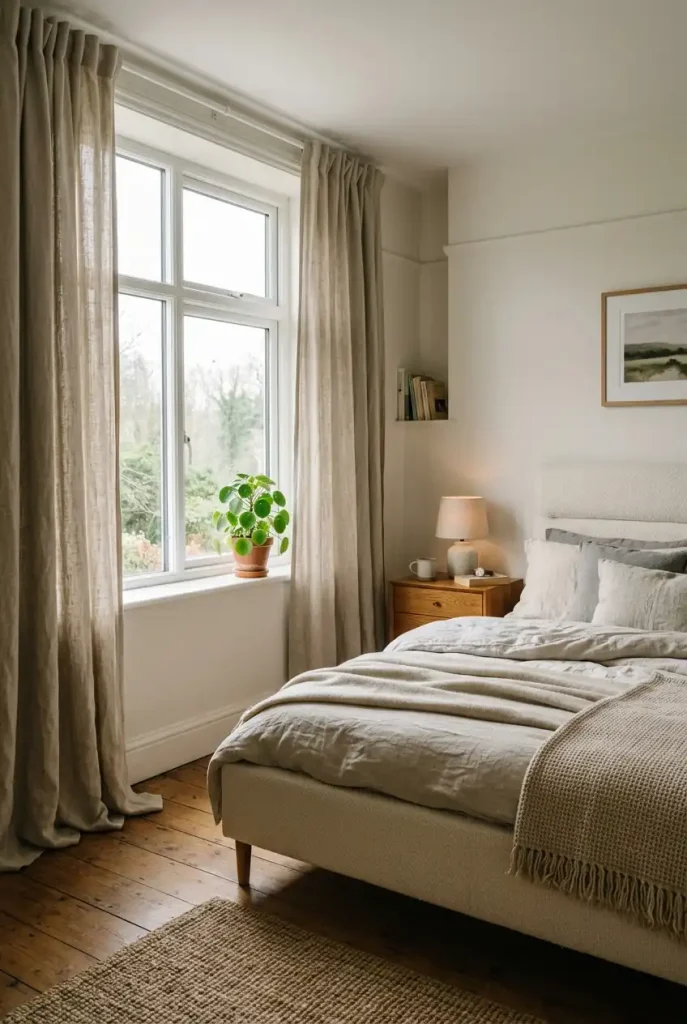
Window treatments can change the atmosphere of a bedroom more than expected. Floor-length curtains add softness and can visually frame the bed, particularly when hung close to the ceiling.
Linen or linen-look panels are useful for a relaxed bedroom, while heavier drapery can create a warmer, more enclosed feeling.
Do: Let curtains relate to the bedding or wall color.
Don’t: Choose a dramatically different color unless you’re intentionally making the window a focal point.
Create a Reading Corner
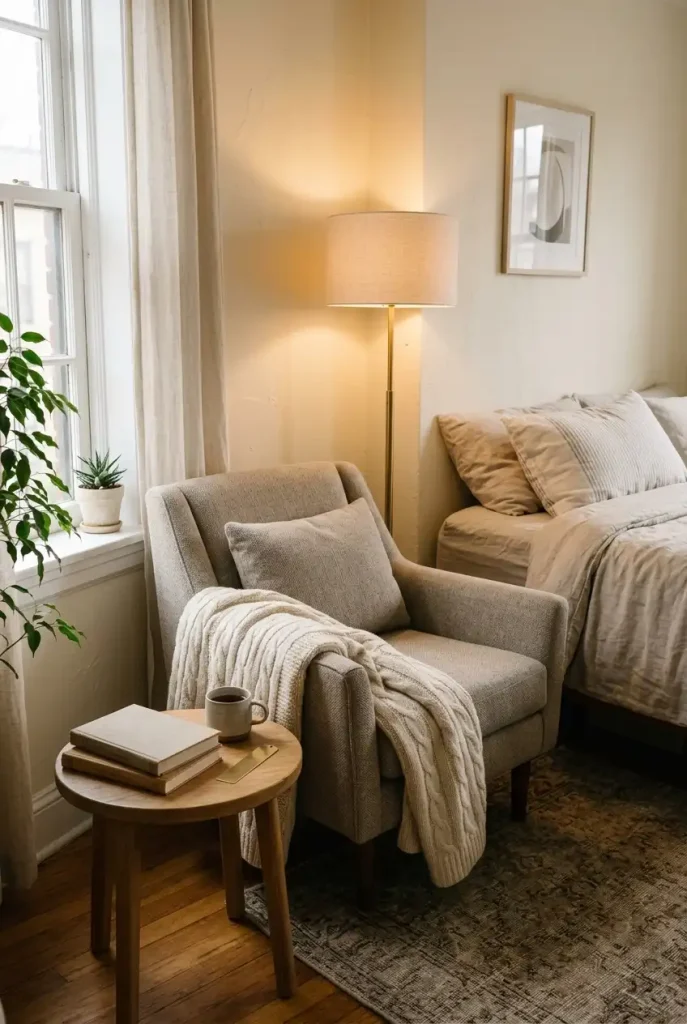
A small reading corner gives the bedroom another purpose beyond sleeping. A comfortable chair, compact side table, floor lamp, and soft throw can turn an unused corner into a natural retreat.
In a small room, skip the traditional lounge chair and try a compact slipper chair or narrow upholstered seat.
Add a Bench at the Foot of the Bed
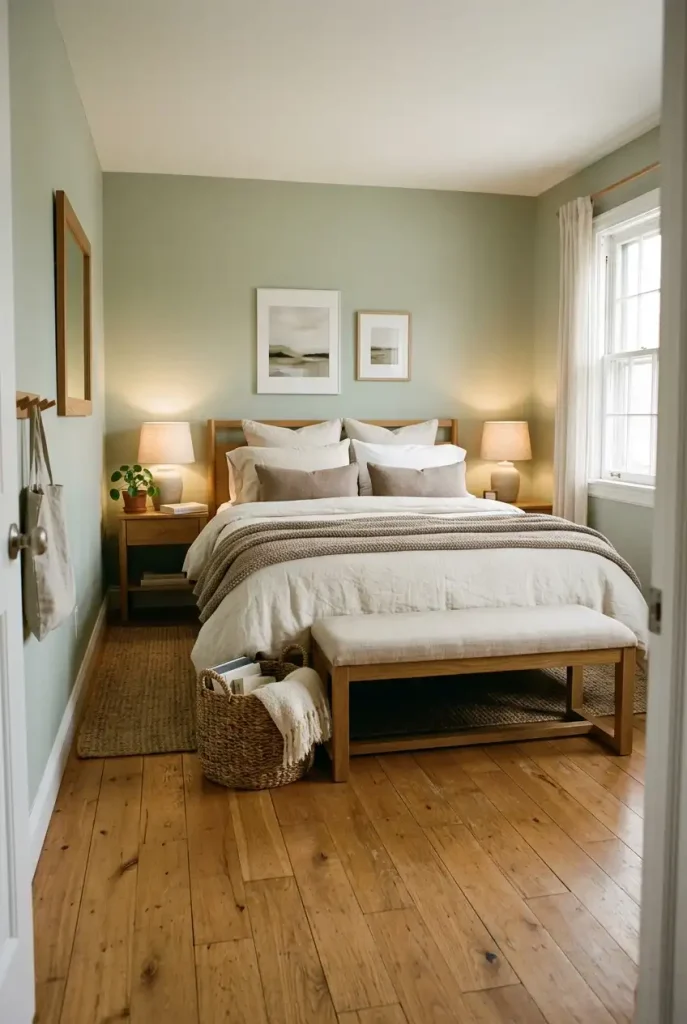
A bench can visually finish the bed while providing a convenient place to sit, fold clothing, or arrange extra blankets.
Choose the size carefully. The bench should complement the bed without making the walking path feel cramped.
For a relaxed bedroom, upholstered or woven benches work particularly well.
Mix Soft Neutrals With One Earthy Accent

A room built entirely from one neutral can sometimes feel flat. Introduce a muted earthy shade such as olive, terracotta, cinnamon, dusty blue, or warm ochre through a throw, pillow, artwork, or small upholstered piece.
The accent doesn’t need to dominate. A little color can give all those warm neutrals more definition.
Make the Nightstand Feel Collected, Not Cluttered
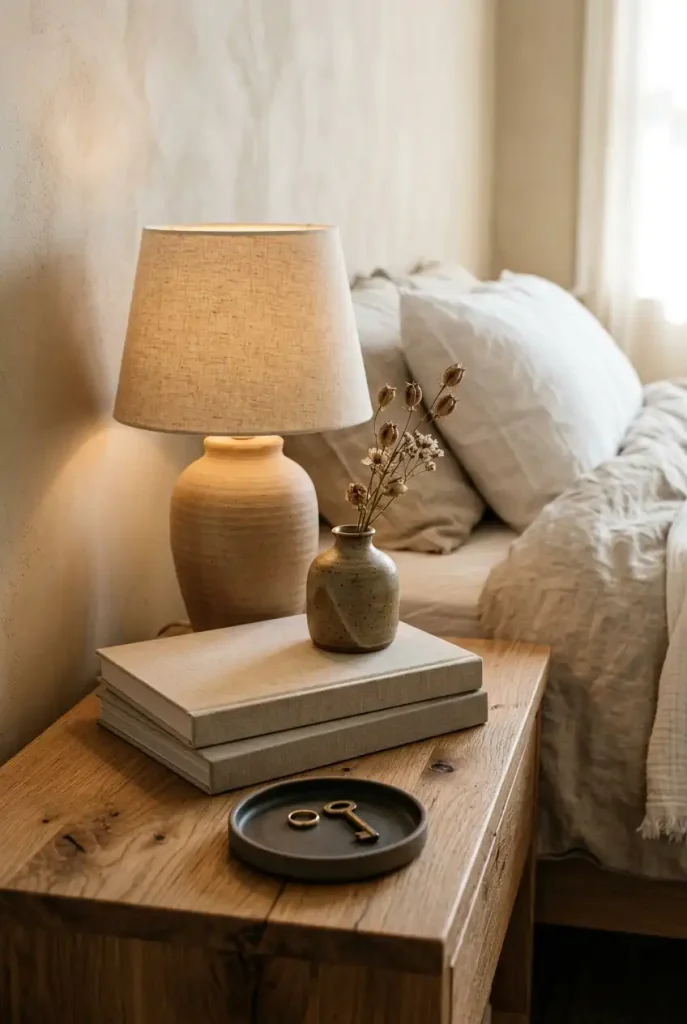
The bedside table is a small surface, so a few carefully chosen objects usually work better than a pile of accessories.
Try a simple combination of:
- A warm-glow lamp
- A small ceramic vessel
- One or two books
- A tiny framed piece of art
- A coaster or tray for everyday essentials
Keep enough open surface for practical use.
Use a Chunky Knit Throw

Few accessories communicate coziness as clearly as a substantial knitted throw. Drape one loosely across the corner of the bed rather than folding it into a perfectly rigid rectangle.
For a calmer look, choose a shade close to the bedding. For contrast, try a muted rust, olive, charcoal, or dusty blue.
Bring in Woven Texture
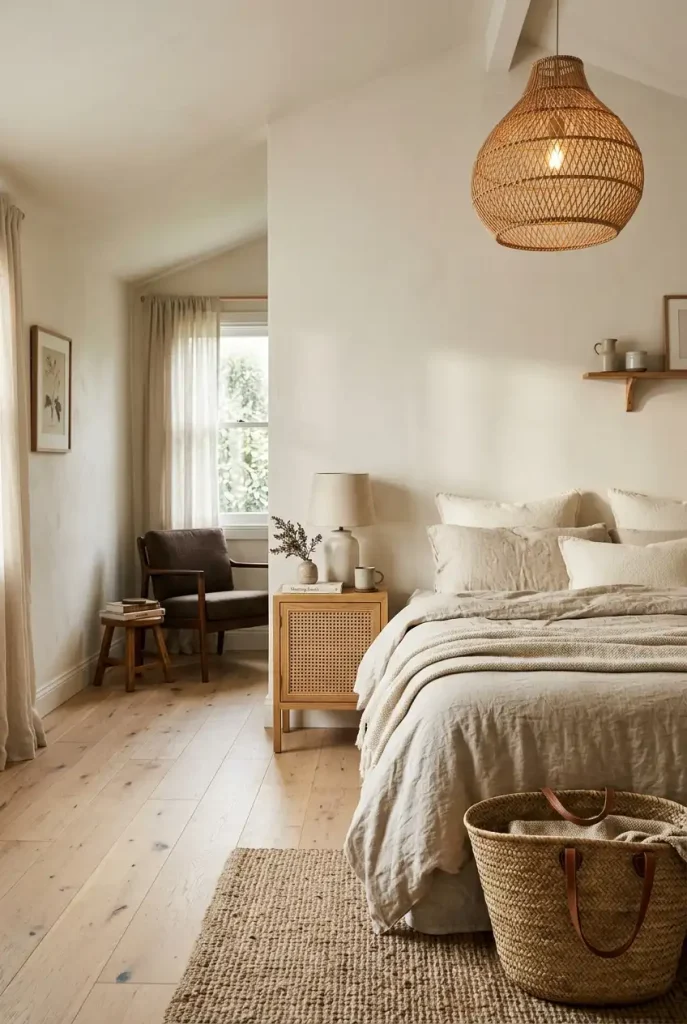
Woven materials add tactile interest without requiring strong colors. Try rattan, cane, seagrass, jute, or woven cotton through baskets, lampshades, benches, storage pieces, or wall accents.
A few different woven textures can make a neutral bedroom feel more layered and relaxed.
Create a Moody Bedroom With Deeper Walls

Cozy doesn’t always mean light. Deep olive, charcoal, warm brown, muted navy, or smoky blue can make a bedroom feel enveloping and intimate.
If you’re nervous about using a dark shade on every wall, begin with one accent wall behind the bed. Keep the textiles somewhat lighter to maintain visual balance.
Common Mistake: Pairing a very dark wall with too many equally dark furnishings.
Better Approach: Let the wall provide depth while bedding, curtains, and lamps introduce softer contrast.
Hang Art Above the Bed

Artwork can make a bedroom feel more personal without adding visual clutter. A single oversized piece works well above a simple headboard, while a small grouping can create a more collected look.
Choose art that relates to the room’s existing palette rather than trying to match every textile exactly.
Try a Canopy-Inspired Bed
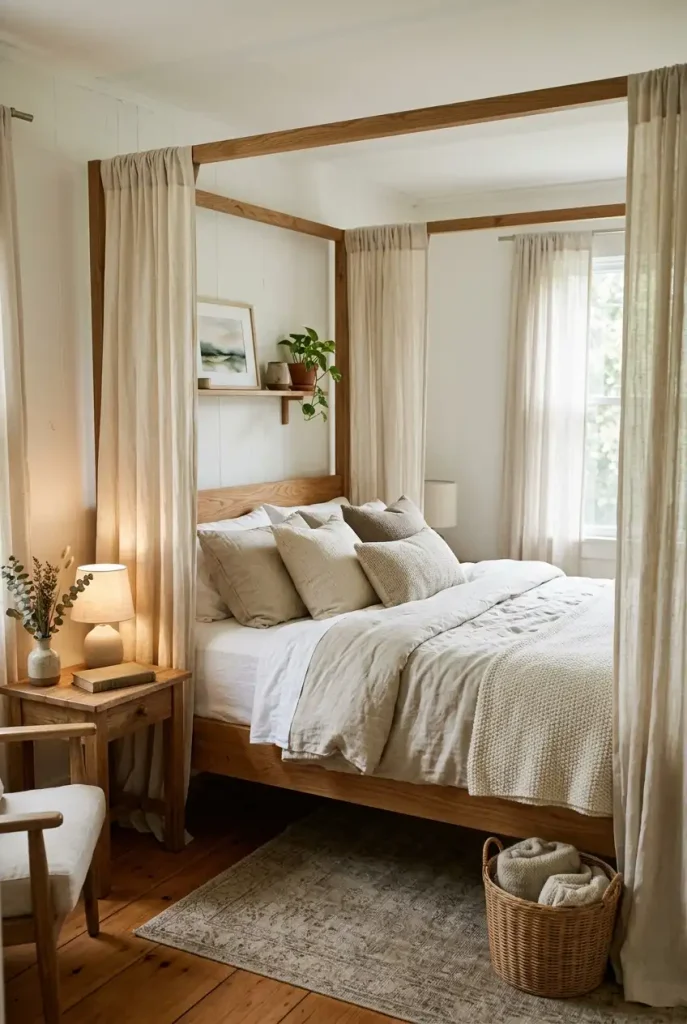
You don’t need a dramatic four-poster bed to get the feeling of a canopy. Long curtains positioned around the bed or a simple frame can create a more enclosed sleeping zone.
Keep the fabric light and breathable-looking so the effect feels romantic and restful rather than heavy.
Add a Small Fireplace Focal Point

Where the room already has a fireplace, make it the natural center of the cozy atmosphere rather than competing with it.
A simple mantel, warm artwork, and comfortable bedding are often enough. For homes without an existing fireplace, a properly installed electric fireplace may provide a similar focal point, subject to the manufacturer’s installation requirements.
Let Bedding Be Slightly Relaxed
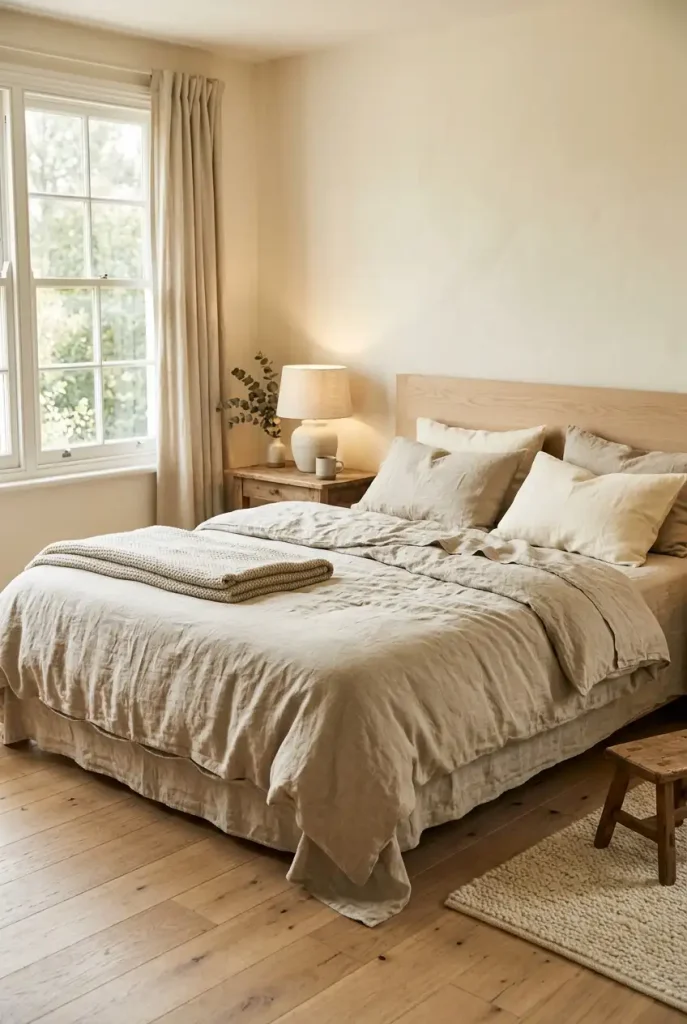
Perfectly tucked bedding can look polished, but a bedroom often feels more comfortable when the textiles have a little natural movement.
Allow the duvet to fall softly over the sides and let one throw or blanket sit casually near the foot of the bed. The goal is intentional ease rather than mess.
Use a Small Floral or Botanical Arrangement

A little greenery can bring life into a bedroom without turning it into a plant-filled space. A small branch arrangement or seasonal stems on a dresser or nightstand can provide organic shape.
Keep the vessel simple so the arrangement feels like part of the room rather than a decorative centerpiece.
Give the Ceiling Some Attention

A ceiling doesn’t have to remain visually invisible. Painting it a soft complementary shade or adding simple architectural detail can make the bedroom feel more finished.
In a smaller room, a subtle tonal treatment may be enough. In a room with architectural character, beams, molding, or a carefully chosen ceiling fixture can become part of the cozy atmosphere.
Create a Calm Monochromatic Palette

A monochromatic bedroom doesn’t have to be boring. Use several shades of the same color family and let texture create the contrast.
For example, cream can move through ivory sheets, oatmeal bedding, beige curtains, pale stone accessories, and warm wood. Because the colors are related, the room feels cohesive while the materials keep it interesting.
Add a Wall of Soft Upholstery
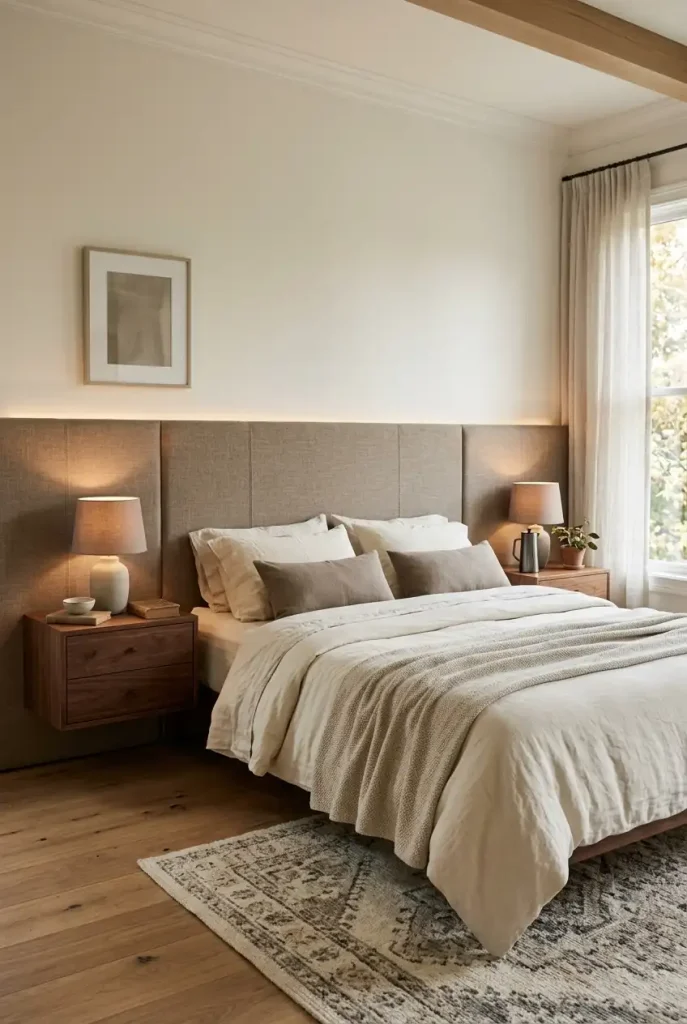
For a more substantial bedroom upgrade, consider a padded wall or large upholstered panel behind the bed. It introduces softness while creating a strong architectural backdrop.
This is especially effective when the upholstery extends wider than the bed, visually anchoring the entire sleeping area.
Turn One Wall Into a Cozy Storage Zone
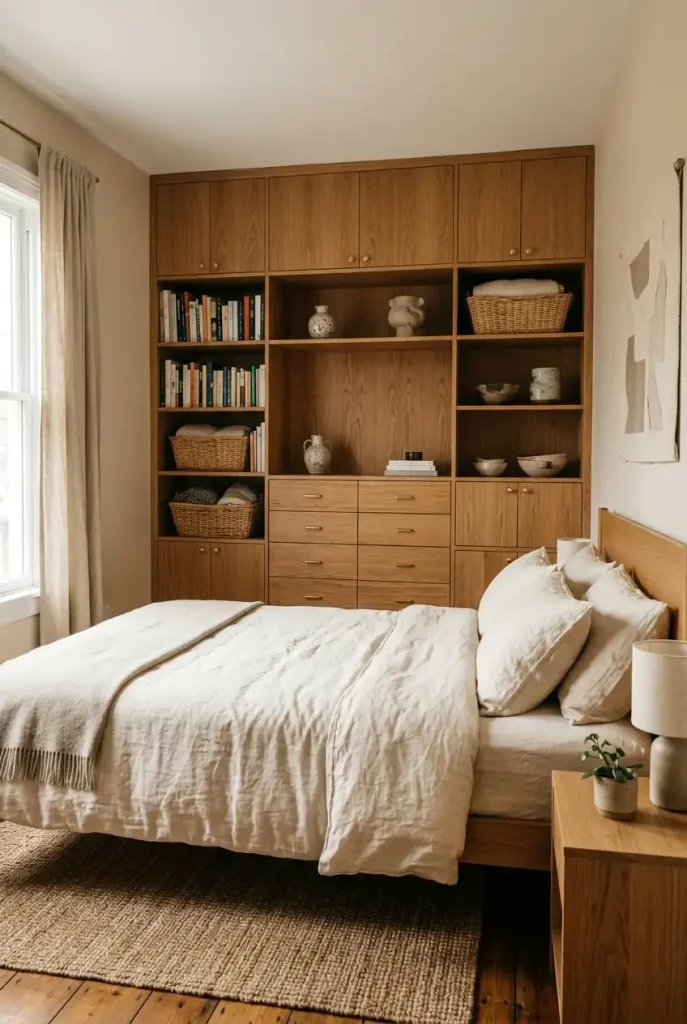
Open shelving, a dresser, or built-in cabinetry can add function without making the room feel purely utilitarian.
Keep everyday storage closed where possible, then use a small amount of open display for books, ceramics, baskets, or framed art.
Quick Tip: Repeat one or two materials from the rest of the room—such as oak, cane, or linen—to make the storage feel integrated.
Add a Seasonal Layer Without Overdecorating
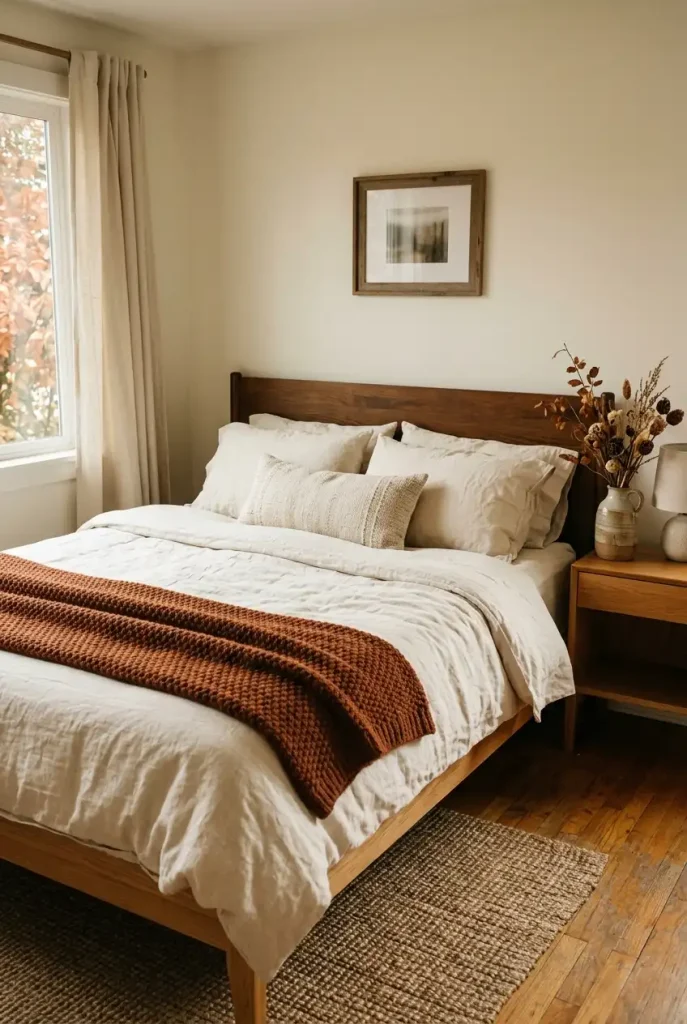
Seasonal bedroom styling doesn’t have to mean replacing everything. Swap a few textiles or accessories instead.
For a cooler season, introduce a heavier throw, warmer bedding layer, deeper accent color, or textured cushion. When the season changes, remove those layers rather than storing an entirely different bedroom in the closet.
Create a Bedside Glow With Wall Sconces
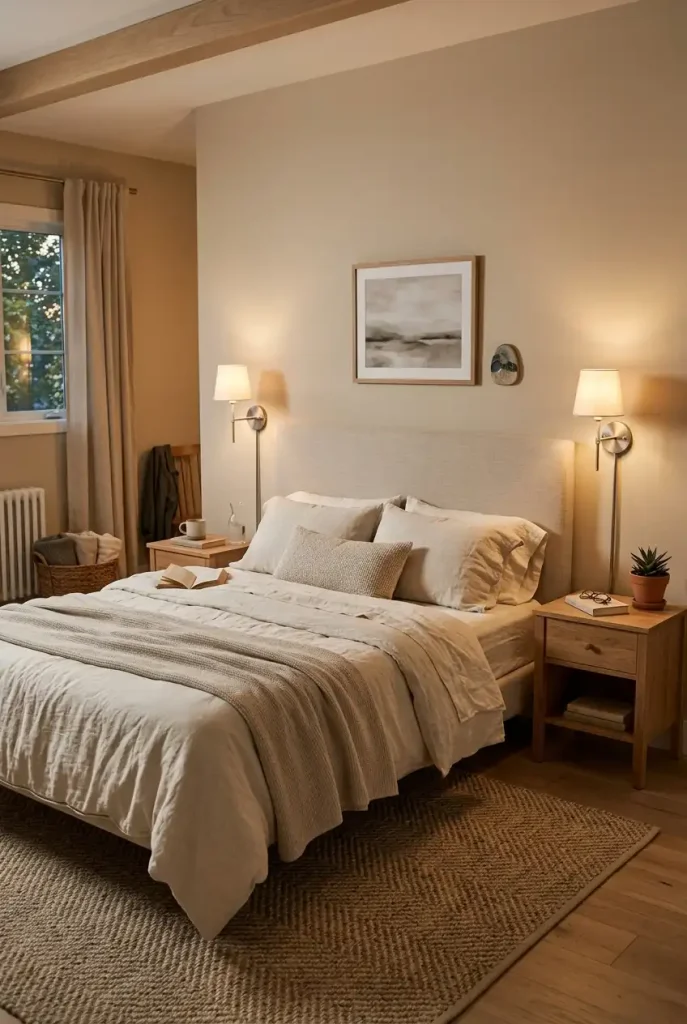
Wall-mounted sconces can make the area around the bed feel especially intimate while freeing up valuable nightstand space.
Choose fixtures that provide useful reading light as well as ambient warmth. Adjustable sconces are particularly practical if each side of the bed needs a different light direction.
Do / Don’t
| Do | Don’t |
|---|---|
| Choose fixtures sized for the bed and nightstands | Install oversized fixtures that dominate the wall |
| Consider adjustable reading light | Rely on decorative light with no useful illumination |
| Coordinate the finish with the room | Match every metal finish mechanically |
How to Make Your Bedroom Feel Cozier Without Redecorating Everything
You don’t need to tackle all 25 ideas at once. Start with the elements that have the biggest effect for the least disruption.
- Change the lighting first. Softer, layered lighting can immediately alter the mood.
- Upgrade the bed textiles. Add one textured layer rather than replacing every piece.
- Introduce warmth through material. Wood, woven fibers, wool, and linen can soften a room quickly.
- Choose one focal point. It might be the headboard, artwork, window treatment, or a reading corner.
- Edit rather than add endlessly. A cozy bedroom still needs breathing room.
The best combination depends on the room itself. A small bedroom may benefit most from lighter textiles and restrained furniture, while a larger room can handle deeper colors, substantial rugs, or a reading area.