
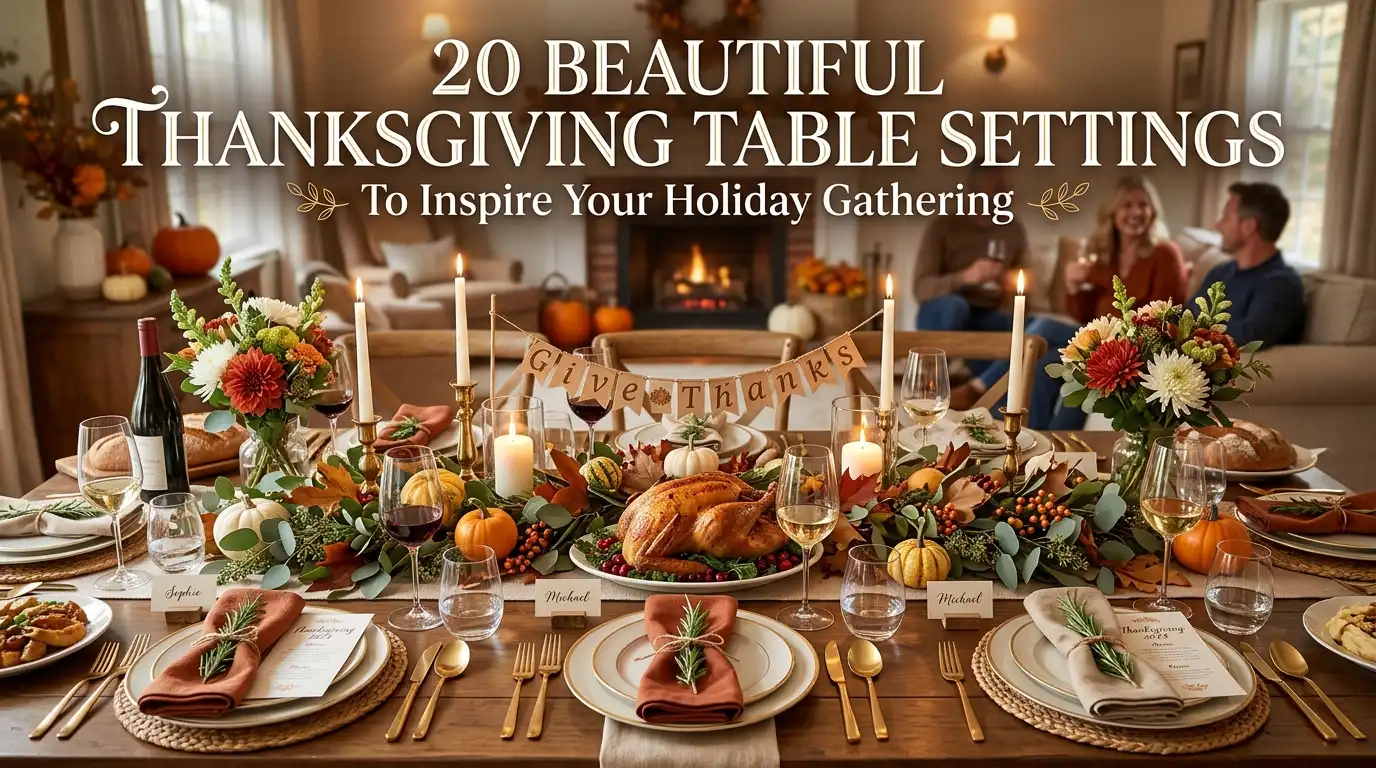
20 Beautiful Thanksgiving Table Settings to Inspire Your Holiday Gathering
Thanksgiving dinner has a way of making the dining table the heart of the home. It is where everyone gathers for the meal, reaches across the table for another helping, and lingers long after the plates have been cleared. A thoughtfully styled Thanksgiving table setting doesn’t need to be elaborate or expensive. The most inviting tables usually combine a few seasonal details with practical pieces you already own.
From warm neutrals and rustic wood to jewel-toned linens and candlelit centerpieces, there are plenty of directions to take your holiday table. The ideas below are designed for a range of American homes and entertaining styles, with options that work for a casual family dinner as well as a more polished gathering.
Layer Warm Neutrals With Natural Texture
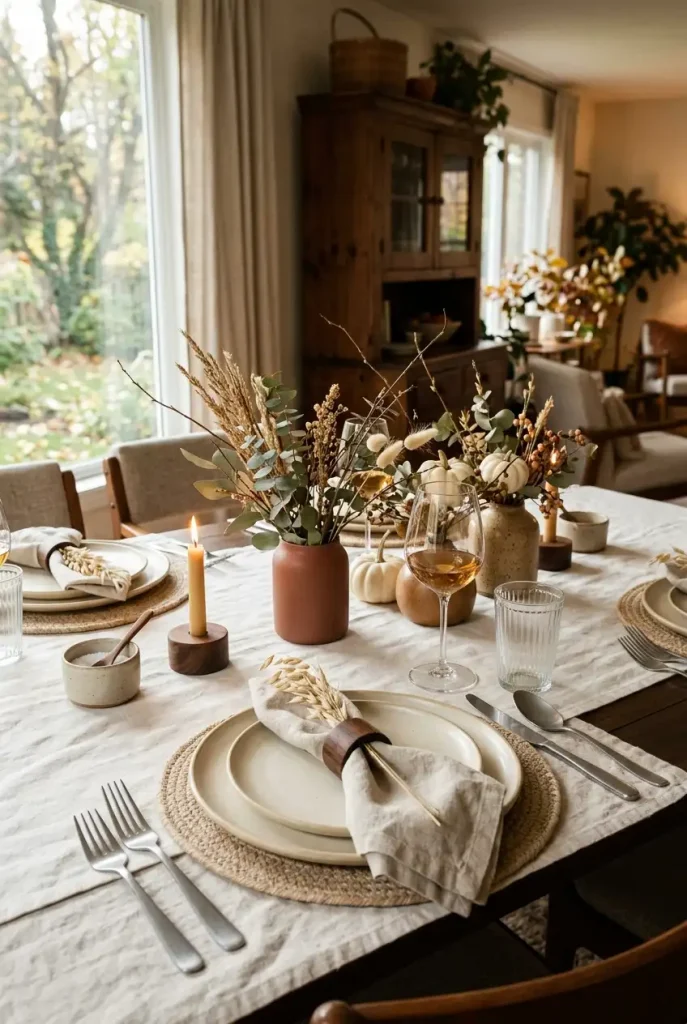
A neutral Thanksgiving table can feel especially inviting when the color palette comes from texture rather than decoration. Start with an ivory or oatmeal tablecloth, then layer woven placemats, stoneware plates, linen napkins, and simple wood accents. Small touches of brown, tan, muted rust, and dried foliage provide enough seasonal color without making the table feel overly themed.
For the centerpiece, keep the arrangement low so guests can see one another across the table. A few small ceramic vessels filled with dried grasses or autumn branches can be spaced down the center rather than gathered into one oversized arrangement.
Quick Tip: Mix several shades of cream and beige instead of trying to match everything exactly. Slight variation gives a neutral tablescape more depth.
Create a Rustic Farmhouse Harvest Table

For a more rustic Thanksgiving gathering, let natural materials do most of the decorating. A reclaimed-wood or farmhouse-style table provides a warm foundation for stoneware dishes, cotton napkins, simple glassware, and seasonal produce. Small pumpkins, pears, apples, and dried leaves can be arranged directly on the table for a centerpiece that feels connected to the harvest season.
The key is restraint. Instead of covering every inch of the table with decorations, leave enough open space for serving dishes and comfortable place settings. A mixture of heights also helps: use low fruit and foliage alongside a few slightly taller candleholders or vessels.
Do:
- Use natural wood, linen, ceramic, and glass.
- Keep the centerpiece loose rather than perfectly symmetrical.
- Choose muted fall colors instead of too many bright shades.
Don’t:
- Let tall decorations block conversation.
- Overfill the table with seasonal objects.
- Make every item look deliberately rustic.
Use a Classic White-and-Gold Setting
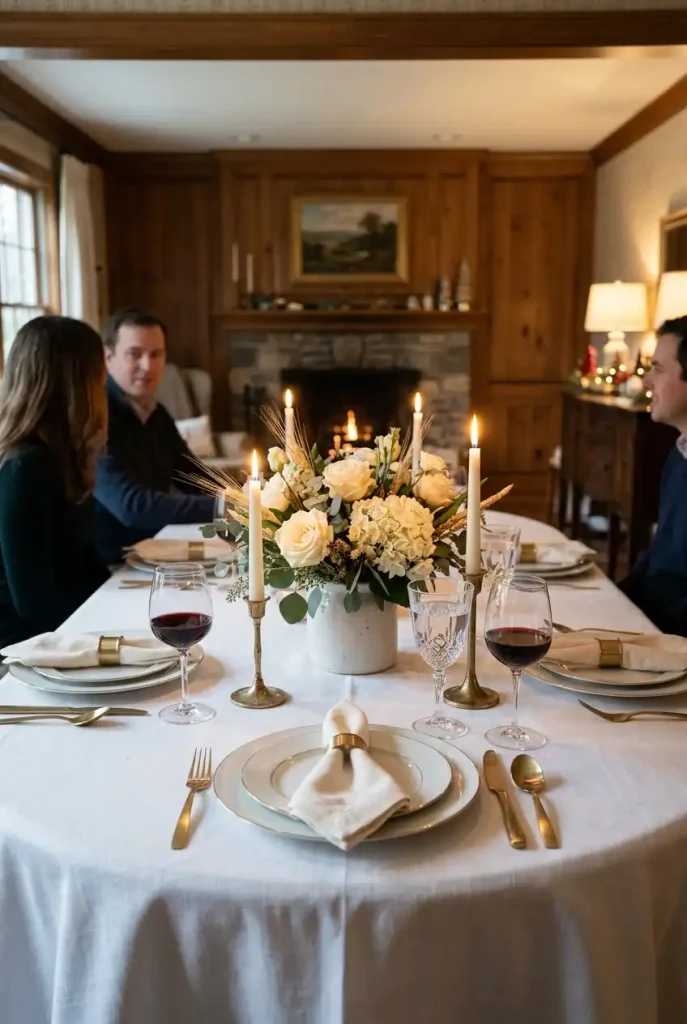
White dinnerware becomes instantly festive when paired with restrained gold accents. This approach works particularly well if you already own simple white plates and want to make them feel special for Thanksgiving without buying an entirely new collection.
Layer white plates over neutral placemats, add linen napkins, and bring in gold through flatware, napkin rings, or subtle candleholders. Keep the metallic finish concentrated in a few places so the table feels elegant rather than overly formal.
A centerpiece of cream-colored flowers, pale dried stems, and greenery can bridge the white and gold elements beautifully.
Bring in Deep Burgundy and Plum Tones

Thanksgiving decor doesn’t have to rely on orange and yellow. Deep burgundy, wine, plum, and muted berry shades create a richer autumn palette that feels dramatic without becoming overly formal.
Use the deeper colors selectively. Burgundy linen napkins against warm ivory plates are enough to establish the palette, while a few dark berries or autumn branches in the centerpiece can tie everything together.
For a smaller dining room, keep the background relatively light so the darker accents become visual focal points rather than making the entire table feel heavy.
Quick Tip: If your existing dishes are neutral, changing the napkins and centerpiece is often enough to create a completely different seasonal look.
Add Individual Mini Pumpkin Place Settings
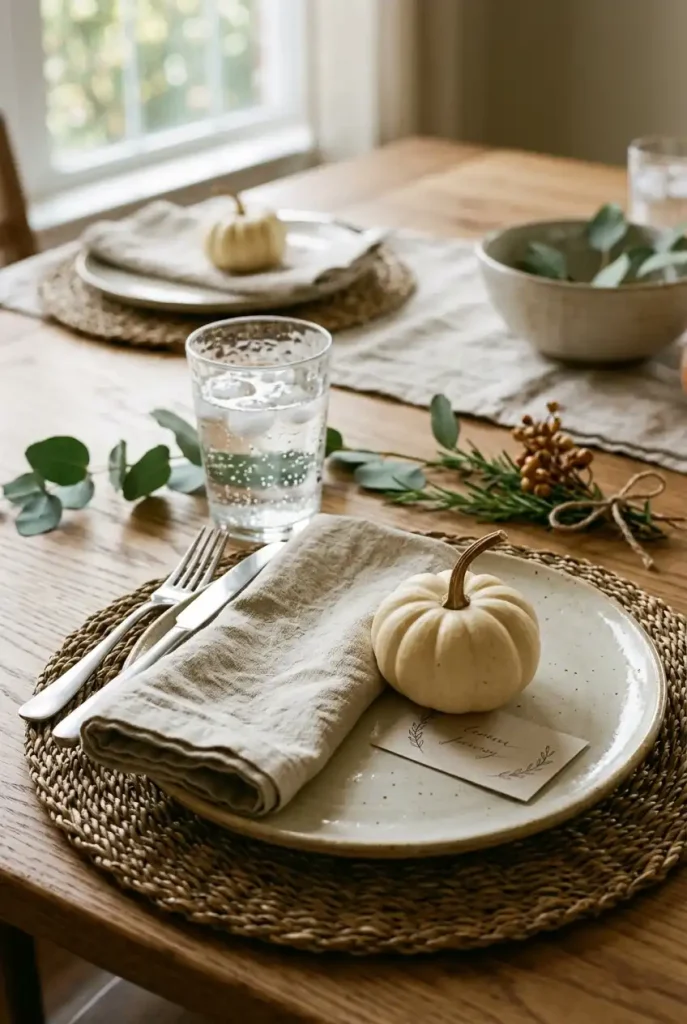
Give every guest a small seasonal detail by placing a miniature pumpkin at each setting. White, cream, green, or muted orange pumpkins can work depending on the rest of your table.
For a more personal presentation, attach a simple handwritten-style place card to each pumpkin or tuck the card beneath the stem. Keep the rest of the setting relatively restrained so the pumpkins remain the stars.
This idea is particularly useful for family dinners because each guest gets a small decorative element without requiring a large centerpiece.
Best pairing: neutral plates, natural linen napkins, wood or woven chargers, and simple glassware.
Style a Candlelit Thanksgiving Table
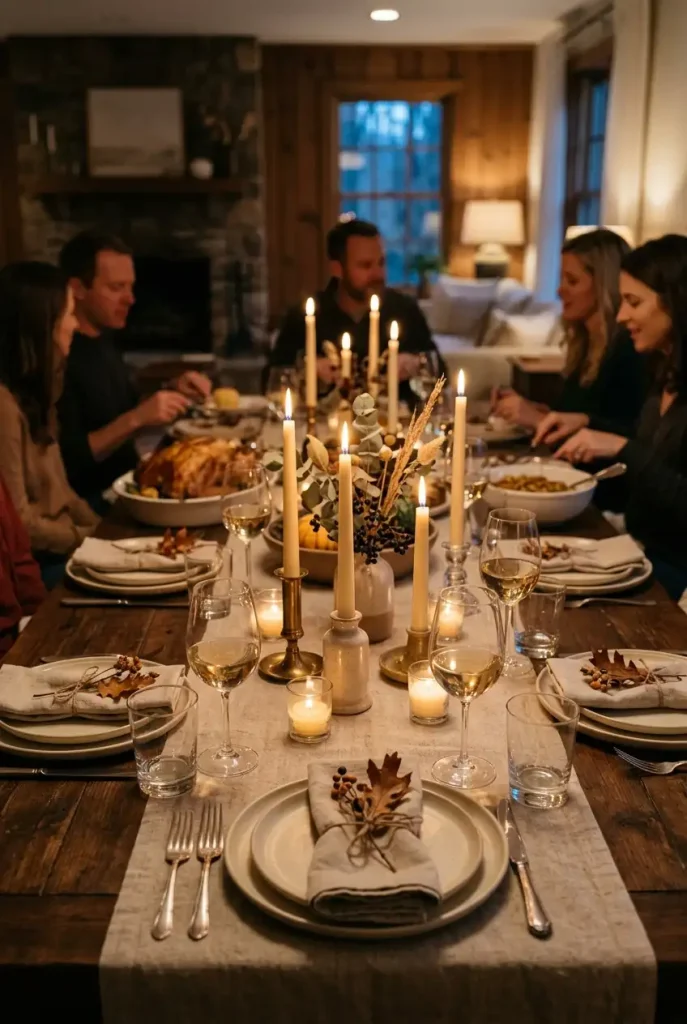
If dinner begins in the late afternoon or evening, candlelight can completely change the mood of the table. Instead of relying on one large centerpiece, scatter several low candleholders down the middle of the table.
Taper candles create height while small votives provide points of light closer to the tabletop. Choose warm ivory or beeswax-toned candles to complement wood, linen, and autumn foliage.
Keep flames away from loose napkins, dried greenery, and anything that could easily shift toward the candle. Battery-operated candles can provide a similar visual effect when open flames aren’t practical.
Pair Blue-and-White Dinnerware With Fall Accents

Blue-and-white dishes can give a Thanksgiving table a fresh look while still feeling seasonal. Rather than replacing your everyday dinnerware, use blue plates or patterned serving pieces as the foundation and add autumn accents around them.
Muted rust, amber, tan, and natural greenery complement navy or dusty blue particularly well. A woven runner can soften the contrast, while amber glassware introduces another subtle fall note.
This is a good option for anyone who wants Thanksgiving decor that doesn’t look like traditional orange-and-brown holiday styling.
Make a Long Table Feel Intimate With Repeated Mini Arrangements
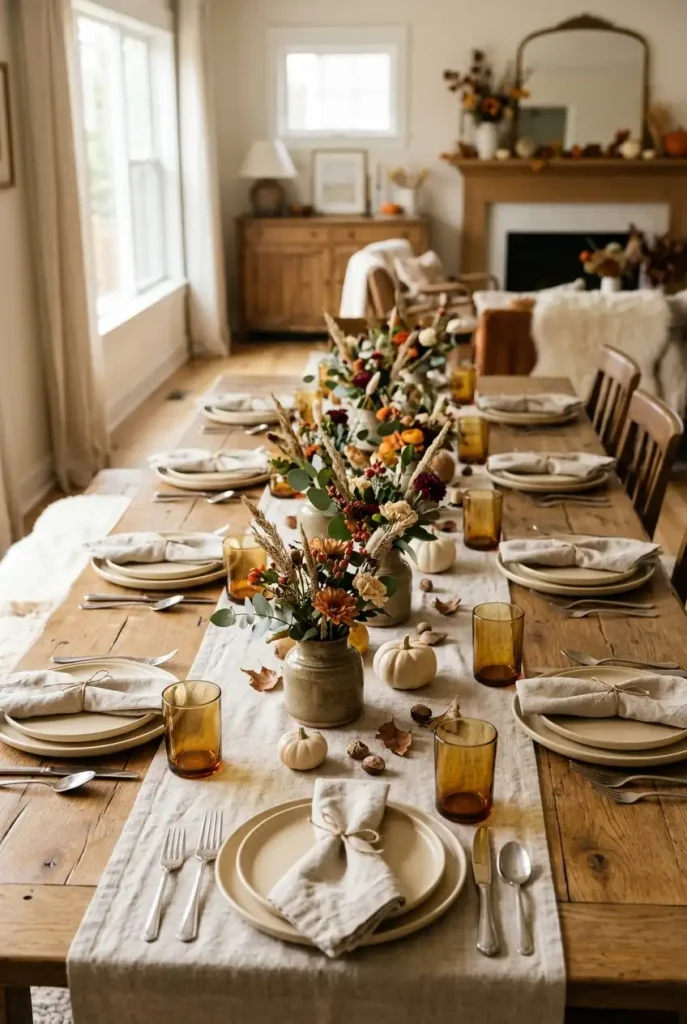
A long dining table can sometimes feel visually empty in the middle. Instead of one enormous floral arrangement, repeat several small arrangements along the length of the table.
Use matching or coordinating vessels filled with autumn foliage, dried flowers, branches, or seasonal fruit. The repeated rhythm visually connects the place settings while keeping the center low enough for conversation.
This approach also makes it easier to move portions of the centerpiece when serving dishes need more space.
Use a Moody Forest-Green Palette

Forest green brings an earthy, sophisticated quality to Thanksgiving decor. It works especially well with warm wood, cream ceramics, brass, and natural linen.
Try a deep green table runner or napkin set with neutral plates and a centerpiece made from evergreen-like foliage, eucalyptus, branches, or other seasonally appropriate greenery. Add just a few warm metallic accents rather than making the entire table metallic.
The result feels autumnal without relying on the usual harvest-color palette.
Common Mistake: Making every element dark.
Better Approach: Let the green accents sit against lighter plates, linens, or walls so the table retains visual breathing room.
Build the Centerpiece Around Seasonal Fruit
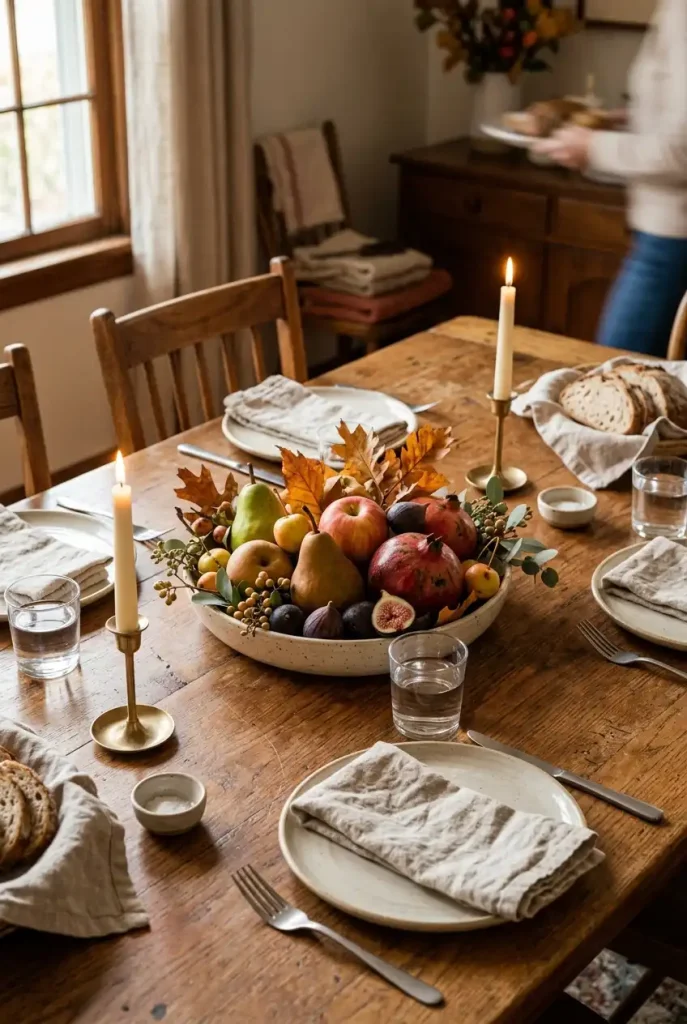
Fruit can make a Thanksgiving table feel abundant without requiring a traditional floral centerpiece. Arrange pears, apples, figs, pomegranates, or small citrus fruits in a low bowl or distribute them loosely among foliage.
The advantage is that the centerpiece feels connected to the meal itself. Pair the fruit with neutral ceramics and natural textiles to keep the look sophisticated.
For a family-style dinner, choose a centerpiece that can be moved easily when serving dishes arrive.
Layer Chargers, Plates, and Linen for a Fuller Place Setting
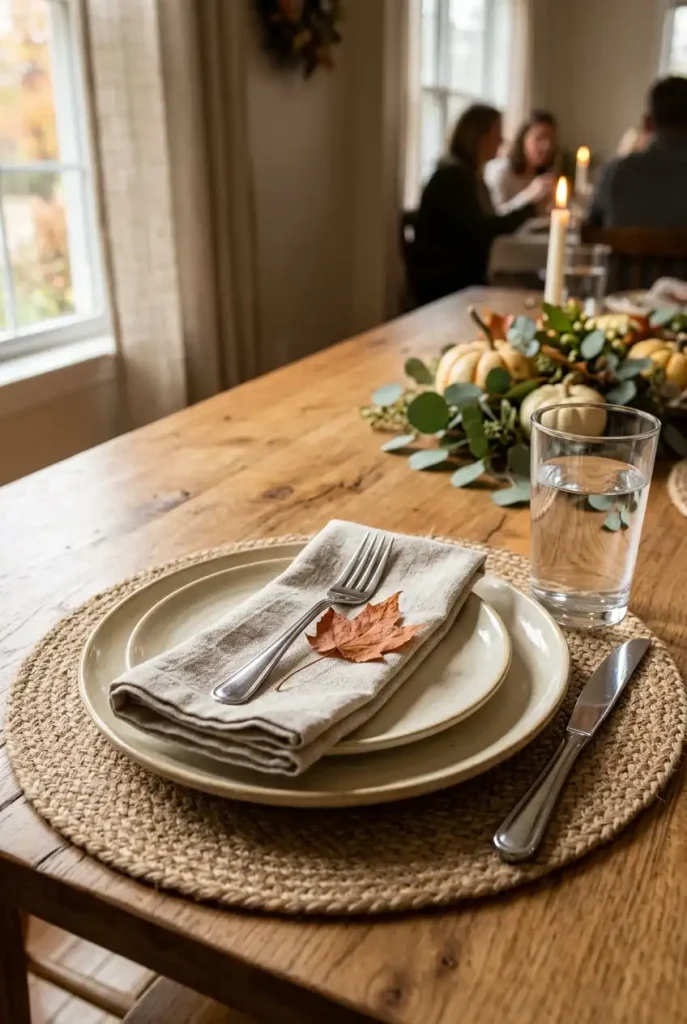
Layering doesn’t have to mean formal. A woven or wood charger beneath a simple dinner plate creates a visual foundation, while a smaller salad or dessert plate adds another level.
Finish with a folded linen napkin placed either on top of the plate or tucked neatly beside it. The combination makes each setting feel intentionally prepared before guests even sit down.
Mix Vintage Pieces With Modern Tableware

A Thanksgiving table doesn’t need every piece to come from the same collection. Mixing a vintage serving platter or glassware with contemporary plates can make the setting feel collected rather than overly coordinated.
Choose one or two older-looking pieces as focal points, then keep the surrounding tableware relatively simple. This works particularly well with warm woods and neutral linens.
Tips & Tricks
- Use one dominant color to connect mismatched pieces.
- Repeat a material, such as brass or wood, in several places.
- Let one unusual vintage piece become the conversation starter.
- Avoid mixing so many patterns that the table loses a clear visual direction.
Try a Soft Sage-and-Cream Thanksgiving Palette
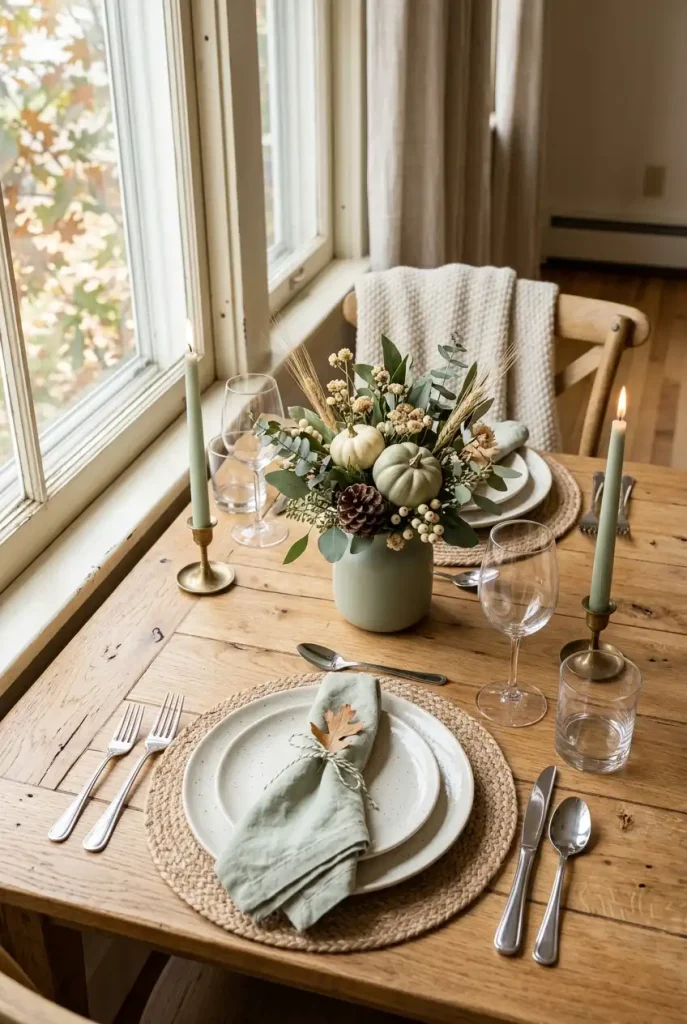
Sage green offers a gentler alternative to traditional fall colors. Combined with cream, natural wood, and muted tan, it creates a calm tablescape that still feels appropriate for November.
Use sage through napkins, glassware, taper candles, or a subtle table runner. Keep the dinnerware light and let natural wood supply warmth.
This palette is particularly effective when the dining room already has neutral walls and furniture because it adds seasonal color without competing with the room.
Add a Dramatic Fall Floral Centerpiece

If you enjoy a more traditional centerpiece, make the flowers the visual anchor and simplify everything around them. A generous arrangement can combine warm-toned flowers, autumn foliage, branches, berries, and textural stems.
Keep the arrangement narrow enough that it doesn’t take over the entire dining surface. A long, low vessel is often easier to work with than a very tall vase for a dinner where guests need to converse.
Editor’s Note: Centerpiece height matters as much as flower choice. A beautiful arrangement becomes less practical when guests have to lean around it to see one another.
Create a Casual Family-Style Table

Not every Thanksgiving dinner needs a formal place setting. For a relaxed family-style meal, prioritize warmth and function. Use everyday stoneware, comfortable cloth napkins, sturdy glassware, and a simple centerpiece that can be shifted when serving bowls arrive.
A wooden table with a runner down the center gives the setting structure without making it feel precious. Small bowls of nuts, seasonal fruit, or bread can double as practical table accents.
Use Plaid Napkins for a Traditional Fall Look
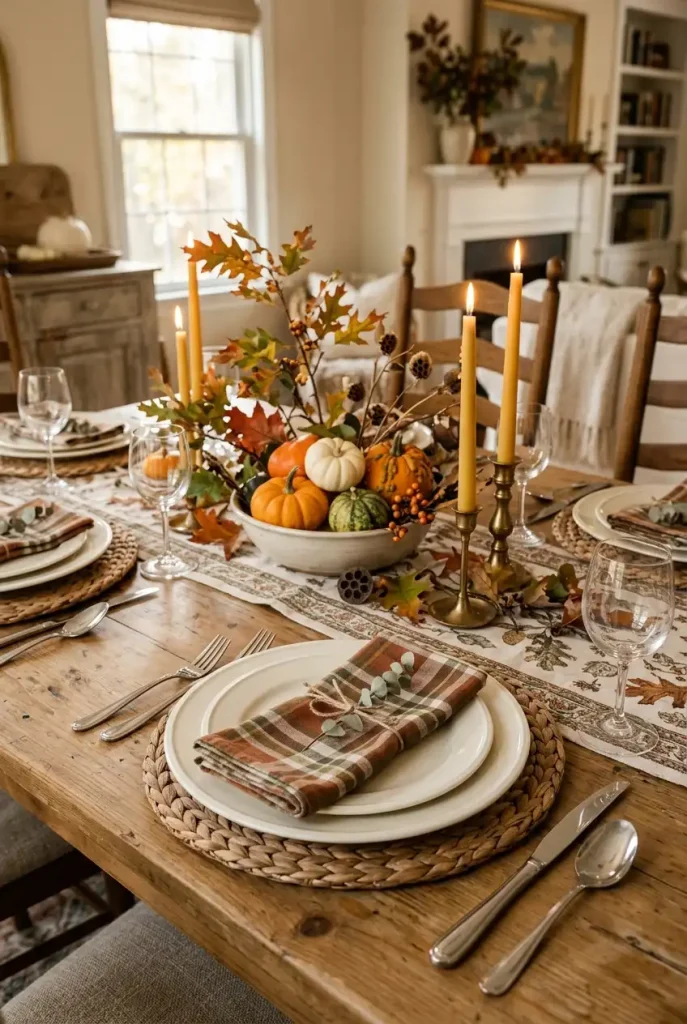
Plaid is an easy way to introduce classic Thanksgiving character without turning the entire table into a themed display. Choose a plaid with warm neutrals, rust, olive, burgundy, or navy, then pair it with solid-color plates and simple accessories.
Because the pattern is already visually strong, keep the centerpiece uncomplicated. A few pumpkins and branches may be all you need.
Decorate With Foraged-Looking Branches and Leaves

For a naturally styled table, use branches and foliage as the main decorative element. The goal is not to make the arrangement look perfectly symmetrical. A few graceful branches extending horizontally across the table can create movement and height without requiring a large floral budget.
Pair them with simple pottery, linen, and wood. The organic shapes become more interesting when the tableware remains clean and uncomplicated.
Common Mistake: Using too much foliage.
Better Approach: Let portions of the table remain visually open so the branches feel intentional rather than cluttered.
Give Each Guest a Folded Linen Napkin

Sometimes the smallest styling decision has the biggest effect on a table. A carefully folded linen napkin gives every place setting a finished appearance without adding another decorative object.
Try simple folds rather than complicated shapes. A relaxed rectangle, soft knot, or loosely folded napkin can look more natural than an elaborate presentation. Choose a color that connects to your centerpiece for a cohesive result.
This is also one of the easiest ideas to adapt if you’re decorating on a limited budget.
Combine Terracotta, Cream, and Warm Wood

Terracotta is a natural bridge between classic fall colors and modern neutral decor. Use it in napkins, ceramic vessels, taper candles, or small decorative pumpkins, then balance it with cream dinnerware and warm wood.
The palette feels especially comfortable in rooms with oak, walnut, or other warm-toned furniture. Keep the remaining accents quiet so the terracotta doesn’t become overly orange.
Finish With a Personal Place Card at Every Setting
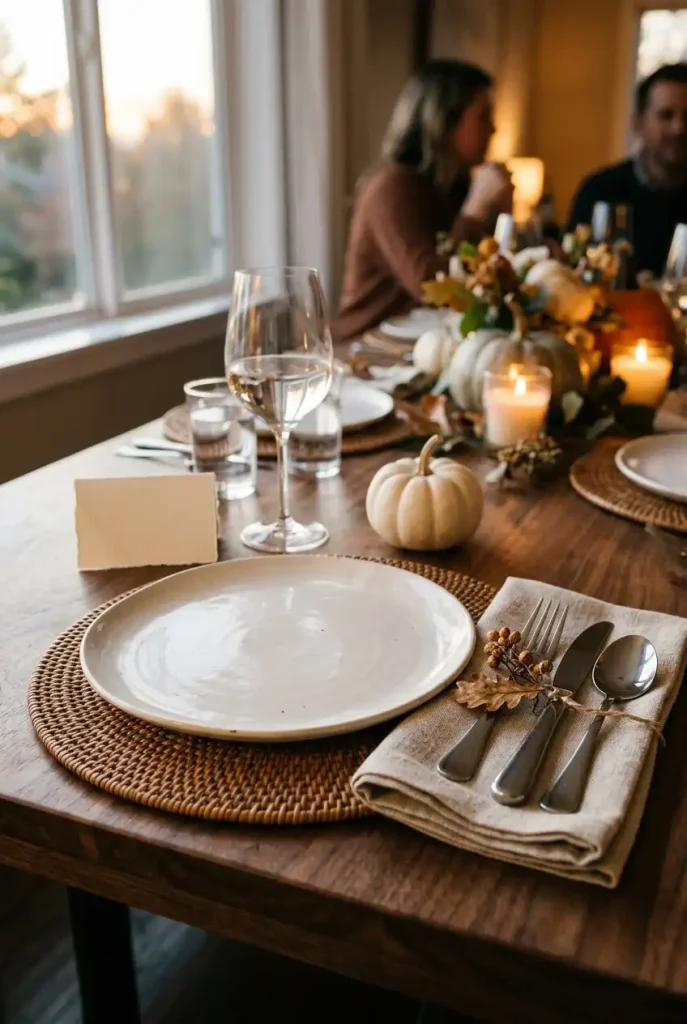
For a gathering with family and friends, personalized place cards can make the table feel especially thoughtful. They don’t need to be elaborate. A simple card with each guest’s name can sit on a folded napkin, rest beside a plate, or be tucked into a small seasonal accent.
Use the place cards to complement the overall table rather than compete with it. Cream cardstock, natural paper, small wooden tags, or understated seasonal shapes can all work.
If you’re hosting a larger dinner, place cards also provide a practical way to guide seating without interrupting the flow once everyone arrives.
Choosing the Right Thanksgiving Table Setting
The best Thanksgiving table isn’t necessarily the one with the most decorations. Start with the atmosphere you want guests to experience. A rustic table can feel relaxed and family-friendly, while layered linens, polished flatware, and candlelight create a more formal mood.
If you’re working with pieces you already own, choose one new element to establish the seasonal direction—perhaps linen napkins, a centerpiece, autumn-colored glassware, or a few miniature pumpkins. From there, repeat the same colors and materials in small ways.
For a busy family dinner, prioritize clear sightlines and enough room for serving dishes. For a smaller gathering, you can afford to spend more attention on individual place settings and decorative details. The most successful tables balance visual beauty with the practical reality of eating, serving, and talking around them.