

20 Cozy Living Room Ideas for a Relaxed, Comfortable Space
A cozy living room does not have to mean filling every corner with blankets, pillows, and decorative objects. The most comfortable rooms usually feel inviting because several small design decisions work together: soft lighting, comfortable seating, layered textures, warm colors, practical furniture placement, and enough open space to breathe. Whether you live in an apartment, townhouse, rental, or spacious suburban home, you can create that relaxed feeling without completely redesigning the room.
These cozy living room ideas cover a range of decorating approaches, from simple changes such as adding a textured throw or rearranging furniture to more substantial upgrades such as built-in shelving, a statement fireplace, or custom millwork. The goal is not to make every room look the same. Instead, use the ideas that fit your space, lifestyle, and budget, then adapt the details to your own home.
Layer Soft Textures Around the Sofa

One of the easiest ways to make a living room feel more comfortable is to build layers of texture around the main seating area. Start with a sofa in a neutral fabric, then add a few cushions in different materials rather than using identical fabrics throughout.
A chunky knit throw, linen pillow, boucle accent cushion, or softly woven blanket can introduce visual depth without requiring new furniture. Keep the color palette relatively restrained so the room feels calm rather than busy.
This approach works especially well in apartments and smaller homes because textiles can make a noticeable difference without taking up additional floor space. A washable throw or durable pillow covers can also make the arrangement more practical for households with children or pets.
For an especially relaxed appearance, avoid arranging every cushion too precisely. A slightly casual arrangement can make the sofa look ready to use rather than staged purely for decoration.
Create a Warm Reading Corner
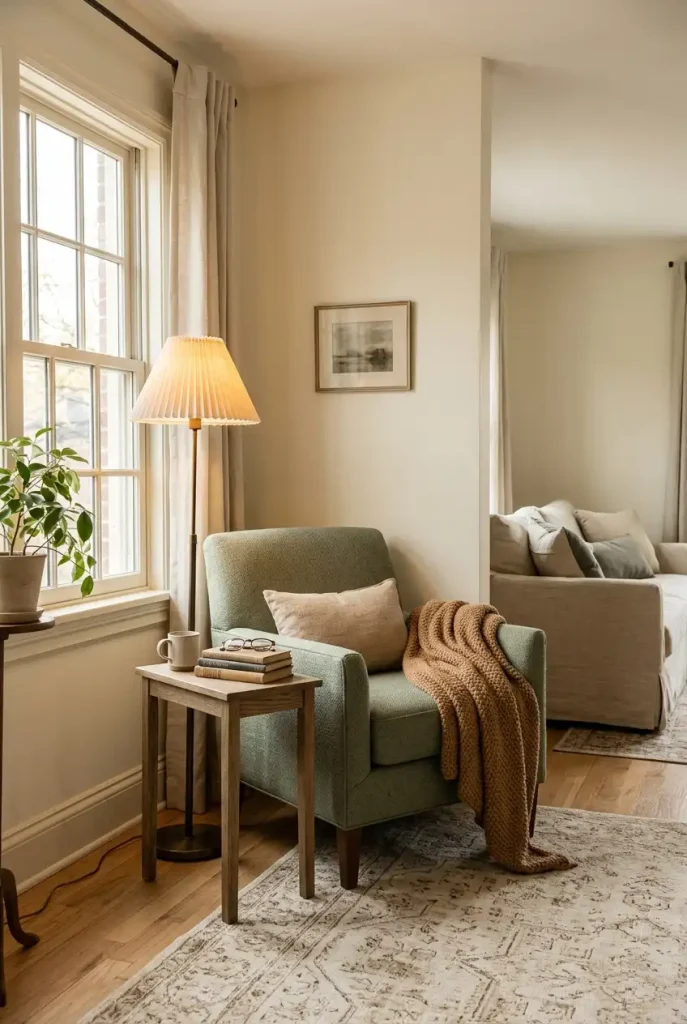
A small reading corner can give a living room a more intimate feeling while also making an unused section of the room functional. Place a comfortable armchair beside a floor lamp and a small side table that can hold a book, drink, or reading glasses.
The chair does not need to match the sofa exactly. In fact, a complementary fabric or slightly different silhouette can make the seating arrangement feel more collected.
A floor lamp with a warm-toned bulb is particularly useful because it creates a smaller pool of light than an overhead fixture. Add a soft throw over the chair for extra comfort.
This idea is especially useful in larger living rooms where one seating arrangement leaves awkward empty space. In a compact room, choose a chair with a relatively small footprint and a narrow side table.
Add an Oversized Area Rug

A large area rug can visually connect the seating pieces and make a living room feel more grounded. Rather than choosing a rug that only fits beneath the coffee table, consider one large enough for at least the front legs of the main seating pieces to rest on it.
For a cozy look, look toward softly patterned rugs, subtle vintage-inspired designs, or solid textured options. Warm beige, muted terracotta, faded blue, cream, and soft brown can all work with a relaxed palette.
The right size matters as much as the pattern. A rug that is too small can make the furniture arrangement feel disconnected, while an appropriately scaled rug helps define the entire conversation area.
For busy households, performance or washable rug options can make the concept more practical without changing the overall visual effect.
Use Warm, Layered Lighting

Lighting can dramatically influence how comfortable a living room feels, especially in the evening. Instead of depending on a single ceiling fixture, combine several smaller sources.
A floor lamp beside the sofa, a table lamp on a console, and a warm accent light near a bookshelf can create separate pools of illumination. This gives the room flexibility throughout the day.
Choose fixtures that complement the room rather than competing for attention. Linen shades, aged metal finishes, ceramic lamps, and warm wood details can reinforce a cozy aesthetic.
If you are renting, portable lamps are particularly useful because they can change the atmosphere without requiring electrical work.
Bring in Natural Wood

Natural wood can add warmth without relying heavily on color. A wood coffee table, oak sideboard, open shelving, or wooden accent chair can soften a room dominated by white, gray, or cream furnishings.
The key is to avoid making every wooden piece identical. Combining slightly different wood tones can create a more collected appearance, provided the overall palette remains harmonious.
For a budget-conscious update, replacing one small accent table or adding a wooden tray can introduce the material without buying an entire furniture set.
In a more substantial renovation, built-in oak shelving or custom wood cabinetry can provide both storage and architectural character.
Try a Soft Monochromatic Palette

A monochromatic palette can make a living room feel calm when several shades of the same color family are layered together. Instead of using one exact beige everywhere, combine cream, oatmeal, taupe, warm gray, and light brown.
Texture becomes particularly important when the color palette is restrained. A woven rug, linen curtains, plush upholstery, ceramic accessories, and a nubby throw can keep the room from looking flat.
This approach works in both small and large rooms because the limited palette creates visual continuity. Add a small amount of darker wood or aged metal to provide contrast.
The result is subtle rather than dramatic, making it useful for people who want a cozy space that still feels clean and organized.
Add a Fireplace Focal Point
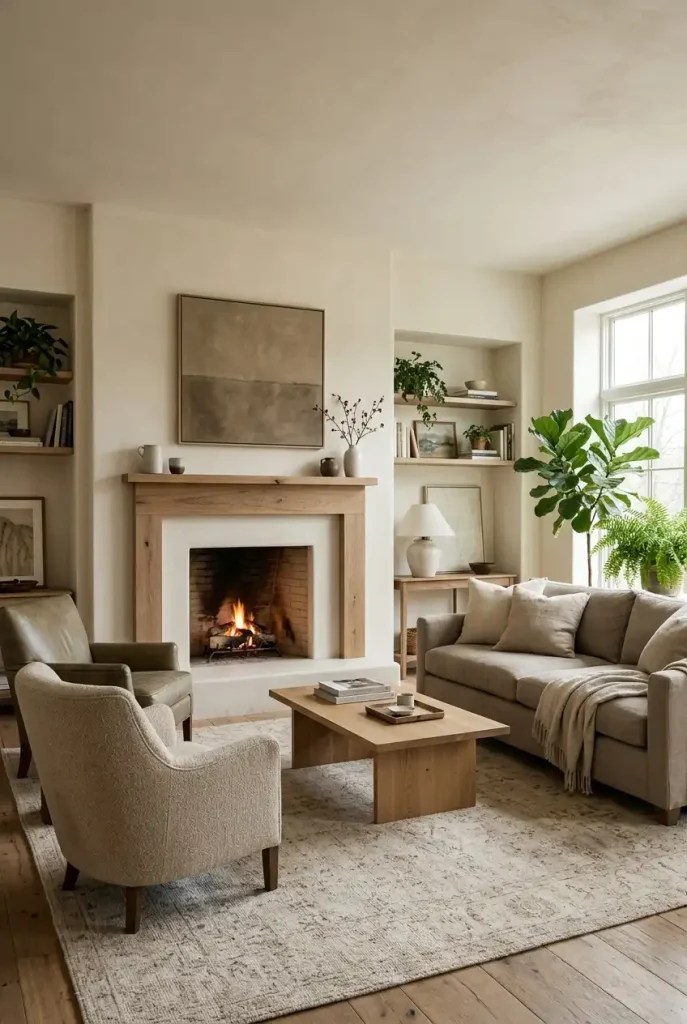
A fireplace naturally gives a living room a visual center and can make the seating arrangement feel more intimate. If your home already has a fireplace, consider treating the surrounding wall as an architectural feature rather than overdecorating the mantel.
A simple stone, brick, plaster, or painted surround can establish the character of the room. Keep the furniture oriented toward the fireplace while leaving enough space for comfortable movement.
For homes without a traditional fireplace, an appropriately installed electric fireplace can provide a similar visual focal point where permitted and suitable for the space.
The surrounding materials matter. Warm plaster, natural stone, or painted wood can create very different moods, so choose one that works with the home’s architecture.
Make the Coffee Table Functional and Inviting

A coffee table should support the way the room is actually used. Instead of filling it with decorative objects, combine practical and attractive elements: a tray, a small stack of books, a candle, a bowl, or a simple vase.
Round or oval tables can work particularly well where circulation space is limited because they avoid sharp corners. Rectangular tables may suit longer sofas and larger rooms.
A wood table can add warmth to an upholstered room, while a soft stone or upholstered ottoman can introduce a different texture.
Leave enough empty surface for everyday use. A cozy room should look usable, not like every surface is reserved for decoration.
Layer Curtains for a Softer Room

Window treatments can change the atmosphere of a living room without changing the furniture. Full-length curtains made from linen, cotton, or another softly textured fabric can make windows feel more substantial and the entire room more finished.
Mounting curtains high and allowing them to extend toward the floor can visually emphasize the room’s height. For a cozy effect, choose warm neutrals or muted colors that coordinate with the rug and upholstery.
Layering sheer curtains beneath heavier panels can provide flexibility in bright rooms while maintaining a softer appearance.
Renters can use tension rods or removable hardware where appropriate, depending on the window and building restrictions.
Mix Vintage and New Furniture

A room filled entirely with matching new furniture can sometimes feel overly coordinated. Mixing one or two vintage or vintage-inspired pieces with newer furniture creates more character.
Try pairing a contemporary sofa with a vintage wood side table, an antique-style mirror, or a secondhand accent chair. The pieces do not need to come from the same era.
Look for common threads such as wood tone, upholstery color, shape, or scale. This helps different pieces feel intentional rather than randomly collected.
Secondhand shopping can also make this approach accessible. A single distinctive piece may have more visual impact than several generic accessories.
Use a Deep, Comfortable Sofa
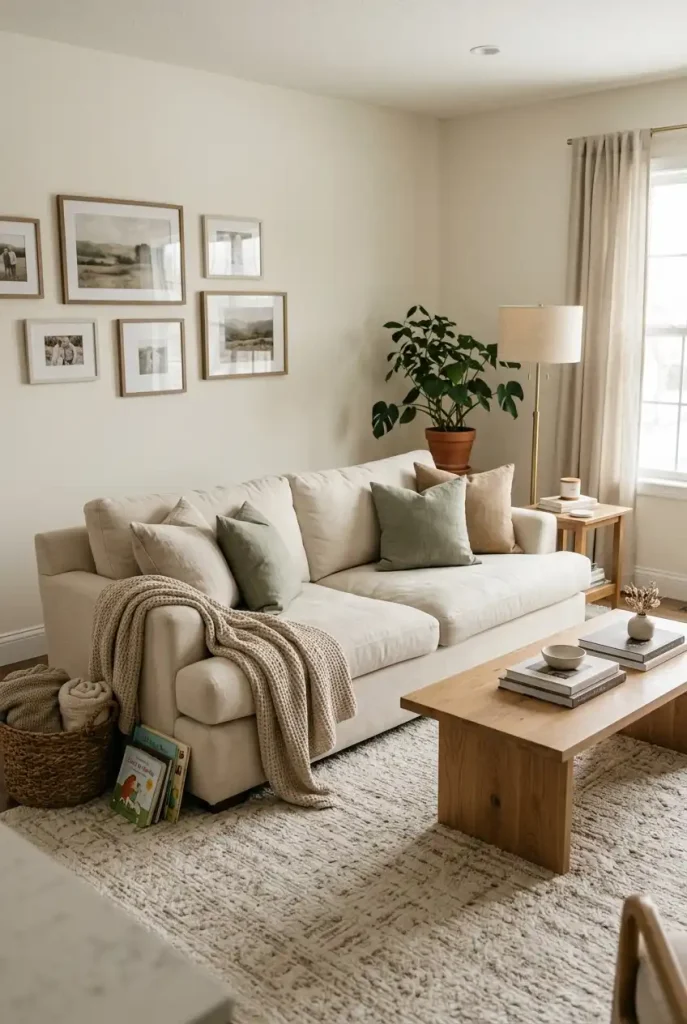
When the living room is primarily used for relaxing, seating comfort should influence the furniture choice. A generously proportioned sofa can become the room’s main destination for reading, watching television, or spending time with family.
Look for upholstery that feels pleasant to the touch and cushions that suit the way the household uses the room. A very deep sofa can be wonderful for lounging but may not suit a compact room or people who prefer a more upright sitting position.
Balance a substantial sofa with lighter-looking tables or chairs so the room does not become visually heavy.
For families, durable upholstery and removable or washable covers may be worth prioritizing over purely decorative details.
Create a Cozy Gallery Wall

Artwork can make a living room feel personal without requiring major furniture changes. A gallery wall works particularly well above a sofa, console, or low cabinet.
For a calm arrangement, use artwork that shares a loose color palette while varying frame styles and sizes. Photography, line drawings, landscapes, abstract pieces, and vintage-inspired prints can coexist when the colors relate.
If you rent, lightweight frames and removable hanging solutions may provide an alternative to permanent installation where suitable.
Leave enough breathing room between the artwork and furniture. A gallery wall should feel connected to the seating area rather than floating high above it.
Add Built-In Shelving

Built-in shelving can turn a plain living room wall into both a storage solution and a focal point. Shelves can display books, ceramics, framed photographs, baskets, and a small selection of decorative objects.
For a cozy appearance, avoid filling every shelf. Empty space helps individual objects stand out and keeps the wall from feeling crowded.
Painted built-ins can blend into the wall for a quiet effect, while natural wood shelving creates stronger contrast.
This is a higher-investment idea, but the underlying principle can be adapted affordably with freestanding bookcases or modular shelving arranged carefully along one wall.
Bring in Greenery
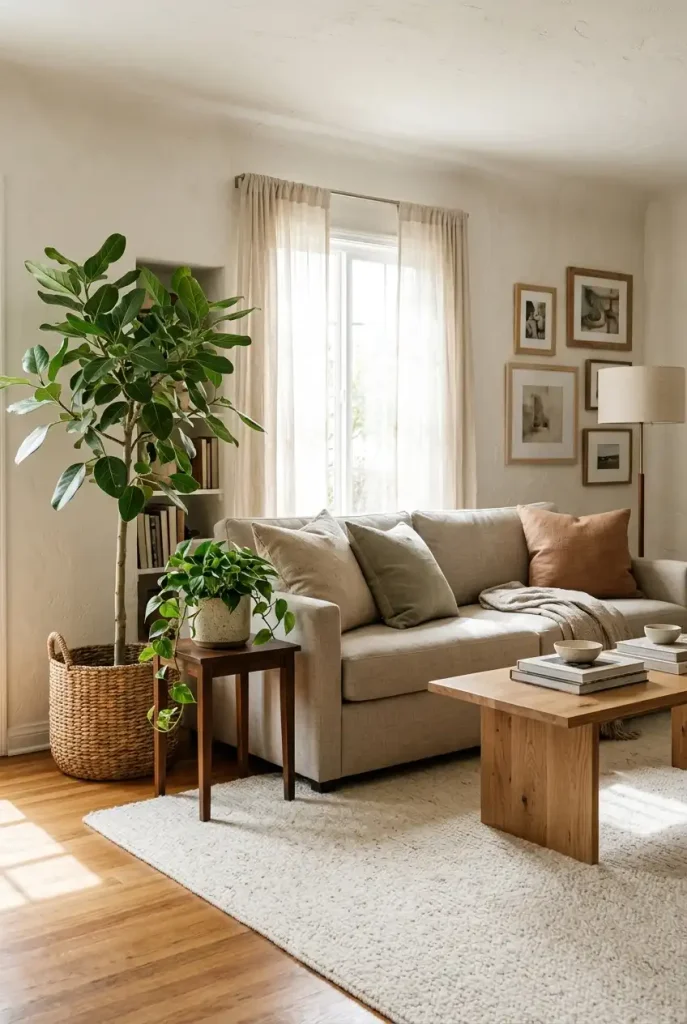
Plants can introduce color and organic texture without requiring a major change to the room’s palette. A tall floor plant can fill an empty corner, while smaller plants can sit on shelves or side tables.
Choose plants according to the actual light conditions in the room rather than choosing solely for appearance. If maintenance is a concern, a single well-placed plant may have more impact than many smaller ones.
Natural baskets, ceramic planters, and wooden stands can reinforce the room’s warm materials.
For households with pets, check that the specific plants selected are appropriate for the animals in the home.
Try a Moody Accent Wall

A deeper wall color can make a living room feel more intimate, especially when paired with warm lighting and lighter furniture. Consider muted olive, deep blue-gray, warm charcoal, earthy brown, or another subdued shade rather than an extremely saturated color.
An accent wall can work particularly well behind a sofa, fireplace, or media console because it naturally creates a focal point.
If you prefer less commitment, use removable wallpaper or focus the darker color on one architectural feature where appropriate.
Balance a dark wall with lighter upholstery, warm wood, reflective accents, and enough lighting to keep the room comfortable rather than gloomy.
Add an Oversized Floor Lamp

An oversized floor lamp can provide both practical illumination and sculptural interest. Choose a fixture with enough visual weight to balance the sofa without dominating the entire room.
Arched lamps work well when you want light to extend over a seating area without placing a lamp directly beside every chair. A tall linen-shade lamp can create a softer, more traditional atmosphere.
This is a relatively simple update because the fixture can be changed without altering the room’s architecture.
Keep the scale proportional. A very small lamp beside a large sectional can disappear visually, while an appropriately scaled fixture can make the arrangement feel intentional.
Design a Family-Friendly Conversation Layout

A cozy living room does not always need to revolve around a television. Arranging two chairs across from a sofa can create a natural conversation area for family visits, reading, games, or casual gatherings.
Keep a clear path through the room and avoid pushing every piece of furniture directly against the walls. Even in a modest room, bringing seating slightly inward can make the arrangement feel more intentional.
A round coffee table can soften the layout and make movement between seating positions easier.
For households with children, choose durable upholstery and tables with practical edges and proportions.
Use a Custom Window Seat
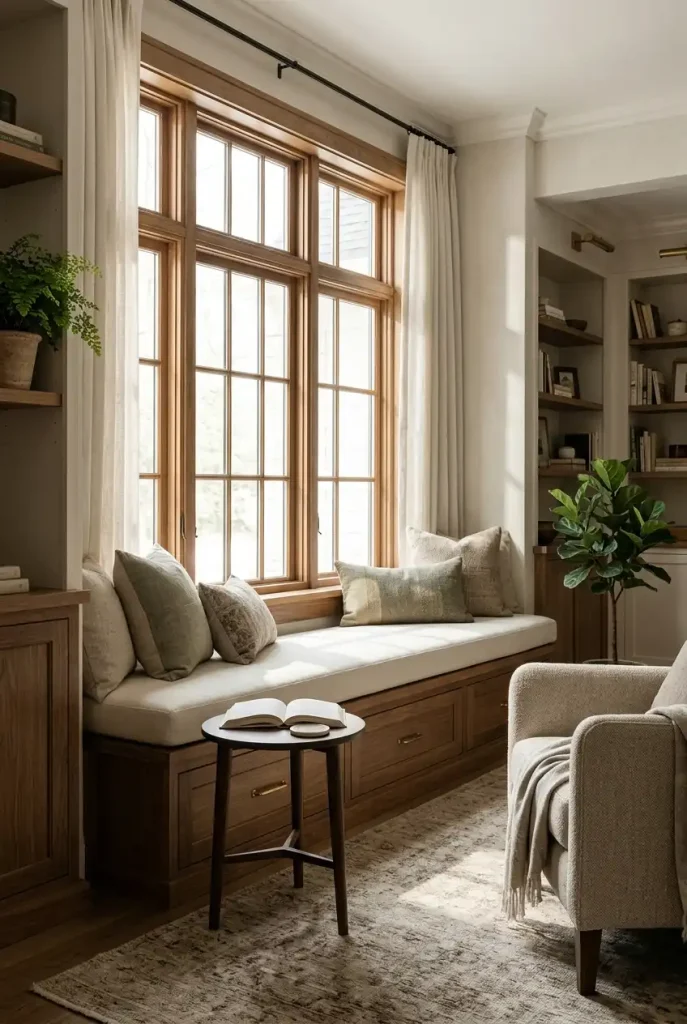
A window seat can turn an overlooked architectural area into one of the most inviting parts of a living room. A built-in bench with a comfortable cushion creates a place for reading, relaxing, or simply enjoying natural light.
Add a few pillows and a small side table, but avoid filling the seat so completely that it becomes difficult to use.
Custom construction can make the most of an unusual window configuration, while a freestanding bench can provide a more accessible alternative.
Storage drawers beneath the seat can make the feature even more useful in smaller homes.
Add a Layered Fireplace-and-Bookcase Wall

For a more substantial renovation, combine a fireplace with integrated bookshelves to create a complete feature wall. This approach gives the living room architectural structure while providing useful storage.
The most successful versions usually keep the materials restrained. A painted wall with oak shelving, for example, can feel warm without becoming visually overwhelming.
Use the shelves selectively for books, art, ceramics, and baskets. The fireplace can remain the central anchor while the shelving provides symmetry and storage.
This is a premium concept, but the visual principle can be recreated at a lower investment using a freestanding media console, separate bookcases, and a simple focal wall.
Finish With a Personal Comfort Layer
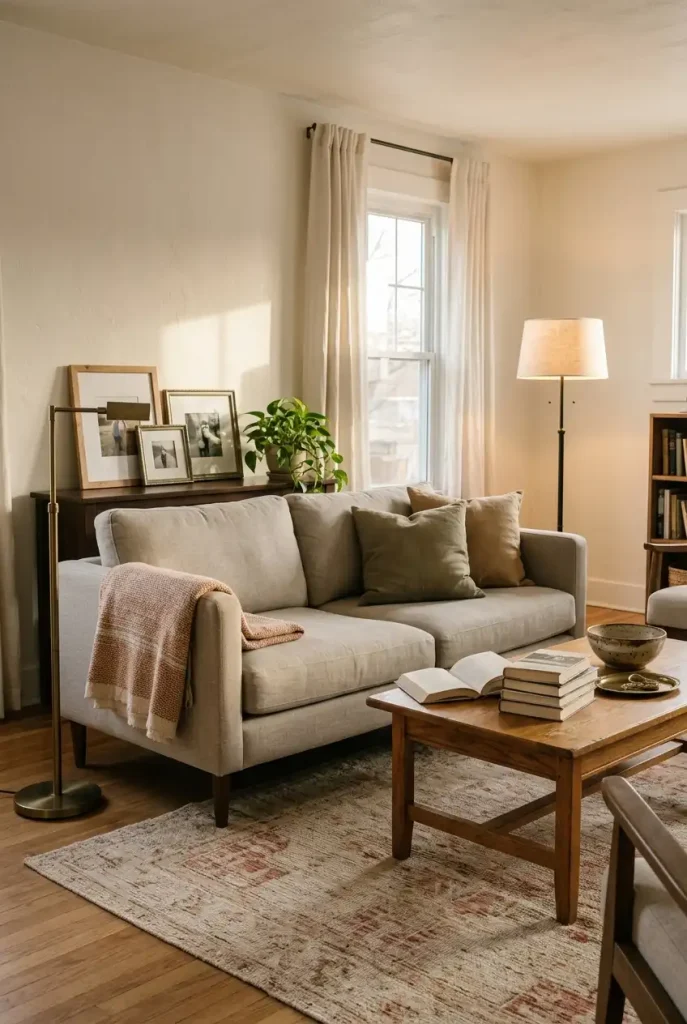
The final ingredient in a cozy living room is personality. Once the furniture, lighting, rug, and major materials are established, add a few things that reflect how the household actually lives.
That might be a favorite collection of books, framed family photographs, travel souvenirs, a handmade ceramic piece, a vintage find, or a blanket that is used regularly.
The goal is not to create a perfectly styled showroom. A comfortable room should communicate that people actually spend time there.
Keep the most meaningful objects visible without allowing every surface to become storage. A handful of personal pieces surrounded by calm negative space can make a room feel much more authentic.
How to Pull the Look Together
The most comfortable living rooms usually rely on several small decisions rather than one dramatic decorating trick. Start with the way you actually use the room, then build around that function.
If the space is mainly for movie nights, prioritize comfortable seating, soft lighting, and a practical coffee table. If it is a gathering space, focus on furniture placement that encourages conversation. If the room doubles as a reading area or workspace, create smaller zones rather than trying to make the entire room serve one purpose.
A useful approach is to choose a restrained base palette and then layer in warmth through wood, textiles, lighting, artwork, and greenery. This gives you room to change smaller accessories seasonally without having to redesign the entire space.
For a budget-conscious update, start with textiles, lighting, furniture arrangement, and secondhand accents. For a larger investment, consider upgraded upholstery, custom storage, architectural lighting, built-ins, or millwork. The design principle can remain the same even when the materials and craftsmanship change.
Most importantly, leave some breathing room. Cozy does not have to mean crowded. Comfortable proportions, clear walkways, soft textures, and lighting that can be adjusted throughout the day will usually do more for the room than simply adding more decoration.