

17 Simple Bedroom Decorating Ideas for a Beautiful Makeover
A bedroom makeover doesn’t have to involve expensive furniture, major renovations, or a completely new color scheme. Sometimes, a few thoughtful changes can make the room feel brighter, cozier, and more put together. Simple bedroom decorating ideas like refreshing your bedding, rearranging furniture, adding warm lighting, and styling an empty wall can create a noticeable difference without making the process complicated.
Whether you’re decorating a small apartment bedroom, updating a guest room, or refreshing the primary bedroom in your home, the key is to focus on details that improve both appearance and everyday comfort. You can work with furniture you already own, introduce a few affordable accessories, or invest in one standout feature that brings the entire room together.
These 17 ideas offer practical inspiration for creating a bedroom that feels personal, inviting, and beautifully styled.
Refresh Your Bedroom With Soft, Layered Bedding

One of the simplest ways to refresh a bedroom is to update the bed itself. Because the bed is usually the room’s largest piece of furniture, its colors and textures have a strong influence on the overall look. Start with crisp white, warm ivory, or soft beige sheets, then layer a quilt or duvet with a contrasting coverlet and a few decorative pillows.
You don’t need a dozen pillows to create a finished appearance. Two sleeping pillows, a pair of shams, and one smaller accent pillow can provide enough variation without making the bed difficult to use. Add a textured throw at the foot of the bed for another layer of warmth.
Styling tip: Mix materials rather than relying on one color alone. Cotton, linen, knitted fabric, and subtle quilting can make a neutral bedroom feel inviting instead of flat.
Paint One Wall in a Warm, Welcoming Color

Paint can change the atmosphere of a bedroom without requiring new furniture or decorative accessories. An accent wall behind the bed gives the room a clear focal point while allowing the other walls to remain a lighter neutral shade.
Muted sage green, dusty blue, warm taupe, and soft clay are useful starting points if you want color without an overwhelming effect. For a brighter bedroom, choose a gentle shade that works with the existing flooring, curtains, and furniture. A deeper green or blue can create a more dramatic backdrop when the room has enough natural or artificial light.
Before committing, test paint samples on the wall and observe them at different times of day. Colors can look noticeably different in morning daylight and under warm evening bulbs.
Common mistake: Choosing a paint color from a small online swatch alone. Check a larger sample in your actual room before painting the entire wall.
Hang Curtains Higher to Create a Taller Look

Window treatments can make a bedroom feel more finished while influencing how tall and spacious it appears. Hanging curtain rods closer to the ceiling, rather than directly above the window frame, can draw the eye upward. Extending the rod slightly beyond the window edges also allows the curtains to sit clear of the glass when open.
Choose floor-length panels in linen, cotton, or a suitable lightweight blend for a relaxed look. Warm white and ivory work well in many neutral bedrooms, while muted blue, olive, or subtle stripes can introduce more personality.
Measure carefully before buying panels. Curtains that stop awkwardly above the floor can make the room look unfinished, while excessively long panels may collect dust or interfere with everyday cleaning.
Quick Tip: If privacy and darkness matter, use a suitable blackout lining or combine decorative curtains with a separate blackout shade.
Add Warm Lighting Beside the Bed
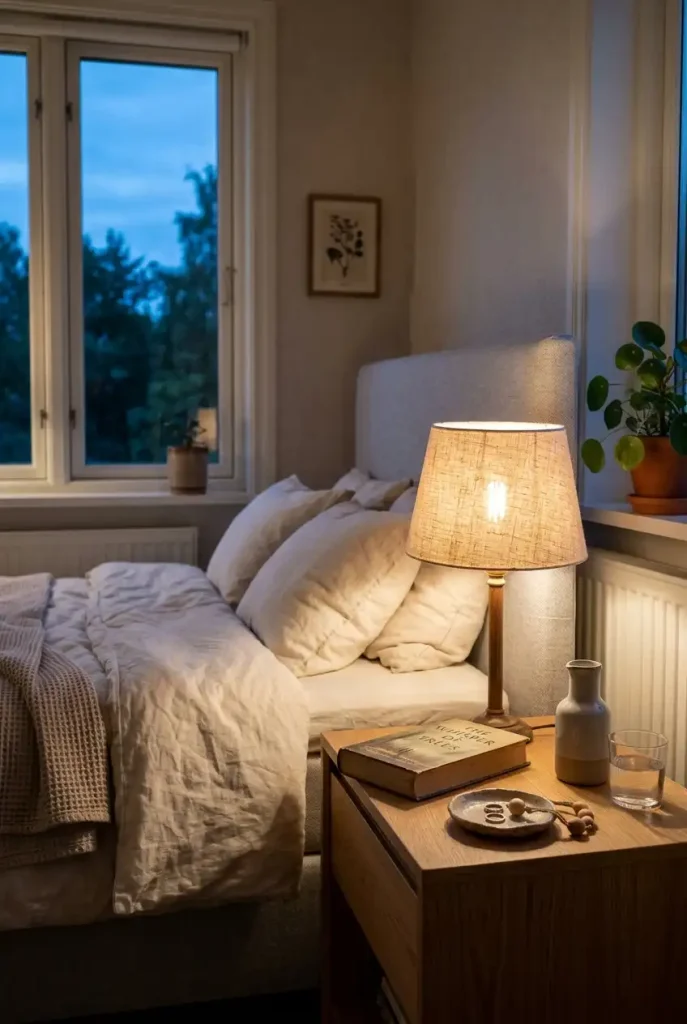
Lighting can make a bedroom feel completely different after sunset. A single bright ceiling fixture often creates a flat, practical atmosphere, whereas smaller light sources introduce depth and a softer mood. Place a table lamp on each side of a double bed if space allows, or use one well-positioned lamp in a smaller room.
Look for lamps with fabric shades, ceramic bases, wood details, or simple metal finishes that complement the rest of the decor. Warm-white bulbs can create a more relaxed evening atmosphere, and dimmable bulbs offer flexibility for reading and winding down.
For a compact bedroom, consider wall-mounted bedside lights to free up space on the nightstand. If you’re renting, plug-in fixtures can provide a similar effect without requiring permanent electrical changes.
Styling tip: Keep the lamp at a comfortable height for reading in bed, and make sure its light is useful rather than shining directly into your eyes.
Create a Personal Gallery Wall

An empty wall above the bed can feel unfinished, but artwork gives it personality without taking up valuable floor space. A gallery wall is especially useful if you want to combine several smaller pieces instead of purchasing one oversized painting.
Choose a loose theme to keep the collection cohesive. Botanical prints, abstract artwork, landscape photography, or family photographs can work well together when their colors relate to the bedding and wall paint. Use frames in two or three complementary finishes, such as natural wood, black, and white.
Before hanging anything, arrange the frames on the floor to test the spacing. You can also cut paper templates and temporarily tape them to the wall to preview the layout. In a rental, removable hanging strips may be an option for suitable frames, provided the wall finish and product instructions allow their use.
Editor’s note: Keep the artwork visually connected to the bed rather than spreading the arrangement across the entire wall without a clear structure.
Use Matching Nightstands for a Balanced Look
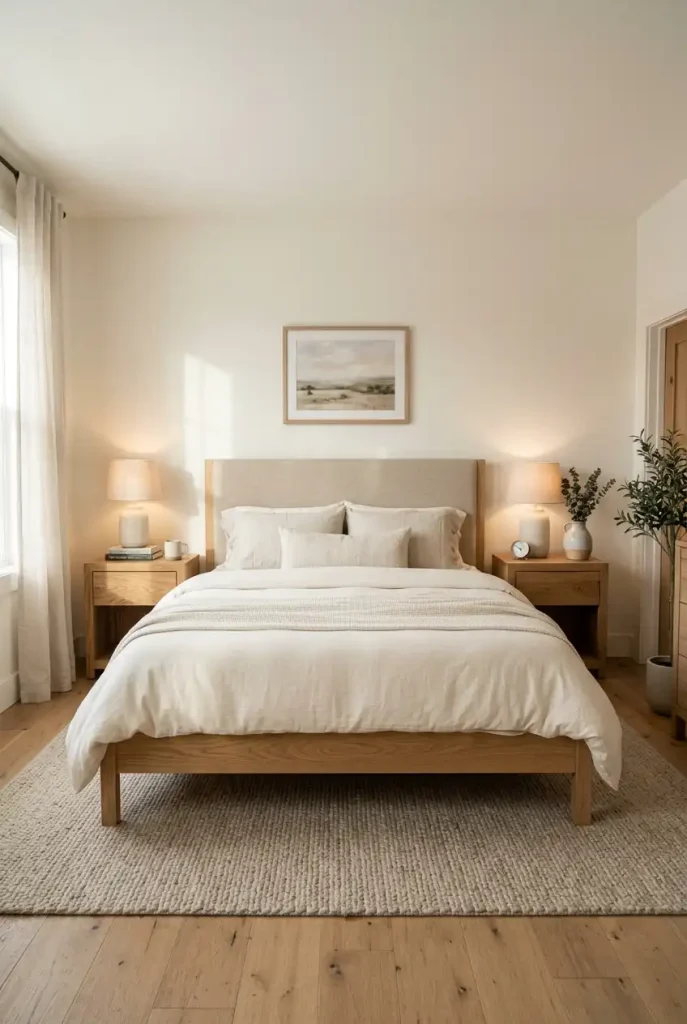
Matching nightstands create a sense of order around the bed. This arrangement is particularly effective in a primary bedroom where you want the space to feel calm and coordinated. The nightstands don’t have to be expensive; simple wood tables, painted cabinets, or compact ready-made pieces can provide the same visual structure.
Pair them with similar lamps or repeat one small decorative element, such as a ceramic vase, to reinforce the symmetry. The rest of the room can remain more relaxed with mismatched pillows, artwork, or textiles.
If your bedroom is narrow, choose shallow tables that leave enough room to walk comfortably around the bed. In an unusually shaped room, matching wall-mounted shelves can create the same balanced appearance without taking up as much floor space.
Bring in a Large Area Rug
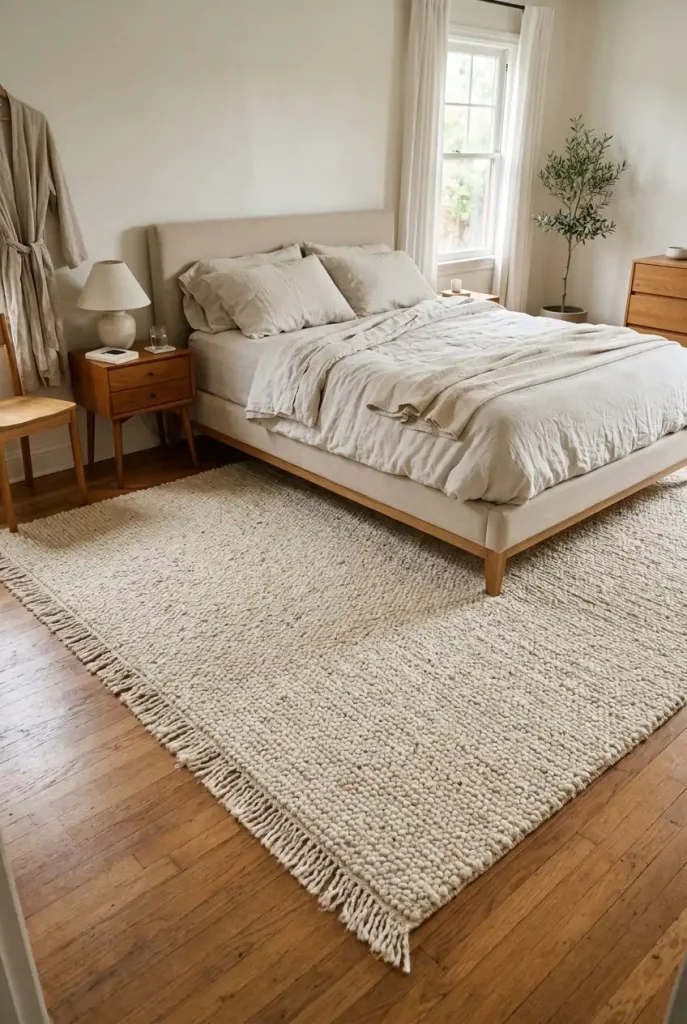
A bedroom rug adds texture, defines the sleeping area, and provides a softer surface underfoot. It can also connect different elements of the room, particularly when the flooring, bed frame, and bedding have different colors.
For a queen or king bed, a larger rug extending beneath the lower portion of the bed often looks more intentional than a small rug placed only at the foot. The exact size depends on the room dimensions and how much floor space you want visible around the edges.
A low-pile wool rug, cotton flatweave, or textured synthetic option can suit different budgets and maintenance needs. Choose a pattern if the bedding is simple, or a subtle solid texture if the room already has several prints.
Do: Use a rug pad suitable for your floor type to help reduce slipping.
Don’t: Choose a rug so small that it appears disconnected from the bed.
Decorate With Greenery and Natural Materials
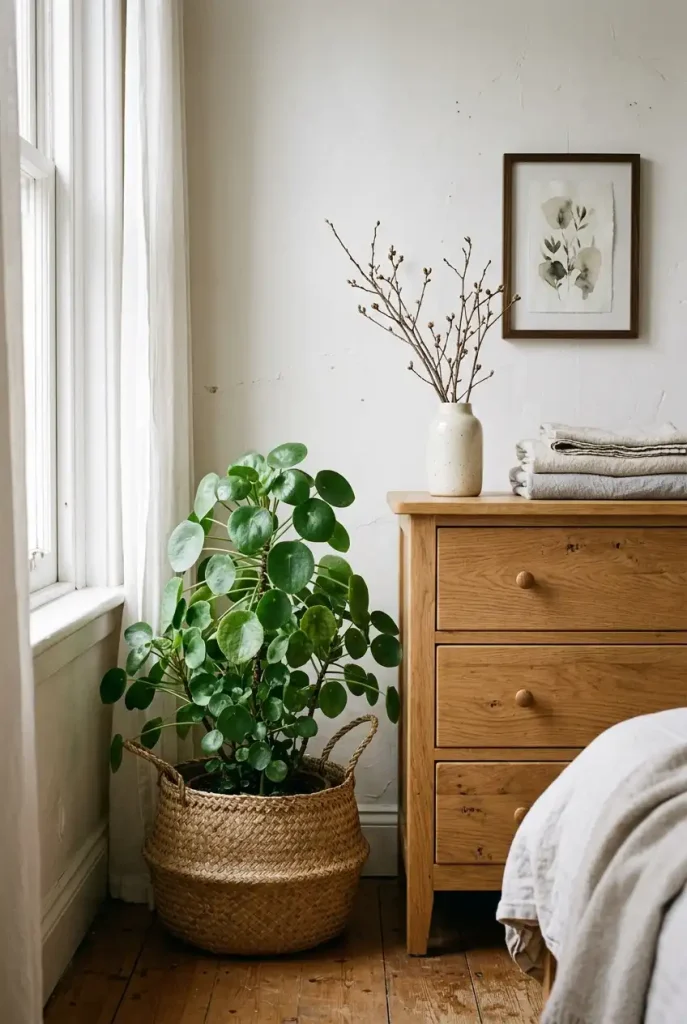
Plants and natural materials can soften a bedroom filled with straight furniture lines and smooth surfaces. A leafy plant beside a dresser, a small arrangement of branches, or a woven basket near the bed introduces organic shapes without requiring a full redesign.
Choose greenery according to the light available in your room. A bright window may suit a different plant from a dim corner, so check the plant’s actual light requirements before buying. If live plants aren’t practical, a vase of dried branches or a well-made artificial plant can still provide visual texture.
Woven baskets are useful for storing spare blankets, while wood accessories and linen fabrics help tie the natural elements together.
Keep plant placement practical: don’t block a walking path, crowd a bedside surface, or put a water-sensitive planter directly on wood furniture without protection.
Make a Statement With an Upholstered Headboard

An upholstered headboard can make an ordinary bed feel more substantial and give the room a comfortable focal point. Linen-look fabric, soft beige upholstery, or a gently curved silhouette works well in a relaxed bedroom, while a tall rectangular headboard can create a more tailored appearance.
You don’t necessarily need to replace your entire bed. A compatible standalone headboard can update an existing frame, and a securely installed wall-mounted version may work when the bed’s design allows it. Check the attachment method and dimensions before purchasing.
For a cohesive look, coordinate the headboard with the bedding without making everything identical. A warm beige headboard paired with white sheets and a muted blue throw, for example, adds contrast while preserving a calm palette.
Budget-conscious alternative: If a new headboard isn’t practical, use a carefully positioned upholstered panel or another suitable wall treatment behind the bed.
Style a Bedroom Dresser With a Few Thoughtful Objects

A dresser can become a decorative feature rather than simply a place to store clothes. The easiest approach is to group a few objects of different heights and shapes, leaving enough empty surface to keep the arrangement practical.
A round mirror, a ceramic vase, a small framed print, and a tray for everyday essentials make a useful combination. The mirror adds visual interest and can reflect light, while the tray keeps small items organized. You can also lean artwork against the wall if it is stable and the arrangement is safe.
Try this simple three-part styling approach:
- Choose one taller object, such as a vase or lamp.
- Add a lower object, such as a tray or small stack of books.
- Finish with one personal detail, such as a framed photograph.
Keep the arrangement proportional to the dresser. A small collection of well-chosen objects generally looks more intentional than covering every inch of the surface.
Give a Small Bedroom a Space-Saving Makeover
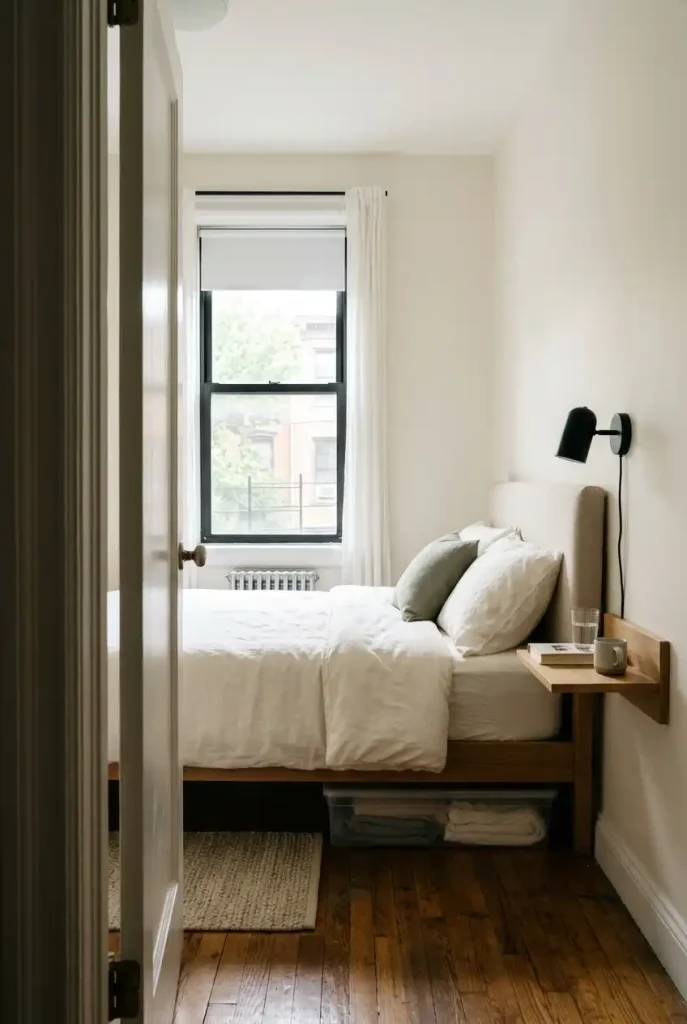
A small bedroom benefits from decorating choices that preserve floor space and reduce visual clutter. Instead of filling every corner with furniture, focus on pieces that serve a clear purpose and leave comfortable walking paths around the bed.
Floating bedside shelves are useful alternatives to bulky nightstands. Wall-mounted reading lights can free up the tabletop, and under-bed storage containers can keep seasonal clothing or spare bedding out of sight. A mirror positioned where it can reflect daylight may also help the room feel more open.
For the color scheme, try a light foundation with a few darker accents rather than introducing many unrelated colors. This doesn’t mean every small bedroom must be white; muted green, warm taupe, and dusty blue can work beautifully in compact spaces too.
Small-room checklist:
- Measure the bed and furniture before buying replacements.
- Use vertical wall space for shelves or hooks.
- Keep frequently used items within easy reach.
- Choose storage that fits the room instead of obstructing the walkway.
Introduce a Mirror to Reflect Light
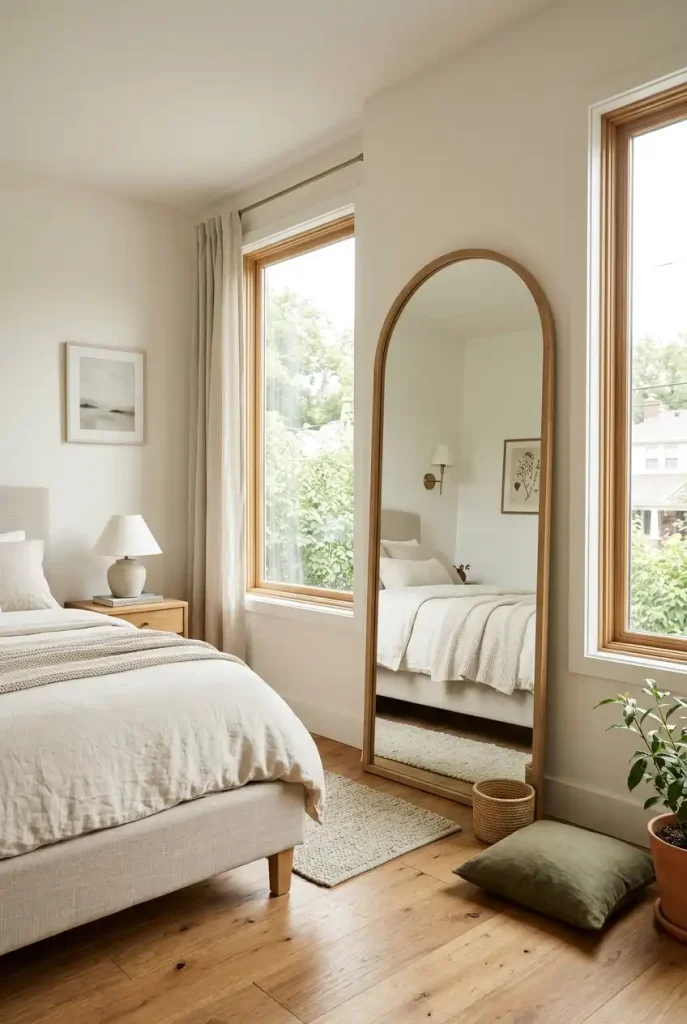
A mirror is both practical and decorative. In a bedroom, it can provide a place to check an outfit while reflecting light from a window or creating a sense of visual depth. A full-length mirror leaning against a wall suits a relaxed contemporary space, while a round or arched mirror can soften the straight lines of a dresser and bed frame.
Think about what the mirror will reflect before choosing its location. A view of a window, attractive artwork, or an uncluttered part of the room is usually more appealing than a pile of laundry or a crowded corner.
In a small bedroom, a slim full-length mirror can offer useful functionality without requiring a large furniture piece. Make sure a leaning mirror is secured according to the manufacturer’s instructions, particularly in homes with children or pets.
Create a Cozy Reading Corner

If your bedroom has an unused corner, turn it into a small place to read, journal, or relax. You don’t need a full lounge area. A comfortable accent chair, a compact side table, and a reading lamp can be enough to create a separate zone within the room.
Choose a chair that fits the available space and doesn’t interfere with the route between the bed, closet, and door. A small upholstered chair in a muted color can complement the bedding, while a textured throw and a cushion add comfort.
If the corner is near a window, take advantage of daylight during the day. For evening reading, a lamp positioned to provide adequate light is more useful than relying on decorative ambient lighting alone.
Quick Tip: In a very small bedroom, substitute a compact upholstered stool or a floor cushion for a full armchair, provided it remains comfortable and practical for your needs.
Mix Neutral Colors With One or Two Accent Shades

A simple bedroom color palette can still have plenty of personality. The trick is to begin with a few foundational shades and introduce one or two accent colors through accessories that are easy to change.
For example, a cream and beige bedroom can gain depth from olive-green pillows and a muted rust throw. A white and light-gray room might benefit from dusty blue accents, while warm taupe pairs naturally with deep brown or soft terracotta.
Think about how the colors relate to permanent elements such as flooring, headboards, and cabinetry. If those elements are warm-toned, cooler accents can provide contrast, but a mixture of undertones that don’t relate to each other may make the room feel less cohesive.
| Base palette | Accent shades | Overall effect |
|---|---|---|
| Ivory and beige | Olive and rust | Warm and earthy |
| White and light gray | Dusty blue | Fresh and relaxed |
| Warm taupe and cream | Chocolate brown | Rich and grounded |
| Soft white and oak | Muted sage | Natural and understated |
Use accents in pillows, throws, artwork, or small decorative objects before committing to a bold paint color.
Upgrade the Bedroom With Simple Wall Molding
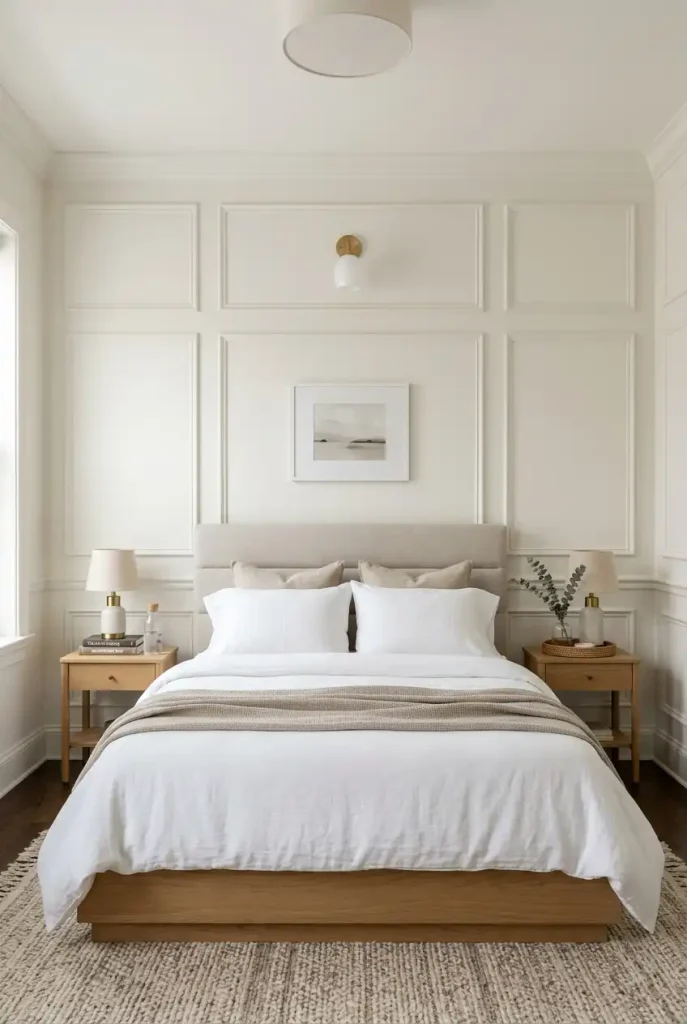
Wall molding adds architectural detail and can make a plain bedroom wall feel more considered. Simple rectangular panels behind the bed create structure without requiring an elaborate design or an expensive full-room renovation.
For a traditional or transitional bedroom, painted molding in the same color as the wall creates a subtle effect. A contrasting shade makes the paneling more noticeable, while a tone-on-tone finish keeps the room visually calm.
Applied molding can be a moderate DIY project, but careful measurement is essential. Sketch the layout first, taking the bed width, ceiling height, windows, outlets, and existing trim into account. In a rental, a removable alternative such as framed artwork can provide similar visual structure without permanent changes.
Common mistake: Making the panels too small or squeezing them into awkward gaps. A simple layout with balanced spacing often looks more intentional than a wall filled with narrow rectangles.
Replace Small Decor With One Statement Piece
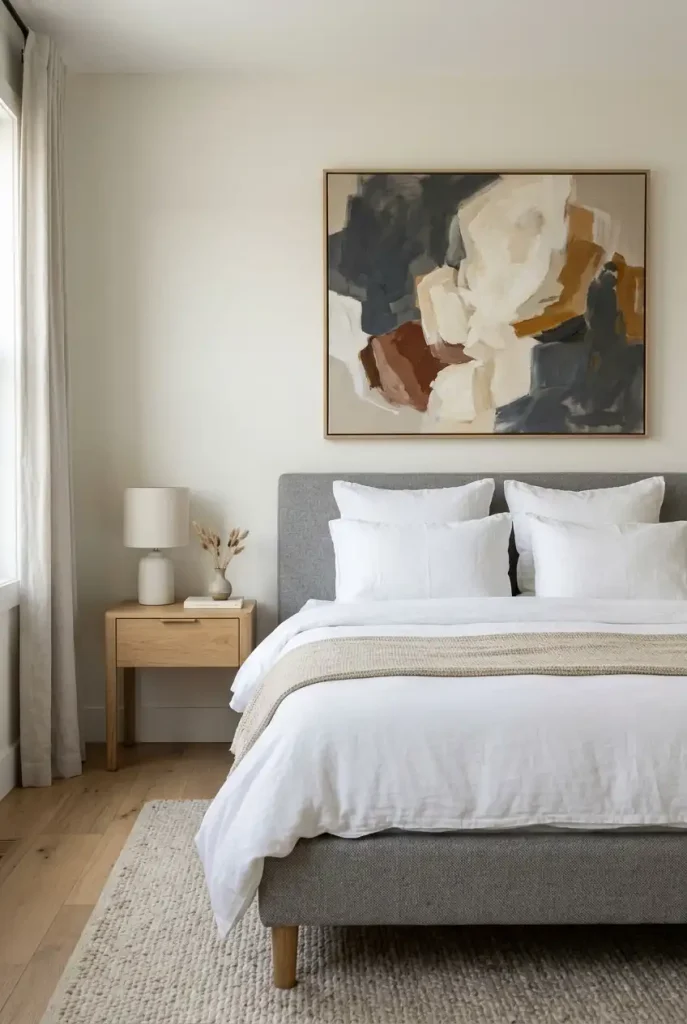
Sometimes a bedroom looks unfinished because the decorative elements are too small for the available space. Instead of buying several additional accessories, consider introducing one larger piece that gives the room a clear focal point.
An oversized abstract painting above the bed, a substantial pendant light, or a distinctive sculptural vase can provide visual interest without creating clutter. Choose a statement piece that relates to the room’s existing colors and materials so it feels intentional rather than disconnected.
Scale matters. Artwork above a wide bed should generally have enough visual presence to relate to the furniture below it. Before purchasing, measure the available wall area and use a paper template to preview the size.
If you prefer a budget-conscious approach, look for large-format prints, secondhand artwork, or a simple canvas in colors that complement your bedding. The goal is not necessarily to spend more; it’s to choose an element with a clear visual role.
Declutter and Restyle What You Already Own
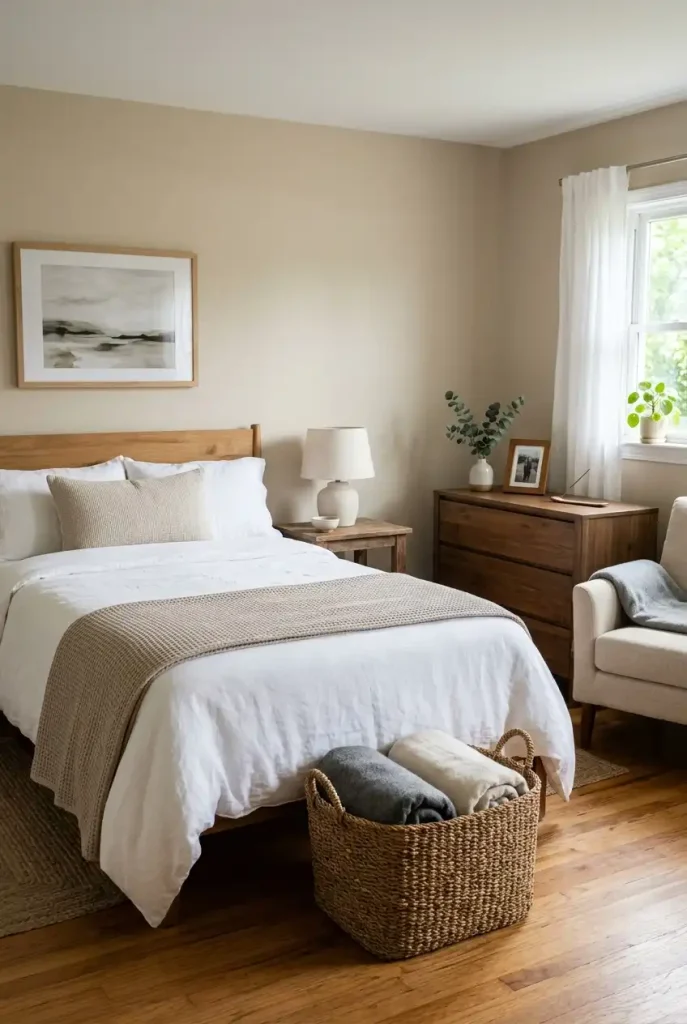
A beautiful bedroom makeover doesn’t always start with shopping. Sometimes the most effective change is to remove items that no longer serve the room and give the remaining pieces more space to stand out.
Begin with the bedside tables, dresser, and floor. Put away laundry, collect loose cables, relocate items that belong elsewhere, and decide which accessories genuinely contribute to the look you want. Then rearrange the objects you keep rather than automatically replacing them.
A practical reset can follow three steps:
- Clear: Remove clutter from visible surfaces and open up the floor.
- Sort: Keep everyday essentials accessible and move occasional-use items into suitable storage.
- Restyle: Return a few useful or meaningful objects to each surface, leaving some empty space around them.
Use baskets for spare blankets, drawer organizers for smaller belongings, and a hamper that fits the room. Keep frequently used items easy to reach so the bedroom remains practical after the makeover.
The advantage of this approach is that it helps you see what the room actually needs before you spend money on new decor.