
25 Kitchen Decor Ideas That Make Your Space Look Beautiful and Inviting
A beautiful kitchen is about more than attractive cabinets and expensive countertops. The right colors, lighting, textures, and decorative details can make the space feel warmer, more organized, and genuinely inviting. Whether you have a compact apartment kitchen, a classic suburban home, or a recently renovated open-plan space, small design decisions can make a noticeable difference.
These kitchen decor ideas combine practical everyday solutions with inspiring design details, from natural wood accents and elegant pendant lights to charming breakfast nooks and thoughtfully styled countertops. Some changes are as simple as displaying your favorite ceramics, while others involve more substantial upgrades, such as a statement backsplash or a custom range hood.
The goal is to create a kitchen that looks cohesive without sacrificing functionality. Use these ideas as a starting point, adapting the colors, materials, and finishes to your space, budget, and daily routine.
Combine Warm White Cabinets With Natural Wood
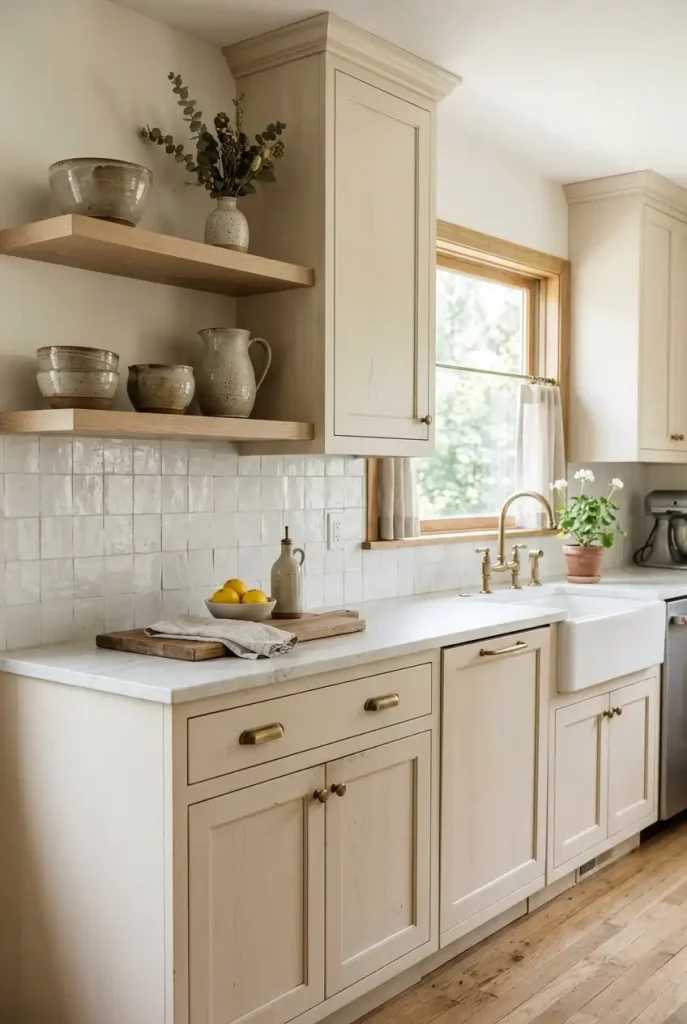
Warm white cabinets paired with natural wood create a kitchen that feels bright without appearing cold or sterile. The combination works especially well in homes where you want a clean, timeless foundation with a little organic character.
Choose creamy white or soft ivory cabinetry rather than an icy blue-white. Introduce oak through floating shelves, bar stools, a butcher-block accent, or a small wooden display cabinet. A pale stone countertop and brushed brass or matte black hardware can help connect the finishes.
For a more affordable refresh, keep existing cabinets and add wooden accessories, cutting boards, or stools. If you are renovating, consider using wood on the island while keeping the perimeter cabinetry light.
Styling tip: Repeat the wood tone in two or three places so the room feels coordinated rather than randomly decorated.
Decorate With Open Shelving

Open shelving gives a kitchen a more relaxed, lived-in character while keeping frequently used items within reach. Instead of filling every wall with cupboards, replace one small section with wood or painted shelves to create a lighter visual break.
The secret is to balance useful items with a few decorative pieces. Display everyday bowls, matching drinking glasses, coffee mugs, and a small vase. Leave some empty space between objects so the shelves do not look crowded.
- Use sturdy shelves and suitable wall fixings for the intended load.
- Group dishes by color or type.
- Place heavier items on lower shelves.
- Keep cooking oils and frequently handled items near their point of use.
Open shelving does require more regular dusting than closed cabinetry, particularly near a stove. Position it away from direct cooking splashes whenever possible.
Add Statement Pendant Lights Above the Island
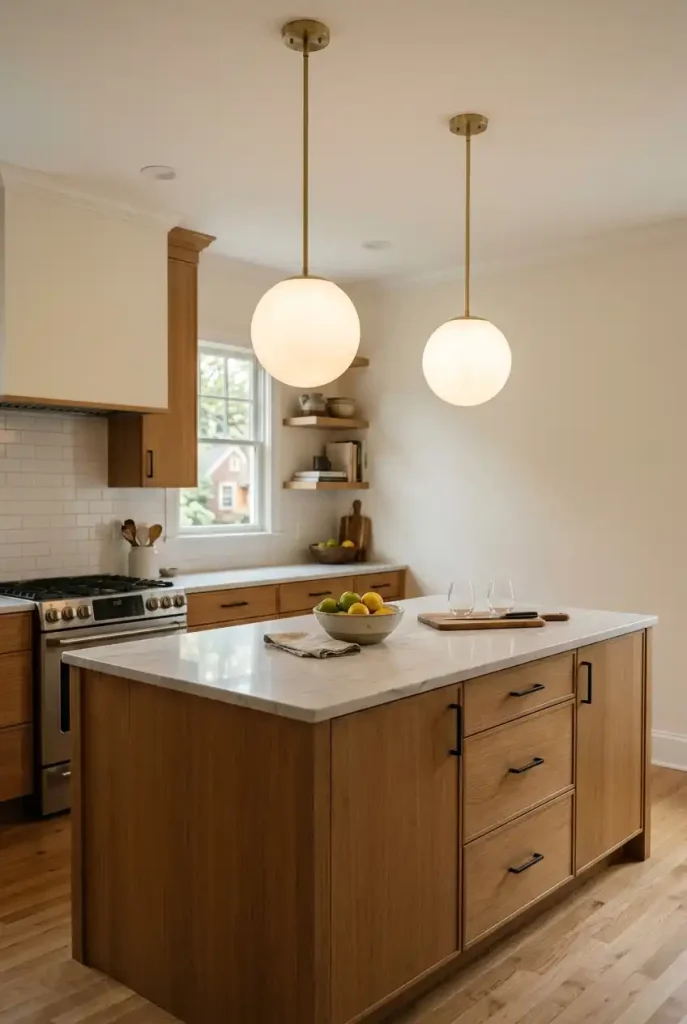
Pendant lights can function as both practical task lighting and decorative focal points. Above a kitchen island, a well-chosen fixture introduces shape, material, and visual interest without using valuable countertop space.
Opal glass creates a soft, diffused appearance, while aged brass adds warmth. Black metal pendants provide stronger contrast in a kitchen with pale cabinets, and woven shades can suit a more casual, natural interior.
Before choosing a fixture, consider the island’s length, ceiling height, and the amount of light needed for food preparation. Two larger pendants may suit a shorter island, while a longer surface may benefit from three smaller fixtures. Keep the arrangement balanced and ensure the lights do not obstruct sightlines across an open-plan room.
Quick Tip: Use separate task lighting and dimmable ambient lighting where practical, so the kitchen can transition from meal preparation to relaxed evening dining.
Create a Cozy Coffee Station
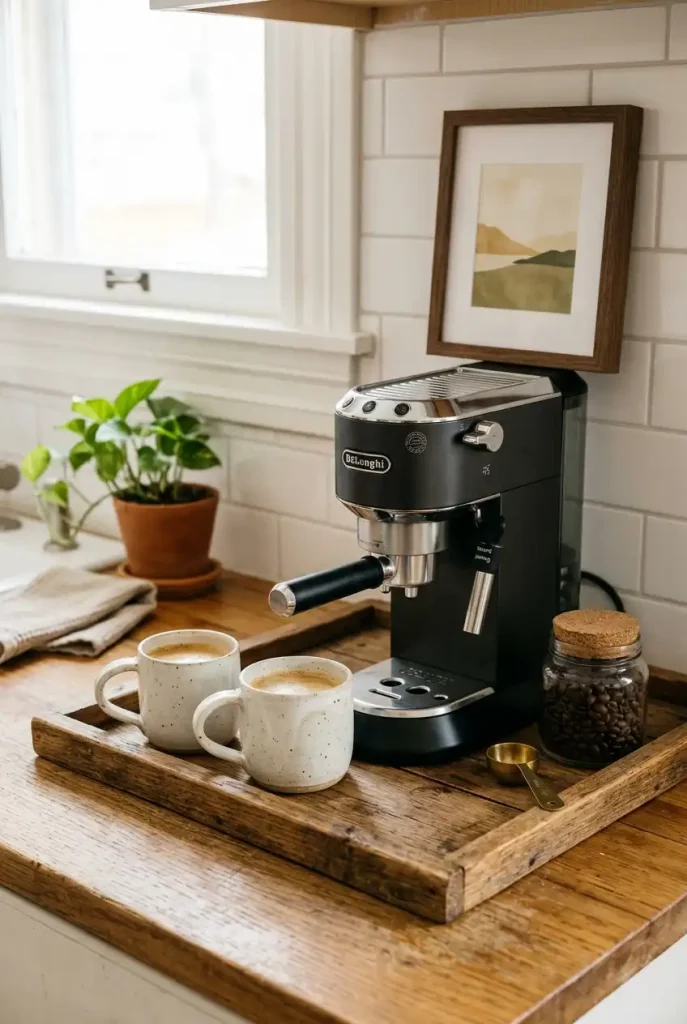
A dedicated coffee station adds personality to the kitchen while giving your morning routine a clear home. It does not require a separate cabinet or expensive built-in shelving. A short section of counter, a sturdy tray, and a few carefully selected accessories are often enough.
Start with the coffee maker or espresso machine, then arrange mugs, a small container for coffee beans, and a spoon holder nearby. A framed print leaning against the backsplash or a small plant can soften the setup without making it feel cluttered.
For a small kitchen, use a vertical shelf or a compact cabinet to keep supplies organized. If your machine needs water refills or produces steam, leave enough clearance and follow its placement requirements.
What makes the station look cohesive? Repeating two or three materials, such as wood, cream ceramic, and brushed metal, ties the pieces together.
Bring in Greenery With Kitchen-Friendly Plants
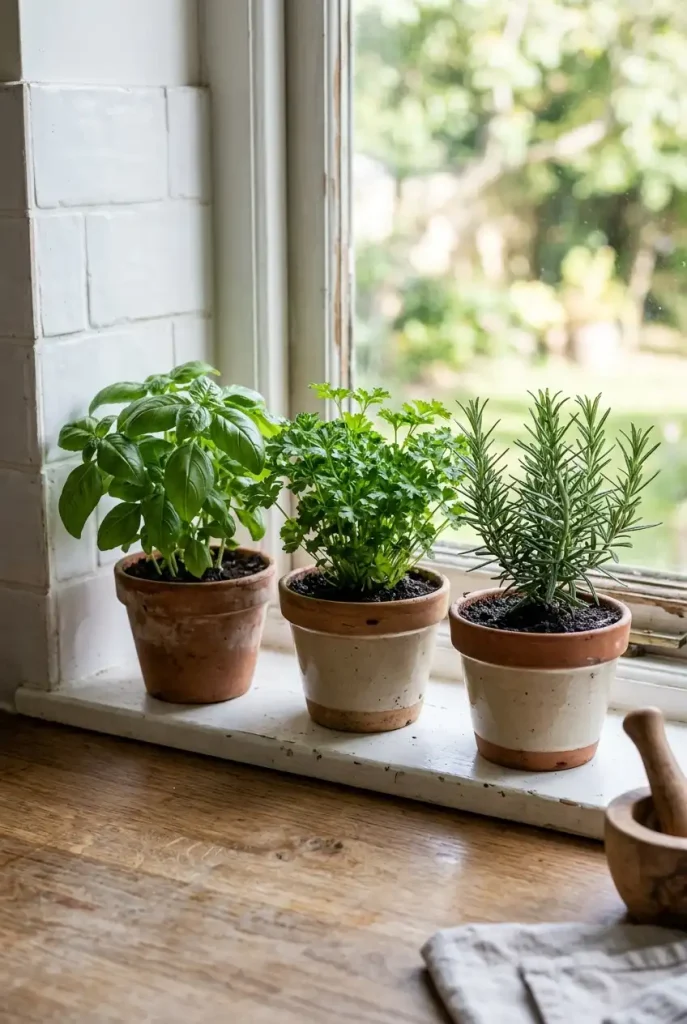
Plants introduce color and a natural softness that can make hard kitchen surfaces feel less formal. A sunny windowsill is an ideal place for a small collection of herbs, while a single trailing plant can add interest to an open shelf away from heat and cooking splashes.
Basil, parsley, mint, and rosemary are useful choices when their light and watering needs can be met. Choose pots that have drainage or use suitable inner nursery pots to avoid water damage to wooden surfaces.
If your kitchen receives limited daylight, do not assume every herb will thrive there. Consider a plant suited to the available light or use fresh-cut greenery in a vase instead.
Keep plant leaves clear of burners, hot appliances, and food-preparation areas. A little greenery works best when it adds life without interfering with everyday cooking.
Choose a Muted Sage Green Palette

Sage green adds color while maintaining a calm, natural atmosphere. It pairs beautifully with warm white, pale oak, creamy stone, and understated metal finishes, making it a useful alternative to an all-white kitchen.
For a balanced look, use sage on the main cabinets and keep the walls and countertops relatively light. If you prefer a smaller commitment, paint a kitchen island or a freestanding hutch rather than every cabinet.
The exact shade matters. A gray-green can feel subtle and contemporary, while a warmer, more olive-toned sage gives the room a slightly rustic character.
Colors that work well together:
- Sage green and warm ivory for a soft, bright finish.
- Sage green and natural oak for an organic look.
- Sage green and brushed brass for gentle warmth.
- Sage green and charcoal accents for stronger contrast.
Test paint samples in both morning and evening light before making a final choice.
Style the Countertops With Intentional Details

Countertops are among the most visible surfaces in a kitchen, so a few carefully chosen accessories can have a bigger impact than a collection of unrelated decorations. The aim is to make the kitchen look finished while preserving enough clear space to prepare meals.
Start with objects you already use. A wooden cutting board, a ceramic utensil holder, and a small tray for frequently used seasonings can look attractive and serve a practical purpose.
Choose accessories with complementary colors and textures. Natural wood, stoneware, clear glass, and brushed metal are easy to combine without introducing too many competing finishes.
A simple styling formula:
- Choose one functional anchor, such as a utensil crock.
- Add one or two supporting objects with different heights.
- Leave a generous section of the counter empty.
Keep decorative items away from the stove’s heat, and avoid displaying food-contact items where grease and splashes accumulate.
Introduce a Patterned Backsplash
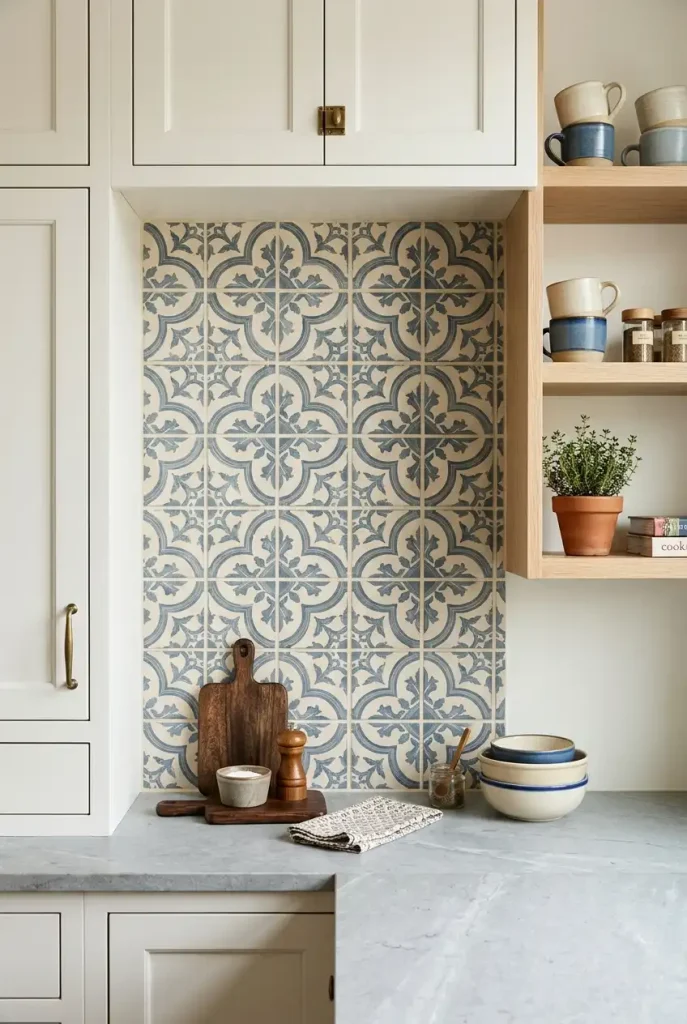
A patterned backsplash adds character to a kitchen without requiring a major change to the cabinetry or layout. It can be the focal point in an otherwise restrained room, bringing in subtle geometry, color, or a handmade appearance.
For a relaxed look, consider cream-and-gray geometric tiles, soft blue patterns, or small-format tiles with gentle variation. In a more traditional kitchen, a decorative tile behind the range can introduce detail without covering every wall.
If your cabinets already have strong color or visible grain, choose a quieter pattern. Conversely, plain cabinetry can support a more expressive backsplash.
When renovating, account for cleaning requirements, grout maintenance, and compatibility with the surface behind the cooking area. Renters can explore removable backsplash products where appropriate, checking that the surface is suitable and that removal will not damage the wall.
Make the Kitchen Island a Natural Gathering Spot

A kitchen island can be both a practical work surface and a comfortable place for conversation. The most inviting designs balance the island’s visual presence with enough room for people to move around it easily.
Natural wood cabinetry gives the island its own identity, especially when the surrounding cabinets are painted white or cream. A contrasting countertop can make the surface stand out, while a vase of seasonal branches creates a simple focal point.
If the island accommodates seating, choose stools that suit the counter height and tuck neatly underneath. Leave adequate clearance around the island for cabinet doors, appliances, and everyday traffic.
For smaller homes, a movable island or narrow kitchen cart can provide some of the same benefits without requiring a permanent renovation.
Design consideration: Avoid filling the island with decorative objects. A clear central work area makes it more useful for food preparation, serving, and informal meals.
Add Vintage Pieces for Character
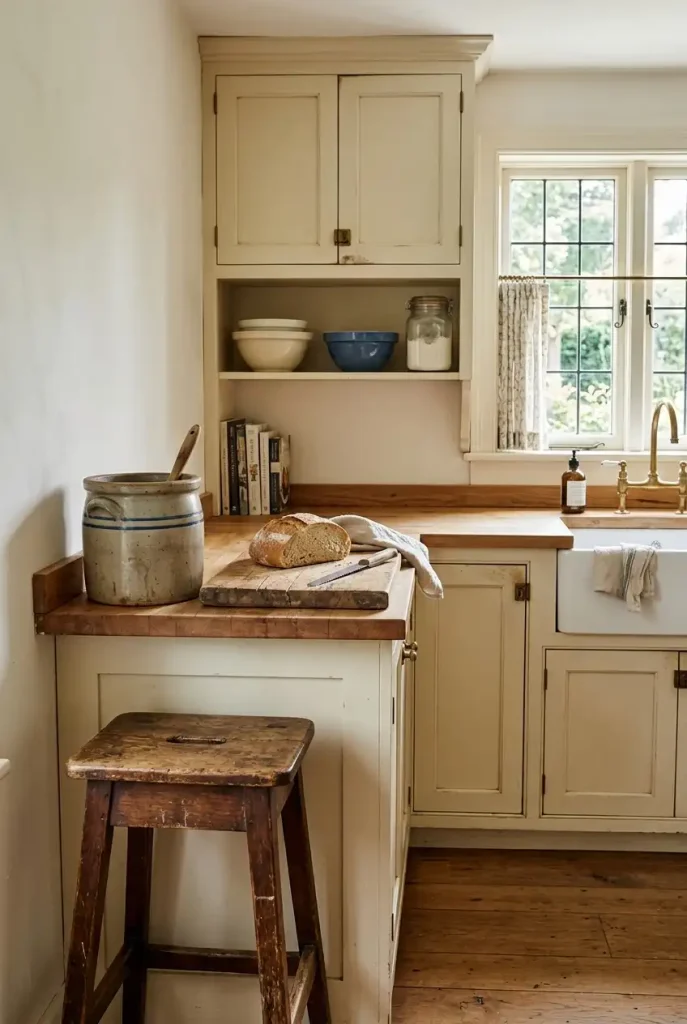
A kitchen made entirely of new, matching finishes can sometimes feel too uniform. Introducing one or two vintage pieces adds individuality and makes the room feel collected over time.
Look for a small wooden stool, an antique breadboard, an old ceramic crock, or a framed botanical print. A vintage piece does not need to be rare or expensive; it simply needs to complement the kitchen’s existing materials and proportions.
For a modern kitchen, one aged wooden accessory can soften clean cabinetry. In a farmhouse-style space, vintage brass hardware or a well-proportioned freestanding cupboard may reinforce the room’s character.
- Inspect secondhand furniture for stability and damage.
- Clean decorative pieces before displaying them.
- Keep food-preparation surfaces hygienic.
- Use vintage textiles as accents rather than placing delicate fabrics near heat or splashes.
The best results come from mixing old and new rather than turning the whole kitchen into a themed display.
Use Two-Tone Kitchen Cabinets
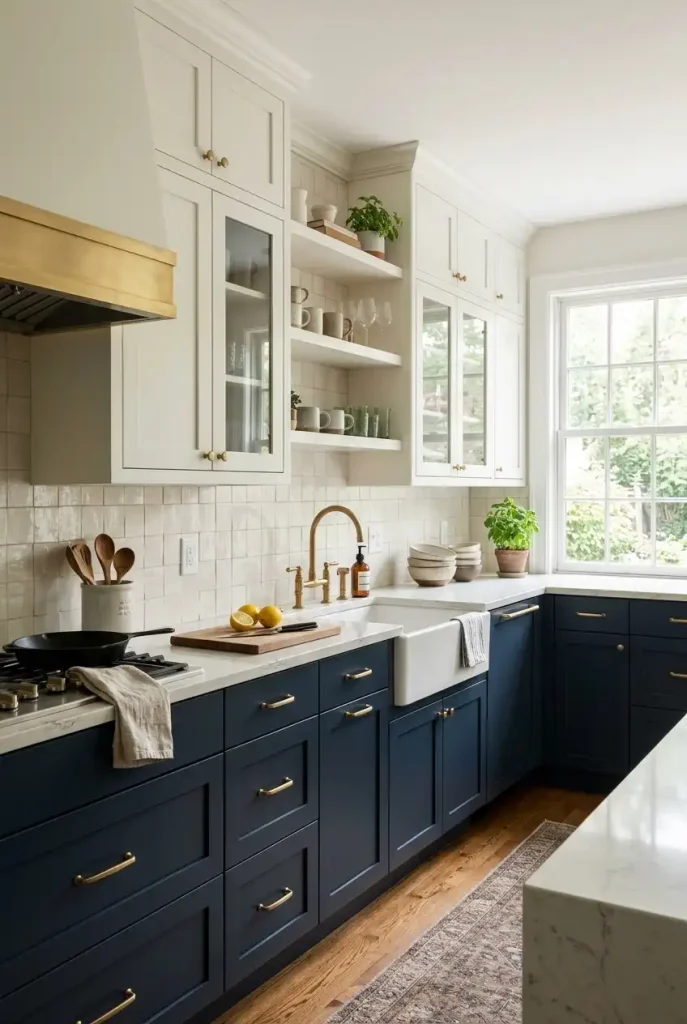
Two-tone cabinetry introduces contrast without requiring multiple decorative features. A common approach is to use lighter upper cabinets and darker lower cabinets, allowing the room to feel open while giving the lower half more visual weight.
White and navy create a crisp, classic combination. Cream and olive feel softer, while pale gray and natural oak offer a more understated result.
The key is to maintain a clear relationship between the cabinet colors and the other finishes. If the lower cabinets are dark, a light countertop and backsplash can prevent the room from feeling visually heavy.
Common Mistake: Introducing several competing cabinet colors, countertop patterns, and metal finishes at once.
Better Approach: Choose two main cabinet finishes, then use the backsplash, hardware, and accessories to connect them.
Layer the Lighting for a Softer Atmosphere

One ceiling fixture rarely provides the most comfortable lighting for every kitchen activity. Combining different light sources makes the room more flexible, from bright meal preparation to a relaxed dinner with friends.
Consider three layers: general lighting for the whole room, task lighting for work surfaces, and accent lighting to highlight architectural details or display shelves.
Under-cabinet lights can brighten countertops that would otherwise sit in the shadow of upper cabinets. Pendant fixtures provide focused light above an island, while recessed ceiling fixtures can supply more even illumination.
For an inviting evening atmosphere, choose compatible light colors and dimmable controls where practical. Keep task areas bright enough for safe food preparation, and have electrical changes installed according to local requirements.
Install a Beautiful Pot Rack
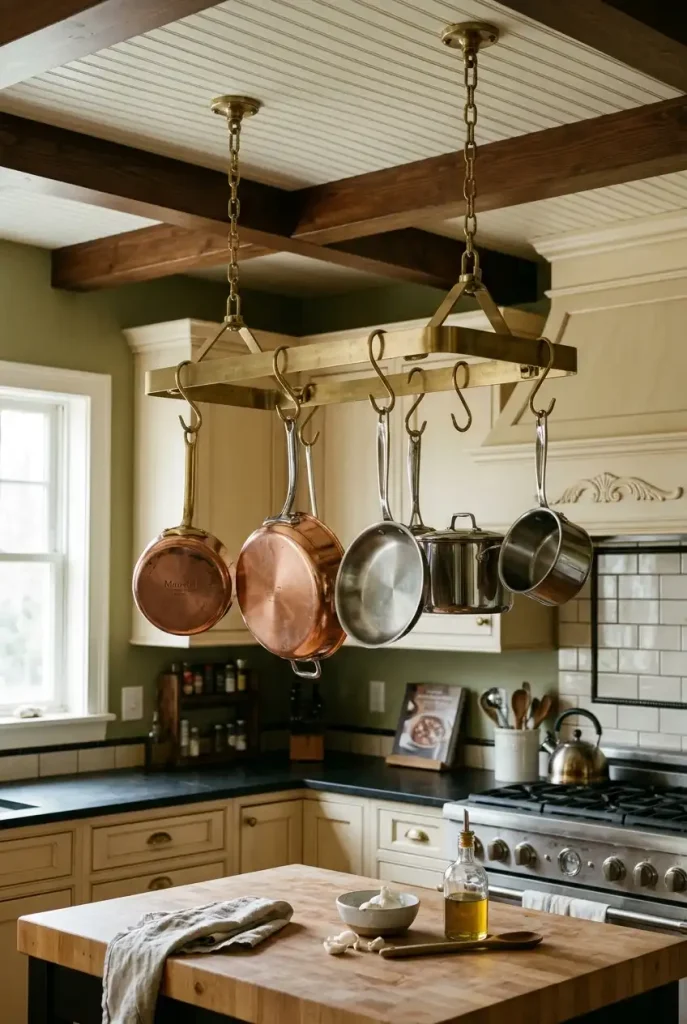
A pot rack can turn cookware into part of the kitchen’s visual design. Copper pans, stainless-steel saucepans, and carefully selected utensils bring texture and a practical, cook-friendly atmosphere to the room.
A ceiling-mounted rack suits kitchens with sufficient headroom and a structurally appropriate mounting point. Wall-mounted rails offer an alternative where ceiling space is limited. Either approach can free cabinet space while keeping frequently used cookware accessible.
Choose the rack according to the amount and weight of cookware you intend to hang. Avoid positioning it where handles could interfere with movement or where pots would hang over a busy walkway.
If you prefer a more subtle version, install a short wall rail with a few attractive utensils rather than displaying every pan you own.
Add a Banquette Breakfast Nook

A breakfast nook creates a comfortable place for morning coffee, casual meals, or conversation without needing a full dining room. It can be especially useful in a corner beside a window or in an open-plan kitchen where a large dining table would feel oversized.
A built-in bench can make efficient use of a wall, while a small round table allows easier movement around the seating area. Add washable cushions or a simple upholstered seat to soften the harder surfaces of the kitchen.
For a compact space, choose a pedestal table and a bench with storage underneath. Make sure the seating depth and table height are comfortable, and allow enough room to pull out any additional chairs.
Styling tip: Use one or two cushion colors that repeat the kitchen’s cabinet or backsplash tones. This helps the nook feel connected to the rest of the room.
Choose a Farmhouse Sink With Classic Details

An apron-front sink can become a defining feature in a farmhouse-inspired kitchen. Its exposed front introduces a distinctive shape, while white fireclay, stainless steel, and other suitable materials offer different visual effects.
Pair a white sink with shaker cabinets, natural wood accents, and a simple backsplash for a classic appearance. A brushed-metal faucet adds detail without overwhelming the design.
A farmhouse sink is a more substantial upgrade than a decorative accessory. Before choosing one, confirm that the existing cabinet base, countertop, plumbing, and support arrangements can accommodate it. Sink depth, splash control, and the finish’s cleaning requirements also deserve consideration.
If replacing the sink is not practical, you can borrow the same design language through traditional faucet styling, warm cabinetry, and simple hardware.
Bring in a Butcher-Block Countertop
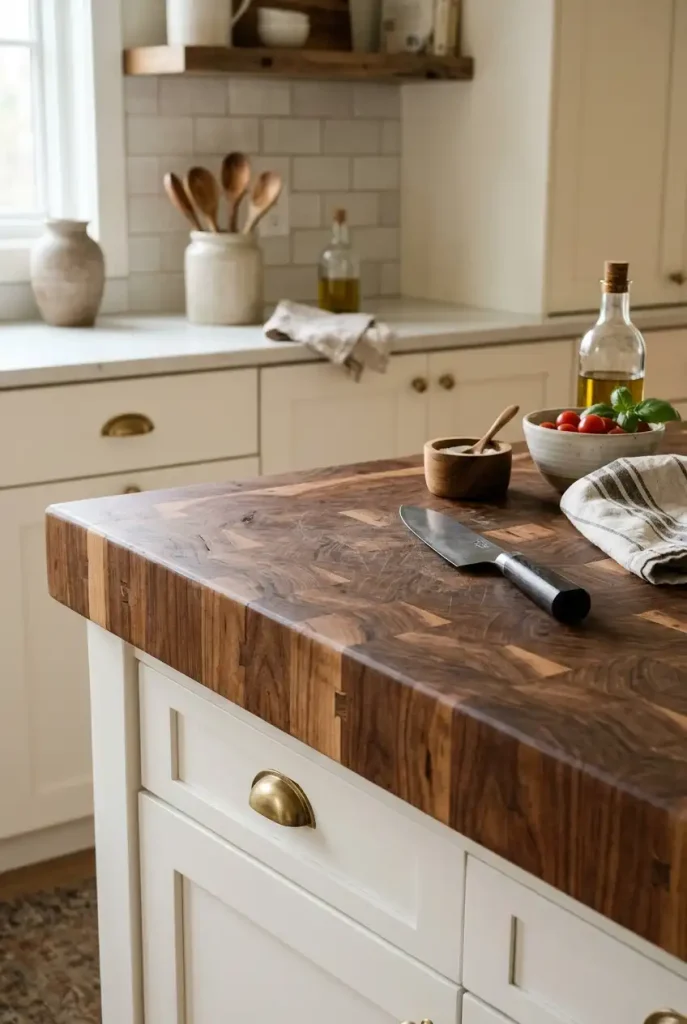
Wood countertops bring warmth to kitchens dominated by tile, stone, stainless steel, and painted cabinetry. Butcher block is particularly effective on an island, where its natural grain creates a focal point without covering every work surface.
Pair it with white or cream cabinets for a bright, balanced appearance. In a darker kitchen, a lighter wood can soften the overall palette, while a deeper wood tone can add richness to pale cabinetry.
Wood surfaces need care appropriate to their finish and intended use. Follow the manufacturer’s guidance for cleaning, moisture protection, and maintenance. Keep standing water away from seams and avoid assuming that every wood countertop is suitable for direct food preparation.
If a full wood countertop is outside your budget, a large wooden serving board can introduce a similar visual warmth.
Decorate With a Large Kitchen Rug or Runner
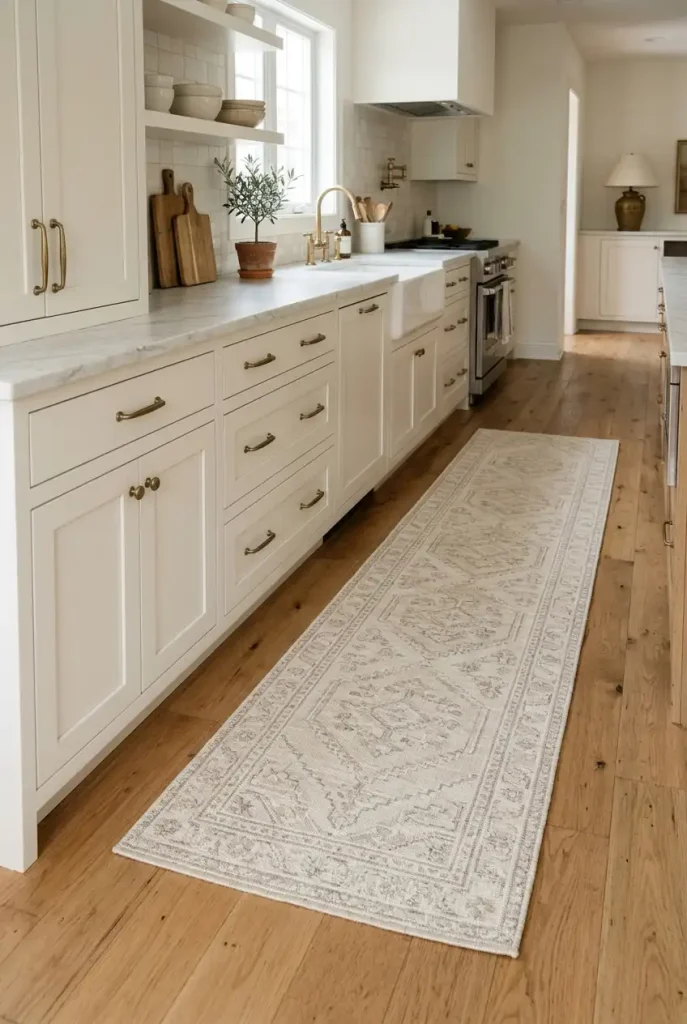
A kitchen runner can add color, pattern, and softness to a room with hard flooring. It also helps visually define a long stretch of cabinetry or make a simple kitchen feel more layered.
Choose a rug that suits the layout rather than filling every available inch of floor. A narrow runner works well along a galley kitchen, while a smaller mat can suit the area near a sink. Muted stripes, vintage-inspired patterns, and subtle geometric designs are easy to combine with different cabinet finishes.
Practicality matters here. Look for a material that suits the amount of foot traffic and the likelihood of spills. A low-profile, washable option may be easier to maintain than a thick, delicate rug.
Do: Use a rug with an appropriate non-slip backing or compatible underlay.
Don’t: Place a loose runner where it can bunch up near a dishwasher, oven, or frequently used doorway.
Display Art on the Kitchen Walls
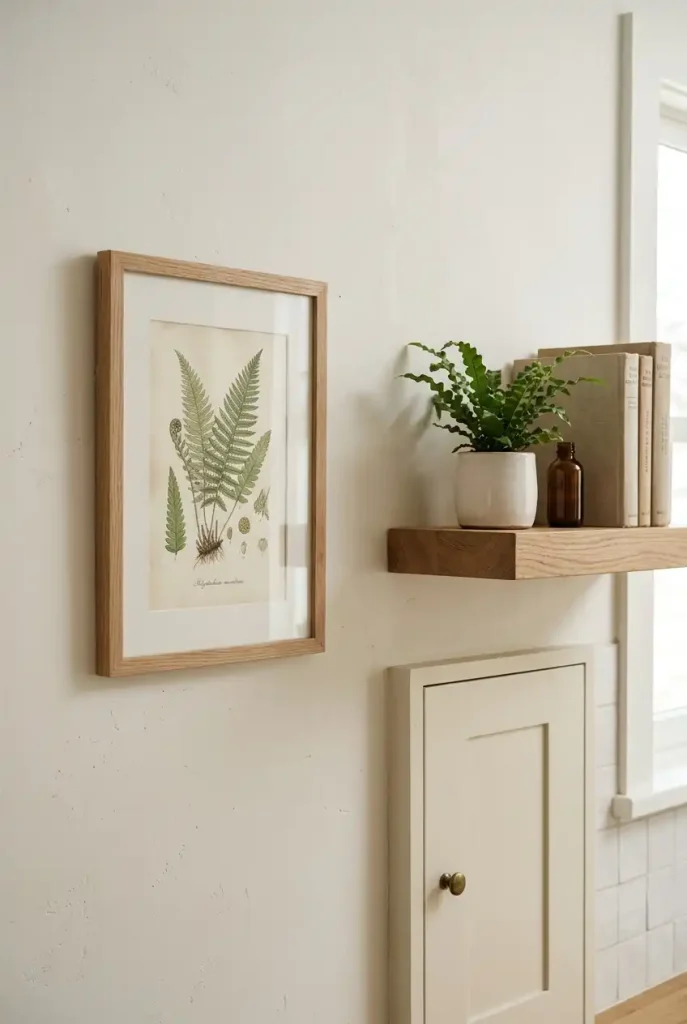
Artwork helps a kitchen feel personal rather than purely functional. Botanical illustrations, still-life prints, abstract shapes, and vintage-inspired food artwork can all work, depending on the style of the room.
A small framed print can fill an empty wall beside a breakfast nook, while a larger piece can anchor a dining corner. Coordinate the frame with nearby finishes: natural wood adds warmth, black creates contrast, and slim brass can introduce a subtle decorative accent.
Think carefully about placement. Keep artwork away from direct heat, excessive steam, and areas where splashes are common. In a busy kitchen, use a frame and glazing that are easy to clean.
For renters, lightweight framed art can be a simple way to introduce personality without changing cabinets or backsplash tiles.
Use Glass-Front Cabinets to Create an Airier Look

Glass-front cabinets provide a lighter visual alternative to a solid wall of upper cupboards. They allow selected dishes and glassware to become part of the decor while keeping the items protected behind cabinet doors.
For a cohesive result, display pieces with related colors and shapes. White dinner plates, clear glasses, and a few ceramic serving bowls create a quieter arrangement than a mixture of many unrelated patterns.
Glass fronts work particularly well on one section of cabinetry, such as a cabinet near a dining area or the end of a kitchen run. Interior cabinet lighting can add gentle emphasis, but it is not essential.
Remember that transparent doors reveal what is stored inside. Keep everyday clutter in closed cabinets and reserve the glass-front section for pieces you are happy to see.
Add a Bold Colorful Island
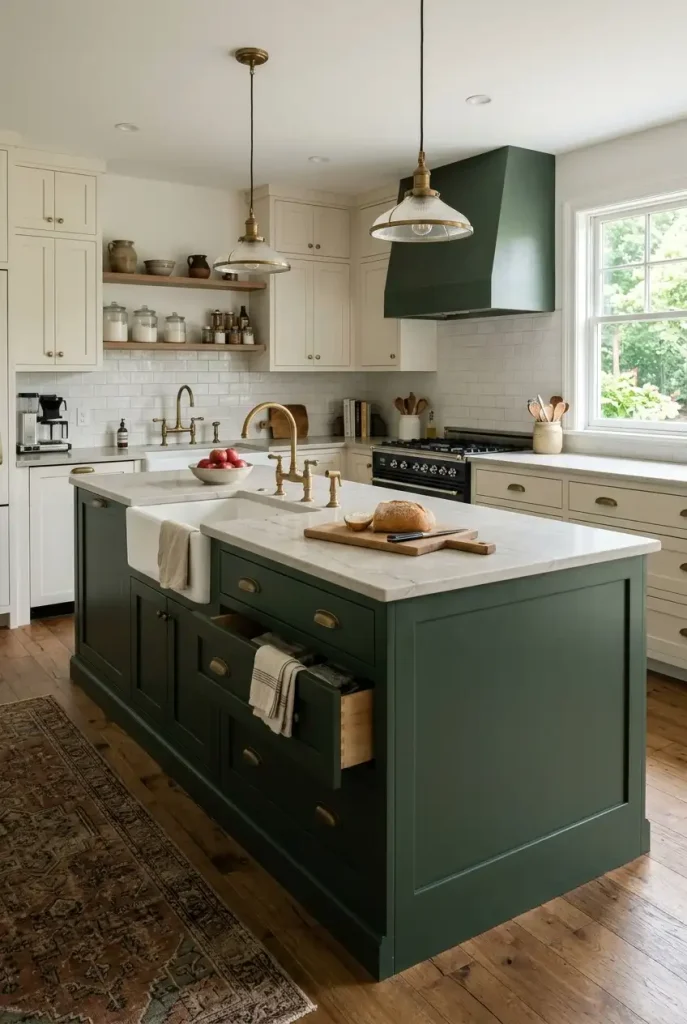
A colorful island is a useful way to introduce personality without committing to a bold color throughout the entire kitchen. Because the island sits at the center of many layouts, it can create a clear focal point and help connect the kitchen to an adjoining dining or living area.
Forest green, deep blue, muted terracotta, and charcoal are options for different styles. Pair a strong island color with quieter surrounding finishes, or repeat a small amount of the color in bar stools, artwork, or a vase.
If you plan to repaint an existing island, check that the surface is suitable for the chosen paint system and prepare it according to the manufacturer’s directions.
Quick Tip: Test the color on a sample board and view it under the kitchen’s actual lighting before painting the entire island.
Install a Decorative Range Hood

A decorative range hood can become the architectural centerpiece of a kitchen. Instead of treating the cooking area as purely functional, a carefully designed hood gives the wall a defined shape and helps anchor the surrounding cabinets.
A softly curved plaster-style hood suits a relaxed Mediterranean-inspired kitchen, while a simple squared hood works well in contemporary spaces. Wood trim can complement natural cabinetry, and a painted finish can blend the hood into the surrounding walls.
This is a more substantial design investment than changing accessories. Make sure the hood is compatible with the cooking appliance, provides appropriate ventilation, and meets the manufacturer’s installation requirements. A decorative exterior should never compromise the practical function of the ventilation system.
For a cohesive result, keep the surrounding backsplash and countertop relatively restrained so the hood remains the focal point.
Style a Dining Corner With Natural Textures

If your kitchen includes a dining area, natural textures can help distinguish it from the cooking zone without making the two spaces feel disconnected. Wood furniture, woven seating, linen textiles, and handmade ceramics introduce warmth and visual variety.
A round oak table works well in a compact corner because it softens the room’s straight cabinet lines. Woven chairs provide texture, while a simple vase and neutral table runner make the setting feel considered without requiring elaborate decoration.
In an open-plan kitchen, repeat a finish from the cabinetry or island to create continuity. For example, oak dining furniture can relate to wood shelving elsewhere in the room.
Keep the table clear enough for everyday meals. A small centerpiece is generally more practical than a large arrangement that needs to be moved whenever someone sits down.
Introduce Terracotta and Earthy Accents
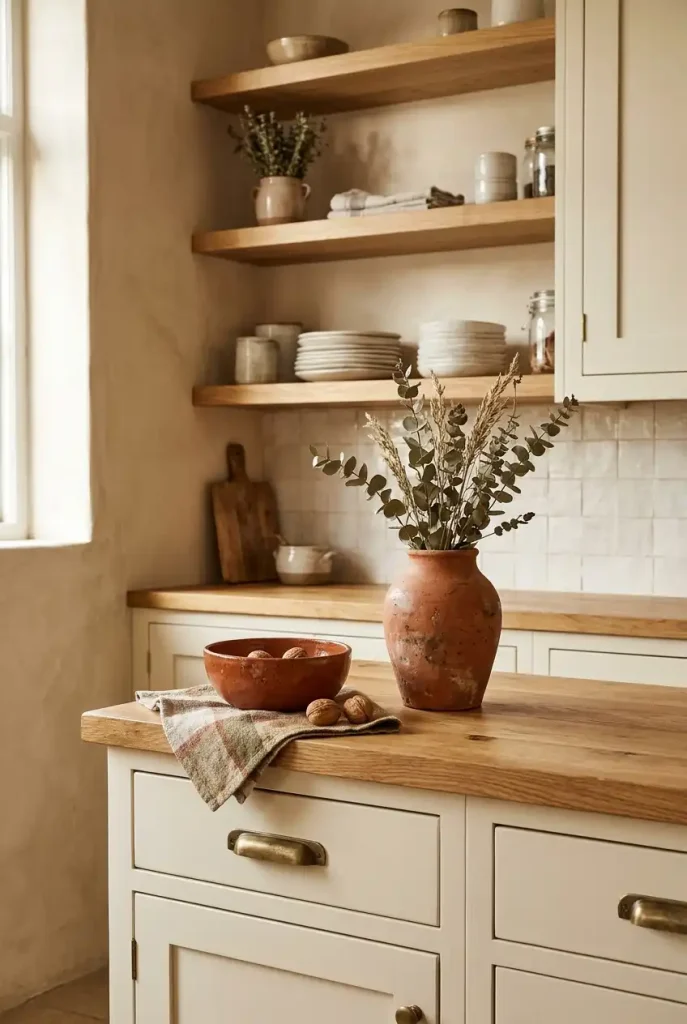
Terracotta, rust, clay, and warm brown bring depth to kitchens dominated by white, cream, or pale gray. These earthy shades create a relaxed atmosphere and work particularly well with natural wood, stone, and handmade ceramics.
You do not need to repaint cabinets or install new tiles to introduce the palette. Start with a terracotta planter, a rust-colored tea towel, a ceramic fruit bowl, or a piece of artwork that includes warm earthy tones.
For a more noticeable change, consider a muted clay-colored wall or a small section of decorative tile, provided the finish is appropriate for the kitchen environment.
Keep the palette balanced by combining earthy accents with lighter surfaces. A few warm details can be more effective than using the same strong color on every accessory.
Create a Minimalist Kitchen With Hidden Storage
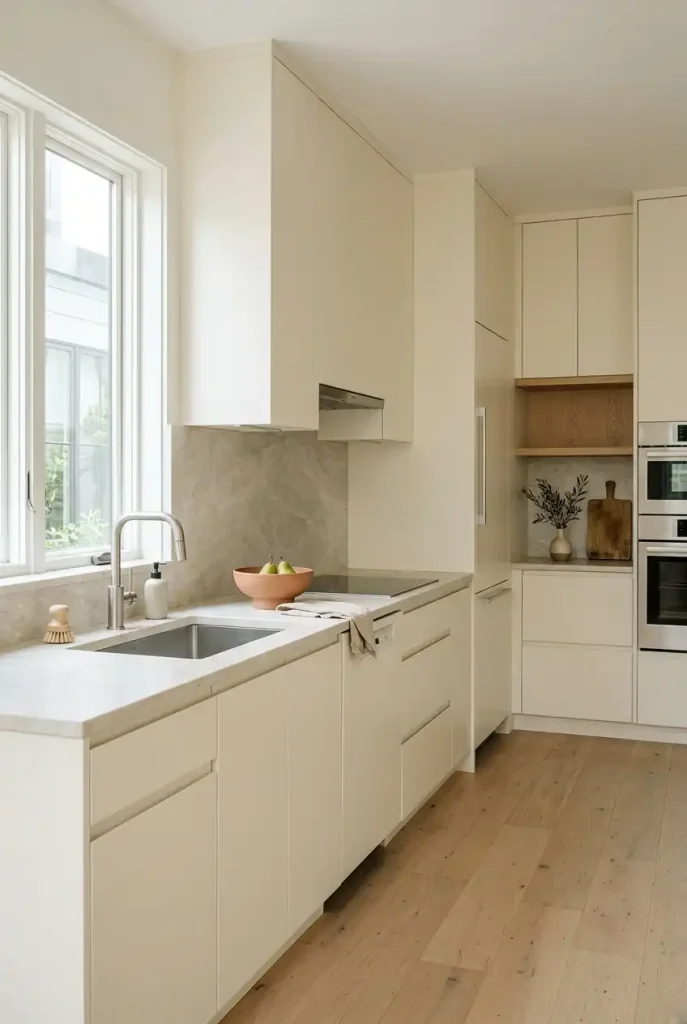
A minimalist kitchen can feel inviting when its simplicity is balanced by warm materials, thoughtful lighting, and a few carefully selected accessories. The objective is not to remove every sign of daily life but to give important features room to stand out.
Flat-front cabinets, integrated appliances, and consistent hardware create a quieter visual background. Deep drawers can keep cookware organized, while internal dividers help make utensils and everyday items easier to find.
Natural wood, warm-white walls, and a textured stone surface prevent the room from looking too stark. A small bowl of fruit or a single ceramic vessel can provide a focal point without undermining the clean appearance.
Practical approach: Before buying new storage, review what you already keep in the kitchen. Reorganizing cabinets and clearing unused countertop items may achieve much of the look without a renovation.
Finish the Kitchen With a Beautiful Fruit Bowl
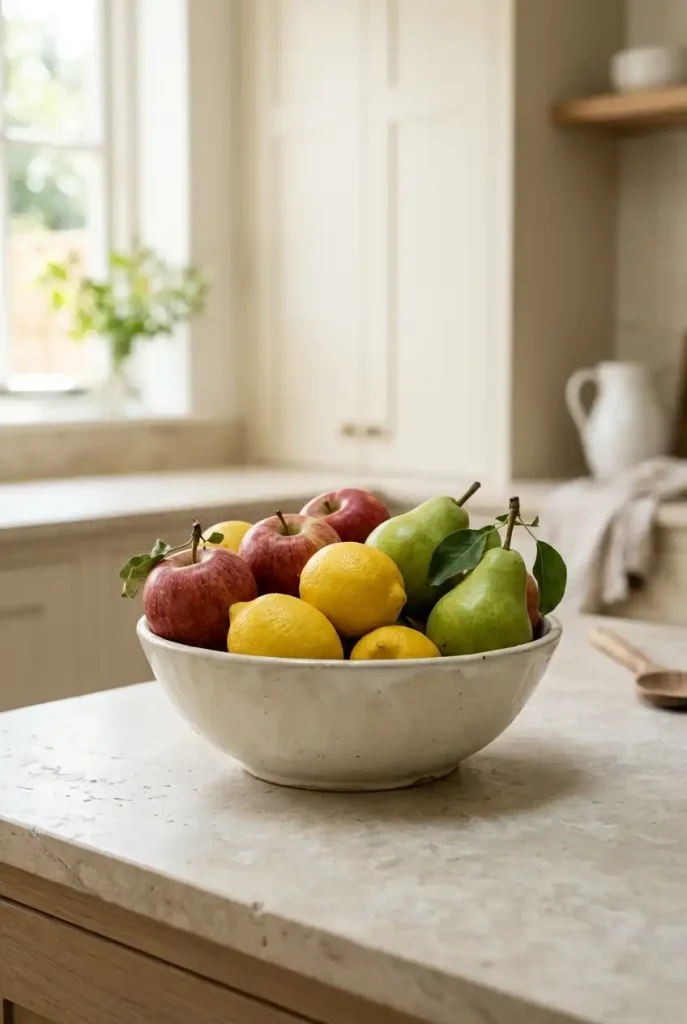
Sometimes the smallest finishing detail makes a kitchen feel more welcoming. A bowl of fresh fruit adds natural color, introduces organic shapes, and gives an otherwise plain countertop a simple focal point.
Choose a bowl that complements the kitchen rather than competing with it. Matte ceramic feels relaxed, a wooden bowl introduces warmth, and clear glass offers a lighter appearance. Lemons, apples, pears, and oranges provide different colors depending on the season and the palette you want to create.
Place the bowl where it is easy to reach but does not interfere with food preparation. A kitchen island or a clear section of countertop is often a practical location.
You can also change the display through the year. Citrus fruits add bright yellow accents, while apples and pears create a softer, autumnal combination.
Styling tip: Let the fruit provide most of the color. A simple bowl with a natural arrangement generally looks more appealing than an elaborate display with many unrelated accessories.
How to Choose the Right Kitchen Decor Ideas for Your Home
You do not need to use all 25 ideas to create a cohesive kitchen. A few well-chosen changes can make more sense than introducing multiple colors, materials, and decorative features at once.
Use this simple guide to narrow down your options.
| Your kitchen’s main challenge | Ideas to consider |
|---|---|
| It feels cold or impersonal | Natural wood, greenery, terracotta, vintage accents |
| It looks cluttered | Minimalist storage, organized countertops, glass-front cabinets |
| It lacks personality | Patterned backsplash, colorful island, wall art |
| It feels dark | Layered lighting, light cabinets, glass-front cupboards |
| It has limited space | Open shelving, compact coffee station, breakfast nook |
| It feels unfinished | Pendant lighting, a fruit bowl, a kitchen runner |
Three Practical Rules for a More Inviting Kitchen
- Start with one visual direction. Decide whether you prefer natural and rustic, modern and minimal, colorful and expressive, or classic and traditional.
- Repeat materials thoughtfully. Two or three recurring finishes help the kitchen feel coordinated.
- Protect everyday functionality. Keep walkways clear, preserve food-preparation space, and choose materials that suit the way you cook and clean.
If you rent, focus on removable accessories, textiles, countertop styling, and portable furniture. If you own your home and plan to renovate, larger changes such as cabinetry, lighting, and backsplashes offer opportunities to shape the room more permanently.
The best kitchen is one that reflects your taste and supports your daily routine.