

23 Stunning Winter Porch Ideas with Evergreen Wreaths, Planters, and Lights
A welcoming winter porch doesn’t need elaborate holiday decorations or a large budget. A fresh evergreen wreath, a pair of thoughtfully arranged planters, and the gentle glow of outdoor lights can make an ordinary entrance feel warm and inviting long after autumn has passed.
The best winter porch ideas combine greenery, texture, light, and a few well-chosen accents. Some lean traditional with red berries and plaid ribbons, while others use understated branches, weathered containers, lanterns, and neutral colors for a quieter seasonal look.
Whether you’re decorating a compact townhouse entrance, a covered farmhouse porch, or a suburban front stoop, the key is to work with the space you have. These 23 ideas offer different ways to create a polished winter welcome, from simple wreath arrangements to layered planters and softly illuminated steps. You can adapt many of them to your budget, existing decor, and local winter weather.
Hang a Full Evergreen Wreath with a Velvet Ribbon

A generous evergreen wreath makes a strong focal point without requiring decorations across the entire porch. Choose a wreath with varied foliage, such as fir, cedar, or pine, and let the natural differences in needle length create depth. A deep forest-green, burgundy, or muted cream velvet ribbon adds a finished touch.
For a balanced appearance, consider the scale of the door. A narrow wreath can disappear against a large entry, while an oversized arrangement may crowd a small one. If your porch is exposed to rain, wind, or snow, choose weather-appropriate ribbon and secure the wreath with a sturdy, door-safe hanger.
Style Matching Evergreen Planters Beside the Door

Matching planters create an orderly entrance, particularly when the architecture already has strong symmetry. Fill two substantial containers with upright evergreen branches, then add a few trailing cedar stems around the edges to soften the shape.
Charcoal, aged stone, dark bronze, and weathered terracotta all pair well with deep green foliage. The container matters as much as the greenery: a tall planter emphasizes vertical lines, while a wide, rounded pot creates a softer silhouette.
For a practical arrangement, use outdoor-rated containers that can tolerate your climate. If you use fresh cut branches, secure them firmly so wind doesn’t pull them loose.
Illuminate the Entry with Warm White String Lights
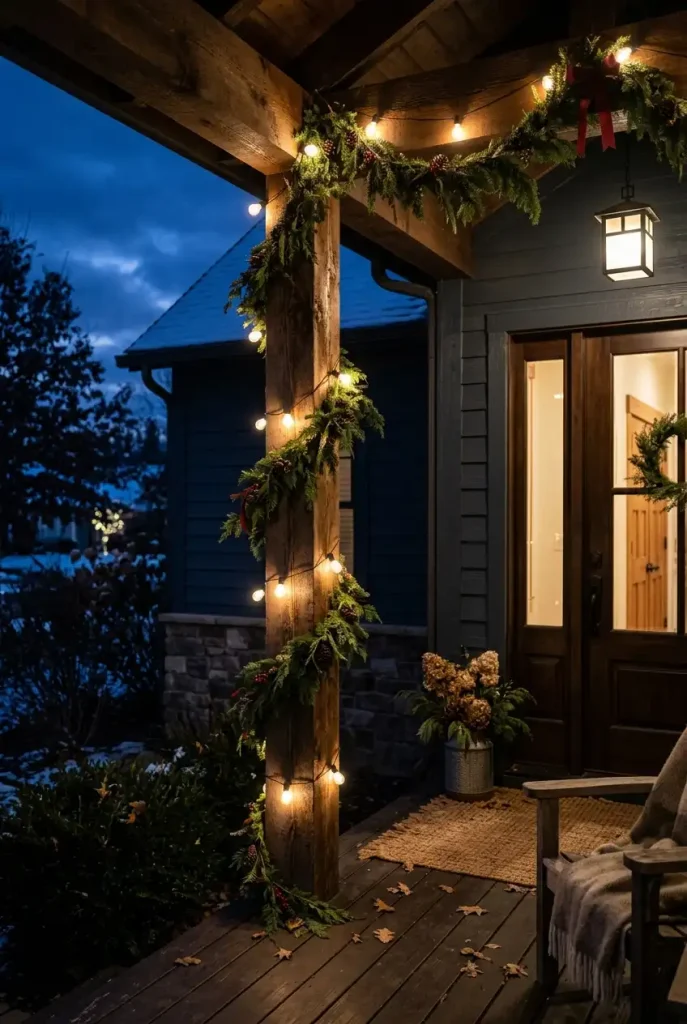
Warm white string lights bring a gentle glow to porch columns, railings, and overhead beams. Rather than covering every surface, choose one or two architectural features and follow their lines with evenly spaced lights.
This approach works especially well on covered porches, where the lighting can frame the doorway without competing with a wreath or planters. Choose outdoor-rated lights and follow the manufacturer’s instructions for installation and weather exposure. Keep cords secured and away from walking paths.
Quick Tip: Warm-toned bulbs generally create a softer, more inviting appearance than very cool white lights when paired with evergreen foliage and natural wood.
Create a Winter Porch with Red Berries and Cedar

For a traditional winter palette, combine rich green cedar with small clusters of red berries. The contrast gives a planter visual interest even when flowers are out of season, and it looks especially appealing against white siding, dark doors, or natural brick.
Start with a few upright branches to establish height. Add cedar sprays around the perimeter, then distribute the berry stems unevenly so the arrangement looks natural rather than perfectly patterned.
Choose decorative berry stems intended for outdoor use if natural branches aren’t readily available. Keep berries and small decorative pieces out of reach of children and pets when their safety is uncertain.
Arrange Lanterns and Greenery on the Front Steps

Lanterns make steps feel more inviting by adding a warm point of light close to the ground. Pair one larger lantern with a smaller one, then tuck a modest cedar arrangement beside them to connect the lighting with the greenery elsewhere on the porch.
Keep the grouping toward the side of the steps rather than in the middle of the walking route. A small cluster is usually more useful than placing a lantern on every stair.
For outdoor use, select lanterns and lighting suitable for the conditions. Battery-operated candles designed for outdoor settings are a convenient alternative to open flames, especially where wind or nearby greenery could create a hazard.
Dress the Door with a Layered Evergreen Garland

A garland draped around the doorframe creates a fuller, more architectural look than a wreath alone. Use a mix of pine, fir, and cedar textures, allowing some branches to extend slightly beyond the main line for a relaxed finish.
On a small porch, keep the garland relatively slim so it doesn’t overwhelm the entrance. A wider frame can support a thicker arrangement, particularly when the door is recessed beneath a covered porch.
To make the design feel cohesive, repeat one element from the wreath or planters, such as cedar foliage, a muted ribbon, or a few natural pinecones.
Plant a Miniature Evergreen in a Rustic Basket
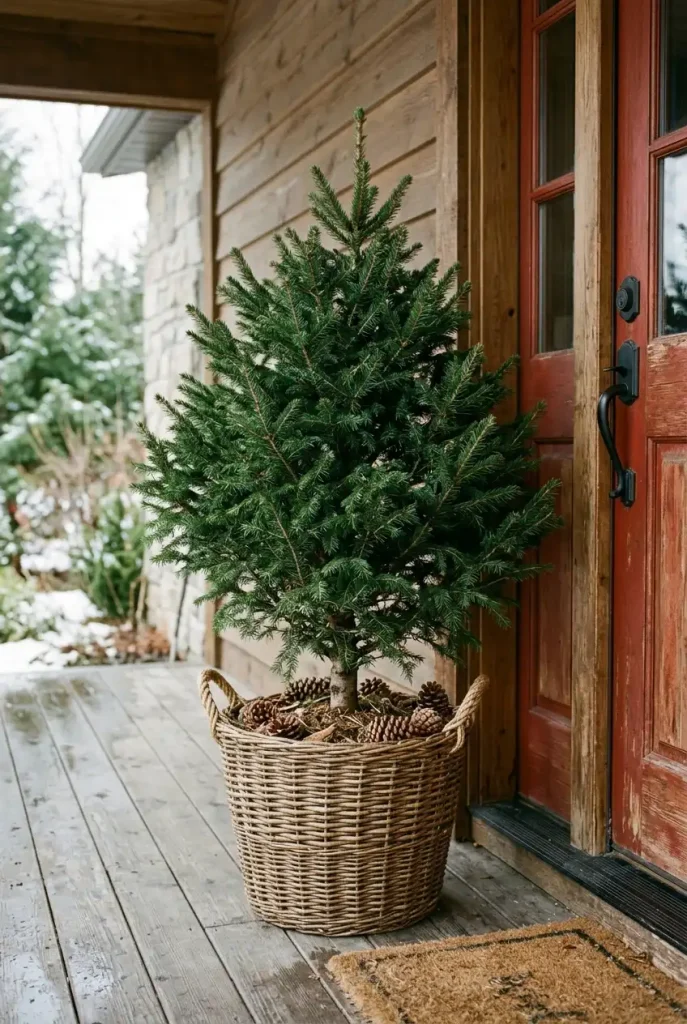
A small potted evergreen brings a living, tree-like silhouette to a porch without taking up the space required by a full-size outdoor tree. Set it inside a sturdy weather-appropriate planter or a decorative basket with a separate waterproof liner.
A dwarf spruce or another locally suitable compact conifer can work well, depending on the climate and growing conditions. Keep the plant in a container that provides appropriate drainage, and check its sunlight and watering needs.
For extra texture, place a few pinecones around the base or add a simple natural-fiber bow. Avoid packing the container so tightly that the plant’s trunk and soil surface disappear.
Add Oversized Pinecones for Natural Texture
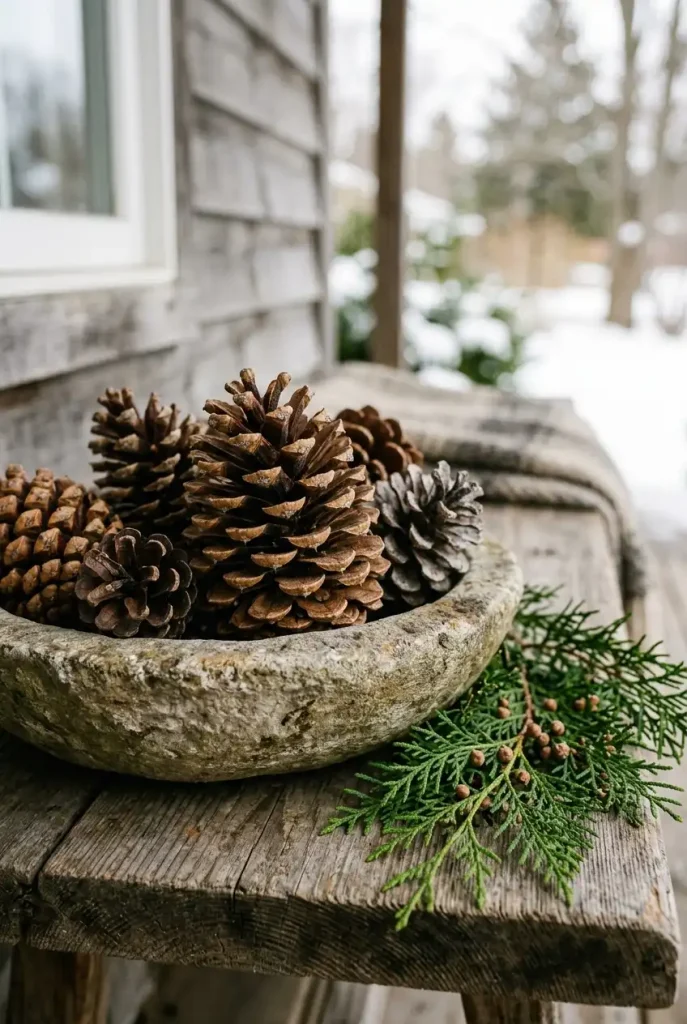
Pinecones are an easy way to introduce natural detail without adding another bright color to the porch. Place several in a shallow outdoor-safe bowl, tuck them into the surface of a planter, or arrange a handful around the base of a lantern.
Choose pinecones in different sizes rather than lining up identical pieces. Their irregular shapes look especially good alongside cedar, bare branches, stone, and weathered wood.
For a restrained arrangement, leave plenty of the container or surrounding surface visible. A few well-placed cones create more definition than a densely packed display.
Quick Tip: Natural pinecones can shed debris, so position them where they won’t become a slipping hazard on steps or smooth walkways.
Use a Pair of Tall Winter Branch Arrangements

Tall bare branches give a porch a sculptural look, particularly when evergreen foliage would feel too dense for the architecture. Arrange them in tall, stable outdoor containers, keeping the branches asymmetrical and slightly varied in height.
This idea works beautifully beside a wide front door, a brick entry, or a porch with simple modern lines. You can keep the branches completely natural or add a few restrained evergreen clippings near the base.
Choose sturdy branches and secure them against wind. Tall, lightweight containers may need added stability, particularly in exposed entrances.
Give a White Porch a Forest-Green Accent

A white porch provides a clean backdrop for dark green foliage. Emphasize the contrast with a lush wreath, deep green planters, and a restrained garland around the entry.
Rather than introducing several additional colors, let the green stand out against white railings, pale siding, or painted columns. A natural wood bench or a black lantern can add another layer without competing with the foliage.
This is a useful approach for homeowners who want winter decoration that feels seasonal but not overly festive. The same containers and greenery can remain in place through much of the colder season.
Layer a Plaid Outdoor Blanket over a Porch Bench
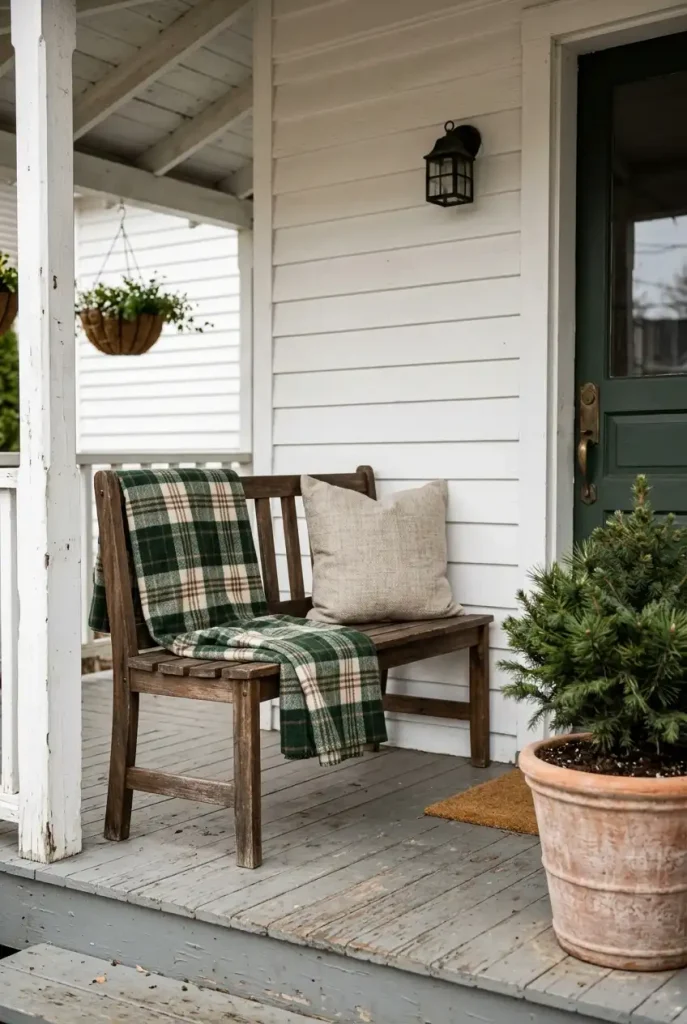
A bench gives a porch a lived-in, welcoming quality, even when it’s too cold to sit outside for long. If the bench is protected from the elements, drape a weather-appropriate plaid blanket over one end and add a textured cushion in a complementary neutral shade.
Deep red, forest green, charcoal, and cream are classic winter choices. For a quieter look, use a gray-and-ivory check with a simple evergreen arrangement nearby.
Textiles should remain dry and be stored indoors when rain, snow, or damp conditions are expected. If the porch is fully exposed, consider a removable accent rather than leaving fabric outside.
Make a Small Porch Feel Festive with a Single Statement Planter

You don’t need matching pots, multiple wreaths, and layers of garland to decorate a small entrance. One substantial planter can provide all the greenery a compact stoop needs.
Choose a container with enough visual weight to balance the door, then build the arrangement with a few upright evergreen branches and a lower layer of cedar. A subtle ribbon or several pinecones can finish the display.
The important detail is scale. A narrow pot with a few sparse stems can look lost beside a large door, while an excessively wide arrangement can block the entrance. Keep the planter to one side of the walking path.
ICreate a Classic Red-and-Green Porch

Red accents bring traditional holiday character to a porch filled with evergreen foliage. Rather than scattering red decorations everywhere, repeat the color in just two or three places: a wreath ribbon, a planter’s berry stems, and perhaps a small cushion on a protected bench.
This creates a recognizable palette without making the entrance feel crowded. Dark green foliage provides the foundation, while brick, cream siding, or natural wood adds warmth.
If you want the display to last into January, focus on botanical red accents and understated fabrics instead of strongly Christmas-specific ornaments.
Line the Porch Rail with Evergreen Garland

A railing garland adds seasonal greenery across the width of the porch, making it especially useful for homes with front steps or a long raised veranda. Secure the garland at regular intervals and allow a little natural drape between attachment points.
For a simple look, use greenery alone. For a more festive arrangement, add a few pinecones or small berry clusters at selected points rather than decorating every section.
Keep the garland firmly attached and make sure it doesn’t interfere with gripping the handrail. Avoid loose ties, trailing branches, or protruding decorations where people need to hold on for support.
Mix Evergreen Foliage with Eucalyptus
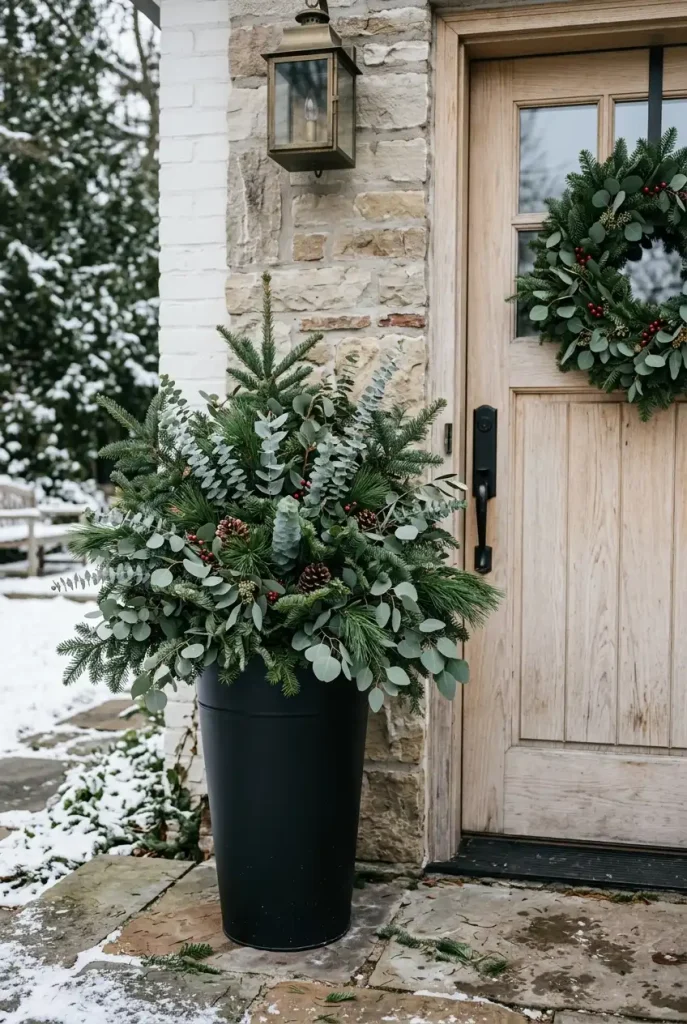
For a softer, more contemporary arrangement, mix deep green evergreen branches with muted eucalyptus foliage. The contrast between pointed needles and rounded leaves creates texture without relying on bright colors.
Use this combination in a wreath, a low planter, or a garland around a sheltered doorway. A matte black container or pale stone pot makes a quiet backdrop, while natural wood helps warm the palette.
Fresh eucalyptus and other cut foliage may dry differently depending on indoor or outdoor conditions. If the arrangement needs to last for weeks in exposed weather, choose durable outdoor-appropriate greenery or replace fragile stems as needed.
Style the Porch with Weathered Terracotta Pots
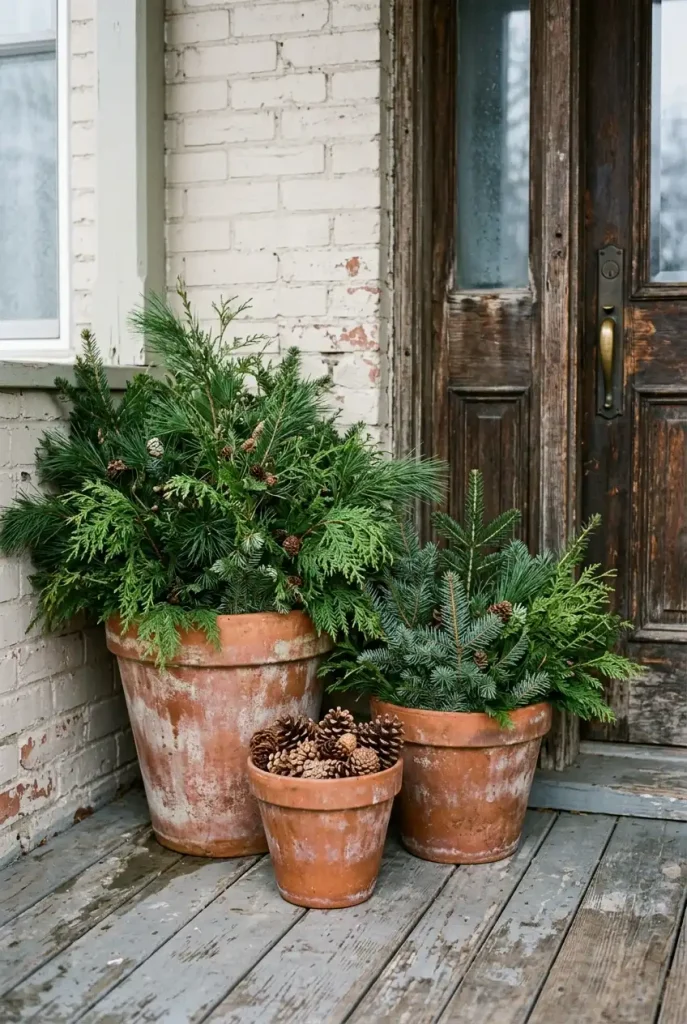
Weathered terracotta adds warmth to winter greenery, especially against white siding, painted brick, or pale stone. Instead of matching every pot, combine two or three related shapes and sizes to create a collected appearance.
Fill the largest pot with upright evergreen branches, use a smaller container for cedar clippings, and leave a third pot empty or fill it with pinecones if that suits the space. Keep the color variation subtle so the containers feel related rather than random.
Check that the pots can tolerate your winter temperatures. Some terracotta containers can crack in freezing, wet conditions, so move vulnerable pieces under cover or choose frost-resistant alternatives where necessary.
Add a Subtle Glow with Step Lighting
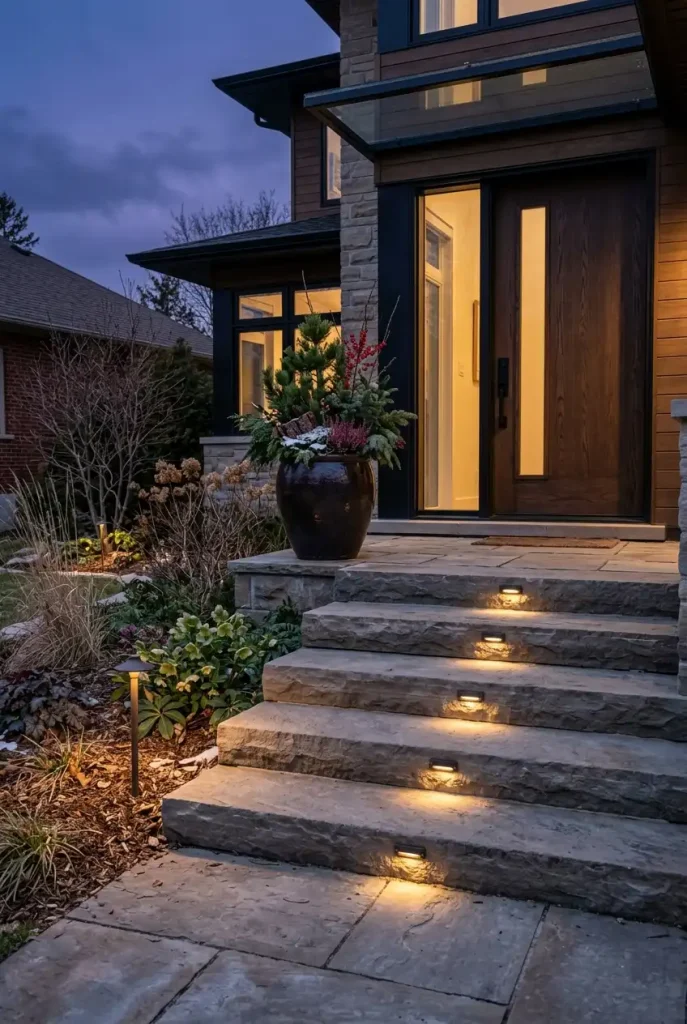
Built-in or well-positioned outdoor step lighting can make a porch feel welcoming without adding visible holiday decorations. Small fixtures beneath a handrail or along the sides of the steps create a clean, architectural effect.
This is a particularly useful option if your porch already has a wreath and planters but needs better evening illumination. Choose fixtures designed for outdoor conditions and ensure that the light is sufficient for safe movement rather than purely decorative.
If permanent installation isn’t practical, outdoor-rated plug-in or solar lighting may offer an alternative, depending on the porch layout and available sunlight.
Use a Wooden Crate for a Relaxed Farmhouse Display
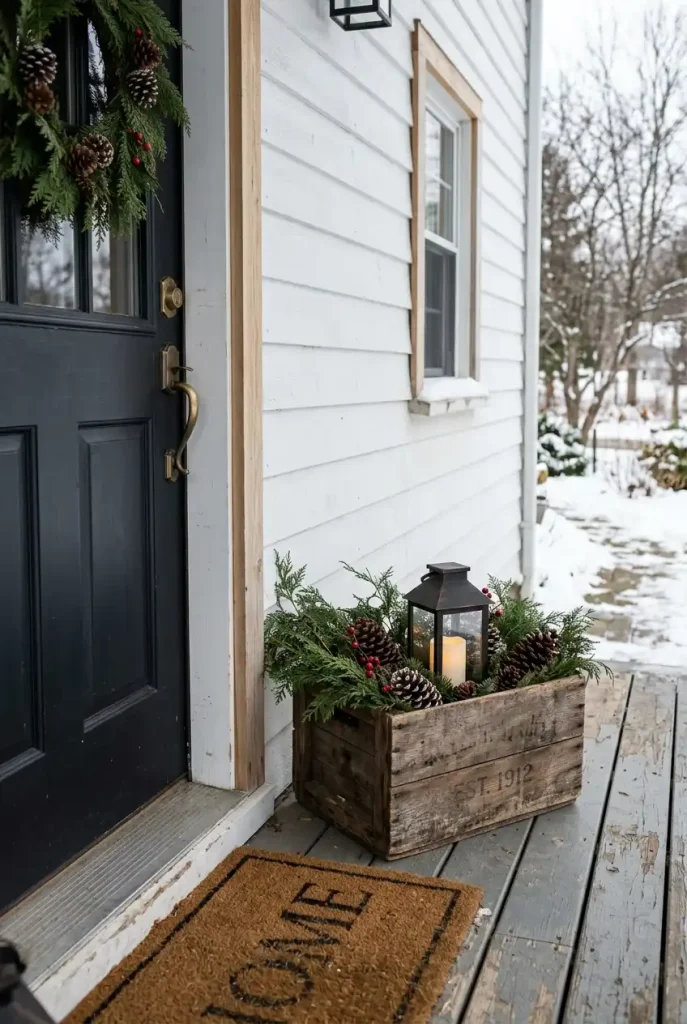
A weathered wooden crate creates a casual base for winter porch decor. Place it beside the door and fill it with evergreen clippings, pinecones, and a small lantern, allowing the objects to sit at slightly different heights.
This approach is particularly effective on farmhouse-style porches, older homes, and entrances with natural wood details. It can also be an economical way to reuse a sturdy crate you already own.
Keep the crate off standing water and check that it can handle outdoor exposure. A protected position beneath the porch roof will generally be more suitable than leaving untreated wood exposed to persistent moisture.
Decorate with Evergreen Swags Instead of a Full Garland

An evergreen swag is a good alternative when you want natural greenery without decorating the entire doorframe. Arrange a handful of fir and cedar branches into a tapered shape, then secure them with twine or a simple fabric ribbon.
Hang the swag vertically on the door, or place a smaller version above a porch bench. The irregular foliage creates a relaxed, handmade look that works with rustic, traditional, and modern homes.
Keep the design uncomplicated. A single ribbon and varied evergreen textures can provide enough detail without adding ornaments or other embellishments.
Frame the Entrance with Warm Brass Lanterns

Brass-finished lanterns bring a subtle golden accent to a winter porch. Their warm metal tones complement evergreen foliage, natural wood, brick, and darker paint colors without relying on bright holiday decorations.
Place a larger lantern beside the door and a smaller one near a planter, keeping both clear of the walking route. Repeating the same metal finish in two places creates a more intentional arrangement than mixing several unrelated finishes.
For an exposed porch, select lanterns made for outdoor conditions and use suitable battery-operated lighting. Wipe away moisture as needed to preserve the finish.
Build a Layered Winter Planter with Upright and Trailing Greenery
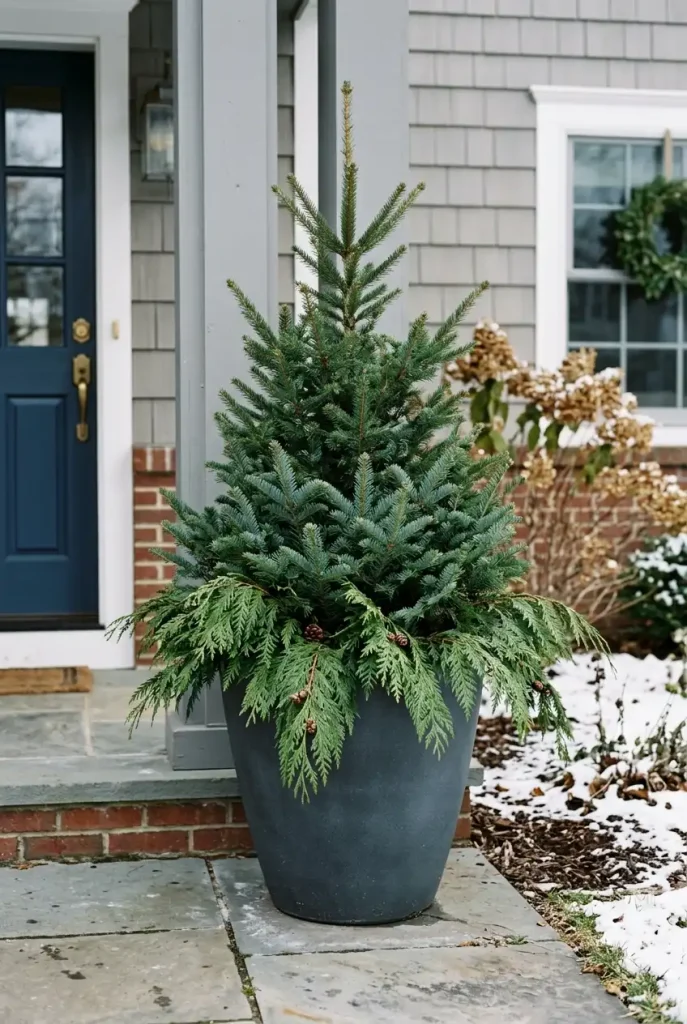
A planter becomes more interesting when its foliage has different heights and directions. Use upright evergreen branches as the central structure, medium-height stems to fill the middle, and trailing cedar around the rim.
This arrangement creates a fuller silhouette than using identical branches throughout. It also allows you to use a relatively small selection of materials while still producing a varied display.
A useful arrangement sequence is:
- Establish the height with a few sturdy upright branches.
- Fill open spaces with shorter evergreen stems.
- Add trailing cedar along the outer edge.
- Finish with a few pinecones or berry stems if desired.
Keep the tallest branches proportionate to the container and secure them against wind.
Keep the Porch Minimal with Greenery and Natural Wood

A minimalist winter porch can feel just as welcoming as a heavily decorated entrance. Let the architecture, natural materials, and greenery do most of the work.
A simple wreath on a wood or charcoal door, one substantial planter, and a small wooden bench can be enough. Leave open space around each element so the eye can appreciate the textures rather than moving between too many decorations.
This approach is particularly suitable for contemporary homes, compact entrances, and anyone who prefers decor that can remain in place beyond the holiday season.
Common Mistake: Adding small decorations to every available surface.
Better Approach: Choose two or three strong elements and give each enough room to stand out.
Combine Wreaths, Planters, and Lights for a Complete Winter Entry
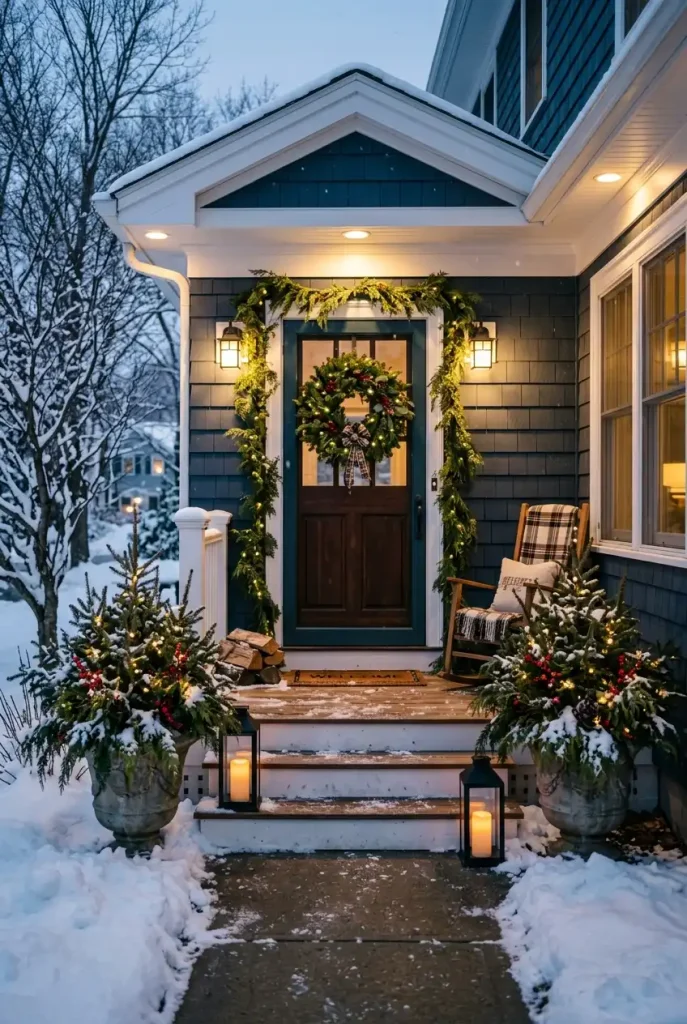
For a more finished entrance, combine the three elements that give winter porch decor its strongest visual foundation: greenery, containers, and lighting.
Start with a wreath or door swag as the focal point. Add one or two planters to establish height and balance, then use garland or string lights to connect the doorway with the surrounding architecture. A lantern or two can provide a lower layer of warm light.
The key is repetition rather than quantity. Reuse the same evergreen varieties, repeat a color such as forest green or cranberry, and choose containers that complement one another.
A simple formula for a coordinated porch
| Element | Purpose | Practical choice |
|---|---|---|
| Evergreen wreath | Creates a focal point | Mixed fir and cedar |
| Planters | Adds height and balance | Matching charcoal or stone pots |
| Garland | Connects the doorway to the porch | Natural evergreen foliage |
| Lighting | Creates a welcoming evening atmosphere | Outdoor-rated warm white lights |
| Finishing accent | Adds texture or color | Pinecones, berries, or a simple ribbon |
You don’t need every element for the look to work. On a small stoop, a wreath, one planter, and a lantern may be enough. A larger covered porch can accommodate garland, matching containers, and additional lighting without appearing crowded.
How to Make Your Winter Porch Look Coordinated
The most successful winter porch designs usually share a few visual elements. You can use these principles to adapt any of the ideas above to your home.
- Choose a limited palette. Forest green, natural wood, charcoal, ivory, and one accent color create a cohesive look.
- Vary the heights. Combine upright branches, medium-height wreaths or garlands, and low lanterns to create depth.
- Repeat materials. Use the same foliage or metal finish in more than one place so the arrangement feels intentional.
- Leave room to move. Keep decorations away from door swings, handrails, steps, and the main walking path.
- Consider the weather. Choose outdoor-suitable lighting, stable containers, and materials appropriate for your climate.
For a smaller budget, begin with one evergreen wreath and a planter you already own. Add lighting or a lantern later if the entrance needs more warmth after dark.
If you prefer a more refined appearance, invest in a well-proportioned wreath, durable containers, and a restrained lighting arrangement rather than adding many smaller decorations.