
25 Winter Living Room Decorating Ideas for a Beautiful Seasonal Refresh
When temperatures drop and evenings grow longer, the living room becomes the natural gathering place for relaxing, reading, entertaining, and spending time with family. A few thoughtful changes can make the space feel warmer without requiring a complete makeover. The best winter living room decorating ideas combine comfortable fabrics, layered lighting, natural materials, seasonal greenery, and colors that complement your existing furniture.
You don’t need a fireplace, an oversized home, or an expensive furniture collection to create a welcoming winter atmosphere. A small apartment can feel just as inviting with a textured throw, a softly glowing lamp, and a carefully styled coffee table. Larger rooms can benefit from layered seating, substantial rugs, and architectural focal points.
These 25 ideas explore different approaches, from simple budget-friendly updates to refined winter interiors. Choose the details that suit your space, your everyday routine, and the kind of winter atmosphere you want to create.
Layer Soft Cream and Ivory Textiles
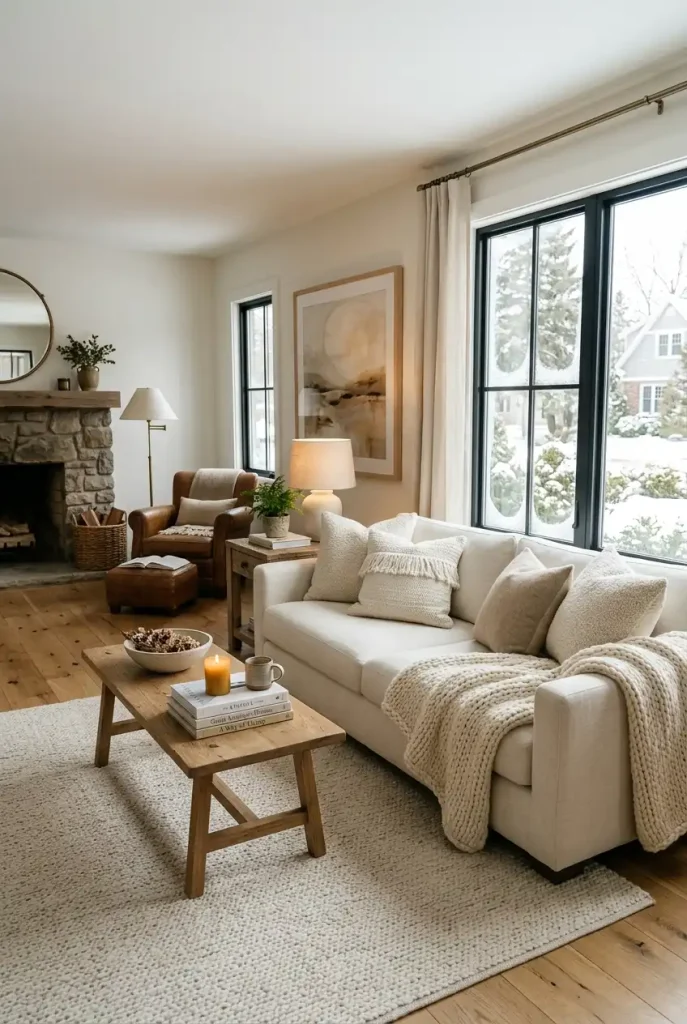
Cream and ivory create a gentle winter palette that feels bright, comfortable, and easy to coordinate with existing furniture. Instead of relying on one shade of white, combine warm ivory cushions, a chunky knit throw, linen upholstery, and a thick woven rug. The differences in texture give the room depth without introducing too many colors.
Drape a substantial blanket over one end of the sofa and arrange pillows in a mixture of smooth and nubby fabrics. If your walls are already white, introduce warmer tones such as oatmeal, sand, and light taupe to keep the room from feeling cold.
Styling tip: Repeat your main cream shade in two or three places, such as the sofa, curtains, and rug. This creates a connected look rather than a collection of unrelated accessories.
Add Warm Ambient Lighting

Lighting can change the entire feeling of a living room during winter. When daylight fades early, overhead lighting alone may make a space feel flat or overly bright. Several smaller light sources create a more relaxed atmosphere and highlight different parts of the room.
Consider combining a floor lamp beside the sofa, a table lamp on a side table, and a small accent light on a bookcase. Lampshades made from linen or other diffusing materials soften the appearance of the light.
Try this simple arrangement:
- Place a reading lamp near your favorite chair.
- Add a table lamp to balance the opposite side of the room.
- Use warm-white bulbs that suit your fixtures and comfort preferences.
- Keep a clear path through the room so cords and lamp bases do not become obstacles.
The result should be practical as well as atmospheric. You want enough light to read comfortably while preserving a gentle evening glow.
Style a Fireplace Mantel With Natural Greenery
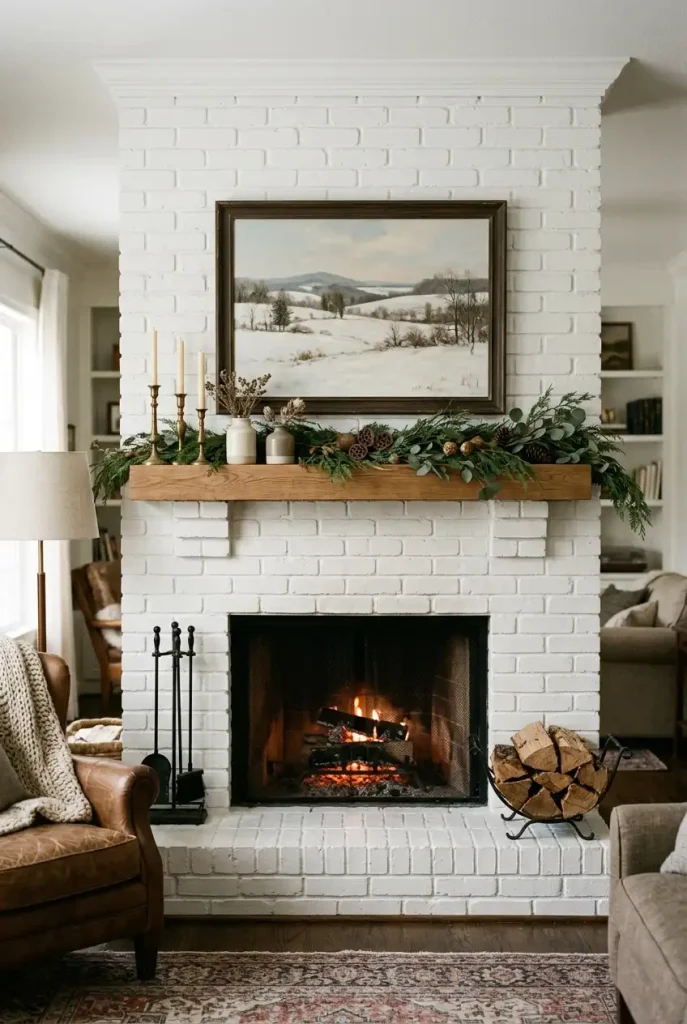
A fireplace naturally attracts attention, making its mantel an ideal place to introduce seasonal decoration. For a winter look that can stay in place beyond the holidays, use understated greenery, sculptural branches, ceramic vessels, and a few candleholders rather than overtly festive ornaments.
Lay a loose garland across the mantel or arrange several small bundles of greenery in simple vases. Add height with one substantial framed artwork or a round mirror. Leave some empty space so the arrangement does not compete with the fireplace itself.
For a nonworking fireplace, the same styling principle works with a clean hearth and a basket of neatly folded blankets beside the opening.
Safety note: Keep dried greenery, fabric, and other combustible decorations well away from an operating fireplace and follow the fireplace manufacturer’s clearance instructions.
Bring in Rich Forest Green Accents
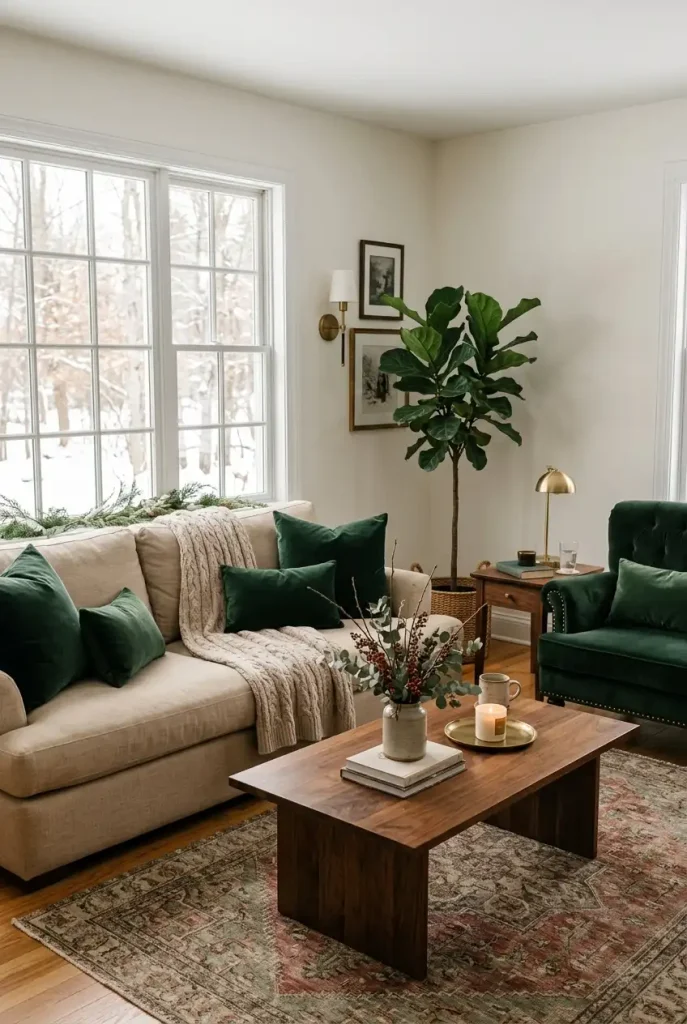
Forest green adds depth to a winter interior while connecting the room to the natural world outside. It pairs particularly well with warm wood, cream upholstery, aged brass, and earthy brown accents.
You can introduce the color through velvet cushions, a wool throw, a ceramic vase, or a small upholstered accent chair. If your living room already has a neutral sofa, a few deep green accessories may be enough to create a noticeable seasonal shift.
For a more dramatic approach, consider a forest-green accent wall behind the sofa. In a small or dim room, test the paint under both daytime and evening lighting before committing.
Keep the rest of the palette relatively restrained. Too many competing jewel tones can make the room feel busier than intended.
Create a Cozy Reading Corner
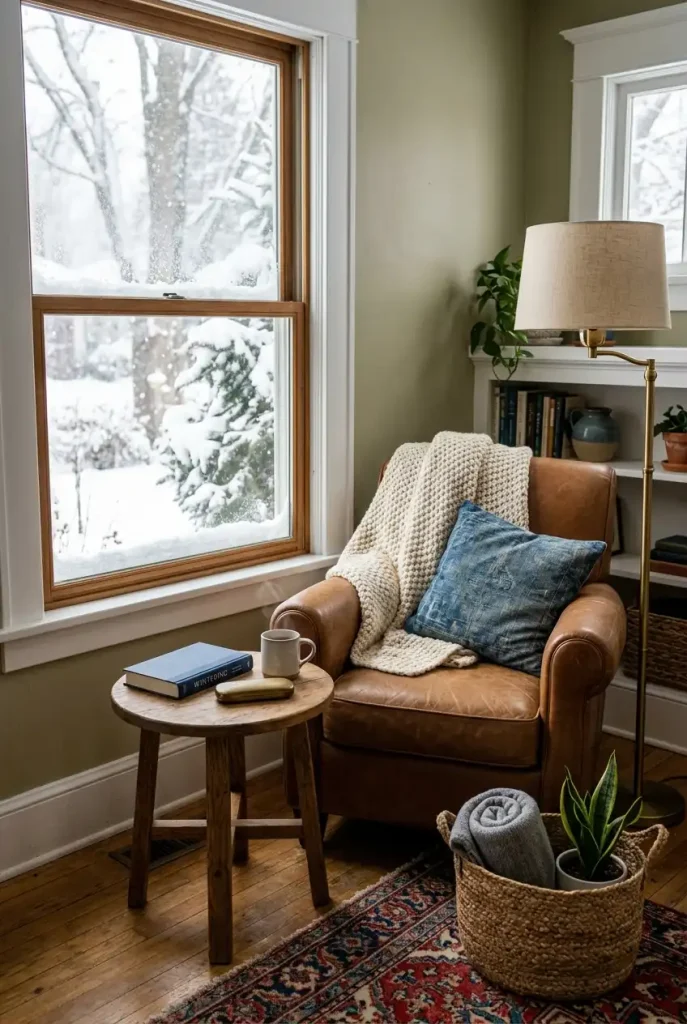
A reading corner gives an unused corner of the living room a clear purpose. It doesn’t need a separate room or a large furniture budget; one comfortable chair and a few useful accessories can be enough.
Position an armchair near a window when possible, then add a compact side table for a book and a cup of tea. A floor lamp makes the corner useful after dark, while a soft throw adds texture and comfort.
For a small apartment, choose a chair with a relatively narrow profile and a side table that doesn’t obstruct the main walking path. In a larger living room, a small ottoman can make the arrangement more inviting.
What to include:
- A supportive chair suited to extended sitting.
- A lamp positioned for reading.
- A basket for books or blankets.
- One cushion in a contrasting seasonal color.
Introduce Rustic Wood and Woven Textures

Natural materials can make a living room feel grounded during the colder months. Wood introduces warmth, while woven baskets, wool rugs, and linen fabrics bring visual variation without relying on bright seasonal colors.
A rustic coffee table can become the centerpiece of a neutral room, particularly when paired with a soft sofa and a simple ceramic bowl. If replacing furniture isn’t practical, use smaller details such as a wooden tray, a woven storage basket, or a textured stool.
Aim for a mixture of finishes instead of matching every wood tone exactly. A light oak side table can work alongside a darker walnut frame when the overall palette feels connected.
For everyday practicality, choose baskets with enough structure to hold extra blankets without collapsing or spilling into the walkway.
Use Layered Rugs for Extra Warmth
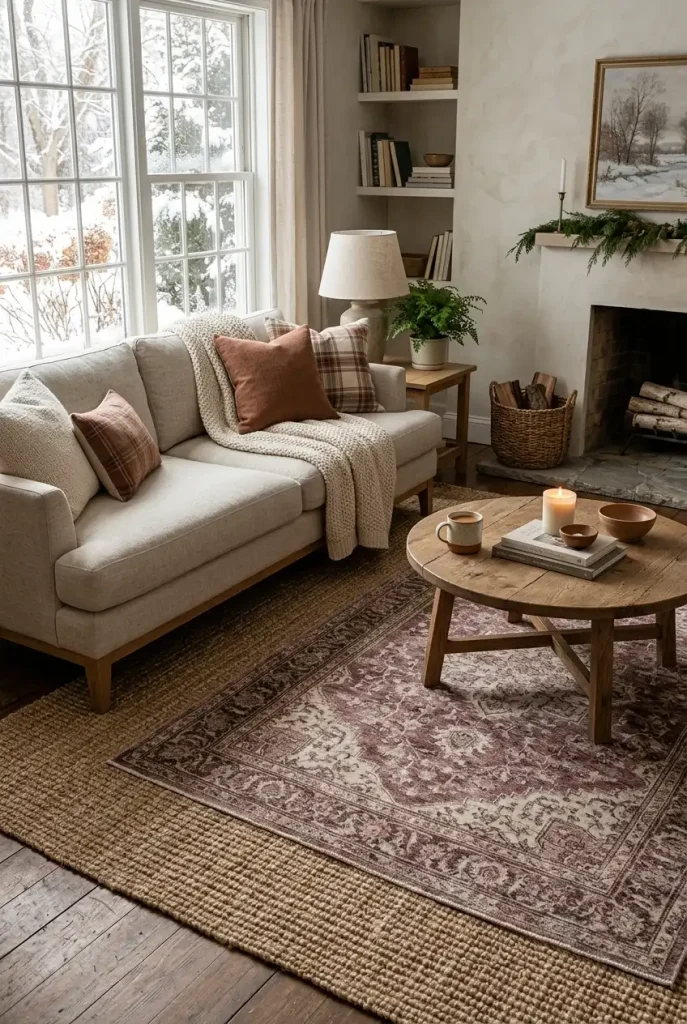
Layering rugs creates a collected look and can visually define a seating area in an open-plan room. A larger, understated base rug paired with a smaller patterned wool rug adds texture without requiring a complete furniture change.
A natural jute or flatweave rug can provide a simple foundation, while the top layer introduces a subtle geometric pattern, traditional motif, or richer winter color. Keep the rugs coordinated in tone so the arrangement looks deliberate.
Size matters. The top rug should be large enough to relate to the furniture grouping rather than appear like a small mat floating in the center. Check that the layers lie flat and use suitable rug pads to reduce slipping and tripping.
This approach is especially useful when a rental living room has neutral flooring that feels visually bare in winter.
Decorate With Burgundy and Rust

For a richer winter atmosphere, introduce burgundy, rust, and muted terracotta. These shades work well with cream, tan, charcoal, and natural wood, creating a room that feels warmer without needing traditional holiday decorations.
Start with two accent cushions or a rust-colored throw. A burgundy vase or an earthy-toned piece of artwork can repeat the palette elsewhere. If your sofa is already brown or cognac leather, these colors complement its natural warmth.
The key is proportion. Use one deeper color as the main accent and let the others support it. A mixture of burgundy, rust, and orange in equal amounts may feel busy, whereas a restrained palette gives each detail room to stand out.
Add a Large Mirror to Reflect Winter Light

Shorter winter days can make some living rooms feel darker, particularly when windows face a shaded yard or neighboring building. A well-positioned mirror can reflect existing daylight and create a greater sense of visual openness.
Place a large mirror opposite or at an angle to a window where it reflects something attractive, such as natural light, greenery, or a carefully arranged seating area. A wood or aged-metal frame can bring warmth to the room.
In a narrow living room, a tall mirror can help the space feel less enclosed. In a larger room, a substantial horizontal mirror above a console may create a strong focal point.
Avoid positioning the mirror where it reflects clutter or creates uncomfortable glare from lamps and televisions.
Style the Coffee Table With Winter Details

A coffee table is an easy place to experiment with seasonal styling because the arrangement can be changed without affecting the rest of the room. The best displays combine objects of different heights while leaving enough clear space for everyday use.
Try grouping a shallow ceramic bowl, a small stack of books, and a vase of winter branches on a wooden tray. A candleholder can introduce another material, such as brass, glass, or stone.
Keep the arrangement low enough that people can see across the table and reach drinks or snacks comfortably. In a busy family room, avoid fragile pieces near the edges and leave an open area for practical use.
Quick Tip: Use a tray to group smaller objects. It makes the display easier to move when the table needs to be cleared.
Create a Soft Blue and Warm White Palette
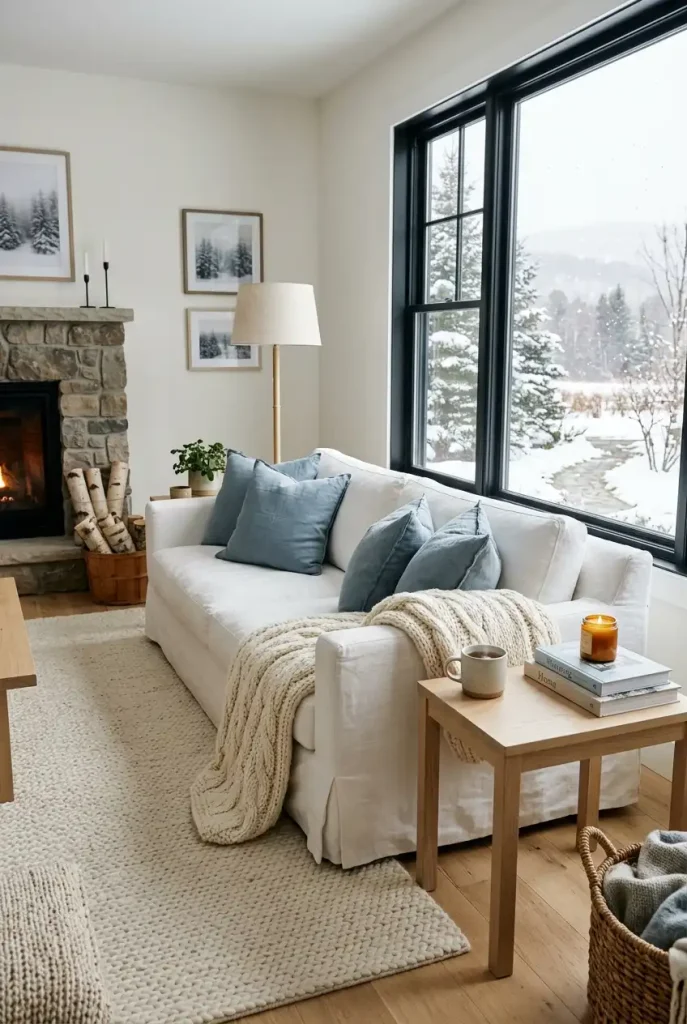
Winter decorating doesn’t have to rely on brown, burgundy, or dark green. Soft blue and warm white create a quieter atmosphere that feels fresh and airy, particularly in rooms with plenty of natural light.
Choose dusty blue cushions, an ivory throw, pale wood furniture, and a cream rug. The blue provides a cool seasonal accent, while warmer neutrals prevent the space from feeling icy. A subtle blue-gray wall color can reinforce the palette without overwhelming a compact room.
For a more traditional interior, use patterned blue-and-white pillows. In a contemporary space, solid fabrics and clean-lined furniture may be a better fit.
Common mistake: Combining too many cool gray surfaces with icy blue. Introduce warm wood, cream textiles, or a natural woven basket to balance the temperature of the palette.
Make a Statement With a Chunky Knit Throw
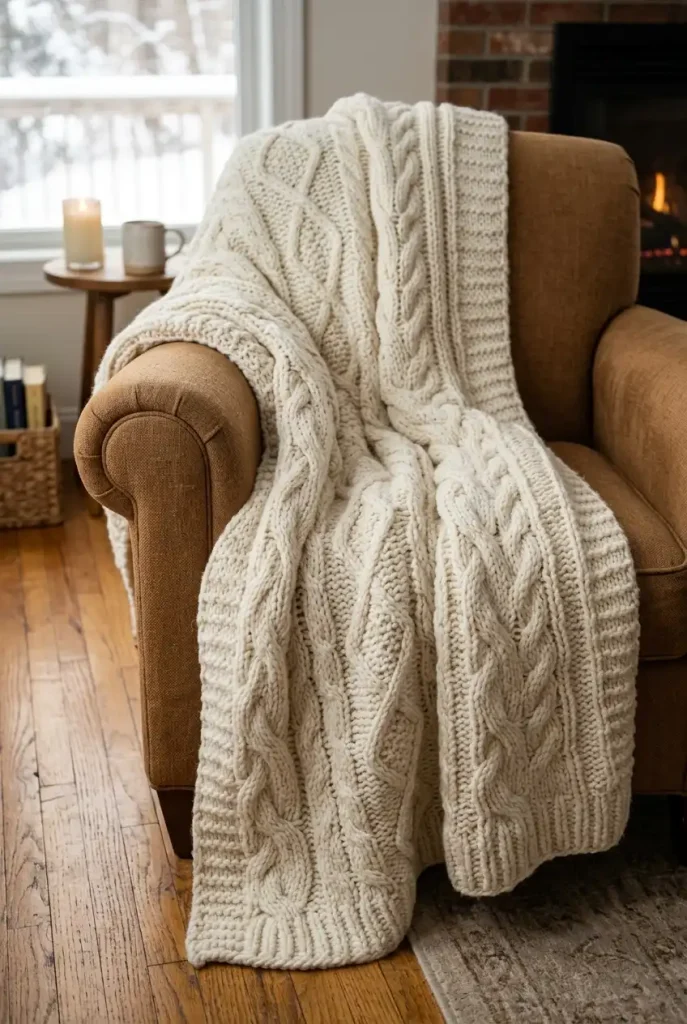
A chunky knit throw brings winter texture into the room without requiring a major purchase or rearrangement. Its thick stitches add visual weight to a smooth sofa, leather chair, or simple upholstered bench.
Choose a color that complements the furniture rather than automatically selecting white. Oatmeal works with warm wood, charcoal looks striking against pale upholstery, and deep green can add color to a neutral seating arrangement.
Drape the blanket loosely over the back or arm of a chair. The fabric should look inviting rather than carefully folded into a rigid display. For households with pets or children, consider a washable throw that can handle everyday use.
Arrange Seasonal Branches in Tall Vases

Bare branches offer a simple way to introduce winter character without adding colorful holiday decorations. Their sculptural silhouettes work particularly well in minimalist, Scandinavian-inspired, and rustic interiors.
Place several branches in a tall ceramic vase on a console, beside the fireplace, or on a sturdy side table. Choose a vessel with enough weight and a wide enough base to support the arrangement. A few naturally irregular branches often look more interesting than a tightly symmetrical bundle.
For a softer look, use suitable fresh seasonal foliage instead of completely bare stems. Keep the arrangement away from busy walkways and places where long branches could obstruct a screen or catch on clothing.
If you gather branches outdoors, use only materials you can identify and collect responsibly.
Introduce a Caramel Leather Accent Chair
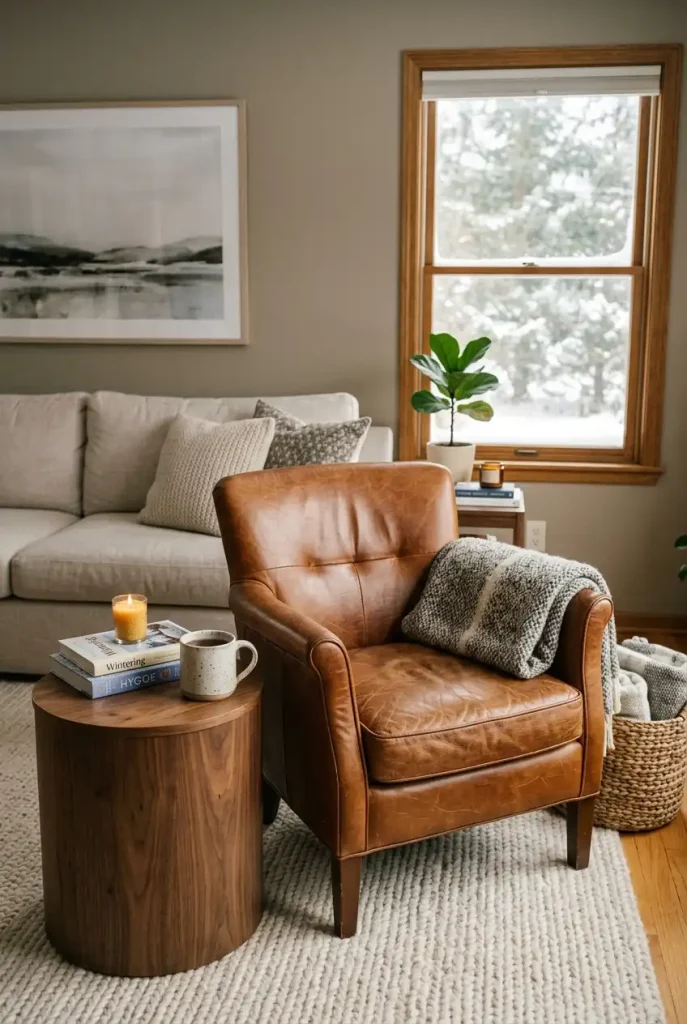
A caramel leather chair adds a rich material contrast to a living room filled with pale upholstery and soft textiles. The warm brown tone feels appropriate for winter, while the leather introduces a smoother texture alongside knitted blankets and wool rugs.
Place the chair near the sofa to complete a conversational seating arrangement or angle it toward a window to create a separate relaxation spot. A small side table makes it more functional for reading, and a nearby floor lamp adds useful task lighting.
If a new leather chair isn’t within your budget, look for a secondhand piece in good condition or create a similar color effect with a warm brown upholstered chair. The important design principle is the contrast between a rich brown accent and lighter surrounding materials.
Decorate With Winter-Friendly Indoor Plants

Indoor greenery can soften the hard lines of furniture and introduce a lively contrast to winter’s muted outdoor landscape. Rather than decorating exclusively with seasonal branches, use a few established houseplants that suit your home’s conditions.
A larger floor plant can fill an empty corner, while a smaller plant on a sturdy side table adds detail at a lower level. Terracotta, stoneware, and woven planters work well with natural winter palettes.
Before choosing a plant, consider the amount of daylight your room receives, the space available for mature growth, and whether pets or children might reach it. Plant needs vary, so match the variety to your actual environment rather than choosing by appearance alone.
Styling tip: Group plants at different heights, but leave enough space around each one for maintenance and watering.
Build a Moody Charcoal and Walnut Living Room

For a more dramatic seasonal refresh, combine charcoal, walnut, and warm cream. This palette works especially well in rooms with good lighting and enough contrast to keep the furniture visually distinct from the walls.
A charcoal accent wall can anchor a seating area, while walnut furniture contributes a rich natural tone. Use cream cushions, a pale rug, or warm artwork to prevent the room from becoming too dark. Multiple lamps can create depth after sunset and highlight the wood grain.
You don’t need to repaint the entire room. Dark cushions, a charcoal throw, and a walnut-toned side table can introduce the same design direction in a rental or a smaller home.
Editor’s note: Test dark paint samples at different times of day. A color that looks rich in daylight may appear much heavier under evening lighting.
Add a Window Seat With Cozy Layers

A window seat can turn an underused architectural feature into one of the most inviting parts of the living room. If you already have a wide window ledge or built-in bench, add a fitted cushion, a few supportive pillows, and a soft blanket to make it more comfortable.
For a built-in seat, consider storage underneath for spare throws or books. A freestanding bench placed beneath a suitable window can create a similar effect without permanent construction.
Choose fabrics that coordinate with the rest of the room, but allow the window seat to have its own character. A small plaid cushion or muted blue pillow can provide a subtle winter accent.
Before arranging furniture beneath a window, make sure it doesn’t block a radiator, interfere with window operation, or obstruct a required exit.
Use Plaid and Subtle Winter Patterns
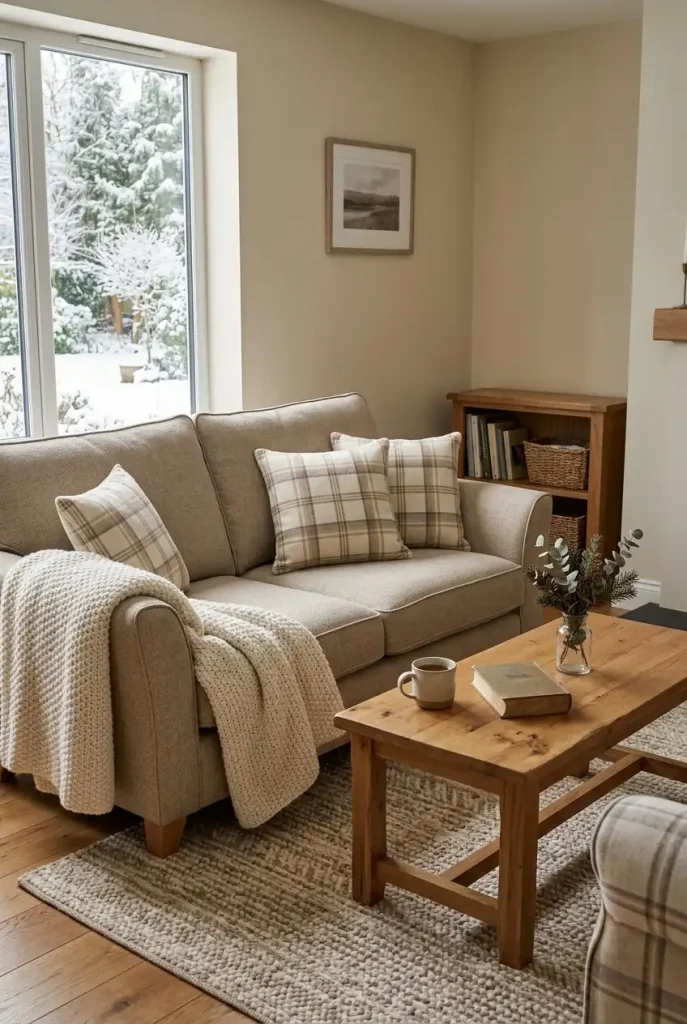
Plaid brings a traditional winter feel to the living room, but it doesn’t have to look like holiday decor. Small-scale checks, understated tartan, and soft windowpane patterns can stay in place throughout the season.
Begin with one patterned cushion on a solid sofa. Repeat one of its colors in a throw or nearby accessory, then keep the other fabrics relatively simple. This creates a coordinated arrangement without making every surface compete for attention.
For a modern interior, look for broad, low-contrast checks in cream, gray, and brown. For a rustic room, deeper red, forest green, and navy can work well with wood furniture and warm lighting.
Create a Simple Winter Gallery Wall

Artwork can refresh a living room without changing the furniture or adding seasonal objects to every surface. A winter gallery wall might feature landscape prints, botanical illustrations, abstract pieces in earthy tones, or personal photographs with a consistent visual palette.
For a cohesive arrangement, select frames in two or three complementary finishes. Arrange the pieces on the floor before hanging them so you can test spacing and balance. The overall grouping should relate to the width of the sofa or console beneath it.
Renters can use suitable removable hanging systems when the wall surface and artwork weight allow. Always check the mounting instructions and weight limits.
If your current gallery wall is already well balanced, changing one or two prints may be enough to introduce a seasonal mood.
Style a Small Living Room With Space-Saving Furniture
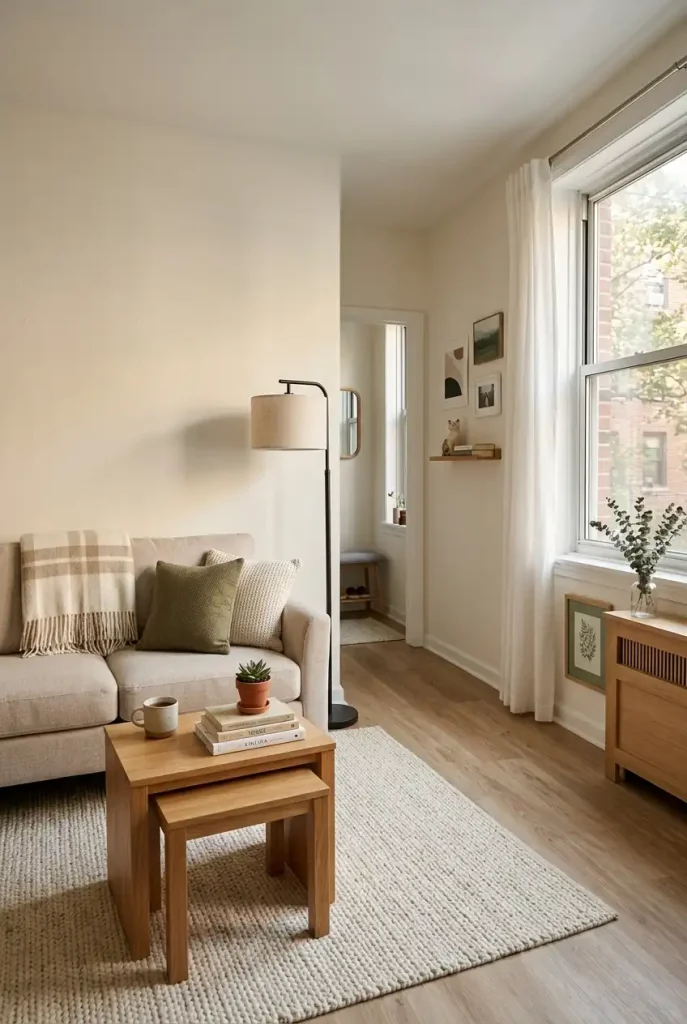
Winter comfort doesn’t depend on having a large living room. In a small apartment or condo, the right furniture proportions can create a warm seating area without sacrificing movement.
Choose a compact loveseat or appropriately sized sofa, then use nesting coffee tables that can be separated when extra surface space is needed. A slim floor lamp provides lighting without requiring a large side table, while a storage ottoman can hold blankets and serve as additional seating.
Keep the main walking path clear and avoid filling every empty corner with decorations. A smaller number of well-chosen accessories often makes a compact room feel more intentional.
Small-space checklist:
- Measure the room before adding furniture.
- Choose a rug that connects the seating arrangement.
- Use vertical wall space for artwork or shelving.
- Store spare blankets in furniture that serves another purpose.
Introduce a Touch of Natural Stone
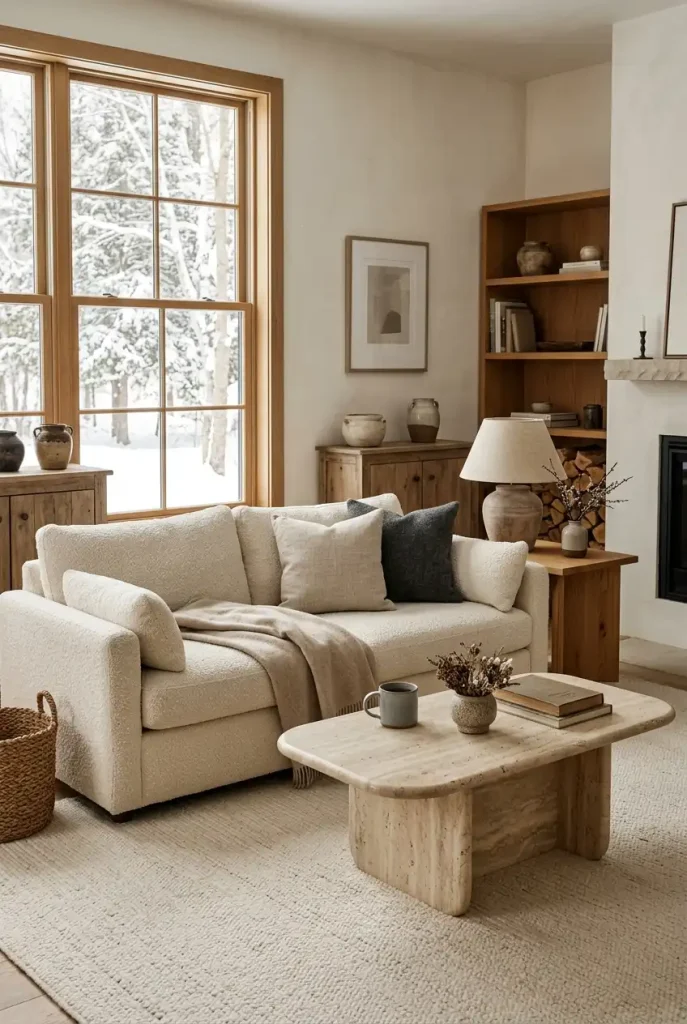
Natural stone adds a grounded, substantial quality to winter interiors. Travertine, marble, and stoneware bring subtle variations in color and surface that contrast beautifully with soft upholstery and knitted fabrics.
A stone coffee table can become the centerpiece of a more refined living room, especially when paired with a simple sofa and warm wood accents. If you prefer a smaller commitment, use a stone tray, a sculptural bowl, or a pair of stoneware accessories instead.
The balance between hard and soft materials matters more than the quantity of stone in the room. A single substantial surface surrounded by comfortable textiles often feels more inviting than multiple competing statement pieces.
When choosing a table, consider its weight, floor protection, and the room’s circulation space.
Decorate With Candles and Reflective Glass

Glass candleholders and simple reflective accessories can introduce a gentle glow to the living room during long winter evenings. Their transparent surfaces add visual interest without making a small room feel crowded.
Arrange a few glass vessels on a sideboard or coffee table, mixing different heights while keeping the overall grouping restrained. Brass or dark metal details can provide contrast, and a clear vase with seasonal branches can connect the display to the natural world.
For households with children or pets, choose stable holders and place them well out of reach. Battery-operated candles are a practical alternative when an open flame isn’t suitable. Follow the manufacturer’s instructions for any candle or lighting product.
Give the Sofa a Fresh Seasonal Arrangement

Sometimes the most effective winter refresh is to restyle the sofa you already own. Changing the arrangement of cushions, introducing a new color, and adding a textured blanket can make familiar furniture feel different without replacing it.
Start with two larger cushions at the back, then layer smaller pillows toward the front. Mix materials such as linen, velvet, wool, and boucle, but keep the colors connected. For a neutral sofa, a combination of cream, forest green, and muted rust creates seasonal depth.
Avoid using so many cushions that nobody can sit comfortably. The sofa should still work for everyday lounging, not just look attractive in a photograph.
Quick Tip: Store lightweight summer cushion covers until spring and rotate them back when the season changes.
Add a Warm Wood Feature Wall

A wood feature wall can make a living room feel more architectural and visually grounded. Natural oak slats, wood paneling, or a carefully designed timber accent can create a backdrop for the sofa while adding warmth to a relatively simple interior.
This is a more involved change than switching textiles, so consider the room’s proportions before committing. A feature wall behind the main seating area can work well, while covering every wall in a small room may feel overwhelming.
For a lower-commitment version, introduce the same material through a large wooden artwork frame, a substantial console, or a row of floating shelves. Renters should choose nonpermanent alternatives that suit their lease and wall surfaces.
Keep furniture in front of a wood feature wall relatively simple so the material remains the focal point.
Create a Relaxed Scandinavian Winter Living Room

Scandinavian-inspired decorating brings together simple forms, natural materials, practical furniture, and a restrained palette. For winter, this approach creates a comfortable room without relying on excessive accessories or seasonal decorations.
Begin with a foundation of cream, pale gray, and natural wood. Add a wool rug, a knitted blanket, a simple ceramic vase, and one or two plants suited to the room’s light conditions. Keep furniture functional and leave enough empty space around the main seating arrangement.
Warm lighting is particularly important in the evening. A paper or fabric shade, a floor lamp, and a small table lamp can make the room feel inviting while maintaining its uncluttered appearance.
This style works in both apartments and larger homes because it emphasizes proportion and thoughtful use of space rather than room size.
The finishing touch: Choose a few objects you genuinely enjoy using or displaying instead of filling every surface simply because it’s winter.
How to Choose the Right Winter Living Room Style
With so many winter living room decorating ideas to choose from, start by deciding how you want the room to feel. A light and airy interior benefits from ivory textiles, soft blue accents, and reflective surfaces. A more traditional space may suit burgundy cushions, plaid patterns, rustic wood, and a decorated fireplace mantel.
Your available space and budget also matter. Use this quick comparison to narrow your choices.
| Decorating goal | Ideas to start with |
|---|---|
| An affordable seasonal update | Chunky throws, cushion covers, coffee table styling |
| A brighter, lighter room | Large mirrors, cream textiles, soft blue accents |
| A warm, rustic atmosphere | Natural wood, woven baskets, layered rugs |
| A refined modern interior | Natural stone, charcoal accents, warm wood |
| A small apartment refresh | Compact furniture, layered lighting, simple greenery |
| A calm minimalist look | Scandinavian styling, sculptural branches, neutral textiles |
You don’t need to implement all 25 ideas. Choose two or three that complement your existing furniture and repeat their colors or materials in different parts of the room. This creates a connected design without making the space feel overdecorated.
Winter Living Room Decorating Mistakes to Avoid
- Using only one type of lighting: Combine general lighting with table lamps, floor lamps, or suitable accent lighting.
- Overloading the sofa: Leave enough seating space for comfortable everyday use.
- Mixing too many unrelated colors: Start with a main neutral palette and introduce a few coordinated seasonal accents.
- Ignoring room proportions: Choose rugs, tables, and accessories that suit the dimensions of your living room.
- Decorating every surface: Allow some empty space so the most important details remain noticeable.
- Sacrificing safety for atmosphere: Keep candles and combustible decorations away from heat sources, maintain clear walkways, and secure heavy mirrors and wall decor appropriately.
Make Your Living Room Ready for Winter
A seasonal refresh doesn’t have to involve buying a new sofa or redesigning the entire room. Start with the changes you’ll notice every day: softer textiles, better evening lighting, a warmer color accent, or a more inviting seating arrangement. Then add a few personal details that make the space feel like yours.
The best winter living room is one that looks welcoming but still works for reading, relaxing, entertaining, and everyday family life. Whether you prefer rustic wood, elegant stone, Scandinavian simplicity, or rich seasonal colors, a thoughtful combination of textures and lighting can make your home feel comfortable throughout the colder months.