25 Apartment Decor Ideas That Make Any Space Feel Like Home
The best apartment decor ideas do more than make a room look attractive. They help a space feel comfortable, personal, and practical, whether you live in a compact studio, a city apartment, or a spacious rental. Thoughtful furniture placement, layered lighting, inviting textiles, and meaningful accessories can make even a plain apartment feel like home without requiring a major renovation.
The key is to work with the space you have. A carefully chosen rug can define an open-plan living area, a mirror can reflect natural light, and a few well-placed shelves can provide both storage and personality. From affordable weekend updates to more refined design choices, these 25 ideas offer inspiration for creating an apartment that reflects your taste and supports your everyday routine.
Create a Cozy Neutral Living Room

A neutral living room creates a calm foundation that works with many apartment styles. Combine an ivory sofa, warm beige curtains, a textured cream rug, and natural wood furniture for a space that feels welcoming rather than plain. Introduce contrast through dark picture frames, a charcoal cushion, or a small terracotta accent.
To keep the room from looking flat, mix materials instead of relying on a single shade. Bouclé, linen, cotton, woven baskets, and wood grain bring depth without overwhelming the palette.
Styling tips:
- Choose a rug large enough to anchor the main seating area.
- Repeat two or three colors throughout the room.
- Add a throw blanket and cushions in different textures.
- Leave enough open floor space for comfortable movement.
Define an Open-Plan Space With Area Rugs
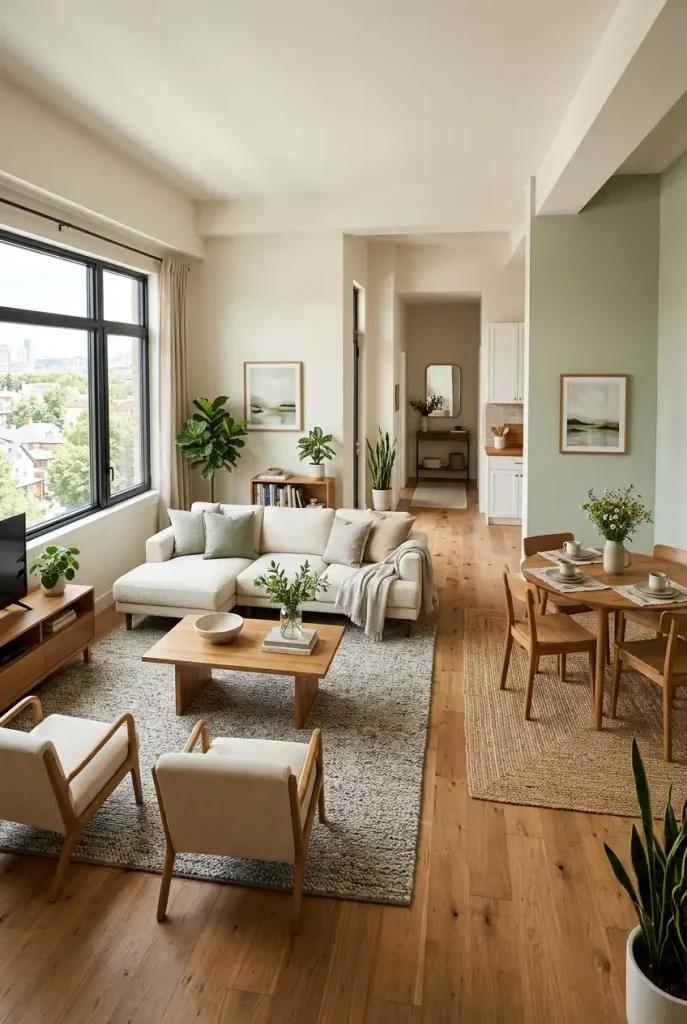
In an open-plan apartment, the living room and dining area can blend together without a clear sense of purpose. Area rugs help establish separate zones while keeping the overall layout visually connected.
Place one rug beneath the sofa and coffee table, then use another beneath the dining table if space allows. The rugs don’t have to match exactly. Similar undertones, complementary patterns, or a shared accent color will help them work together.
Quick tip: Measure the furniture arrangement before buying a rug. A rug that is too small can make a seating area feel disconnected, while one that is appropriately scaled helps the room feel intentional.
Layer Warm Lighting for an Inviting Atmosphere

Overhead lighting alone can make an apartment feel stark, particularly in the evening. Layering several light sources gives you more control over the atmosphere and makes different areas more useful.
Combine a ceiling fixture with a table lamp near the sofa, a floor lamp beside a reading chair, or a small lamp on a console. Warm-white bulbs can create a softer residential atmosphere, while adjustable lamps let you direct light where you need it.
For a practical lighting plan, consider:
- Ambient light: General illumination for the room.
- Task light: A reading lamp or focused light for working.
- Accent light: Gentle illumination that highlights artwork or a decorative feature.
Add a Large Mirror to Reflect Natural Light

A mirror can make a room feel brighter by reflecting daylight and existing interior light. A large arched mirror leaning against a wall adds a decorative focal point, while a round mirror above a console softens the straight lines of the furniture.
Position the mirror so it reflects something attractive, such as a window, a plant, or a carefully styled section of the room. Avoid placing it where it simply reflects clutter or an awkward corner.
Renters should check the mirror’s stability and follow the manufacturer’s instructions for securing heavy pieces. A mirror can be a decorative investment that moves with you from one apartment to the next.
Decorate Blank Walls With a Personal Gallery

Blank walls can make an apartment feel unfinished, but decorating them doesn’t require expensive original artwork. A gallery wall made from personal photographs, abstract prints, botanical illustrations, and simple line drawings gives the room character.
For a coordinated arrangement, choose a common thread such as black frames, warm wood, muted colors, or a consistent print style. Lay the frames out on the floor first to test their spacing before hanging anything.
In a rental, removable picture-hanging solutions may work for lighter frames when used within their weight limits and according to the product instructions. Always check your lease and protect the wall surface.
Common mistake: Buying frames one at a time without planning the arrangement. A quick layout plan makes it easier to balance different sizes.
Bring Life Into the Room With Indoor Plants

Plants add organic shapes, natural color, and a sense of life to apartment interiors. A tall floor plant can fill an empty corner, while smaller pots look attractive on shelves, windowsills, and side tables.
You don’t need to cover every surface in greenery. Start with one statement plant and two smaller plants, then arrange them at different heights. Terracotta, ceramic, and woven planters can help connect the greenery with the room’s existing materials.
Choose plants according to the light available in your apartment, and consider mature size, watering needs, and household pets before buying. A plant that suits the actual conditions is more useful than one selected solely for its appearance.
Make a Small Dining Area Feel Special

A dining area doesn’t need a separate room to feel thoughtful. A round table, two comfortable chairs, and a well-chosen pendant can turn an unused corner into a pleasant place for everyday meals.
Round tables are particularly useful where people need to move around the furniture, although the table diameter should still suit the available floor space. If a dining nook doubles as a work area, choose chairs that remain comfortable for longer periods and a tabletop that is easy to maintain.
Finish the arrangement with a small vase, a linen runner, or a bowl of seasonal fruit. Keep decorative objects low enough that they don’t interfere with conversation.
Use Curtains to Soften the Windows

Curtains soften hard architectural lines, add texture, and help a room feel more finished. Hanging a curtain rod somewhat higher than the window frame can draw the eye upward, provided the ceiling height and window placement allow it.
Light-filtering linen-look curtains work well in many neutral interiors, while lined panels may be more suitable when privacy or light control is important. Choose a length that suits the room and allows the panels to hang neatly without becoming a tripping hazard.
Before drilling, check your rental agreement and any building restrictions. A tension rod or another suitable no-drill option may work for some windows, depending on the frame and curtain weight.
Make the Bed the Bedroom’s Main Focal Point

A well-styled bed can make an entire bedroom feel more inviting. Start with simple bedding in white, cream, or muted beige, then add a quilt or coverlet, a few pillows, and a throw in a contrasting texture.
The aim is a comfortable bed rather than a display that takes too long to maintain. Two sleeping pillows per person and a small number of decorative cushions may be enough, depending on your preferences and bed size.
A compact bedside table, a warm lamp, and a framed print complete the arrangement. In a small apartment bedroom, keep the furniture proportionate so that the bed remains the focal point without obstructing movement.
Choose Furniture That Does More Than One Job

Multifunctional furniture makes a small apartment easier to live in. A storage ottoman can serve as a footrest, an extra seat, and a place to store blankets. A nesting table set can expand when guests visit and tuck away when it isn’t needed.
Other useful options include a bed with drawers, an extendable dining table, and a console that doubles as a desk. The best choice depends on which problem you want to solve rather than how many functions a piece claims to offer.
Look for sturdy construction, accessible storage, and dimensions that work with your layout. Furniture that is difficult to open or move may not be practical for daily use.
Style Open Shelves With Books and Meaningful Objects

Open shelves offer a way to display the things that make an apartment feel personal. Books, framed photographs, small ceramics, travel keepsakes, and plants create a layered look without requiring a large collection of decorative objects.
Instead of filling every shelf, leave some breathing room. Arrange a few books vertically, stack others horizontally, and place one sculptural object beside a small frame. Repeating a few colors throughout the display helps different belongings feel connected.
For a small apartment, a tall, narrow bookcase may use less floor space than a wide cabinet. Secure tall furniture appropriately, especially in homes with children or pets.
Quick tip: Mix useful items with decorative ones so the shelves feel personal rather than like a showroom.
Add Color With Cushions and Throws
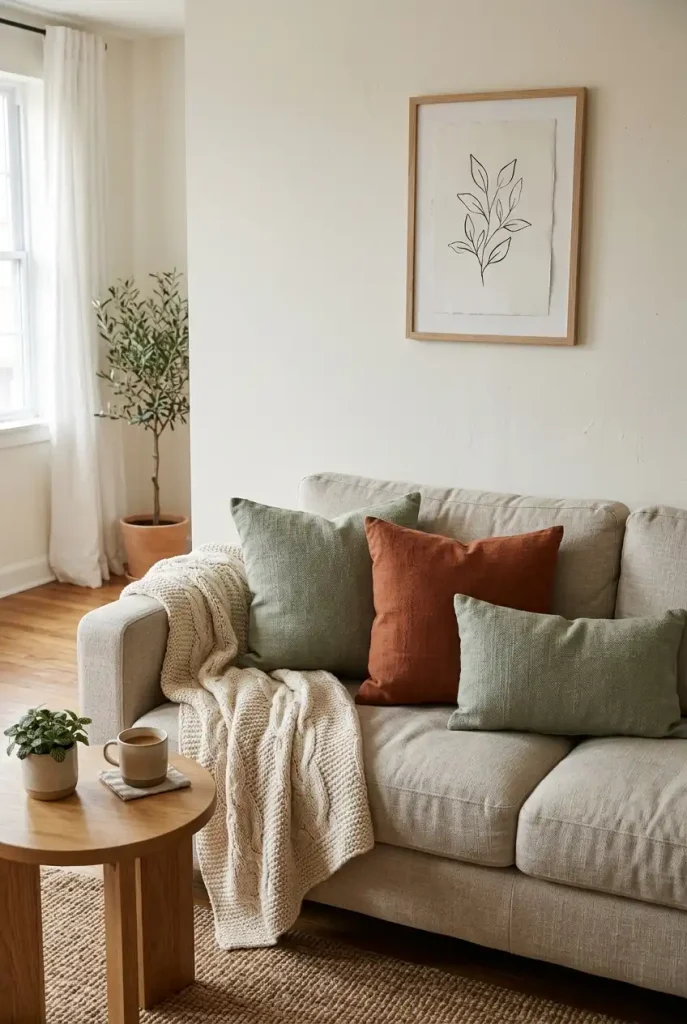
Soft furnishings are among the simplest ways to introduce personality without committing to a permanent color scheme. A neutral sofa can look completely different with sage-green cushions, a rust-colored throw, or a combination of cream and muted blue.
Choose one main accent color and one supporting shade to keep the arrangement cohesive. Vary the textures through linen, cotton, woven fabric, or knitted wool, rather than relying on many competing patterns.
This approach is especially useful for renters because cushion covers and throws can be changed seasonally or taken to a new home. Before purchasing, check cushion sizes and care labels so the pieces remain practical for everyday use.
Create a Functional Entryway
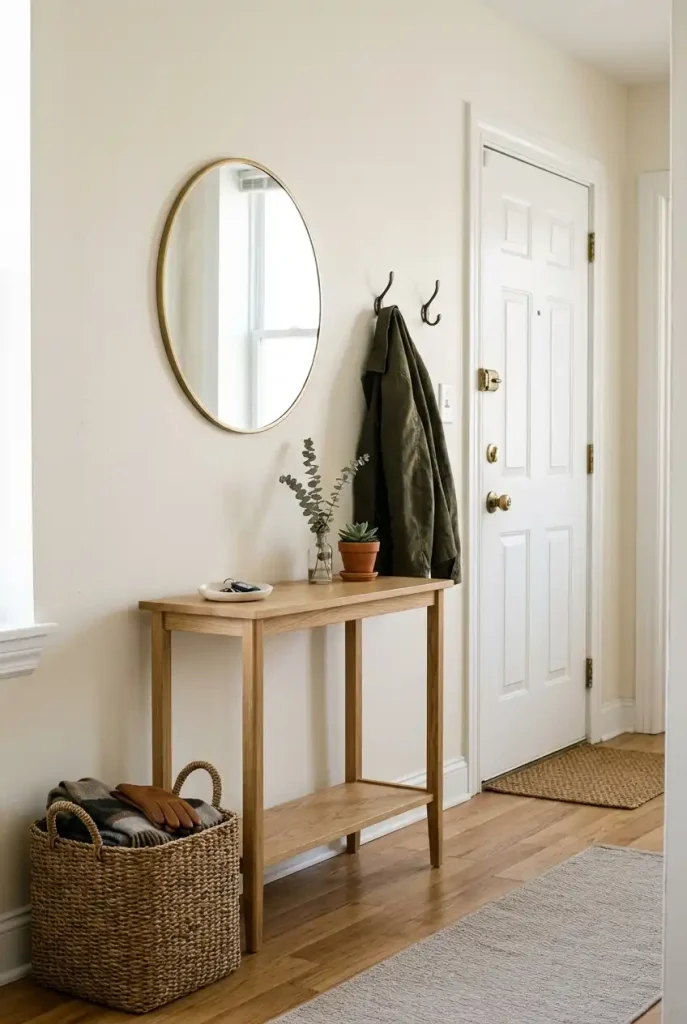
Even a narrow strip of wall near the front door can become a useful entryway. A shallow console, a mirror, and a tray for keys create a designated place for everyday essentials. If floor space is limited, wall hooks and a small floating shelf may be more practical.
Think about what you actually need when arriving home. A basket can hold shoes or accessories, while a small dish keeps keys from disappearing into a bag or drawer. If the apartment has no entry closet, a compact coat rack can provide additional storage.
Keep the walkway clear and avoid placing furniture where the door cannot open comfortably.
Do / Don’t
- Do: Choose shallow furniture and practical storage.
- Don’t: Overfill the entrance with baskets, stools, and decorative accessories that restrict movement.
Introduce Warm Wood for Natural Texture

Wood adds warmth to apartments with white walls, gray flooring, or contemporary finishes. An oak coffee table, walnut sideboard, wooden dining chairs, or a simple picture frame can make a room feel more grounded.
You don’t need every wooden item to match exactly. A mixture of compatible wood tones can look collected and natural, especially when the shapes and finishes are balanced. Try repeating one wood tone in two or three places to create visual continuity.
For an affordable update, consider replacing a small accent table or adding a wooden tray rather than purchasing an entirely new furniture set.
Use Removable Wallpaper for a Rental-Friendly Accent
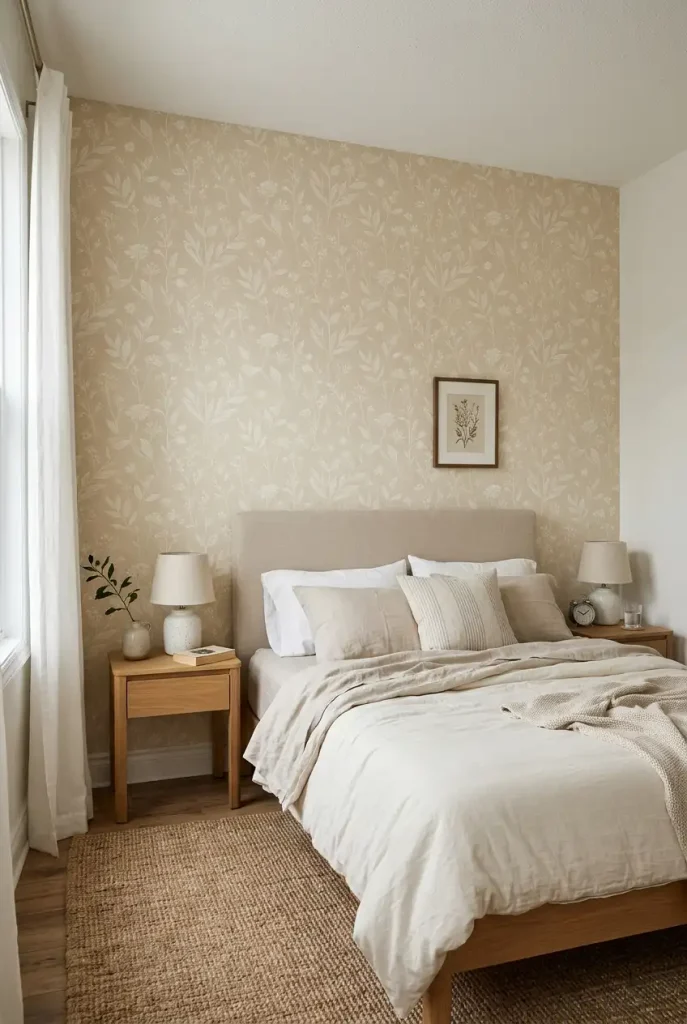
Removable wallpaper can introduce pattern without the commitment of traditional wallpaper, making it worth considering for some rental homes. A subtle botanical print, small geometric design, or textured-looking pattern can create a focal wall behind a bed or dining nook.
Choose a pattern that complements the room’s existing furniture rather than competing with several bold accessories. In a compact apartment, a restrained design often feels easier to live with than an oversized, high-contrast print.
Before installation, review the lease and test a sample according to the manufacturer’s instructions. Removable wallpaper is not suitable for every paint finish or wall surface, and removal can still cause damage under certain conditions.
Turn an Unused Corner Into a Reading Nook

An empty corner can become one of the most inviting spots in an apartment with just a few carefully chosen pieces. Start with a comfortable chair, add a small side table for a book or drink, and position a floor lamp nearby for evening reading.
A small rug can visually separate the nook from the rest of the room. If the corner is beside a window, consider the available daylight and avoid blocking access to the window or heating equipment.
You don’t need a dedicated library or a large footprint. The goal is to create a comfortable destination within the home, even if it occupies only a few square feet.
Make a Small Kitchen Feel More Organized
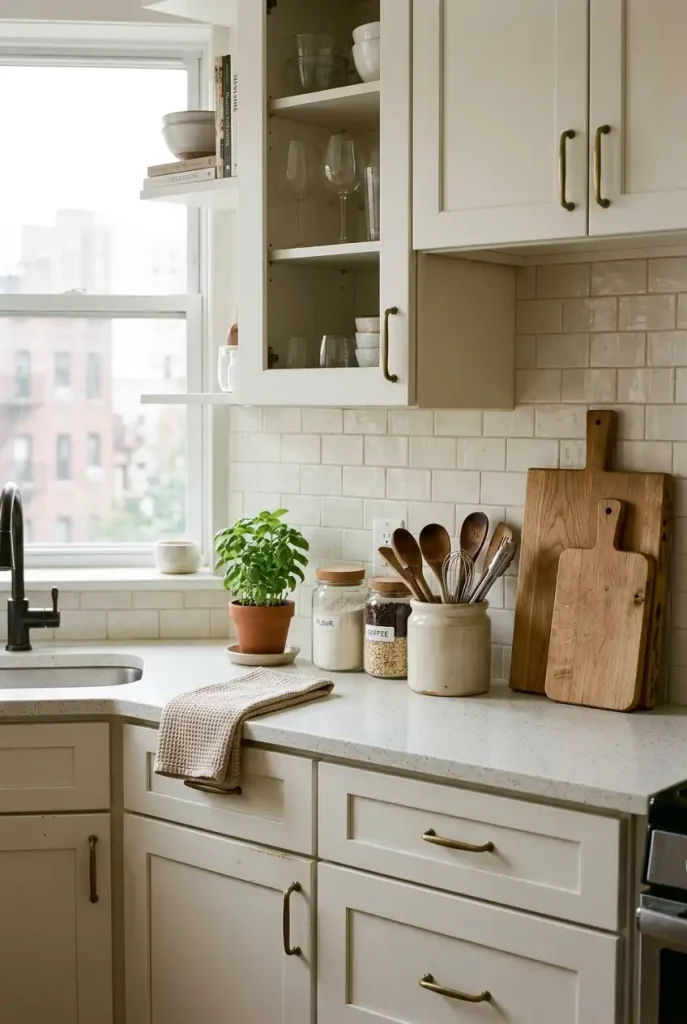
Apartment kitchens often have limited counter space, so decorating works best when it supports daily use. Keep frequently used essentials accessible, group small items on a tray, and store occasional appliances elsewhere if you have suitable cabinet space.
A few coordinated pieces can make the kitchen feel more considered: wooden cutting boards leaned securely against the backsplash, a ceramic utensil holder, attractive food-storage jars, and a small herb plant where conditions allow.
Try to leave a clear area for food preparation. An organized counter should make cooking easier rather than simply move clutter into decorative containers.
Useful arrangement:
- Keep cooking utensils close to the stove where practical.
- Group oils or frequently used seasonings on an easy-to-clean tray.
- Store less-used appliances in cabinets.
- Choose containers that fit the available shelf and counter dimensions.
Give the Bathroom a Simple Spa-Inspired Feel
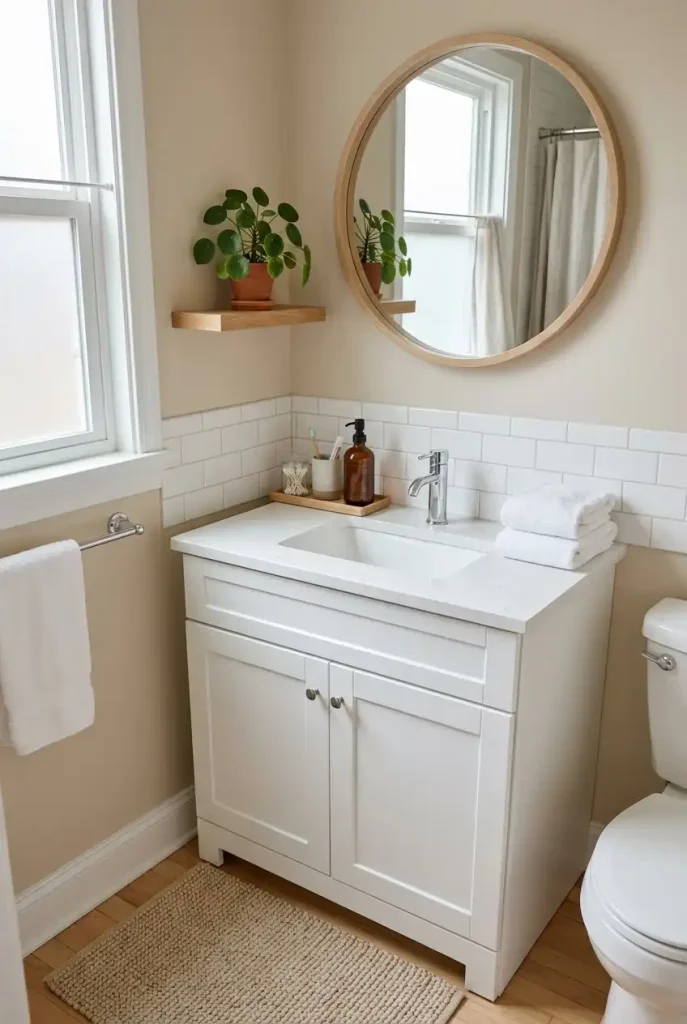
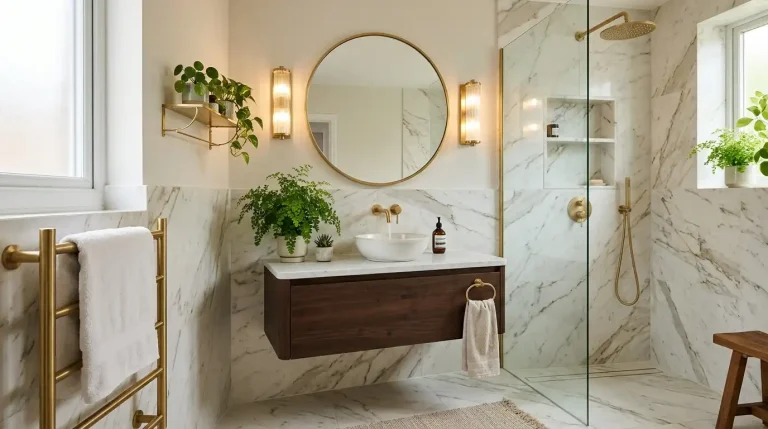
A bathroom can feel calmer with coordinated accessories and a few natural textures. Fresh-looking towels, a simple soap dispenser, a small tray, and a neutral bath mat create a more intentional appearance without requiring new tile or fixtures.
Wood, stone-look ceramics, and soft cotton work well together, but choose materials suitable for the room’s moisture levels. Keep items that can be damaged by water away from wet surfaces, and avoid crowding the sink or shower with decorative pieces.
If you rent, smaller changes such as swapping a shower curtain or adding removable accessories may provide enough visual improvement without permanent alterations.
Add a Statement Pendant or Ceiling Light

A well-proportioned ceiling light can become a focal point and help establish the apartment’s design style. A woven pendant brings natural texture, a linen shade creates a softer appearance, and a sculptural fixture can give a simple dining area more character.
Scale matters. A fixture that is too large can overwhelm a small room, while one that is too small may feel disconnected from the furniture beneath it. Consider ceiling height, table dimensions, and how the light will spread across the room.
In a rental, check whether the existing fixture can be changed under your lease and building rules. Electrical work should be handled by a qualified professional when required.
Personalize the Apartment With Meaningful Art and Keepsakes
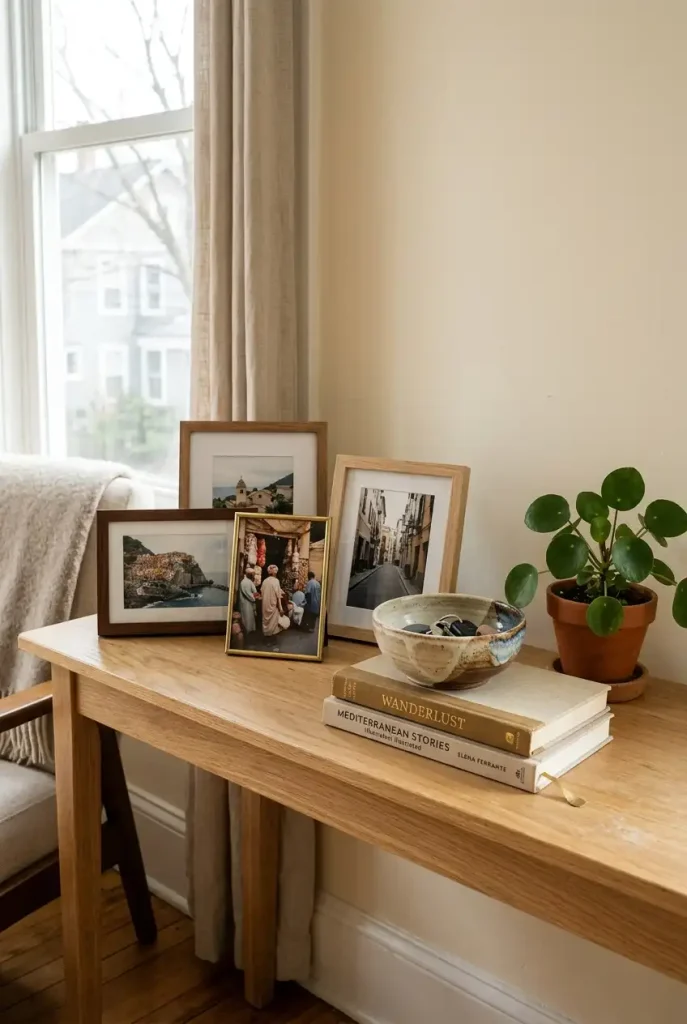
A home feels more personal when it reflects the people who live there. Display a favorite travel photograph, a handmade ceramic bowl, a few well-loved books, or a small collection of objects connected to meaningful memories.
The trick is to edit the collection rather than display everything at once. Group a few objects on a console or shelf, vary their heights, and leave some open space around them. This gives each piece room to stand out.
Personal decor doesn’t need to be expensive or perfectly coordinated. An inherited object can sit comfortably beside a modern vase when the arrangement has a balanced shape and color palette.
Use Vertical Storage to Free Up Floor Space

When an apartment has limited square footage, unused wall height can provide valuable storage. Tall bookcases, wall-mounted shelves, and narrow cabinets create room for books, baskets, office supplies, and decorative objects without spreading everything across the floor.
In a home office, shelves above a compact desk can keep frequently used items within reach. In a living room, a vertical cabinet may provide more storage than several small pieces of furniture.
Keep heavier items on lower shelves and secure tall units according to the manufacturer’s instructions. Avoid placing shelves where they interfere with doors, windows, or comfortable movement.
Common mistake: Filling every available shelf. Use baskets to conceal small items and leave some open space to keep the arrangement visually calm.
Make a Work-From-Home Area Feel Intentional

A work area doesn’t have to occupy a separate room. A small desk beside a window, a comfortable chair, and a task lamp can establish a useful workspace within a bedroom or living room.
Choose furniture that suits the available space and the amount of time you spend working. If the desk is in a shared living area, a drawer unit or closed storage box can help put work materials away at the end of the day.
A framed print, a small plant, or a coordinated desk organizer makes the corner feel like part of the apartment rather than an improvised workstation. Prioritize a comfortable setup and adequate task lighting over decorative accessories.
Use a Folding or Extendable Dining Table
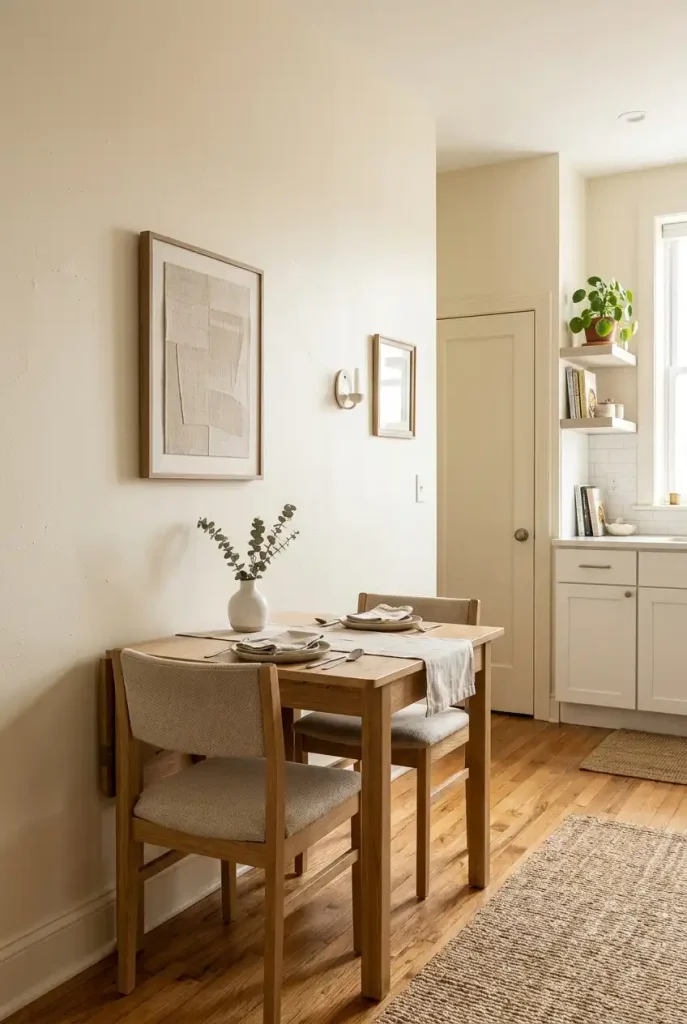
A fixed dining table can consume valuable space in a small studio or one-bedroom apartment. A folding table or extendable design offers flexibility when your needs change throughout the day.
Keep the table compact for everyday meals and expand it when friends visit. Some designs can sit against a wall or double as a work surface, while a drop-leaf table can provide additional space without requiring a permanently large footprint.
Before choosing a model, measure the table in both its compact and extended positions. Include the space needed to pull out chairs and walk around them. A clever table is only useful if people can move comfortably when it’s in use.
Introduce a Subtle Accent Wall With Paint
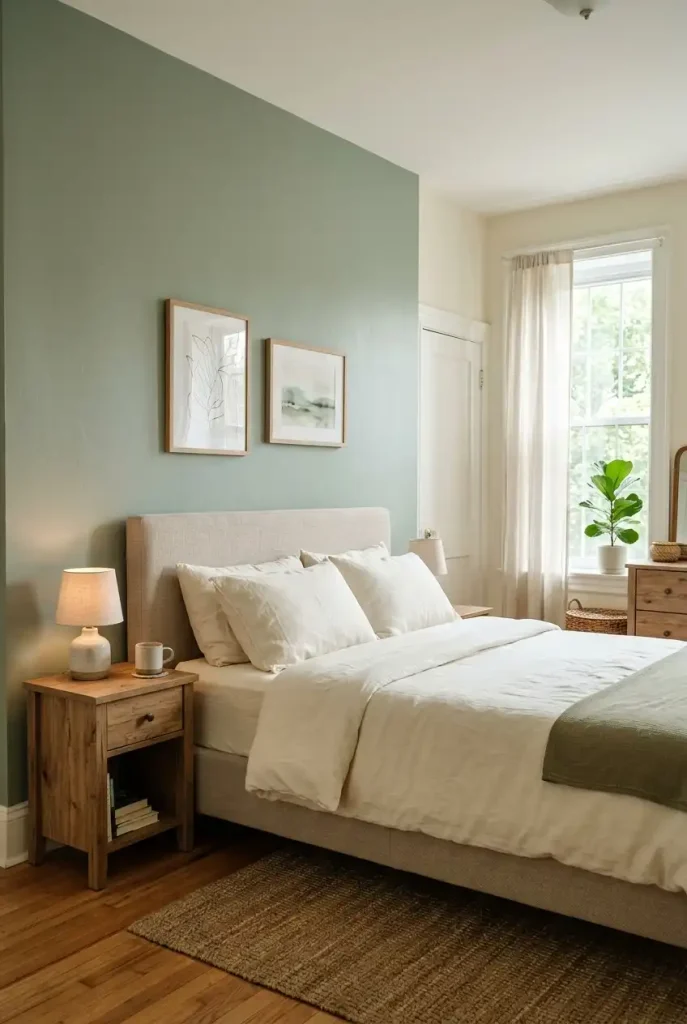
Paint can change the atmosphere of an apartment more dramatically than adding another accessory. A muted sage wall brings a natural note to a bedroom, while warm taupe or soft clay can create a cozy backdrop for a living room.
An accent wall is one option when you want color without painting every surface. Choose a wall that already has a clear purpose, such as the wall behind a bed or sofa, and coordinate the color with the flooring, upholstery, and available natural light.
Test a few paint samples in the room before committing. Colors can look different throughout the day and under warm artificial lighting. Renters should obtain any required permission before painting.
Finish With a Scented Candle and a Simple Styling Tray

Small finishing touches can bring an apartment together without adding much clutter. A decorative tray on a coffee table or sideboard creates a defined place for a candle, a small vase, and a couple of books. Grouping these objects makes the surface feel intentional while leaving room for everyday use.
Choose a tray that fits the furniture and doesn’t dominate the surface. Combine different heights and materials, such as a low ceramic bowl, a glass candle holder, and a small vase with seasonal flowers.
If you use a real candle, keep it away from curtains and other combustible materials, never leave it unattended, and follow its safety instructions. An attractive flameless candle can provide a similar decorative effect when an open flame isn’t suitable.
How to Choose the Right Apartment Decor Ideas for Your Space
Not every decorating idea needs to happen at once. The most useful changes depend on your layout, budget, rental restrictions, and daily routine.
| Your priority | Ideas to start with |
|---|---|
| Make a small apartment feel larger | 2, 4, 10, 21 |
| Create a cozy atmosphere | 1, 3, 9, 12 |
| Personalize a rental | 5, 11, 15, 20 |
| Improve storage and organization | 10, 13, 17, 21 |
| Create a more functional home | 7, 16, 22, 23 |
| Add color and character | 6, 12, 14, 24 |
A Simple Plan for Decorating an Apartment
If you’re unsure where to begin, use this practical sequence:
- Identify the main problem. Decide whether the room needs better lighting, more storage, a clearer layout, or a stronger sense of personality.
- Work with existing furniture. Rearrange what you already own before investing in new pieces.
- Establish a color palette. Choose a few complementary shades and repeat them across the rooms.
- Add useful layers. Introduce textiles, lamps, wall art, plants, and practical storage where they serve a purpose.
- Finish gradually. Live with the arrangement before buying additional accessories.
A consistent approach usually produces a more cohesive result than purchasing many unrelated decorations at once.