
17 Modern Small Apartment Ideas You’ll Want to Copy
A small apartment can feel stylish, comfortable, and surprisingly spacious when every design choice has a purpose. The secret isn’t filling the room with trendy furniture or sticking to an all-white color scheme. It’s choosing pieces that fit the space, using vertical areas wisely, layering lighting, and creating a layout that makes everyday living easier.
These modern small apartment ideas offer inspiration for studio apartments, compact rentals, and smaller city homes across the United States. You’ll find clever storage solutions, furniture arrangements that open up the floor plan, contemporary color palettes, and decorative details that make a home feel personal rather than crowded.
Whether you’re decorating your first apartment or refreshing a space you’ve lived in for years, these ideas can help you create a home that looks pulled together without sacrificing comfort or functionality.
Choose a Neutral Color Palette With Warm Accents
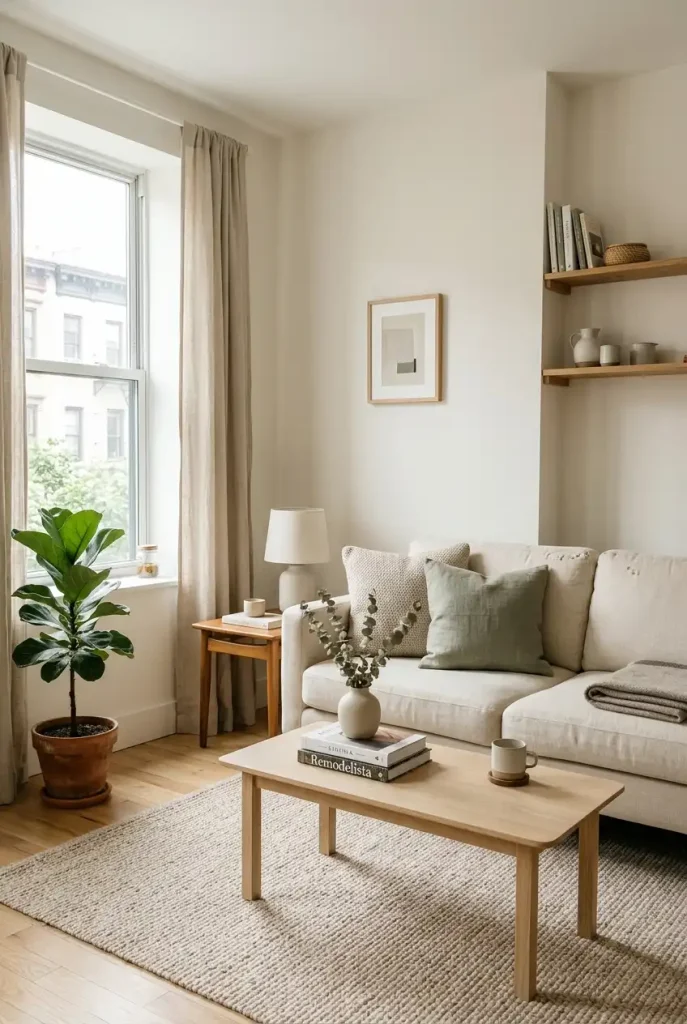
A warm neutral palette gives a small apartment a calm, connected appearance. Instead of relying on stark white everywhere, combine creamy walls, oatmeal-colored upholstery, pale wood, and a few muted accent colors. These tones create depth without making the room feel visually busy.
Use a consistent palette throughout the living room, bedroom, and dining area, especially in a studio or open-plan apartment. Repeating two or three colors helps separate functional areas while maintaining a cohesive look.
How to recreate it:
- Choose warm white, soft beige, or light greige as your main color.
- Introduce light oak or ash wood through furniture and shelving.
- Add sage green, dusty blue, or terracotta through cushions and artwork.
- Use contrasting textures, such as linen, wool, and woven materials, to keep the palette interesting.
If you’re renting, start with bedding, curtains, rugs, and removable accessories rather than repainting. You can achieve a coordinated look without making permanent changes.
Use Multifunctional Furniture to Save Space
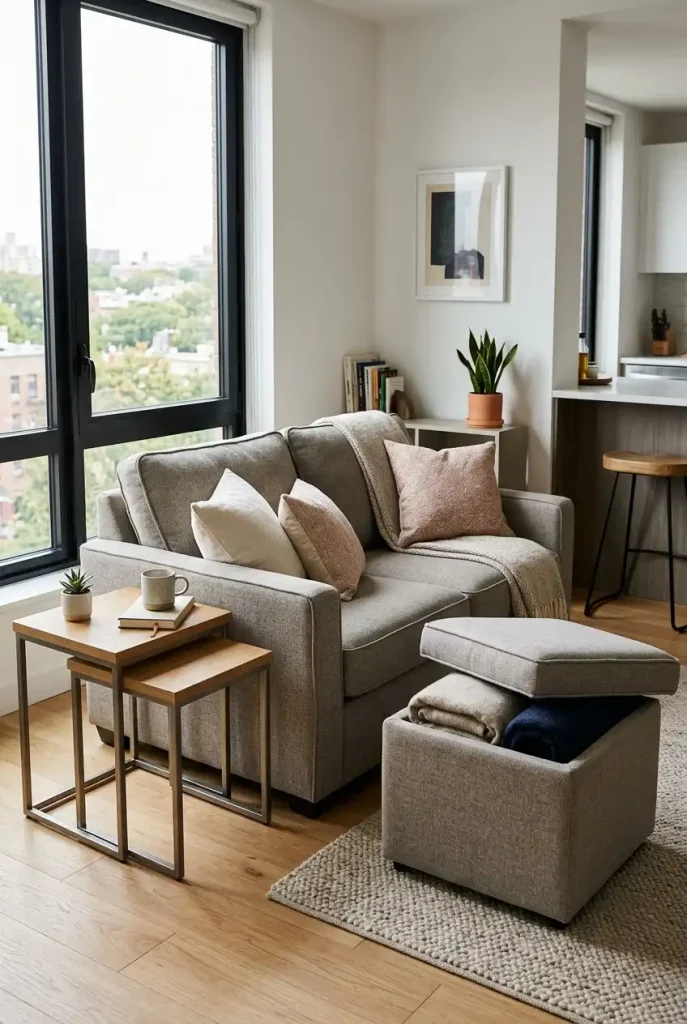
When a small apartment needs to function as a living room, workspace, and occasional guest room, multifunctional furniture can make a noticeable difference. Each piece should serve a clear purpose, ideally more than one.
A storage ottoman can act as a footrest, extra seat, and place to hide blankets. Nesting tables provide surfaces when guests visit but tuck away when you need more floor space. A sleeper sofa can accommodate overnight visitors without requiring a dedicated guest room.
Before purchasing anything, measure the room and consider how the furniture will be used daily. A convertible piece is only helpful if it is comfortable and easy to operate.
Smart furniture choices include:
- Storage benches for extra linens and accessories.
- Extendable dining tables for occasional entertaining.
- Nesting side tables instead of several permanent tables.
- Sofa beds for studio apartments with limited sleeping space.
Quick Tip: Check the fully opened dimensions of convertible furniture, not just its footprint when folded away.
Make the Most of Vertical Wall Space

In a compact apartment, the walls offer valuable storage and display space. Tall bookcases, vertical shelving, and narrow wall-mounted cabinets can provide storage without spreading furniture across the floor.
A floor-to-ceiling shelving unit draws the eye upward and creates room for books, baskets, framed photographs, and a few decorative objects. Keep frequently used items on accessible shelves and reserve the highest levels for lighter or less frequently needed belongings.
The key is balance. Filling every shelf with small objects can make a room feel cluttered, so alternate books with open space and group accessories in small collections.
For renters, freestanding bookcases or shelving systems that can be installed without permanent modifications may be preferable. Always secure tall furniture according to the manufacturer’s instructions, using suitable anti-tip measures where appropriate.
Create the Illusion of More Space With Mirrors

Mirrors are a useful decorating tool because they reflect light and provide another view of the room. A well-positioned mirror can make a narrow entryway feel less enclosed or brighten a living area by reflecting a window.
Try a large round mirror above a slim console table, a full-length mirror beside the bedroom wardrobe, or a tall rectangular mirror on a wall perpendicular to a window. Choose a frame that complements the furniture rather than competing with it.
Placement matters more than quantity. Several small mirrors scattered across one wall can create visual noise, while one generously sized mirror often creates a cleaner focal point.
Before hanging a mirror, check what it will reflect. A view of a window, attractive artwork, or an uncluttered part of the room is generally more appealing than a pile of everyday belongings.
Define Your Living Room With a Well-Sized Rug

An area rug can visually anchor a seating arrangement and distinguish the living room from a dining or work area without adding a physical divider. This is especially useful in studio apartments, where one open room may need to accommodate several activities.
Choose a rug that relates to the size of your furniture. Ideally, the front legs of the sofa and accompanying chairs sit on the rug, creating one connected seating zone. A rug that’s too small can make the furniture appear disconnected.
Neutral rugs with subtle patterns work well in many modern interiors, but a geometric design can introduce personality without requiring more accessories. Consider a low-pile or flat-weave option if chairs need to move easily or you want simpler everyday maintenance.
Design tip: Use the rug to establish the living room’s color palette, then repeat one or two of its colors in cushions or artwork.
Turn a Small Corner Into a Functional Home Office

A dedicated workspace doesn’t have to occupy an entire room. A quiet corner near a window, an unused section of hallway, or a small wall beside the living area may be enough for a comfortable home office.
Start with a narrow desk that provides sufficient working depth for your laptop or monitor. Add a chair that fits underneath when not in use, and use wall shelves for notebooks, supplies, and other essentials. A desk lamp helps when natural light isn’t sufficient.
To make the office feel intentional rather than temporary, repeat a material or color from the rest of the apartment. A wood desk with black metal details, for example, can complement contemporary living room furniture.
Keep cables organized and avoid storing unrelated household items on the desk. A visually quiet workspace is easier to use and helps the apartment maintain a sense of order.
Choose a Sofa With a Slim, Raised Profile
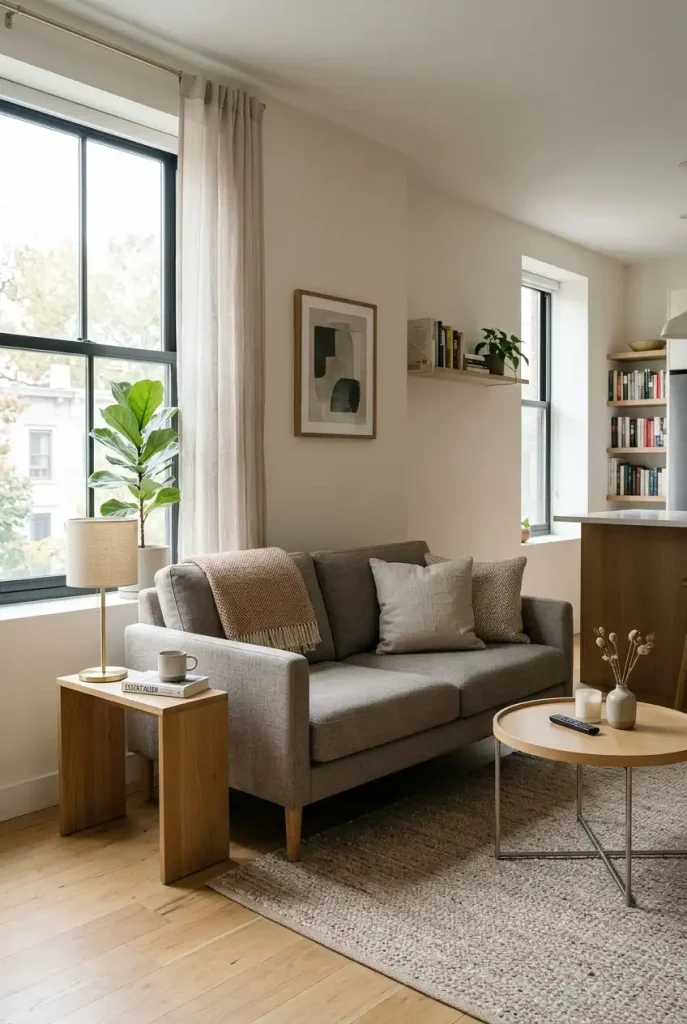
A sofa can occupy a large portion of a small apartment’s visual space. Choosing a streamlined design with narrow arms and raised legs can help the room feel less heavy, particularly when the floor remains visible beneath the furniture.
Look for a two-seat or compact three-seat sofa with proportions suited to your room. A low, bulky model with oversized arms may offer generous lounging space but leave less room for side tables and walking paths.
Color also influences the overall effect. Cream, warm gray, muted olive, and soft taupe can blend easily with a neutral interior, while a darker sofa creates a stronger focal point. Either approach can work if the rest of the room feels balanced.
Before ordering, measure the doorway, hallways, and stairwell as well as the intended sofa location. A sofa that fits the floor plan may still be difficult to get into the apartment.
Use a Drop-Leaf Dining Table
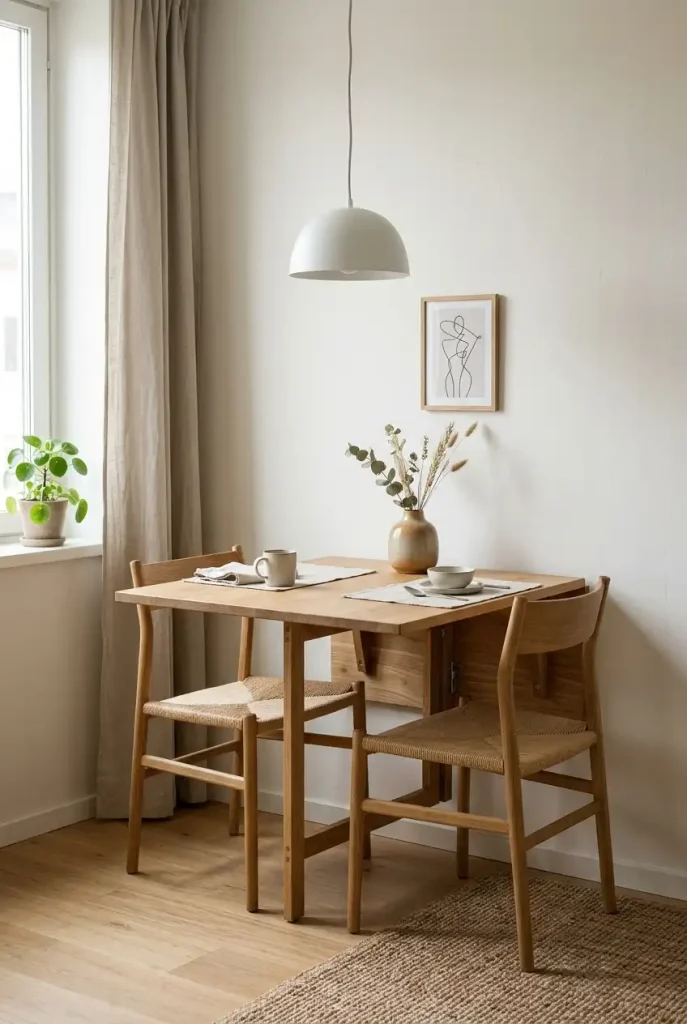
A traditional dining table can take up valuable floor space even when nobody is using it. A drop-leaf table offers a practical alternative because its sides can fold down when you need more room to walk or work.
Place the table against a wall or in a small dining nook, with two chairs that slide neatly underneath. When guests visit, raise one or both leaves to create a larger surface for meals, coffee, or board games.
A round or oval design can soften a compact dining area, while a rectangular table may fit better against a straight wall. Consider how the table opens and how much clearance the chairs need before settling on a style.
For everyday flexibility, pair the table with stackable or lightweight chairs. You can also use a small pendant light above the dining area to establish a visual destination within an open-plan room.
Separate a Studio Apartment With Open Shelving
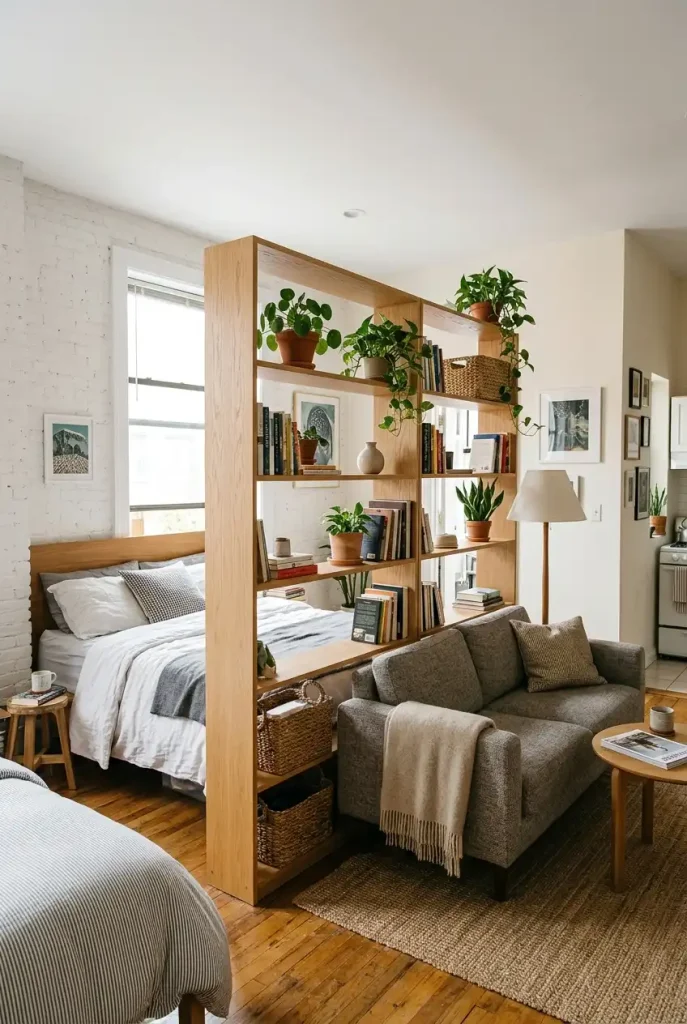
Open shelving can help divide a studio apartment into sleeping and living zones without blocking all the light. Unlike a solid wall, an open-backed unit allows you to see through the structure, maintaining a greater sense of openness.
Position the shelving between the bed and sofa, ensuring that it doesn’t obstruct a window, entrance, or essential walking route. Use a unit designed to stand securely in its intended position; tall shelving may require anchoring according to its manufacturer’s guidance.
Keep the arrangement visually light. A few books, woven baskets, and selected decorative objects are enough. Leaving some compartments open preserves sightlines and prevents the divider from looking like a solid block.
Do / Don’t
- Do: Keep frequently accessed storage at a comfortable height.
- Do: Coordinate the shelf finish with the surrounding furniture.
- Don’t: Overfill every compartment or create a dark barrier across the room.
This approach works particularly well when you want the bedroom to feel more private without losing the flexibility of an open studio layout.
Install Floating Nightstands in a Small Bedroom

Traditional bedside tables can make a small bedroom feel crowded, especially when the bed sits close to the walls. Floating nightstands provide a useful surface for a phone, book, or bedside lamp while leaving the floor underneath clear.
Choose a compact design with enough depth for the items you use regularly. A small drawer is particularly useful for keeping personal belongings out of sight. If you prefer a minimalist appearance, a simple oak shelf with a rounded edge can be enough.
Wall-mounted lighting can complement floating nightstands by eliminating the need for a table lamp. Plug-in sconces are worth considering in rentals, provided the cords can be routed safely and neatly.
Before installing anything, confirm the wall construction, mounting requirements, and permission to make holes if you’re renting. A freestanding narrow bedside table is a practical alternative when drilling isn’t allowed.
Make Window Treatments Feel Taller
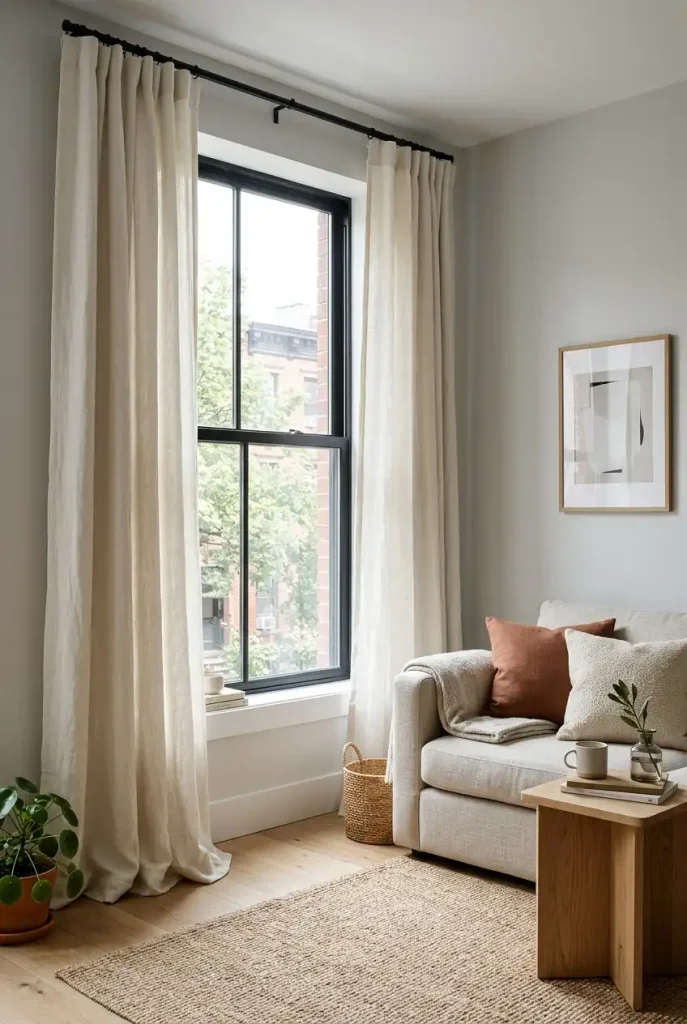
Window treatments can change how the proportions of a small apartment feel. Hanging curtains higher than the top of the window frame, where the architecture allows, draws attention upward and creates a longer vertical line.
Choose curtains that reach close to the floor for a clean, finished appearance. Linen-look fabric and other softly textured materials can filter daylight while adding warmth to a contemporary room.
A light neutral shade is an easy choice when you want the windows to blend into the background. If you prefer more color, muted green, blue-gray, or a subtle stripe can introduce character without overwhelming the room.
Measure carefully before buying. Curtain length, rod placement, and panel width all affect the final result. If privacy is important, consider a layered arrangement with a translucent panel and a separate room-darkening option where appropriate.
Quick Tip: Avoid letting long curtains pool heavily on the floor in a compact room; a neat hemline is easier to maintain.
Layer Lighting Instead of Relying on One Ceiling Fixture

One bright overhead fixture can leave a small apartment feeling flat, particularly in the evening. Layered lighting creates a more comfortable atmosphere and helps different areas serve different purposes.
Combine general room lighting with task lighting for reading or working and softer accent lighting near artwork, shelves, or a seating area. You don’t need a large number of fixtures; two or three thoughtfully placed sources can make a meaningful difference.
A slim floor lamp beside the sofa, a table lamp on a console, and a focused desk lamp can provide distinct pools of light. Choose compatible color temperatures to avoid a room that feels disjointed, and use dimmable bulbs or fixtures when practical.
For rentals, plug-in lamps are an easy way to add flexibility without electrical work. Always follow fixture instructions and keep lamps, cords, and bulbs clear of fabrics and other combustible materials.
Add a Fold-Down Desk for Flexible Living

If your apartment needs a work surface but doesn’t have room for a permanent desk, a fold-down wall desk can make the most of an otherwise unused wall. When closed, it takes up relatively little space; when open, it provides a place to work, study, or manage household paperwork.
Choose a model with sufficient depth for your intended tasks. Some designs include small shelves or compartments, while others are simple folding panels. Check the weight limits and installation requirements carefully, especially if you plan to use a monitor or store heavier equipment.
Place the desk where you can sit comfortably without blocking a doorway or narrow walkway. A lightweight chair that can be tucked away helps keep the area flexible.
For renters who cannot drill into walls, a compact folding table may provide similar functionality without permanent installation.
Use a Storage Bed to Keep the Bedroom Clutter-Free
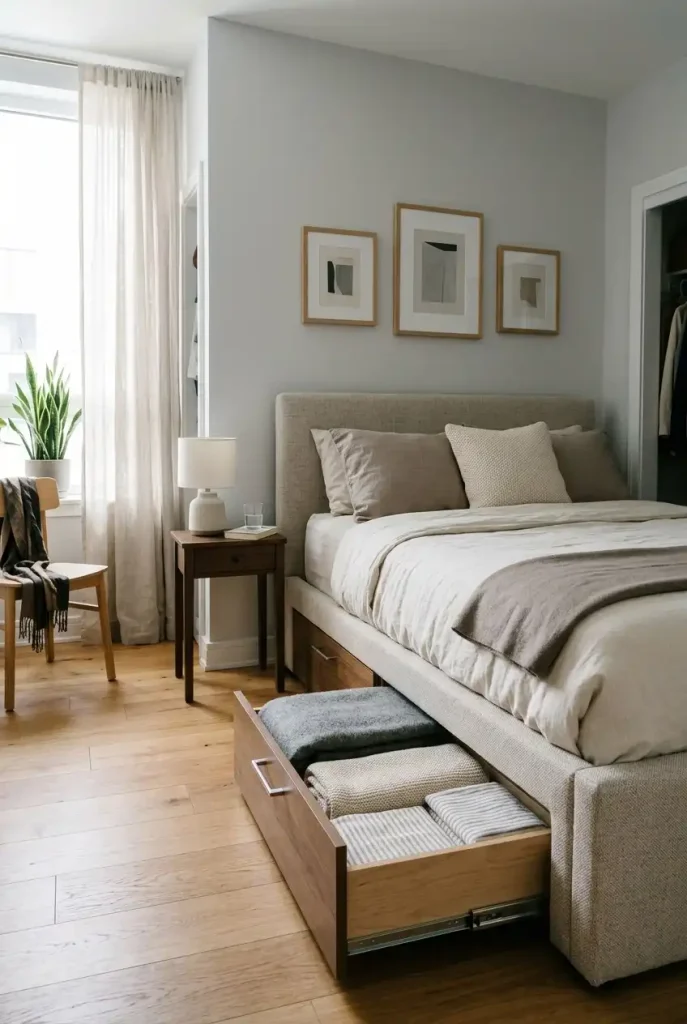
The space beneath a bed is valuable, especially in an apartment without a dedicated linen closet. A storage bed makes use of that area for spare bedding, seasonal clothing, extra pillows, or luggage.
There are two common options: beds with built-in drawers and lift-up storage beds. Drawers are convenient for items you access regularly, but they need clearance along the sides. Lift-up models can provide access to a larger storage compartment, although the mattress and lifting mechanism should be comfortable to operate.
Choose a design that complements your bedroom rather than making the bed feel oversized. A simple upholstered frame or streamlined wood design can work well with neutral bedding and compact bedside furniture.
Best storage uses:
- Extra sheets and blankets
- Out-of-season clothing
- Spare towels
- Soft bags and travel accessories
Use fabric organizers or labeled containers inside the storage compartment to keep belongings easy to find. Avoid storing damp items or anything that requires ventilation in a sealed space.
Bring Nature Indoors With a Few Well-Placed Plants

Plants add color, texture, and organic shapes to a modern apartment. They can soften straight furniture lines and bring a sense of life to a neutral room without requiring a major decorating project.
Rather than placing lots of small pots on every surface, try grouping two or three plants at different heights. A medium-sized floor plant can fill an empty corner, while a smaller plant on a shelf adds interest at eye level. A windowsill can accommodate compact varieties when the available light suits their needs.
Choose plants according to your apartment’s actual conditions. A bright south-facing window offers a different environment from a shaded corner, and not every plant will thrive in both. Consider mature size, watering needs, and whether the species is safe around pets if relevant.
Use planters in complementary materials, such as terracotta, ceramic, or woven baskets with suitable waterproof liners. Repeating a small selection of finishes keeps the arrangement looking intentional.
Add Personality With One Statement Artwork
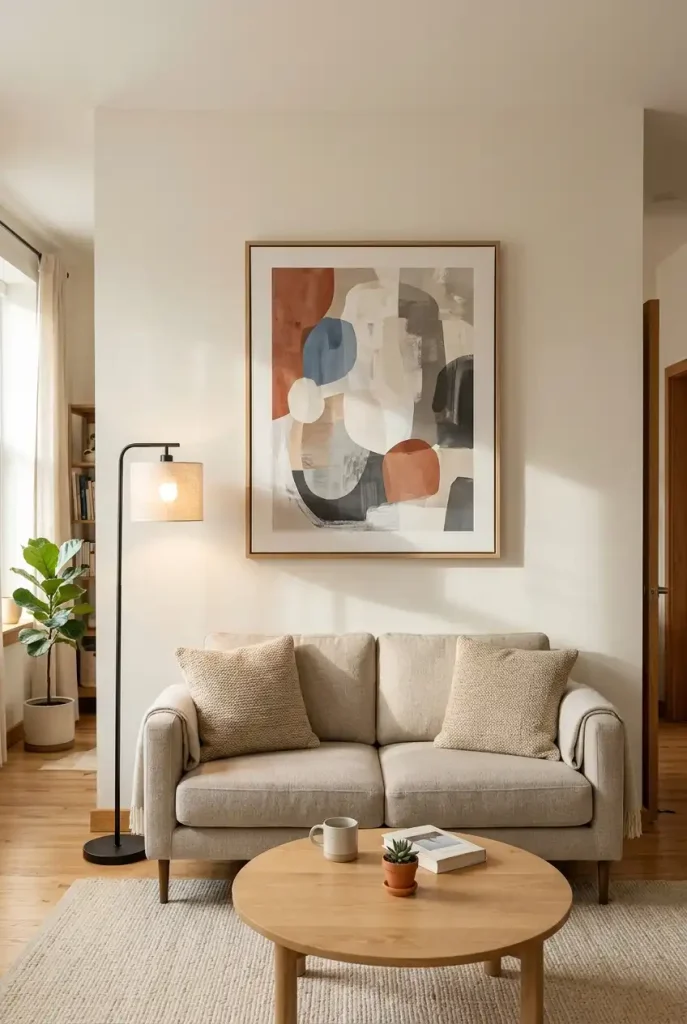
Decorating a small apartment doesn’t mean avoiding bold choices. In fact, one substantial piece of artwork can create a stronger focal point than many small frames and accessories scattered throughout the room.
Hang a large abstract print, a colorful landscape, or a framed photograph above the sofa or dining table. Choose artwork that relates to the room’s existing colors while introducing something distinctive, such as rust, deep blue, olive, or soft pink.
Scale matters. A piece that’s too small can appear disconnected from the furniture below it, while an oversized work may dominate a narrow wall. Measure the available area and consider the width of the sofa or console before choosing a frame.
If original artwork is outside your budget, look for affordable prints, secondhand frames, or your own photographs. The aim is to select something meaningful that gives the apartment character.
Editor’s Note: Leave some surrounding wall space visible. A statement piece needs room to stand out rather than compete with a crowded gallery of accessories.
Create a Cohesive Look With Matching Finishes

One of the easiest ways to make a small apartment look more thoughtfully designed is to repeat a few materials and finishes throughout the home. When the living room, dining area, and bedroom share visual details, the entire apartment feels connected.
For example, pale oak furniture can appear in the coffee table, dining chairs, and bedside table. Black metal accents can repeat in lighting, curtain rods, and picture frames. Cream textiles and a consistent wall color help bridge the different rooms.
This doesn’t mean every piece must match. Too much coordination can make a home feel like a furniture showroom. Instead, establish two or three recurring finishes and let individual objects provide variety through shape, texture, and color.
Try this simple approach:
- Choose a dominant wood tone or furniture finish.
- Select one metal accent, such as black, brass, or brushed nickel.
- Repeat a small palette of textiles across the main rooms.
- Add a few personal objects that don’t match perfectly but complement the overall scheme.
The result is a modern apartment that feels unified without looking overly staged.
How to Make These Small Apartment Ideas Work Together
You don’t need to implement all 17 ideas at once. Start with the changes that address your biggest daily frustrations, then add decorative details once the layout is working.
- If the apartment feels crowded: Measure your furniture, remove unnecessary pieces, and prioritize multifunctional designs.
- If storage is limited: Look upward with tall shelving and make use of under-bed or hidden storage.
- If the space feels dark: Experiment with mirrors, light-colored window treatments, and layered lighting.
- If a studio feels disorganized: Use rugs, furniture placement, and open shelving to establish separate functional zones.
- If the apartment feels plain: Introduce plants, statement artwork, and a consistent palette of materials and finishes.
For renters, focus first on changes that can move with you, such as lamps, textiles, freestanding shelves, and flexible furniture. Before making permanent alterations, check your lease and any applicable building rules.
The best modern small apartment design balances appearance with everyday comfort. A beautiful room is more useful when you can move through it easily, find what you need, and relax without feeling surrounded by clutter.