17 Easy Apartment Decorating Ideas You Can Try Without Making Permanent Changes
Decorating an apartment can be challenging when you’re renting and can’t make permanent changes to the walls, floors, or fixtures. You might want a more personal living room, a cozy bedroom, or a kitchen that feels thoughtfully styled without risking your security deposit. Fortunately, creating a beautiful rental doesn’t require a renovation or expensive upgrades. The right apartment decorating ideas can make an ordinary space feel warm, comfortable, and full of personality while keeping everything temporary. From removable wallpaper and stylish lighting to layered rugs, decorative mirrors, and clever storage, small changes can make a noticeable difference. These 17 ideas focus on practical ways to personalize your apartment using furniture, accessories, textiles, and renter-friendly solutions that can move with you when it’s time for a new home.
Create an Accent Wall With Removable Wallpaper
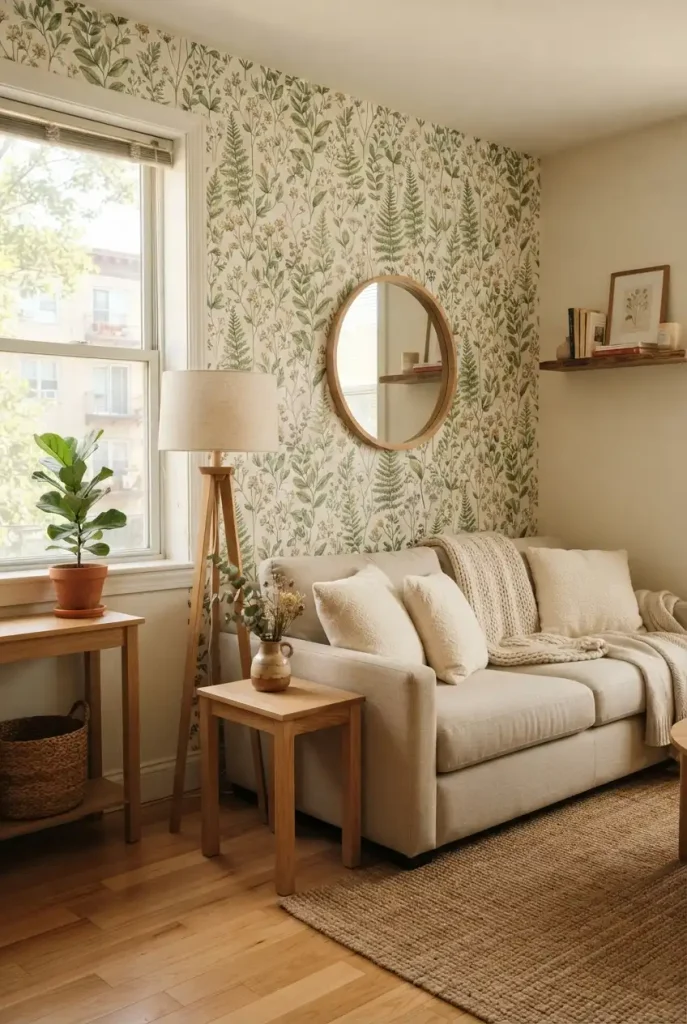
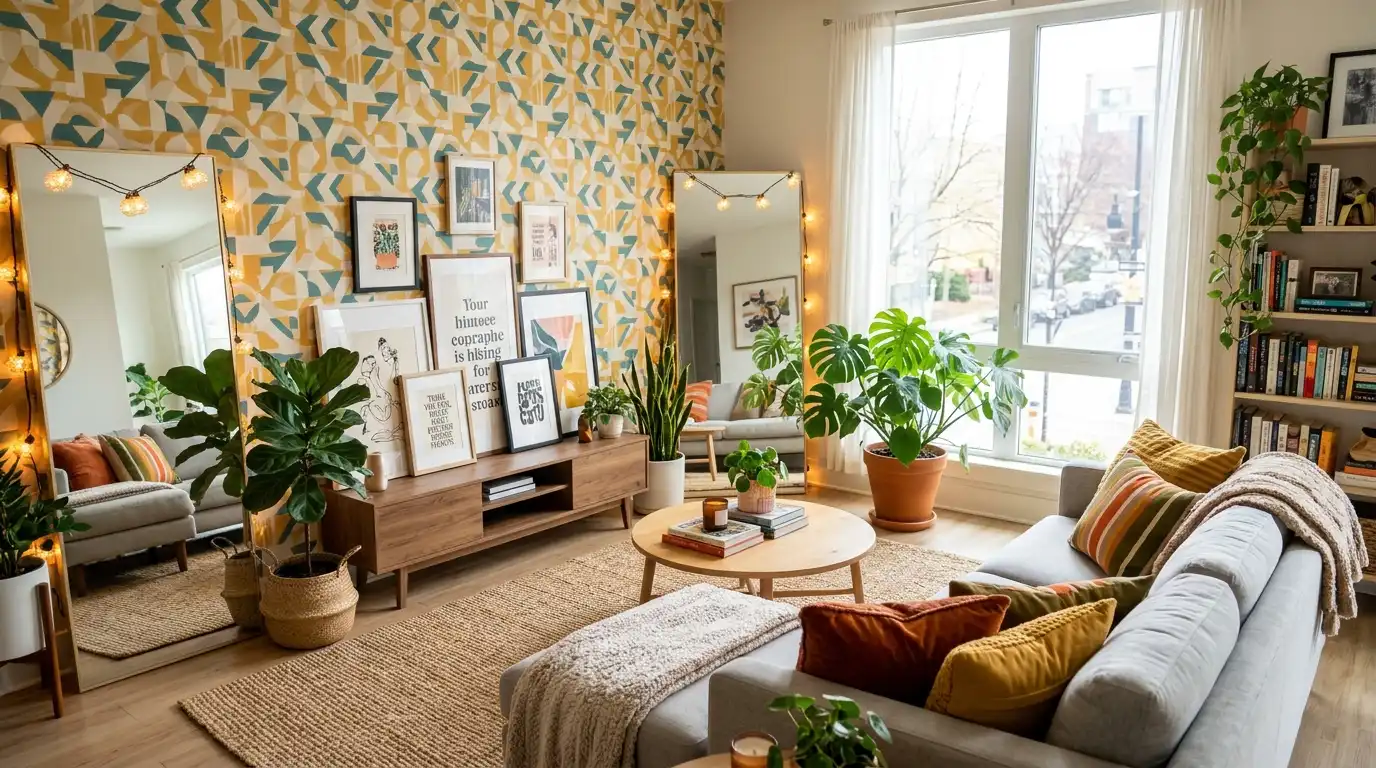
An accent wall can give an apartment a completely different atmosphere without requiring paint or permanent renovations. Removable wallpaper is a useful option because it introduces color, pattern, and texture while allowing you to change the look later. Choose a botanical print, subtle geometric pattern, delicate stripes, or a soft linen-inspired design that complements your furniture.
For a living room, consider applying it behind the sofa or around a small reading corner. In a bedroom, the wall behind the headboard can become a natural focal point. Keep the remaining walls relatively simple so the pattern doesn’t overwhelm the room.
Tips for getting the look right:
- Choose patterns that complement existing furniture.
- Measure the wall carefully before purchasing wallpaper.
- Look for products specifically described as removable.
- Test a small section in an inconspicuous area first.
- Follow the manufacturer’s removal instructions.
Important: Removable wallpaper isn’t guaranteed to be damage-free on every surface. Check your lease and test compatibility with the wall finish before applying it.
Layer Area Rugs to Add Warmth and Personality
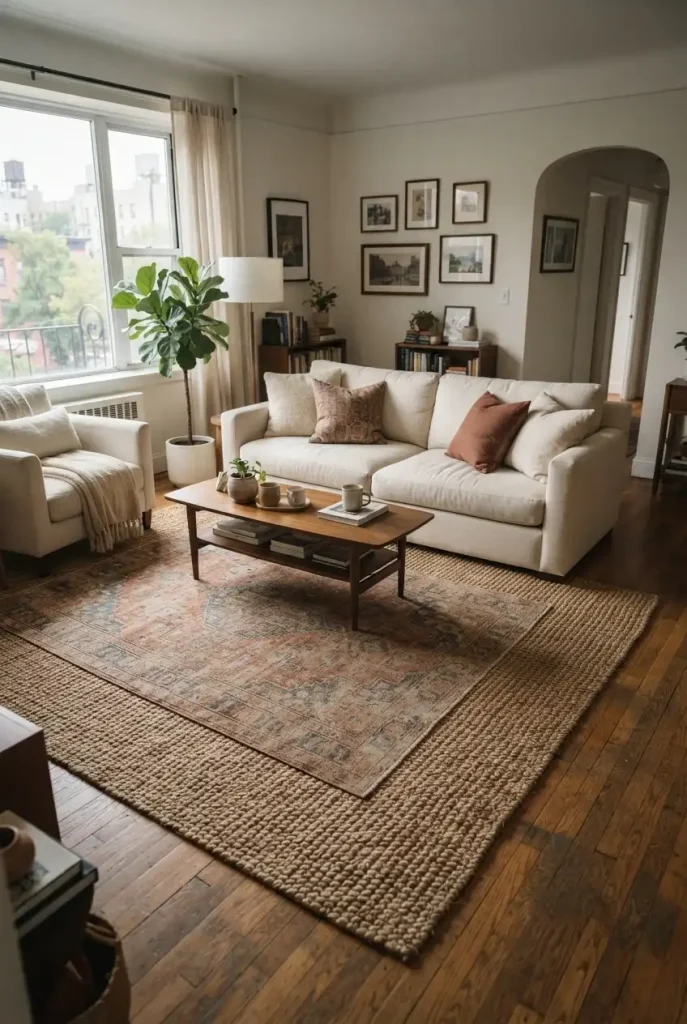
Apartment flooring doesn’t always match your decorating preferences. You might have plain carpet, dated laminate, or hardwood that feels a little cold. Area rugs offer a simple way to change the appearance of your floor without replacing anything.
Layering rugs creates additional texture and makes a living space feel more thoughtfully decorated. Start with a larger natural jute or neutral rug, then place a smaller patterned rug over it. A vintage-inspired design can introduce muted terracotta, faded blue, or warm brown without making the room feel too busy.
For smaller apartments, choose rugs that help define separate areas. A rug beneath the sofa and coffee table can visually establish the living room, even when it shares an open layout with the dining area.
A useful combination:
- Large neutral jute rug as the foundation.
- Smaller vintage-style rug for color.
- Soft cushions that repeat one or two rug colors.
- A coffee table with natural wood finishes.
Make sure the rug edges sit flat and use suitable rug pads to reduce slipping, checking compatibility with your flooring.
Hang Curtains With Renter-Friendly Hardware
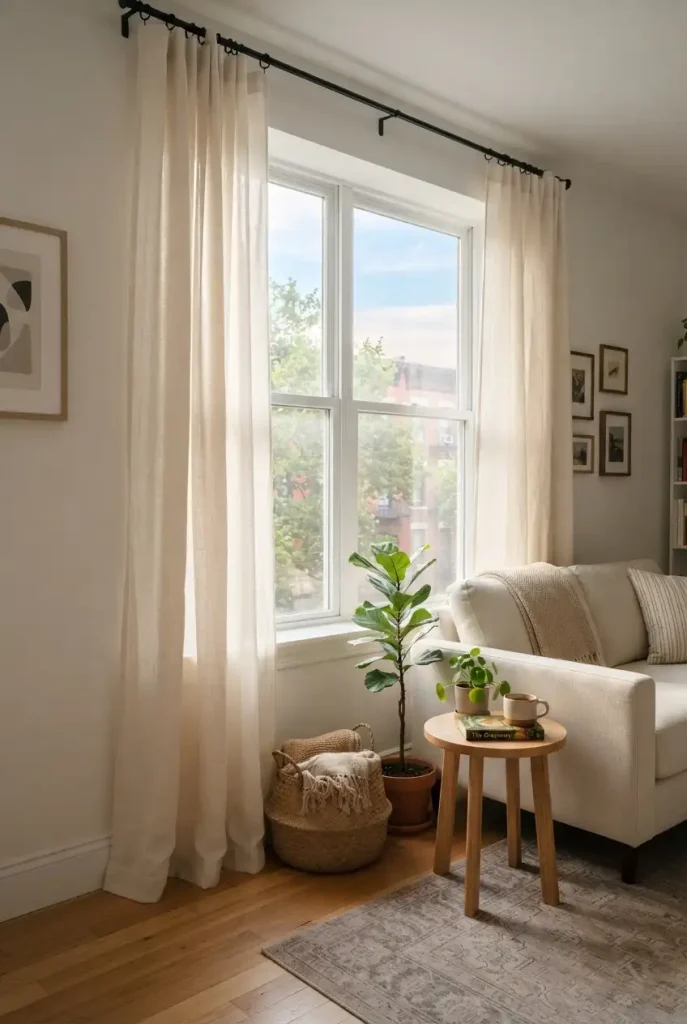
Window treatments can make a rental feel more finished, especially when the existing blinds are plain or unattractive. Full-length curtains add softness, create visual height, and help connect the different colors in your room.
If drilling into the walls isn’t permitted, consider a properly sized tension rod or another removable mounting system suitable for the window and curtain weight. Some windows and window frames won’t accommodate every option, so measure before buying.
Choose lightweight linen-look curtains for an airy appearance or heavier lined panels if you want more privacy and light control. Hanging curtains close to the ceiling, where the mounting arrangement allows, can make a room appear taller.
Styling suggestions:
- Ivory curtains work well with warm neutral interiors.
- Soft sage adds a subtle natural color.
- Light taupe creates a relaxed, understated appearance.
- Floor-length panels give windows a more complete look.
Avoid covering radiators or blocking windows that need to remain accessible.
Decorate Empty Walls With Removable Picture Arrangements
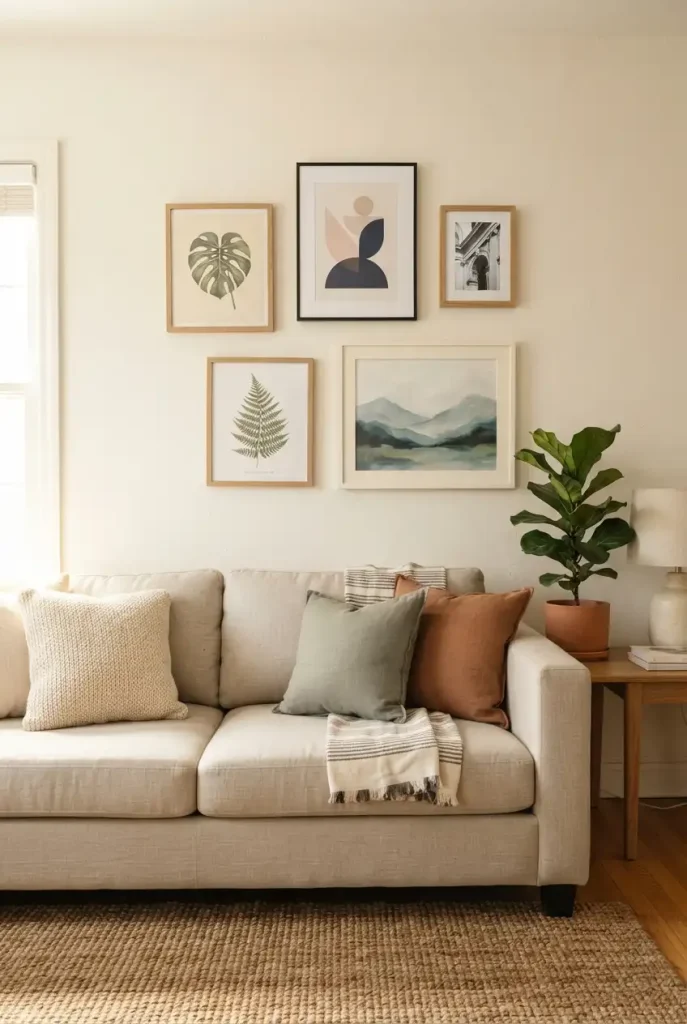
Bare walls can make even a nicely furnished apartment feel unfinished. Artwork is one of the easiest ways to introduce personality without changing the structure of the room.
Create a gallery wall using framed botanical prints, abstract artwork, photography, or personal illustrations. Instead of automatically using nails, explore removable picture-hanging strips or hooks that are approved for your particular wall surface and frame weight.
A coordinated arrangement doesn’t need identical frames. Mixing light oak, matte black, and natural wood frames can create a collected appearance while keeping the overall display balanced.
Before attaching anything, arrange the frames on the floor. This allows you to experiment with spacing and proportions without repeatedly repositioning adhesive products.
Quick Tip: Choose artwork with two or three colors already present in your sofa, rug, or cushions to create a connected look.
Use Floor Lamps Instead of Permanent Lighting Changes
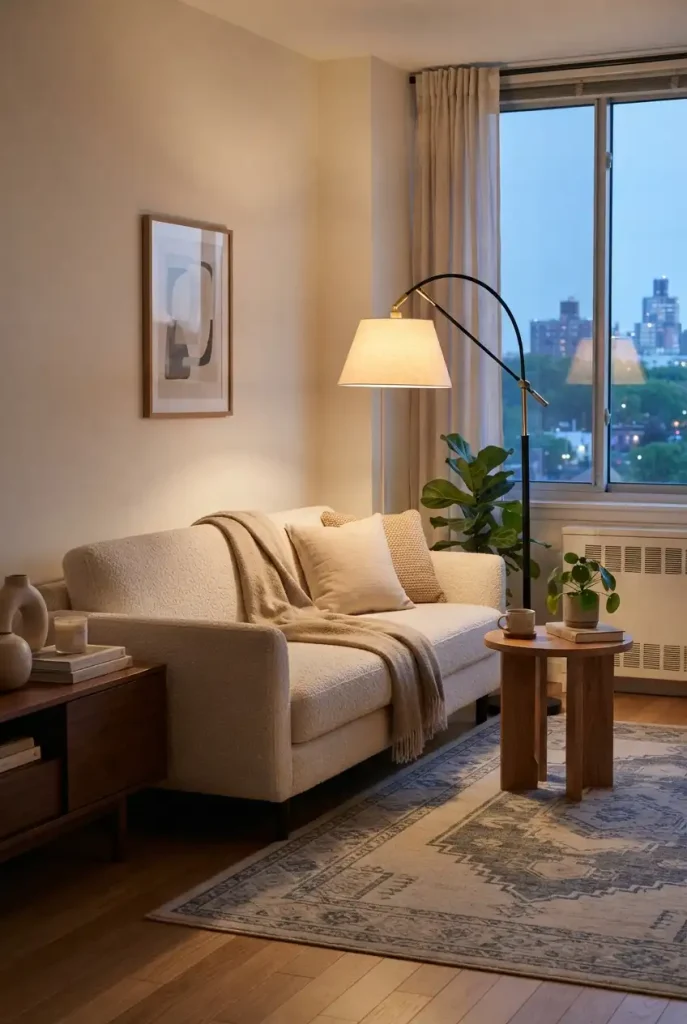
Lighting has a major influence on how an apartment feels. A room that relies entirely on one overhead fixture can look flat, especially during the evening. Floor lamps provide an easy way to introduce softer illumination without changing electrical fixtures.
Choose a sculptural lamp that contributes to the room’s decor even when switched off. A slim black floor lamp suits modern interiors, while brass, wood, and fabric shades work well in warmer spaces.
Position a floor lamp beside a sofa, near a reading chair, or in an empty corner that needs more visual interest. You can also combine it with a table lamp and a small accent light to create layers.
Consider these lighting styles:
- Arc lamps for seating areas.
- Tripod lamps for relaxed contemporary interiors.
- Fabric-shade lamps for softer illumination.
- Adjustable reading lamps for functional corners.
Keep cords safely arranged and away from walkways.
Add Personality With Decorative Throw Pillows
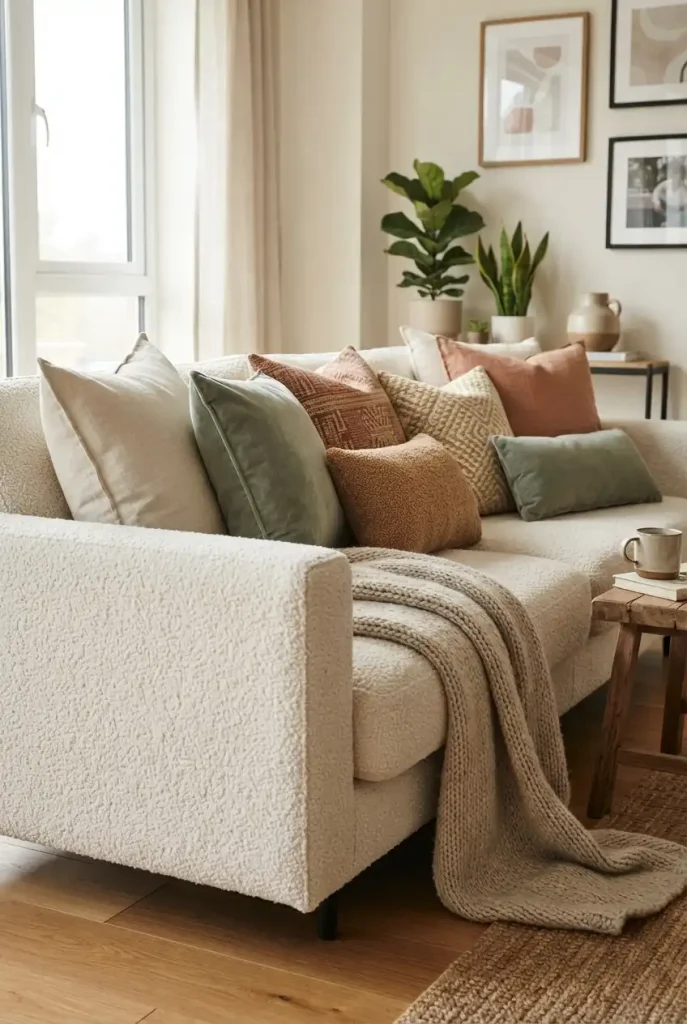
Throw pillows are among the simplest ways to refresh an apartment without buying new furniture. A plain sofa can look completely different when you introduce a thoughtful combination of colors, fabrics, and patterns.
Rather than purchasing several matching pillows, mix different textures. Linen, cotton, velvet, boucle, and woven fabrics can create visual depth while keeping the arrangement comfortable.
For a warm apartment interior, combine cream, muted sage, caramel, and soft terracotta. If your furniture is already colorful, choose pillows with complementary shades instead of introducing too many competing patterns.
A balanced pillow arrangement might include:
- Two larger solid-colored cushions.
- One or two smaller patterned pillows.
- A textured lumbar cushion.
- A soft knitted or woven throw.
Removable pillow covers are especially useful in rental homes because you can change the entire color scheme without replacing the inserts.
Bring Life Into the Room With Indoor Plants
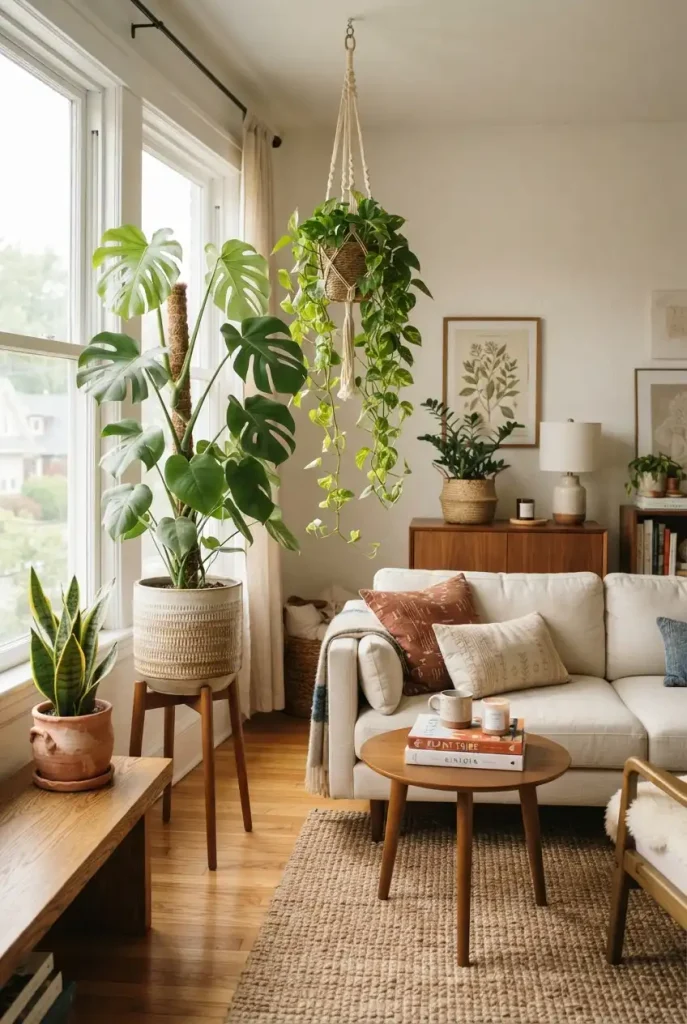
Indoor plants can make a rental feel more connected to nature. Their different shapes, heights, and shades of green introduce contrast against neutral furniture and ordinary apartment walls.
You don’t need a large collection. A taller plant beside a window, a smaller plant on a shelf, and a trailing pothos on a bookcase can create a natural arrangement without overcrowding the room.
Consider the light conditions in your apartment before selecting plants. A bright window may suit a sun-loving variety, while lower-light spaces need plants that can tolerate those conditions. Remember that no plant thrives in complete darkness.
Use attractive ceramic, woven, or terracotta planters to complement your decorating style. Place saucers beneath pots to protect floors and furniture from moisture.
Plant styling ideas:
- A statement leafy plant beside the sofa.
- Small succulents on a sunny windowsill.
- Trailing greenery on open shelving.
- A compact plant on the bathroom counter.
If you have pets, check whether a plant is toxic before bringing it home.
Transform a Small Corner Into a Reading Nook
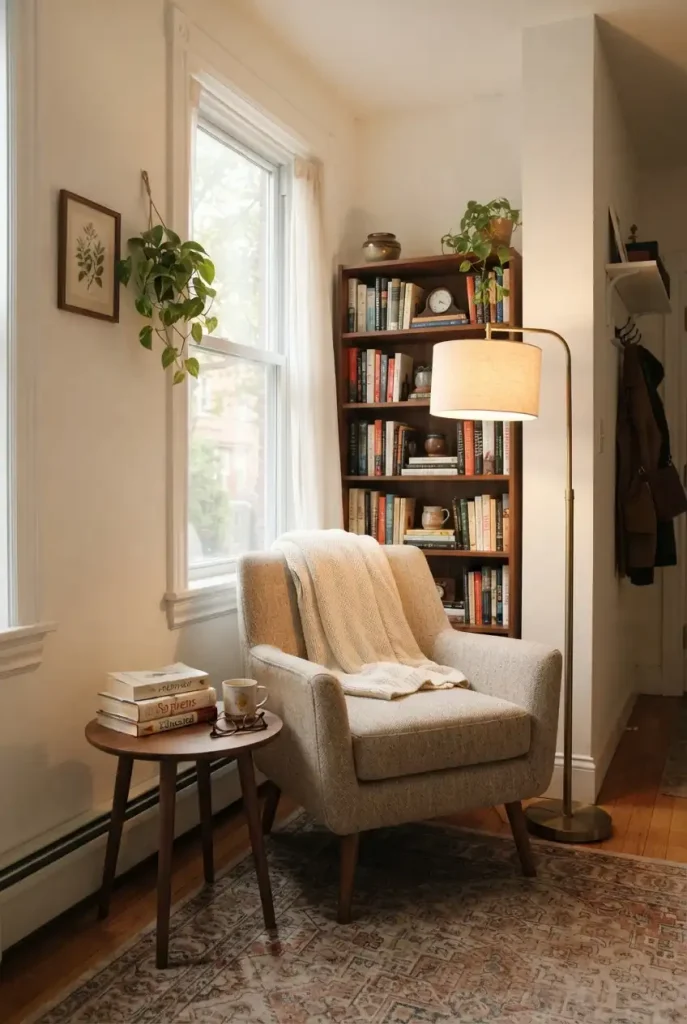
Even a small apartment can have a dedicated place to relax. An unused corner beside a window or an empty area near a bookcase can become a comfortable reading nook with just a few carefully selected pieces.
Start with a compact accent chair that fits the available floor space. Add a small side table for books and drinks, then position a floor lamp nearby for evening reading. A soft cushion and lightweight throw complete the arrangement.
You don’t need built-in shelving or a custom window seat. A narrow freestanding bookcase or a small stack of attractive books can provide storage while adding character.
How to create the arrangement:
- Choose an underused corner with comfortable lighting.
- Measure the available space before selecting a chair.
- Add a compact table within easy reach.
- Introduce a lamp and a few personal accessories.
Keep enough clearance around the chair so the nook doesn’t interfere with everyday movement.
Use Freestanding Shelves for Stylish Storage
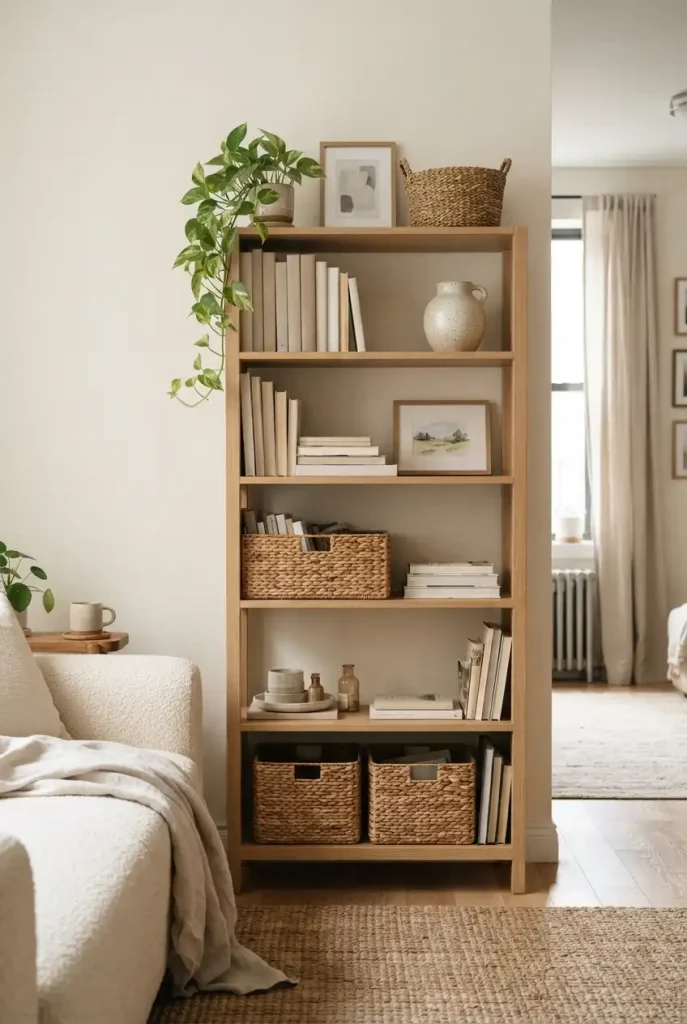
Storage is often limited in rental apartments, especially when there are few built-in cupboards. Freestanding shelving provides extra space while giving you another opportunity to display decorative pieces.
A narrow bookcase can fit beside a sofa, in a bedroom, or along an unused wall. Choose a design that matches your furniture, such as light oak for a Scandinavian-inspired apartment or matte black metal for a more contemporary interior.
The secret to attractive open shelving is balancing useful storage with decoration. Avoid filling every shelf with objects. Leave some breathing room between books, baskets, plants, and ceramics.
Try combining:
- Books arranged both vertically and horizontally.
- Woven baskets for smaller belongings.
- A few decorative ceramic objects.
- Small framed prints.
- One trailing plant.
Choose a stable shelf and follow its assembly and safety instructions. Where wall anchoring is required for safe use, discuss an approved solution with your landlord rather than ignoring the requirement.
Refresh Kitchen Cabinets With Temporary Contact Paper
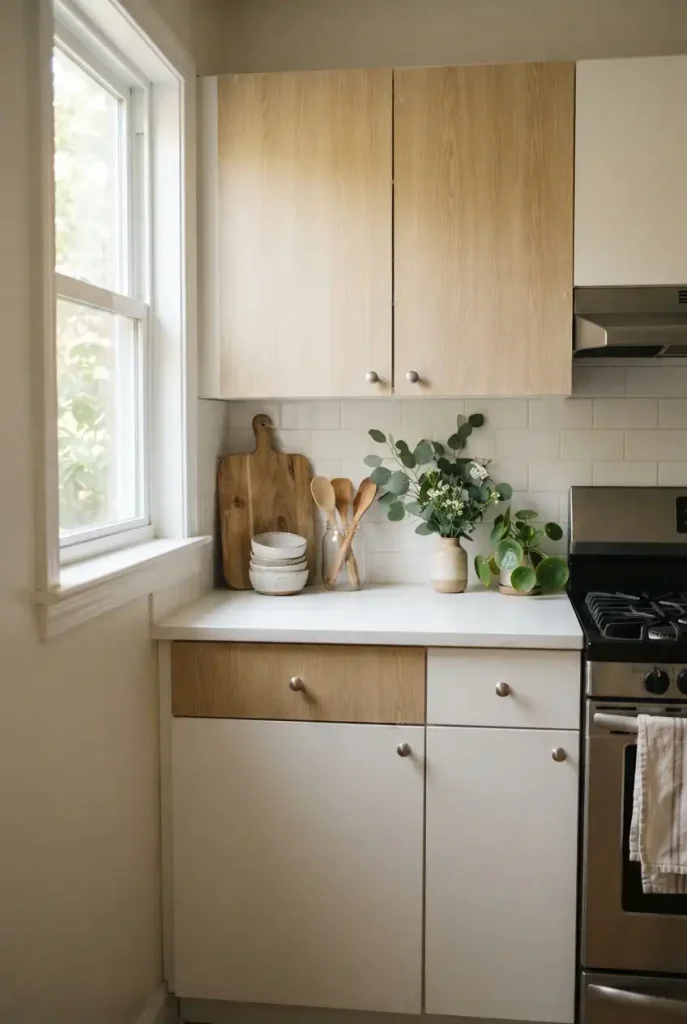
A rental kitchen may have cabinet finishes that don’t match the rest of your apartment. Temporary contact paper can offer a decorative alternative when you want to introduce a different finish without replacing the cabinetry.
Depending on the product and cabinet surface, you might use a subtle wood-look finish, a clean neutral pattern, or a marble-inspired design on selected surfaces.
A restrained approach usually looks more convincing than covering every cabinet. Consider a small section, such as an open shelf backing or an appropriate decorative surface, rather than attempting to redesign the entire kitchen.
Before applying anything, check your lease and the product instructions. Test the material in a hidden area because adhesives can leave residue or damage certain finishes.
For a cohesive kitchen:
- Keep countertops relatively uncluttered.
- Introduce wooden cutting boards.
- Display a few ceramic containers.
- Use matching kitchen textiles.
- Repeat the cabinet finish in small decorative details.
Style a Console Table Near the Entryway
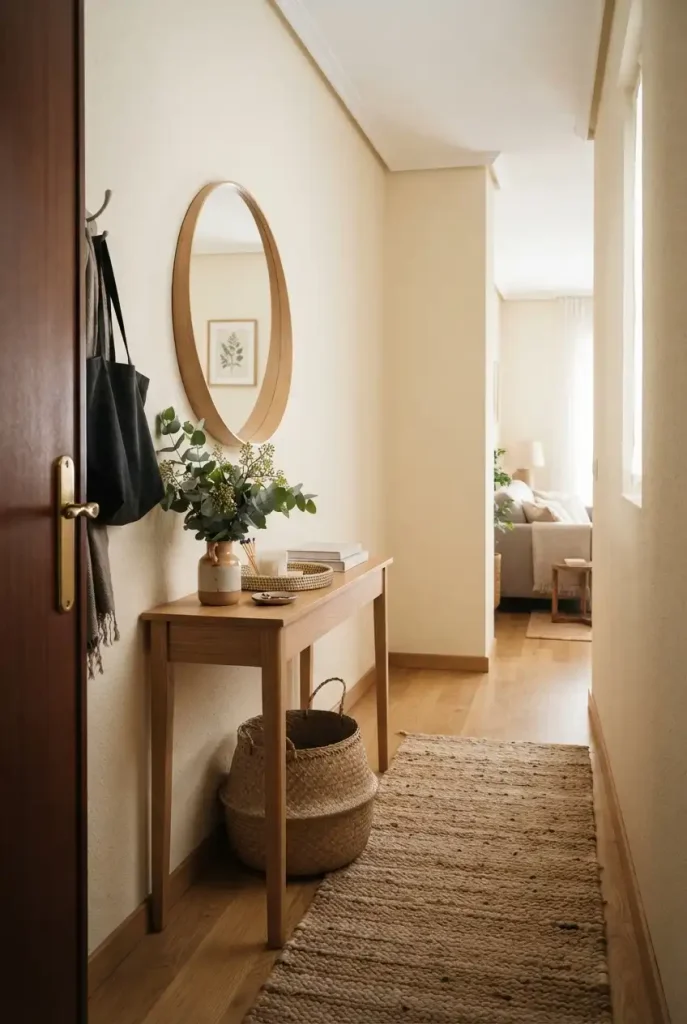
An apartment entrance is often overlooked, but it creates the first impression when someone walks through the door. A slim console table can make this small area feel intentional while providing a practical place for everyday belongings.
Choose a narrow freestanding table that doesn’t obstruct the doorway or walking path. Style its top with a small ceramic vase, a decorative tray, and a few carefully selected accessories.
If drilling isn’t permitted, lean a lightweight mirror securely on the table or use an appropriate removable mounting solution. A mirror can reflect available light and make a compact entrance feel more open.
Storage baskets underneath can hold shoes, scarves, or reusable shopping bags. This is particularly useful in apartments without a separate mudroom.
Quick Tip: Keep the tabletop simple. One decorative object, a small tray, and a mirror often create a more balanced look than filling the entire surface.
Make the Bedroom Cozy With Layered Bedding
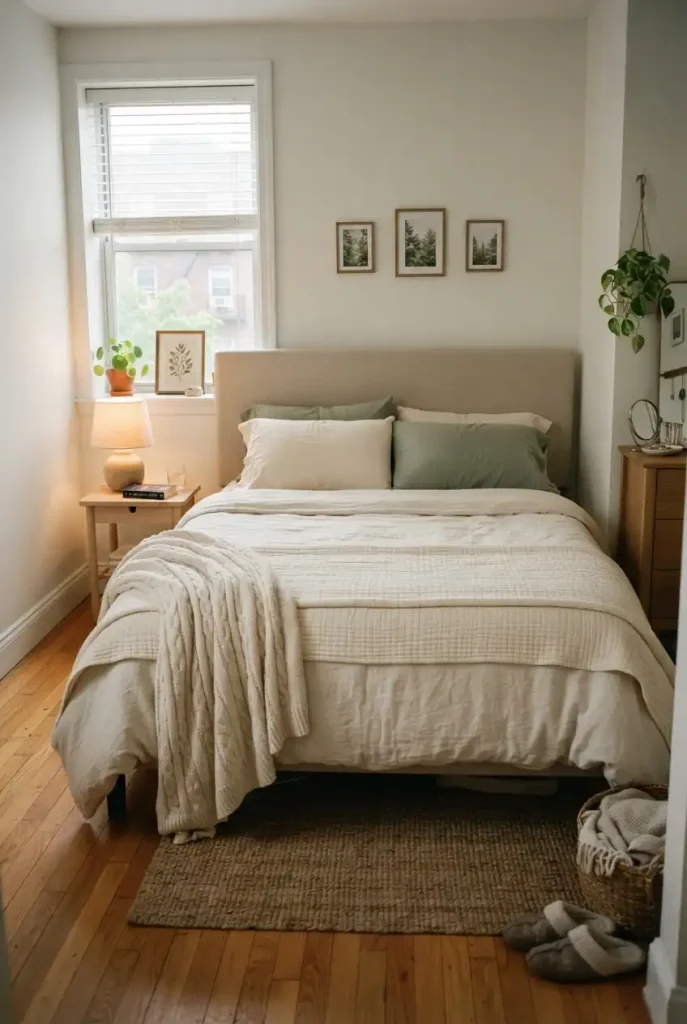
The bedroom should feel like a comfortable retreat, even if the apartment has plain walls and basic flooring. Layered bedding is a simple way to create a more finished appearance without changing permanent features.
Begin with comfortable neutral bedding, then add a textured quilt or duvet, a lightweight throw, and a few decorative cushions. Mixing cotton, linen-look fabrics, and knitted textures creates depth without requiring bold colors.
You can introduce personality through a muted accent shade such as sage, dusty blue, or warm terracotta. Repeat that color in a bedside accessory or small decorative object to make the room feel coordinated.
For a rented apartment, removable decorative headboard panels or a freestanding upholstered headboard can provide additional character without changing the wall.
A simple bedding combination:
- White or ivory base bedding.
- A textured neutral quilt.
- Two larger sleeping pillows.
- Two smaller accent cushions.
- A folded throw at the foot of the bed.
Introduce a Full-Length Decorative Mirror
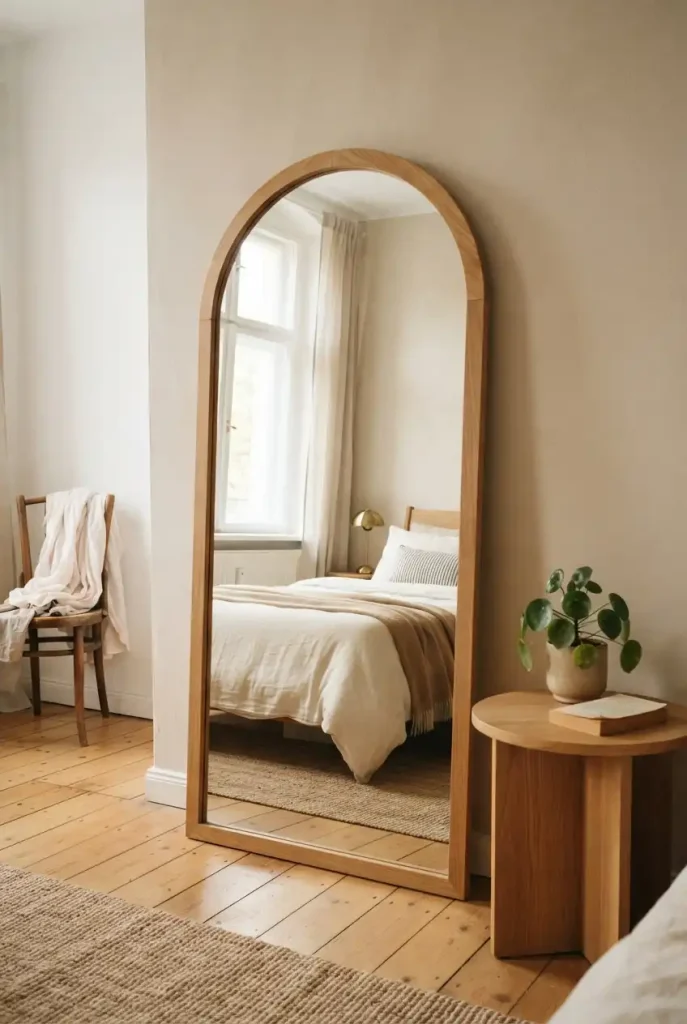
A full-length mirror is both practical and decorative. It can make a small apartment feel more open by reflecting light and giving the eye another view into the room.
Instead of attaching a mirror permanently to the wall, consider a freestanding or leaning design that suits your available space. An arched mirror with a natural wood frame adds a softer shape, while a simple black frame creates a more contemporary look.
Place it where it can reflect natural light or an attractive part of the room. Avoid positioning it where it reflects clutter or an awkward corner.
Mirror styles worth considering:
| Mirror style | Decorating effect |
|---|---|
| Arched wood frame | Warm and organic |
| Slim black frame | Modern and minimal |
| Rounded irregular frame | Relaxed and artistic |
| Full-length frameless | Simple and understated |
Make sure the mirror is stable and secured according to its manufacturer’s instructions. A tall mirror should not be left in an unsafe leaning position.
Decorate With Peel-and-Stick Backsplash Tiles
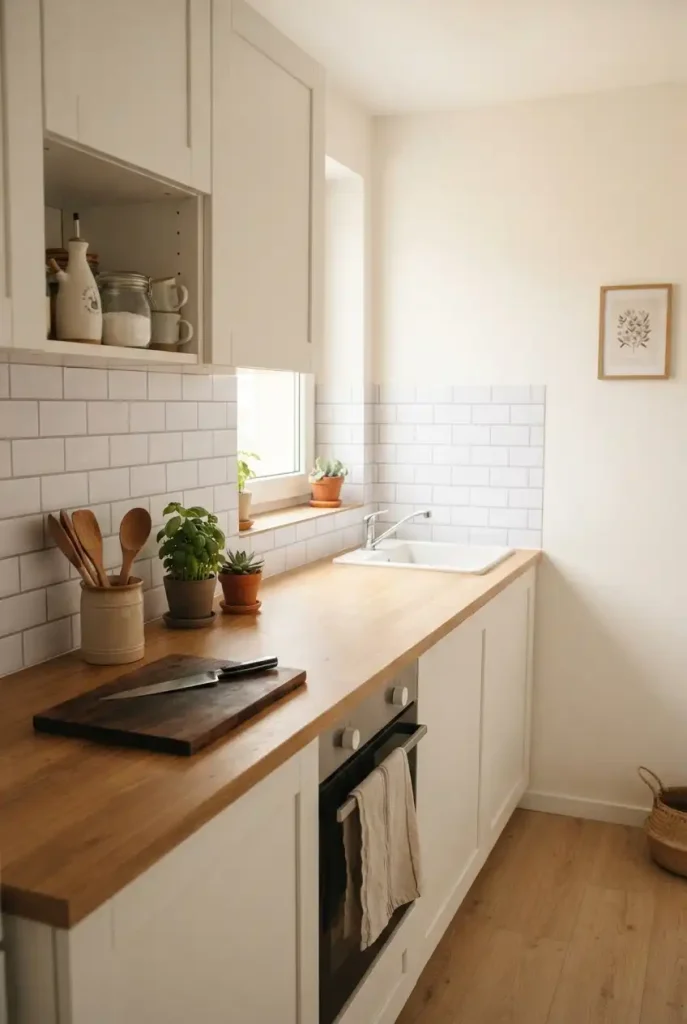
A plain kitchen backsplash can make the entire cooking area feel basic. Peel-and-stick backsplash products offer a temporary decorative option for suitable surfaces, giving you an opportunity to introduce a tile-inspired appearance without installing traditional tiles.
White subway-style patterns work well in classic interiors, while subtle stone effects complement contemporary kitchens. If your apartment has a small kitchen, lighter finishes can help maintain an open, uncluttered appearance.
You don’t need to cover every wall. A carefully selected backsplash section can create a more defined cooking area.
Before purchasing, check whether the product is suitable for the existing surface and the temperatures and moisture conditions where you intend to use it. Some products aren’t appropriate behind gas ranges or near high-heat appliances.
Better results come from:
- Measuring the backsplash area accurately.
- Cleaning and drying the surface as instructed.
- Choosing a pattern that complements the countertop.
- Following installation and removal instructions.
- Checking the lease before applying adhesive products.
Add a Small Bar Cart for Functional Decoration
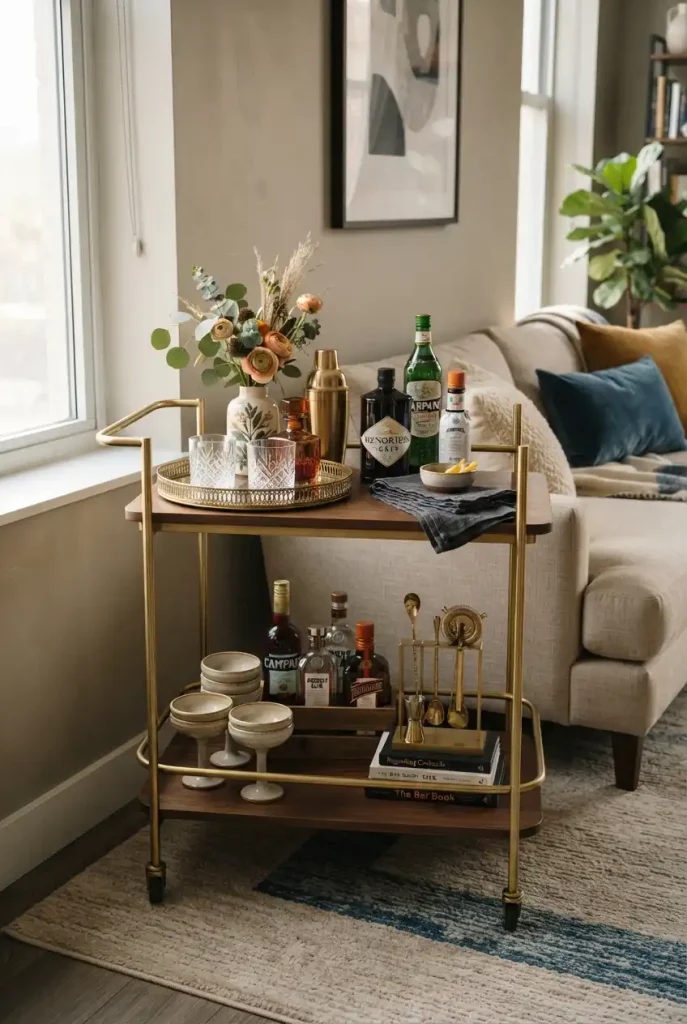
A small bar cart can add personality to an apartment while providing useful storage. Although traditionally used for drinks, it can also display coffee accessories, books, decorative ceramics, or a small collection of attractive everyday items.
Choose a cart that fits the available floor space. A slim metal design works well in modern apartments, while natural wood shelves create a warmer appearance.
The best part is its flexibility. Since the cart is freestanding, you can move it between the dining area, living room, or kitchen depending on your needs.
Ideas for styling a bar cart:
- A small decorative tray on the top shelf.
- Attractive glassware or ceramic cups.
- A small vase with seasonal branches.
- Coffee accessories or a compact serving set.
- A few books or neatly arranged napkins.
Keep the arrangement functional rather than overcrowded. The cart should still be easy to move and use.
Use Decorative Baskets to Hide Everyday Clutter
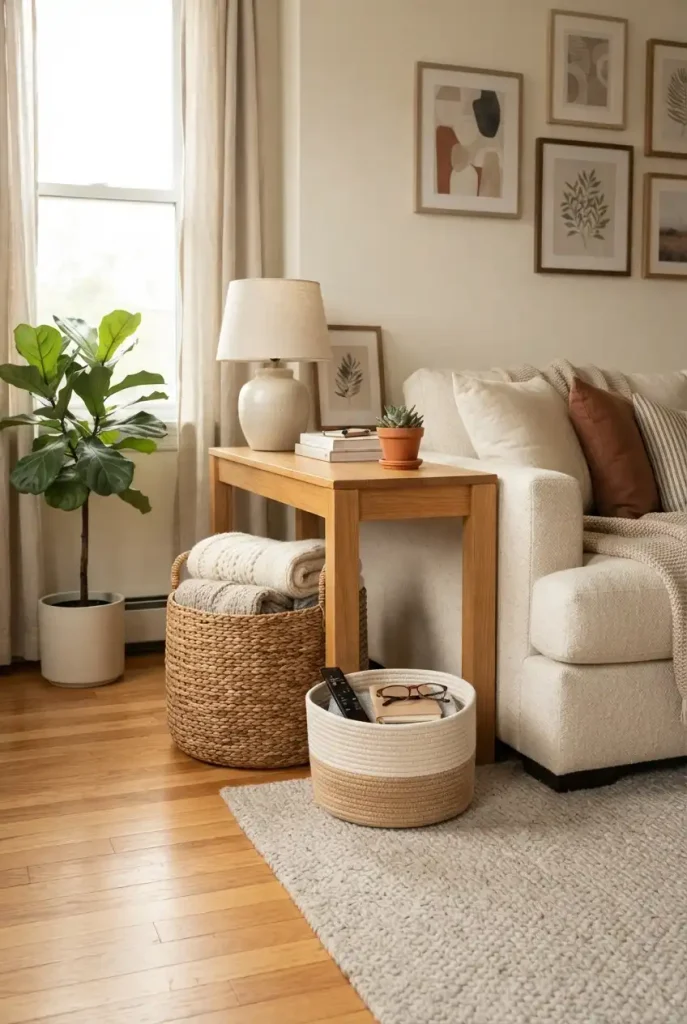
Storage doesn’t have to look purely practical. Decorative baskets can help organize everyday belongings while contributing natural texture to an apartment.
Woven seagrass, rattan, cotton rope, and fabric baskets work particularly well in relaxed interiors. Place a larger basket beside the sofa for blankets, use smaller versions on open shelves, or position one beneath a console table for items that would otherwise remain visible.
This approach is especially helpful when your apartment doesn’t have much built-in storage. You can organize accessories without adding bulky furniture or changing the existing layout.
Where to use decorative baskets:
- Living room: Store throws, cushions, and magazines.
- Bedroom: Organize extra blankets and accessories.
- Bathroom: Keep clean towels together.
- Entryway: Collect reusable bags and everyday essentials.
- Open shelving: Conceal smaller household items.
Editor’s Note: Choose baskets that fit the shelf or floor area rather than buying oversized containers. Storage should make a room easier to use, not create another obstacle.
Create a Cozy Balcony With Portable Outdoor Decor
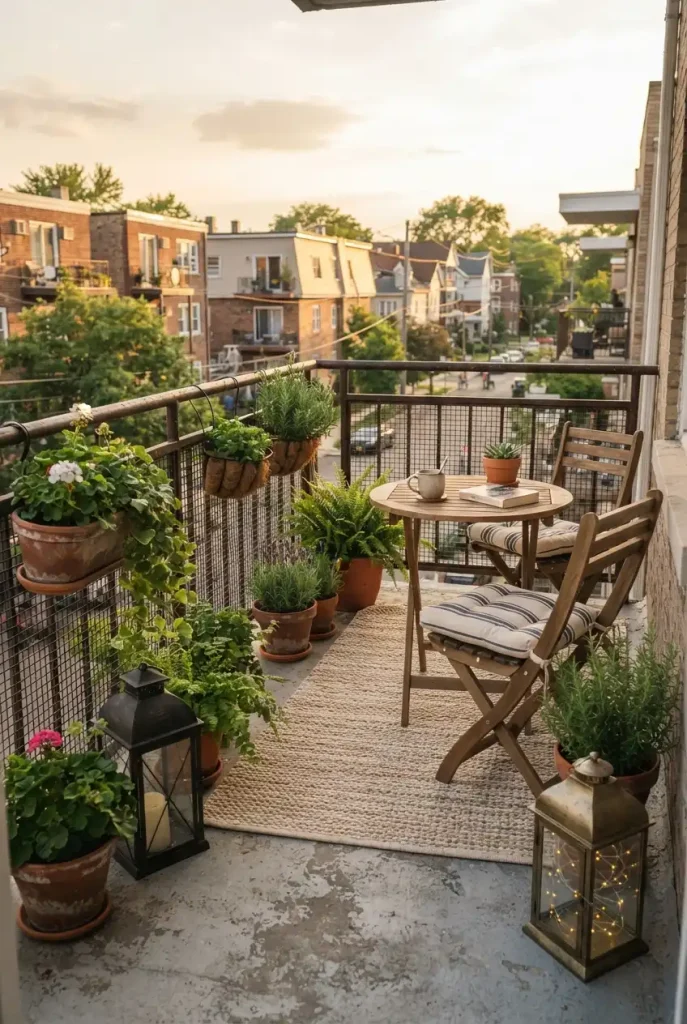
Even a tiny apartment balcony can become a comfortable place to enjoy fresh air. You don’t need permanent decking, built-in seating, or major outdoor improvements to make it feel inviting.
Start with a compact folding bistro set or lightweight outdoor chairs. Add a weather-appropriate outdoor rug, a few attractive planters, and portable lanterns to create a relaxed atmosphere.
If space is limited, use vertical arrangements that don’t require permanent wall attachments. Freestanding plant stands and railing-compatible planters can provide greenery while preserving valuable floor space. Check building rules before attaching anything to railings or placing objects where they could fall.
Choose cushions and textiles designed for outdoor use, and store them indoors during bad weather.
Small balcony decorating ideas:
- A folding table with two compact chairs.
- Terracotta pots with suitable seasonal plants.
- A small outdoor rug to define the seating area.
- Battery-operated lanterns for evening ambiance.
- A lightweight outdoor cushion set.
A few carefully selected pieces can turn an overlooked balcony into a useful extension of your apartment.
How to Make Your Apartment Look Beautiful Without Permanent Changes
The best decorating approach is to focus on changes that suit your lifestyle and can move with you. Before buying new accessories or furniture, consider the apartment’s existing colors, natural lighting, storage limitations, and available floor space.
A few practical principles can help you make better decorating decisions.
Start With One Room at a Time
Trying to decorate an entire apartment at once can become expensive and overwhelming. Begin with the room you use most frequently.
For example, you might start with:
- The living room by adding cushions, rugs, and better lighting.
- The bedroom by introducing layered bedding and decorative mirrors.
- The kitchen by organizing countertops and improving small decorative details.
- The entryway by adding a slim console and attractive storage.
Choose Decorations You Can Take With You
Prioritize freestanding furniture, portable lighting, removable textiles, decorative objects, and storage accessories.
These pieces can become part of your next home rather than being left behind when your rental agreement ends.
Check Before Applying Adhesive Products
Removable wallpaper, contact paper, adhesive hooks, and temporary backsplash products can be useful, but their performance depends on the surface and product.
Before using them:
- Read your lease and any decorating restrictions.
- Check the manufacturer’s surface compatibility instructions.
- Test products in a discreet location where permitted.
- Follow weight limits and removal instructions.
- Photograph existing wall or surface conditions before decorating.
Keep a Consistent Color Palette
A small apartment can feel visually disconnected when every room has a completely different color scheme.
Choose two or three main shades and repeat them throughout your home. For example, warm white, natural wood, and muted sage can work across a living room, bedroom, and kitchen without making every space look identical.