15 Easy First Apartment Decorating Ideas You Can Recreate on a Budget
Moving into your first apartment is an exciting opportunity to create a space that reflects your personality. However, decorating an entire home for the first time can feel expensive, especially when you’re starting with empty rooms, limited furniture, and a long list of things you need. The good news is that a beautiful apartment doesn’t require designer furniture or a huge decorating budget. With thoughtful furniture choices, inexpensive accessories, creative DIY projects, and a little patience, you can make even a small rental feel warm and inviting.
These first apartment decorating ideas focus on affordable ways to improve your living room, bedroom, kitchen, and other everyday spaces. From decorating blank walls and adding cozy lighting to creating clever storage and styling secondhand furniture, each idea offers a practical way to make your new place feel like home without overspending.
Create a Cozy Living Room With Affordable Furniture
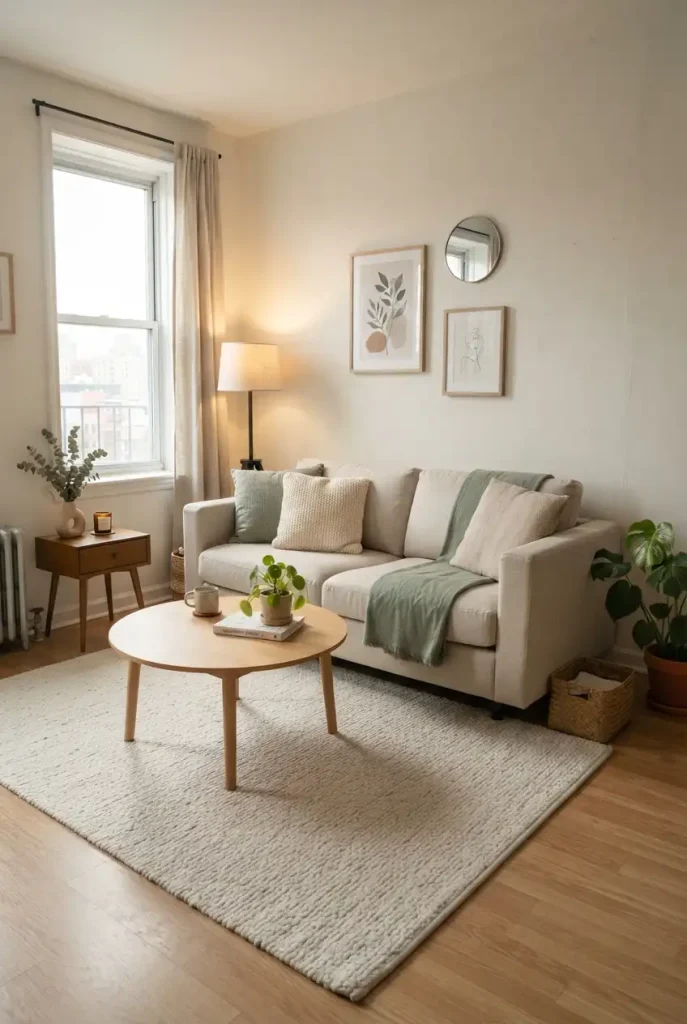
Your living room is often the first space you’ll want to decorate because it’s where you relax, entertain friends, watch movies, and spend time after a busy day. You don’t need a complete furniture set to make it comfortable. Start with a reasonably sized sofa, an inexpensive coffee table, and a comfortable accent chair if the space allows.
Neutral furniture in shades of beige, gray, cream, or soft brown creates a flexible foundation. You can introduce personality through colorful cushions, a textured throw blanket, and a decorative rug. If your living room is small, choose furniture with visible legs to keep the floor area feeling open.
Budget-friendly furniture ideas:
- Look for gently used sofas and tables at secondhand stores.
- Choose a simple coffee table that can serve multiple purposes.
- Use affordable cushion covers to refresh basic furniture.
- Add a floor lamp instead of purchasing expensive lighting fixtures.
A coordinated living room doesn’t have to happen all at once. Purchase the essential pieces first, then gradually add decorative details as your budget allows.
Decorate Blank Walls With Affordable Wall Art
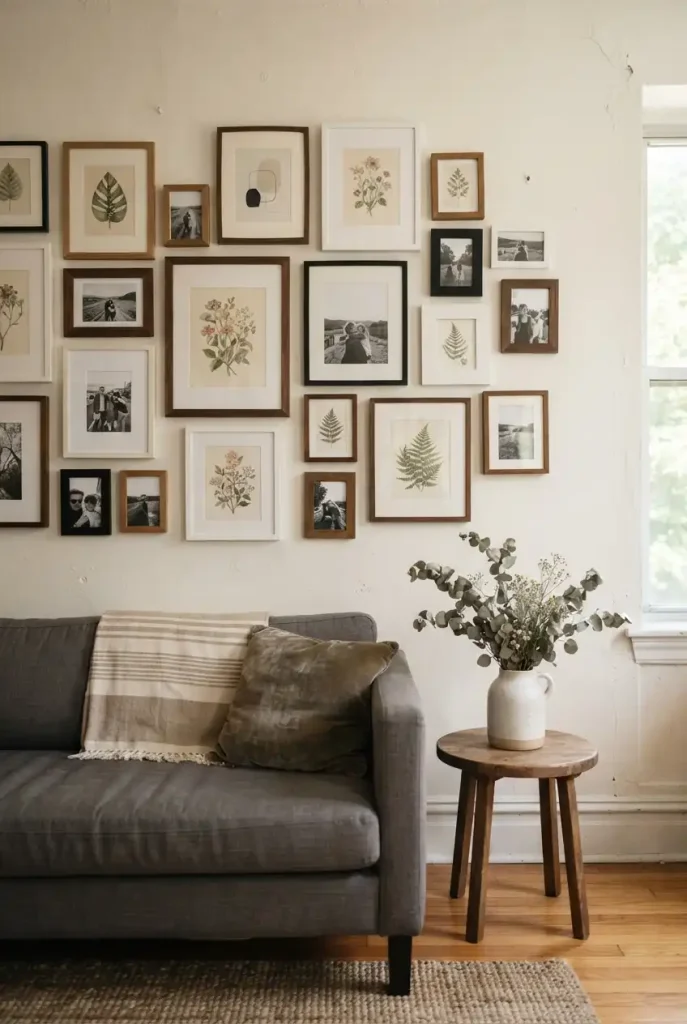
Empty walls can make a new apartment feel unfinished, but filling them doesn’t require expensive artwork. Affordable prints, thrifted frames, personal photographs, and simple DIY wall decorations can make a noticeable difference.
A gallery wall above a sofa or bed is an easy way to introduce personality. Choose a consistent frame finish, such as black, natural wood, or white, to create a coordinated appearance. You can also combine different frame sizes for a more relaxed arrangement.
Some inexpensive wall decoration options include:
- Printable artwork in affordable frames.
- Personal photographs from memorable trips.
- Minimalist botanical prints.
- Secondhand paintings and decorative mirrors.
- DIY abstract artwork using inexpensive canvas and paint.
For renters, removable picture-hanging strips or other approved hanging methods can be useful alternatives to drilling, depending on wall condition and lease requirements.
Quick Tip: Arrange your frames on the floor before hanging them. This makes it easier to experiment with spacing and balance without repeatedly changing their positions on the wall.
Add Warm Lighting With Table and Floor Lamps
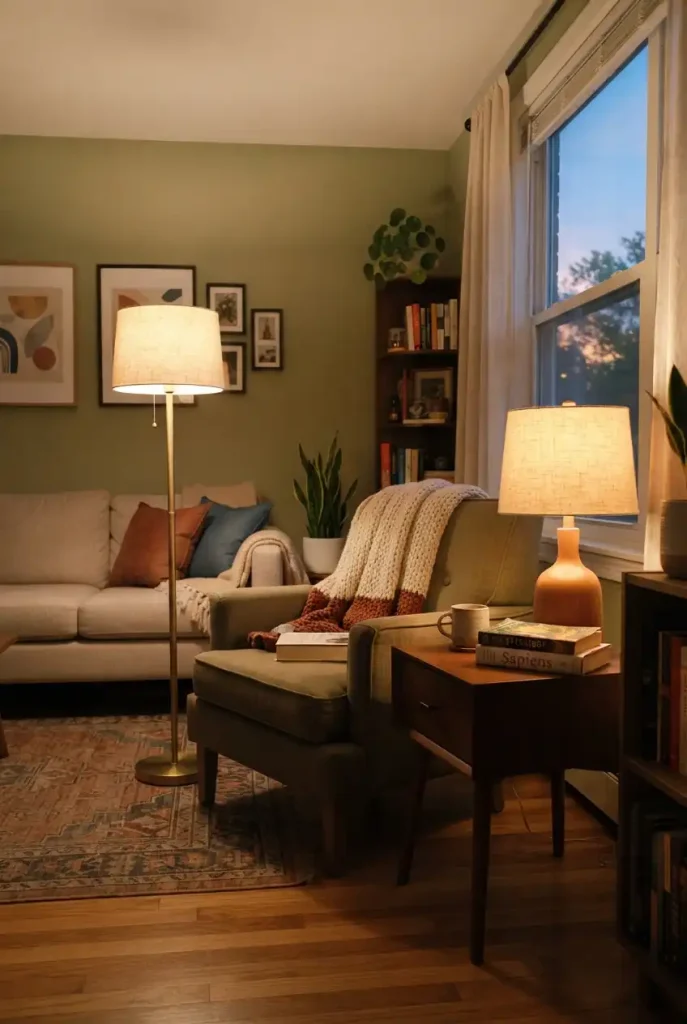
Lighting can change the atmosphere of an apartment without requiring expensive renovations. A single bright overhead fixture may make a room feel harsh, especially in the evening. Adding a few smaller light sources creates a softer and more comfortable environment.
Start with a table lamp beside the sofa or on your nightstand. A floor lamp can brighten an empty corner, while a small accent lamp can make a desk or reading area feel more inviting.
Consider these affordable lighting options:
- Fabric-shade table lamps for soft ambient lighting.
- Simple floor lamps for dark corners.
- Warm-white LED bulbs for a comfortable evening atmosphere.
- Battery-operated accent lights where electrical access is limited.
Choose fixtures that suit the size of your apartment. A large floor lamp may overwhelm a narrow corner, while a compact table lamp can provide useful light without taking up much space.
Use Removable Wallpaper for an Affordable Accent Wall
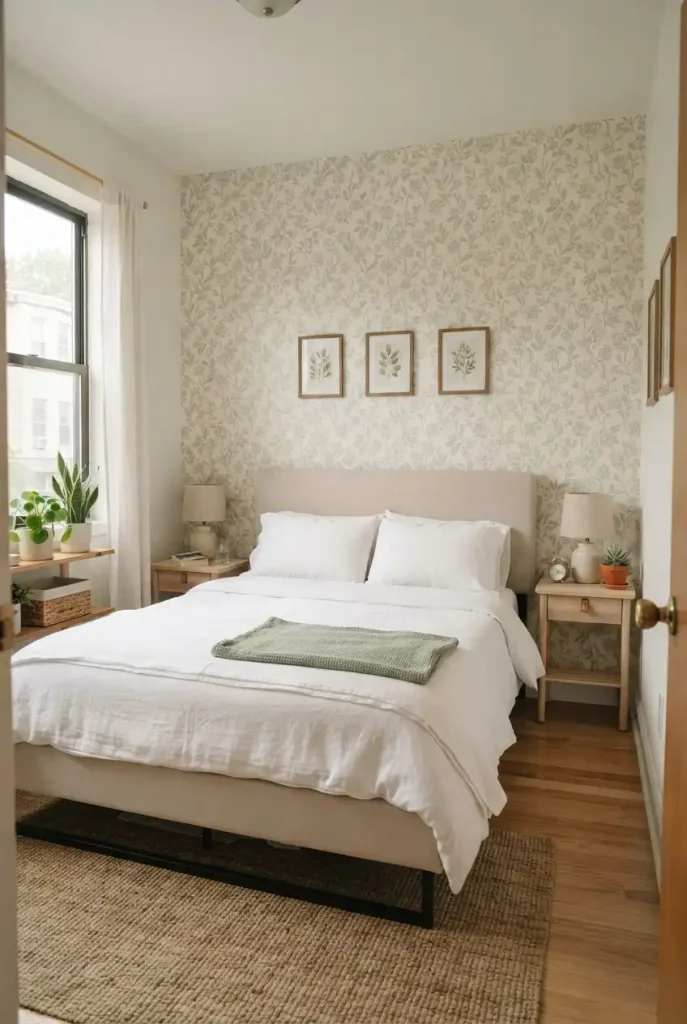
Removable wallpaper is a useful way to introduce color, pattern, or texture without committing to permanent wall changes. It can make a plain apartment bedroom or living room feel more personalized while keeping the rest of the decorating scheme simple.
Consider using it behind your bed, on a small living room feature wall, or inside an entryway. Subtle botanical patterns, soft geometric designs, and delicate stripes can add interest without making a small room feel visually crowded.
Before purchasing, check the manufacturer’s application instructions and your lease. Test a small area if appropriate, since removal results can vary depending on the wall finish, paint condition, and product.
For a balanced result, coordinate the wallpaper with simple bedding, understated furniture, and a few accessories that repeat its colors.
Bring in Secondhand Furniture and Give It a Fresh Look
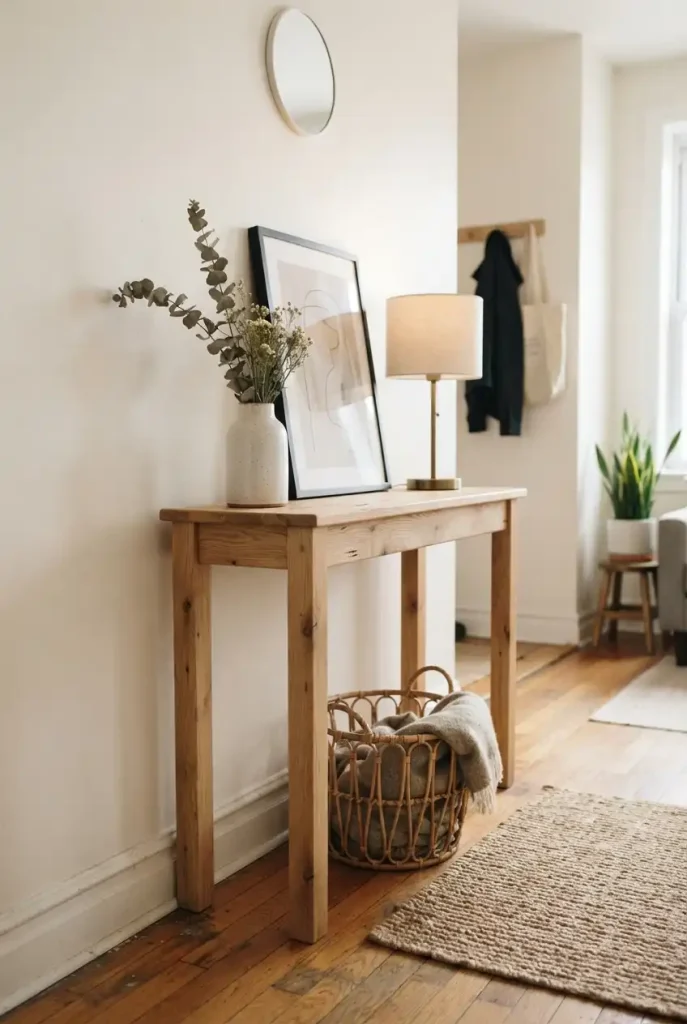
Secondhand furniture is one of the most practical ways to furnish your first apartment without spending too much. Thrift stores, local resale listings, estate sales, and neighborhood marketplaces can offer useful pieces at different price points.
Look beyond the original color or finish when evaluating a piece. A basic wooden nightstand, small dresser, or coffee table may become a great addition with careful cleaning and a suitable refinishing project.
Furniture worth looking for:
- Small wooden side tables.
- Compact dining chairs.
- Vintage mirrors.
- Simple bookcases.
- Bedside cabinets.
- Small dressers with useful storage.
Check furniture for stability, strong odors, pests, moisture damage, and missing hardware before bringing it home. Upholstered pieces require particular care because cleaning and pest treatment can add unexpected costs.
If you find a solid wooden table with an outdated finish, a suitable paint or refinishing project can give it a more current appearance.
Make Your Bedroom Feel Cozy With Layered Bedding
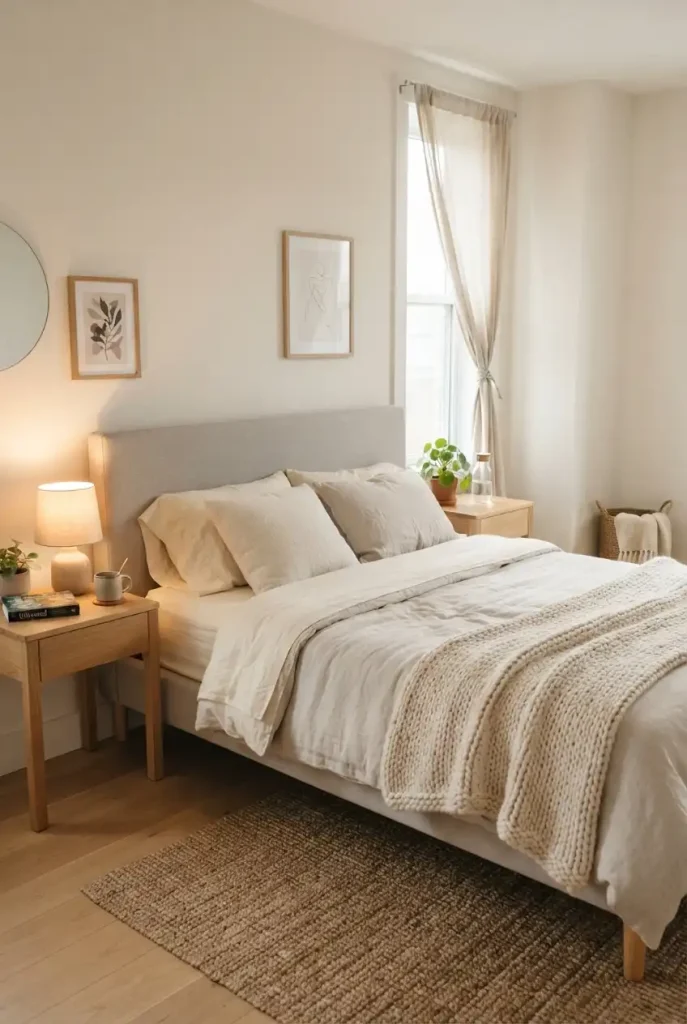
Your bedroom should be one of the most comfortable areas of your first apartment. Even an inexpensive bed can look thoughtfully styled with coordinated bedding, soft textures, and a few decorative accents.
Start with simple white, cream, or neutral bedding. Add a lightweight comforter, two sleeping pillows, and one or two decorative cushions. A textured throw blanket placed across the foot of the bed adds another layer without requiring a complete bedding makeover.
For a more interesting look, combine different fabrics rather than relying on multiple colors. Cotton, linen-look textiles, quilted bedding, and knitted throws can create visual depth.
Affordable bedroom styling combination:
- Cream duvet cover.
- White or beige pillowcases.
- One muted accent cushion.
- Textured throw blanket.
- Simple bedside lamp.
Keep the arrangement comfortable for everyday use. Decorative pillows should not take over the entire bed or become difficult to put away each morning.
Use Mirrors to Make a Small Apartment Feel More Open
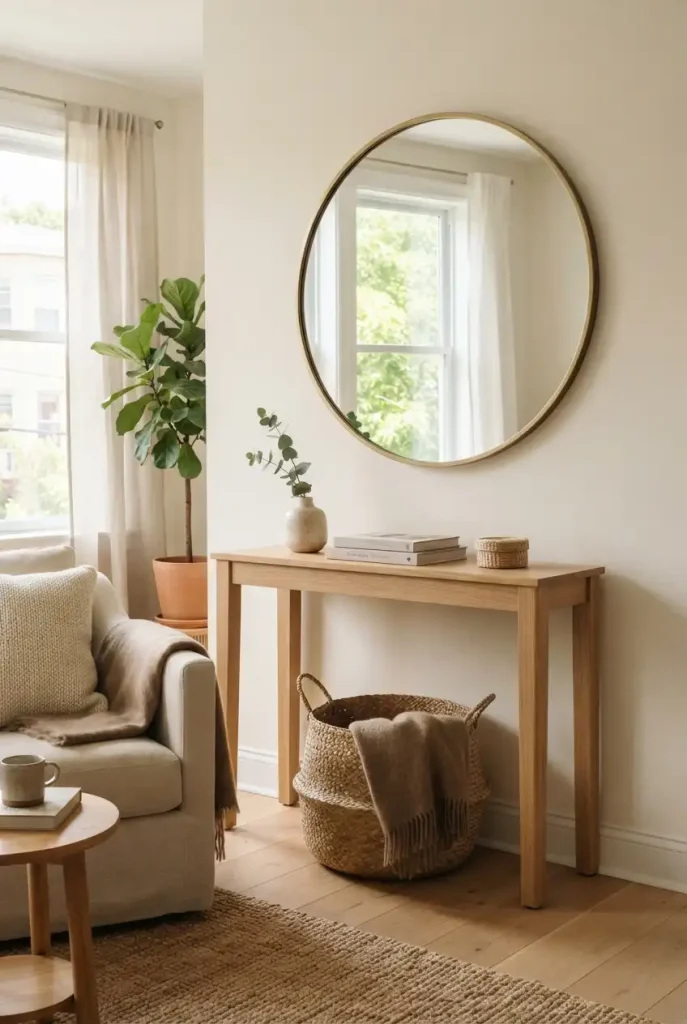
Mirrors are practical decorating accessories that can help a compact apartment feel brighter and visually more spacious. They reflect existing light and create another visual layer, which is particularly useful in rooms with limited windows.
A large leaning mirror can work in a bedroom or living room if the layout provides enough floor space. A round wall mirror can soften the appearance of an entryway, while a smaller decorative mirror can make a narrow hallway feel more finished.
Placement matters. Position a mirror where it reflects natural light, an attractive part of the room, or an open area rather than a cluttered corner.
Common Mistake: Placing a mirror where it reflects storage clutter or an unappealing view.
Better Approach: Check the reflection from your normal viewing position before deciding where to install it.
Create an Affordable Dining Area With a Small Table
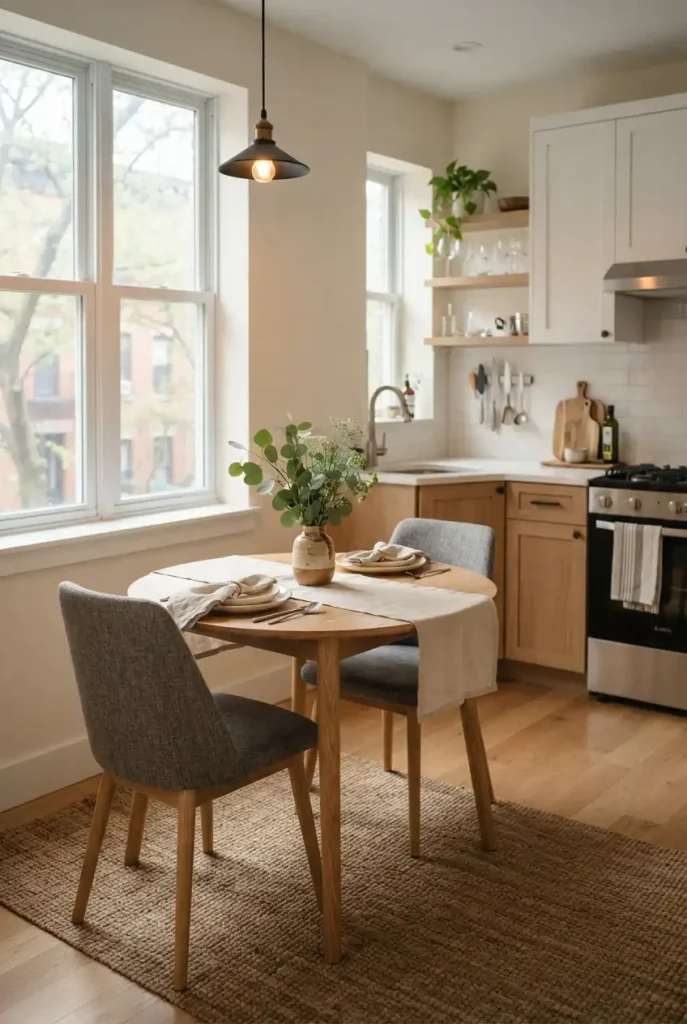
Even if your apartment doesn’t have a separate dining room, you can still create a comfortable place to enjoy meals. A compact round table is often a practical option because it can fit into a corner or an open area between the kitchen and living room.
Look for a simple two-person table with chairs that can slide underneath when not in use. If you occasionally host friends, choose a design that can accommodate an extra chair without blocking the main walkway.
Make the area feel intentional with a small centerpiece, a simple table runner, and a pendant or nearby floor lamp if the existing lighting is limited.
For very small apartments, a narrow counter-height table or wall-mounted drop-leaf table may be more suitable than a traditional dining set.
Decorate With Affordable Indoor Plants
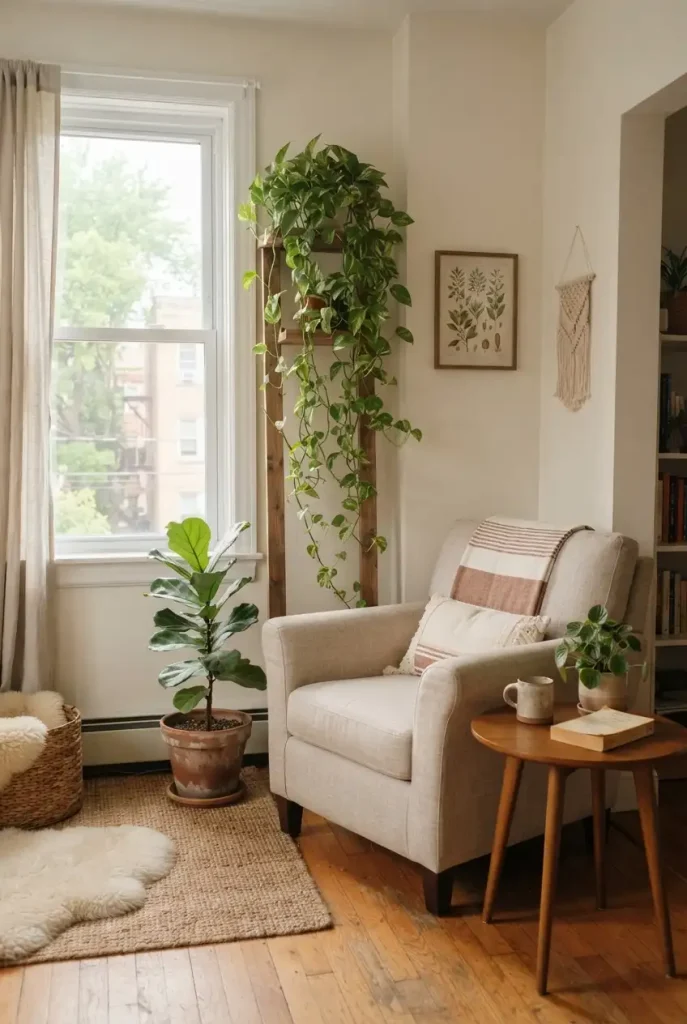
Indoor plants can introduce natural color and texture into a first apartment. They work particularly well in empty corners, on windowsills, beside bookshelves, and on small side tables.
You don’t need a large indoor garden to create a fresh atmosphere. Start with one or two plants that suit the available light and your ability to care for them. A pothos, for example, can be displayed on a shelf where its trailing foliage becomes part of the room’s decoration. A snake plant can provide a vertical accent in a suitable bright or lower-light location, depending on its growing conditions.
Affordable plant styling ideas include:
- Use simple terracotta pots.
- Place smaller plants together on a windowsill.
- Display trailing plants on a sturdy shelf.
- Use a larger floor plant to fill an empty corner.
- Coordinate planters in two or three complementary finishes.
Check light, watering, drainage, and household pet safety before choosing plants. A beautiful plant is only a good decorating choice when its environment supports its needs.
Add Rugs to Define Different Living Areas
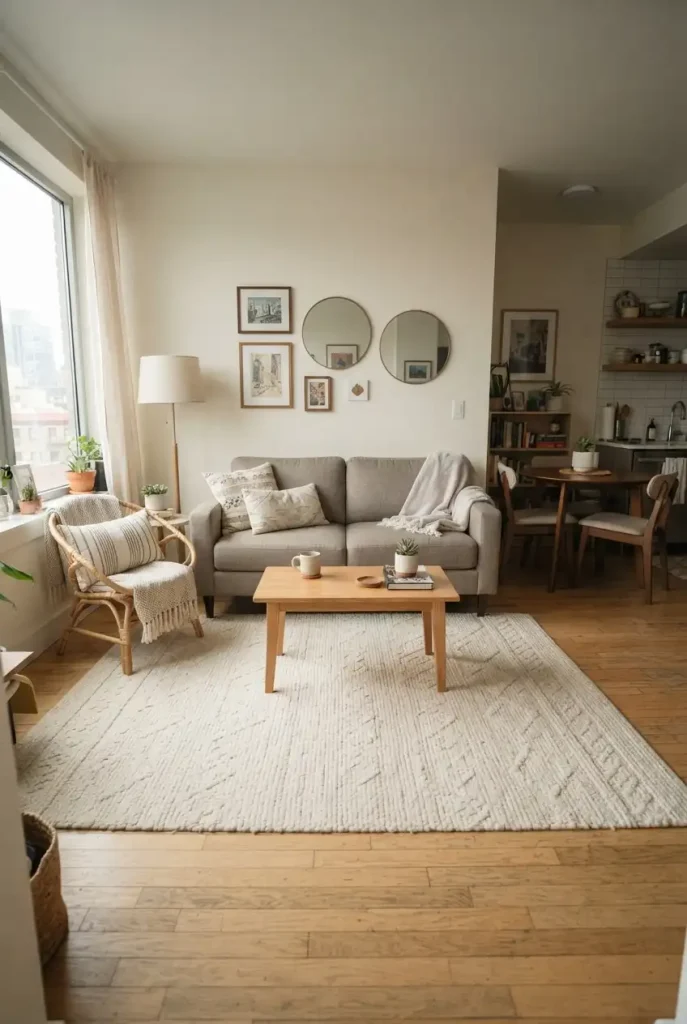
Area rugs can make an apartment feel more organized by visually separating spaces that share one open floor plan. This is particularly helpful when your living room, dining area, and kitchen are connected.
Choose a rug that is appropriately sized for the furniture arrangement. In a living room, the front legs of the sofa and chairs can sit on the rug to help connect the seating area. Under a small dining table, make sure the rug provides enough room for chairs to move without catching on the edges.
Affordable rug styles include:
- Flatweave neutral rugs.
- Simple geometric patterns.
- Subtle vintage-inspired designs.
- Washable rugs suitable for everyday use.
- Natural-looking woven textures.
A rug should complement the flooring rather than compete with every other decorative element. If you already have patterned cushions or curtains, consider a simpler rug.
Style Open Shelves With Books and Everyday Accessories
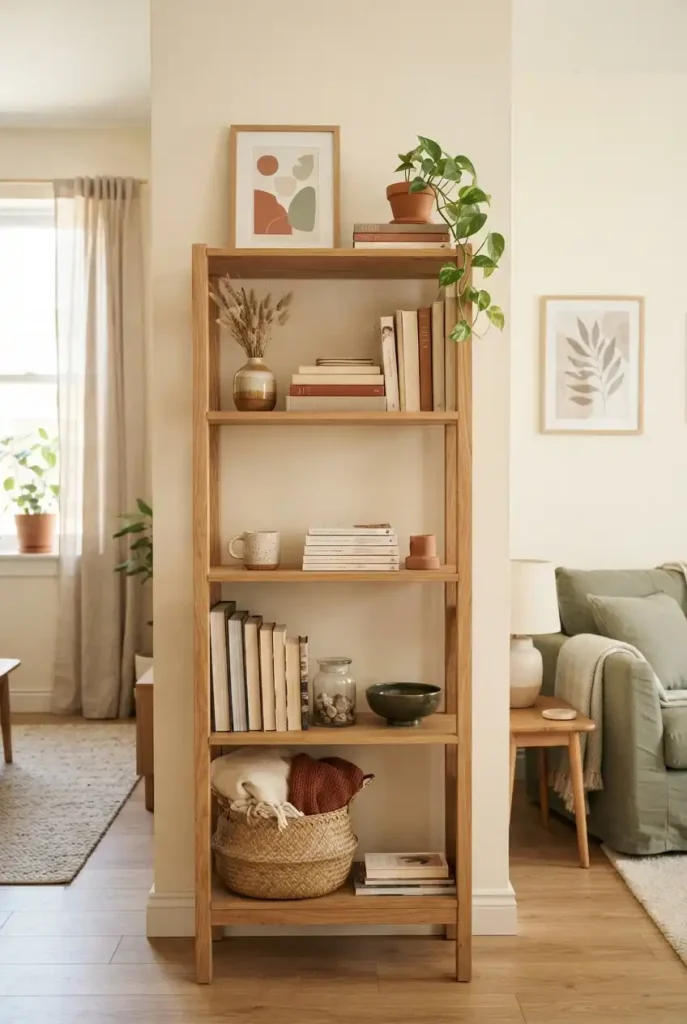
Open shelving is an affordable way to add personality and practical storage to a first apartment. A small freestanding bookcase or wall shelf can display books, framed photographs, decorative objects, and useful everyday items.
The secret is to avoid filling every available space. Leave some empty areas so the shelves look organized rather than crowded.
Try combining different shapes and heights:
- Stack a few books horizontally.
- Place a small framed print against the back of a shelf.
- Add one ceramic decorative object.
- Include a small plant where light is suitable.
- Use attractive baskets for smaller items.
A narrow bookcase can fit beside a sofa or in a bedroom corner. Before purchasing wall-mounted shelves, check the wall type and use suitable installation hardware. Renters should also confirm whether drilling is permitted.
Personalize Your Space With DIY Decor
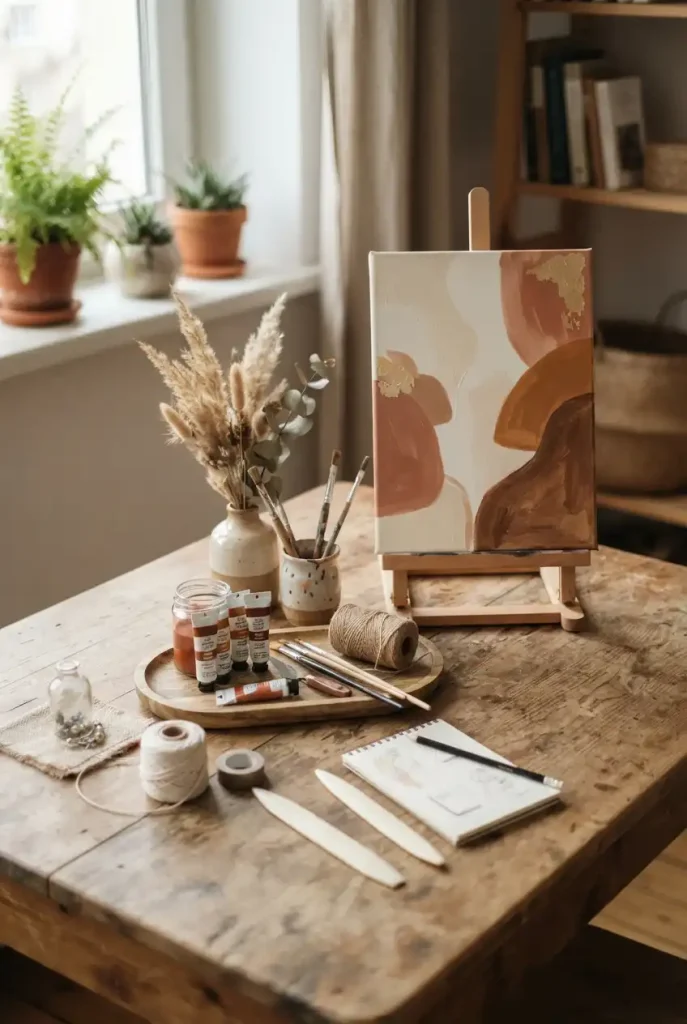
DIY decorating projects are an excellent way to make your first apartment feel personal while keeping expenses manageable. You don’t need advanced crafting skills or expensive supplies to create attractive decorative pieces.
Start with small projects that don’t require permanent alterations. You could paint a simple canvas, create a decorative tray, customize a plain lampshade with an appropriate removable accessory, or arrange photographs in inexpensive frames.
Some beginner-friendly projects include:
- Painted canvas art: Use a small canvas and two or three complementary colors to create simple abstract artwork.
- Decorative trays: Style an inexpensive wooden tray with a small vase and candle.
- Customized storage boxes: Cover basic storage boxes with attractive paper or fabric.
- Photo displays: Arrange printed photographs in matching frames.
Choose projects that suit your existing decor. A few coordinated handmade accessories will usually look more intentional than several unrelated crafts.
Make Your Entryway Functional With Hooks and Baskets
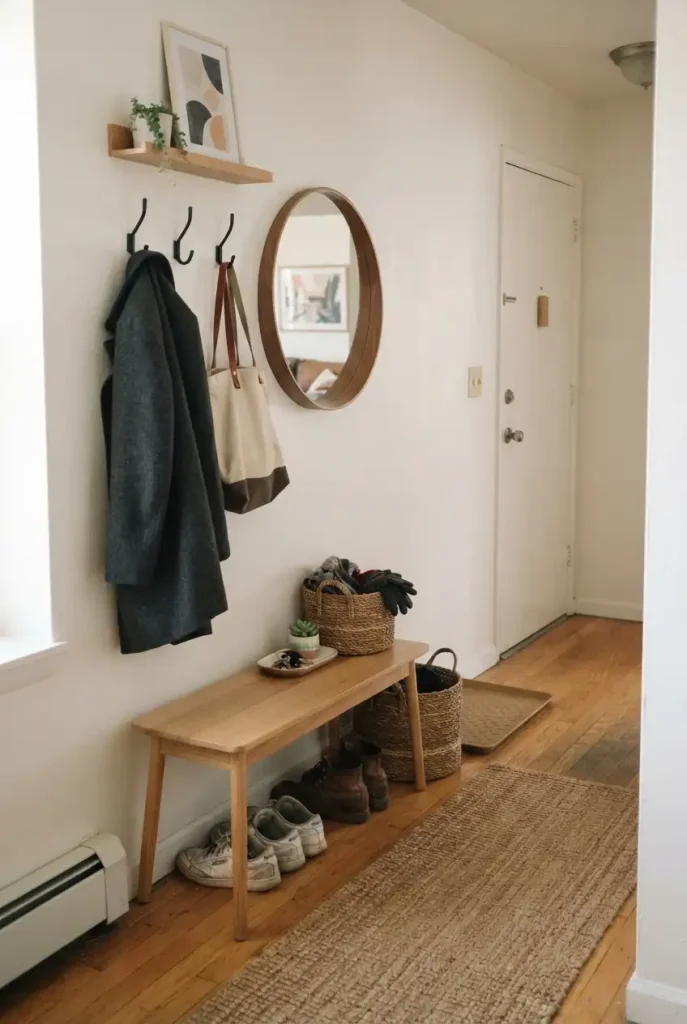
A small entryway can quickly become cluttered with shoes, coats, bags, keys, and everyday essentials. Creating a simple organization area helps keep the rest of your apartment tidy while making the entrance feel more welcoming.
A narrow console table, a few wall hooks, and one or two baskets can provide useful storage without taking up much room.
For a budget-conscious setup, consider:
- A small shoe rack near the entrance.
- A basket for reusable shopping bags.
- Hooks for coats and everyday bags.
- A small tray for keys and sunglasses.
- A mirror to complete the entryway.
If floor space is limited, use vertical storage where permitted. Keep the walking path clear and avoid placing furniture that interferes with the apartment door.
Quick Tip: Give frequently used items a dedicated place. You’ll spend less time searching for keys, bags, and shoes when everything has a consistent location.
Refresh Kitchen Counters With Simple Decorative Accessories
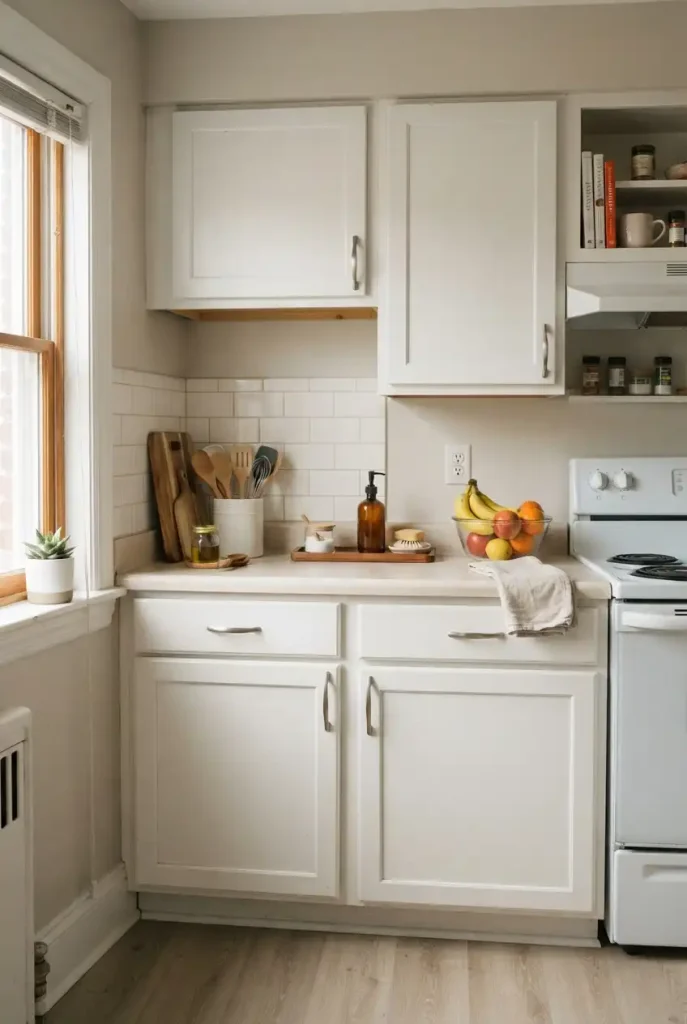
Your first apartment kitchen may not have the most attractive cabinets or countertops, but a few inexpensive accessories can make it feel more organized and inviting.
Start by clearing unnecessary items from the counters. Then select a small group of useful objects that also contribute to the decor. A wooden cutting board, ceramic utensil holder, attractive soap dispenser, and small countertop tray can create a coordinated look.
Affordable kitchen styling essentials:
- Wooden cutting boards.
- Matching food storage jars.
- A ceramic utensil holder.
- A small decorative tray.
- A simple fruit bowl.
- A washable kitchen runner.
Keep food preparation areas clear and avoid placing decorative objects near heat sources or where they could interfere with everyday kitchen activities.
Rather than purchasing a full collection of matching accessories, choose a few pieces that share a similar color or material. Natural wood, white ceramics, and subtle black details work well together.
Use Multi-Functional Furniture to Save Money and Space
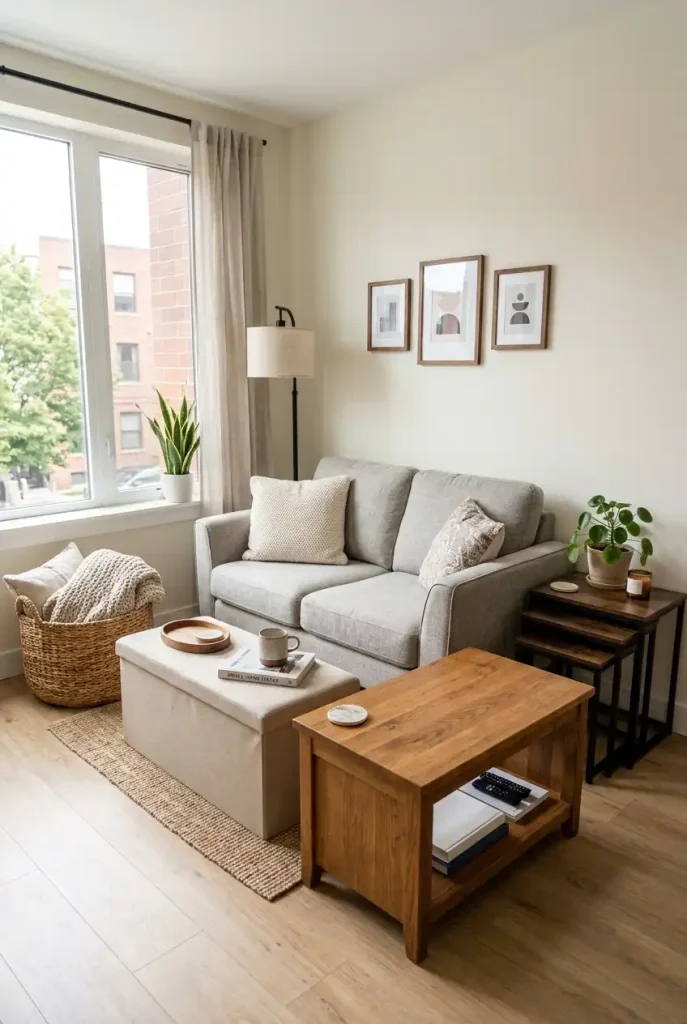
When you’re decorating your first apartment, every furniture purchase should serve a useful purpose. Multi-functional furniture can help you make the most of limited square footage while avoiding unnecessary purchases.
A storage ottoman can provide extra seating, a footrest, and a place to keep blankets. A coffee table with a lower shelf offers additional storage, while a bed with drawers can reduce the need for a separate dresser.
Consider these practical options:
| Furniture | Additional Function |
|---|---|
| Storage ottoman | Seating and hidden storage |
| Nesting tables | Flexible extra surfaces |
| Bed with drawers | Clothing and bedding storage |
| Drop-leaf table | Compact dining workspace |
| Storage bench | Seating and shoe organization |
Think about how you actually use your apartment before buying anything. A large storage unit isn’t helpful if it blocks a walkway, and a convertible table isn’t worthwhile if you never need the additional function.
Editor’s Note: Measure the available floor space, doorways, and furniture clearance before purchasing larger pieces. This simple step can help prevent expensive mistakes.
How to Decorate Your First Apartment Without Overspending
Decorating your first apartment is easier when you approach it gradually instead of trying to furnish every room immediately. Start with the items that make your home comfortable and functional, then add decorative pieces as your budget allows.
A simple decorating order can help:
- Prioritize essentials: Purchase a comfortable bed, basic seating, and necessary kitchen items first.
- Choose a color palette: Select two or three main colors so new accessories coordinate with existing furniture.
- Focus on frequently used rooms: Make your bedroom, living room, and kitchen comfortable before decorating less-used areas.
- Shop secondhand: Compare used furniture and accessories before paying full retail prices.
- Decorate gradually: Add artwork, rugs, plants, and decorative accessories over time.
- Keep rental restrictions in mind: Check your lease before painting, drilling, or making other permanent changes.
The goal isn’t to make your apartment look completely finished on moving day. It’s to create a comfortable home that develops with your lifestyle and budget.